Jul 27, 2018 | Science and Art
by Merlijn Twaalfhoven
Composer Merlijn Twaalfhoven co-created the IIASA session: Courage – A dance science performance debate about sustainable futures by Gloria Benedikt who leads the Art and Science Project at IIASA, at the EuroScience Open Forum in Toulouse. He tells us more about how this merging of worlds can create new bridges between art, science, and societal issues.
An urgent need for better questions
There I was, an artist invited to the largest conference on science and innovation in Europe – the EuroScience Open Forum, commonly referred to as ESOF. Amidst showcases and lectures about robotics, space exploration, and gene technology, I could share my ideas about the connection between art and science.
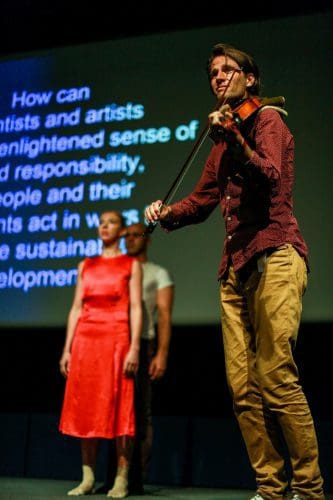
Merlijn Twaalfhoven, © Guillaume Gimenez
This topic can easily become filled with abstractions or generalities. It is true that science and art are both about creativity and research, but is there a concrete way for them to find each other? Is there urgency to bridge these two worlds? The answer to both these questions is a resounding yes.
Different eyes
Art and science are like children that always loved to play together. The worlds of both are filled with curiosity, take steps into the unknown, and embrace uncertainty and adventure. Both are not satisfied with the answers that are provided, and keep asking questions – obsessed with what is below the surface, beyond the horizon, and beneath the solid ground of our convictions.
These two children have much in common, yet they have different eyes, they see things differently. While observing the same world, they pose different questions.
One would ask, ‘What is this?’, ‘How did it become this way?’ and ‘Why is this the way it is?’ While the other asks, ‘What might this also be?’, ‘How can we see this differently?’ and ‘What will this be if…?’
Art and science have always learned and grown together, but over the last few centuries, they have started to grow more and more apart. We might say they have grown up. They each developed their curiosity and creativity into diligent practices and professional attitudes, and started to work within strict disciplinary boundaries. The playfulness and free experimenting sadly transformed into competition and a fixation on what they call “excellence”.
Who is asking the questions?
Today, while global warming, inequality, digitalization, and migration bring instability and change to our societies and global mindsets, there is an urgent need for answers, reliability, and guidance.
Leaders of all kinds, including artists that might influence the way we feel and scientists that might direct the way we reason, are pressed to give such answers. We all add our answers to platforms and channels of news, opinion, soundbites, and statements. It is a cacophony. A flood without structure.
Nevertheless, do we actually know who is asking the questions? Is it the entertainers, talk show hosts, and commercial news media? Will we let the most dominant voices define the big questions of our time? Or can we bring better questions built on the observations, insights, and intuition of artists and scientists to the surface?
Show, don’t talk
We know what the big challenges in society are, and the urgent steps needed to prevent catastrophic global warming, societal polarization, and mass migration are well defined. But how do we, as curious, experienced, and highly trained artists, scientists, researchers, and explorers join forces to make the urgent and engaging questions become not just loud and clear, but part of everybody’s daily reality? Can we not just write or talk about warnings and concerns, but rather create and build questions that ask for a vision that is attractive and beautiful – a way forward that we can experience directly and that makes all of us want to make the world great again?
Beauty
A first step is to find beauty in the world around us. Instead of asking, ‘Why are these people poor?’ we can ask, ‘What makes you proud?’ Instead of asking, ‘How do we stop people from buying cars?’ we can ask, ‘How can I relieve you from the burden of owning (cleaning, insuring, repairing) a car?’ Instead of asking, ‘Why are people unhealthy?’ we can ask, ‘When do you feel free of stress?’
Imagination
A second step is to design ways to express this beauty and to imagine new possibilities. How can we show others the pride you feel? What is the value you get when you do not own a car? What does a stress-free moment sound like?
Play
A third step is to connect people to a changing and evolving reality in playful and challenging ways. What makes your pride contagious to others? How do we practice freedom from possessions? How do we build moments of stress-free time into a rhythm?
These are only a few examples of how art can expose beauty in urgent research topics, create forms of expression to give new ideas presence, and build living and changing structures where a new scientific/artistic mindset may flourish.
What will be the laboratories in which we develop and explore new questions? When will these grownups – art and science – decide to approach each other again, remember their playful childhood, and fall in love all over again? It might be a fruitful affair and give birth to a new mindset that can help us face today’s challenges.

Thank you: In writing this text, I received some valuable contributions from Gloria Benedikt and Anne Glover.
Note: This article gives the views of the authors, and not the position of the Nexus blog, nor of the International Institute for Applied Systems Analysis.
Jul 24, 2018 | Education, Sustainable Development, Women in Science
By Stephanie Bengtsson, researcher in the IIASA World Population Program
In the months after finishing my doctorate, I would often find myself having some variation of the following conversation upon meeting someone new, particularly in a social context:
New person: “So, what do you do?”
Me: “Actually, I’ve just finished my doctorate.”
New person [impressed]: “Wow! In what field?”
Me: “Education.”
New person [after a long pause]: “Oh.”
The tone of that “oh” has stayed with me in the years since: “You can get a doctorate in education?”, that little word seemed to say, following up with: “What does that involve? Stacking ABC blocks and looking through picture books? It can’t possibly be as challenging as a doctorate in a real subject, like economics or neuroscience.”
Many of my education colleagues around the world have had similar experiences, especially those who, like me, work primarily in the field of development. At the same time, the global news media is rife with articles about ‘failing’ school systems, a dwindling ‘supply’ of qualified teachers, ‘underperforming’ teachers, low Programme for International Student Assessment (PISA) results, and more, as the international community searches for quick-fix solutions with easily quantifiable measures of progress to address these problems, often outside the realm of education research. Generally, within the dominant development discourse, the aim of these solutions is clear: to increase attainment and improve student test scores, particularly in the so-called STEM subjects (i.e., Science, Technology, Engineering, and Mathematics), in order to build human capital and subsequently grow and sustain the labor market and economy. In other words, improvements to education are typically justified only to the extent that they will increase education’s instrumental value (leading to improvements in other sectors), rather than its intrinsic value.
As such, those of us working in international educational development often find ourselves caught in a paradox, as our sector has been (and continues to be) simultaneously under-appreciated in terms of the contribution it can make to other aspects of development and wellbeing (and subsequently under-prioritized), and over-emphasized in its role as a tool of development when it does make it onto the agenda. We therefore frequently find ourselves having to first ‘make the business case’ for education by proving its instrumental value before beginning any research or development project, in a way that would be considered ludicrous in, for instance, the sectors of health and nutrition. Once we have successfully argued that case, the pressure is on to measure inputs and narrowly-defined short-term outcomes, leaving little time to examine complex educational processes and longer-term impacts of education.
In late September 2015, Heads of State and High Representatives from around the world committed to a new sustainable development agenda consisting of 17 Sustainable Development Goals (SDGs) and 169 accompanying targets. The framing document for the SDGs, UN Resolution 70/1, Transforming our World: The 2030 Agenda for Sustainable Development, envisions an important role for education within this agenda, both as an end and a powerful means of development:
“All people, irrespective of sex, age, race, ethnicity, and persons with disabilities, migrants, indigenous peoples, children and youth, especially those in vulnerable situations, should have access to life-long learning opportunities that help them acquire the knowledge and skills needed to exploit opportunities and to participate fully in society. We will strive to provide children and youth with a nurturing environment for the full realization of their rights and capabilities, helping our countries to reap the demographic dividend including through safe schools and cohesive communities and families.” (UN 2015, article 25)
For those of us working in international educational development, the SDGs thus represent a significant step forward from the Millennium Development Goals (MDGs), as well as an opportunity to encourage the wider development community to engage with and invest in a shared vision for equitable, inclusive, quality lifelong learning opportunities.
In our new book, The Role of Education in Enabling the Sustainable Development Agenda, my colleagues and I conduct an extensive critical review of literature from a range of disciplines, attempting to find answers to these fundamental questions about the value of education and the dynamic nature of the relationship between education and development. We engage with the argument put forward in the capabilities approach to development that the capability to be educated is, in and of itself, an important freedom, and a fundamental aspect of human wellbeing. Given that processes of teaching and learning are a natural and defining characteristic of human society, we argue that education is most successful at contributing to sustainable development across all dimensions at once if, rather than being crafted as an instrument to achieve a specific and narrow development objective – no matter how worthy – education is improved on its own terms, and as an end in itself.
We also draw from recent work by the economist Kate Raworth, which attempts to connect the economic, social, and environmental dimensions of sustainable development, by combining social justice work with planetary boundaries research in order to define a space within which humanity can survive and thrive:
“Between a social foundation that protects against critical human deprivations, and an environmental ceiling that avoids critical natural thresholds, lies a safe and just space for humanity [. . .] where both human wellbeing and planetary wellbeing are assured, and their interdependence is respected.” (Raworth 2012, p. 7)
This book builds on work we carried out for the United Nations Educational, Scientific, and Cultural Organization (UNESCO) Global Education Monitoring (GEM) Report, and shares in UNESCO’s urgent sense of purpose to demonstrate not only “the potential for education to propel progress towards all global goals”, but also that “education needs a major transformation to fulfil that potential and meet the current challenges facing humanity and the planet” (UNESCO n.d., n.p.). At no point do we claim to be providing the definitive account of the role of education in the sustainable development agenda; rather, we hope that our book will inspire critical reflection, engagement, and, above all, learning, among a wide audience of scholars, students, policymakers, and practitioners alike.
References
Harber, C. (2014). Education and international development: Theory, practice and issues. Oxford: Symposium Books.
Raworth, K. (2012). A safe and just space for humanity: Can we live within the doughnut? Oxfam Discussion Paper. Oxford: Oxfam.
Sen, A. (1999). Development as Freedom. New York: Knopf.
UNESCO. (n.d). Education needs to change fundamentally to meet global development goals. Retrieved from: www.unesco.org/new/en/education/themes/leading-the-international-agenda/education-for-all/single-view/news/education_needs_to_change_fundamentally_to_meet_global_devel/
Note: This article gives the views of the authors, and not the position of the Nexus blog, nor of the International Institute for Applied Systems Analysis.
Jul 20, 2018 | Systems Analysis, Water, Young Scientists
By Melina Filzinger, IIASA Science Communication Fellow
Imagine you are heading home from work and are stuck in evening rush hour traffic. You see an opportunity to save time by cutting another driver off, but this will lead to a delay for other cars, possibly causing a traffic jam. Would you do it? Situations like these, where you can benefit from acting selfishly while causing the community as a whole to be worse off, are known as social dilemmas, and are at the heart of many areas of research in economics.
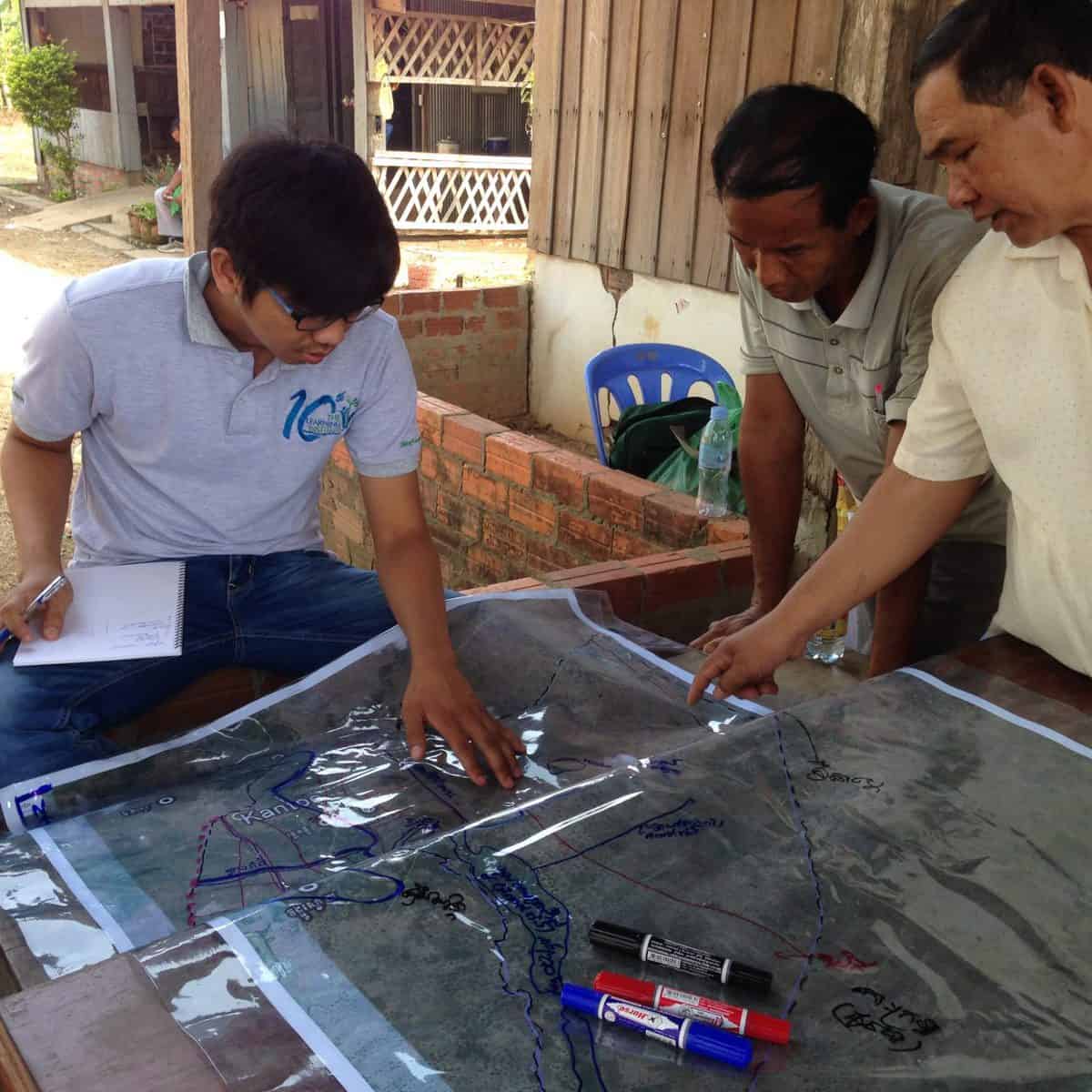
Tum Nhim (left) discusses water sharing with farmers and local authorities in rural Cambodia. © Tum Nhim
The social dilemma becomes particularly important when considering so-called common pool resources such as water reservoirs that are depleted when people use them. For instance, picture several farmers using water from the same river to irrigate their farmland. The river might carry enough water for all of them, but if there is no incentive for the upstream farmers to take the needs of the farmers living further downstream into consideration, they might use more than their share of the water, not leaving enough for the rest of the group. Situations like this are particularly relevant in developing countries, where small-scale farmers that manage the irrigation of their farmland themselves play a significant role in ensuring food security.
Growing up in southwestern Cambodia, YSSP participant Tum Nhim saw how the surrounding farmers shared water among themselves, and how important water was to their livelihoods. Not having enough water often meant that there were no crops for a whole year, and many farmers were forced to take on loans in order to feed their families. “Now that climate change is starting to affect Cambodia, and water scarcity is becoming an even bigger problem, it is more important than ever to investigate fair and efficient ways of sharing water,” explains Nhim.
As a water engineer, Nhim used to design and build water infrastructure. He however soon learned that not considering how human decision making affects the water supply will cause situations where the infrastructure provides enough water, but some farmers are still left high and dry. “I think that human behavior is the most important factor to consider when managing common pool resources,” he says.
To find possible solutions for distributing water in a way that yields an optimal outcome for the community, Nhim and his colleagues from the IIASA Advanced Systems Analysis Program use a bottom-up approach–they model the behavior of a number of individual farmers that interact according to certain rules. The researchers can then look at the collective outcome of these interactions after a certain time and ask questions like, “Will the farmers cooperate?” or, “Will some farmers be left without water?” In their model the researchers take into account both the water itself, a common pool resource, and the water infrastructure, which is not depleted by use.
Several mechanisms can be used to ensure the fair distribution of water. Some of them are formal; like laws and regulations, but it is often difficult to keep people from extracting water, because using a given water resource might be a long-standing cultural tradition or legal right. There are however also more informal mechanisms that can help. For example, individuals often prefer to be good citizens in order to ensure that they have a high social standing in their community that will bring them benefits.
This reputational mechanism is especially relevant in small communities with everyday contact between members. If someone takes too much water, or doesn’t invest in the common water infrastructure, they will gain a bad reputation, which will in turn limit their ability to get support from their neighbors later on.
The main question Nhim is investigating in his YSSP project is if this mechanism can spread across several villages that share a common water resource and irrigation infrastructure, and lead to an outcome where everyone cooperates. If this turns out to be true, the reputational mechanism could be a very inexpensive and natural solution for managing common goods across several communities.
Note: This article gives the views of the author, and not the position of the Nexus blog, nor of the International Institute for Applied Systems Analysis.
Jul 17, 2018 | Air Pollution, Energy & Climate, Poverty & Equity, Women in Science, Young Scientists
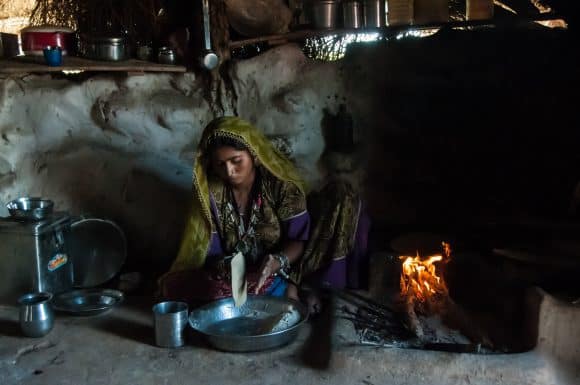
© Stefano Barzellotti | Shutterstock
By Sandra Ortellado, IIASA Science Communication Fellow
When it comes to home cooking in rural India, health, behavior, and technology are essential ingredients.
Consider the government’s three-year campaign to reduce the damaging impacts of solid fuels traditionally used in rural households below the poverty line.
Initiated by the Ministry of Petroleum and Natural Gas, a program called Pradhan Mantri Ujjwala Yojana (Ujjwala) aims to safeguard the health of women and children by providing them access to a clean cooking fuel, liquid petroleum gas (LPG), so that they don’t have to compromise their health in smoky kitchens or wander in unsafe areas collecting firewood.
According to the World Health Organization, smoke inhaled by women and children from unclean fuel is equivalent to burning 400 cigarettes in an hour.
Nevertheless, an estimated 700 million people in India still rely on solid fuels and traditional cooking stoves in their homes. A subsidy of Rs. 1600 (US $23.47) and an interest free loan attempts to offset the discouraging cost of the upfront security deposit, the stove, and the first bottle of LPG, but this measure hasn’t been able to change habits on its own.
Why? Although the government has made an overwhelming effort to increase access, interconnected factors like cultural norms, economic trade-offs, and convenience require an in-depth analysis of human behavior and decision-making.

Abhishek Kar, 2018 YSSP participant ©IIASA
That’s why Abhishek Kar, a researcher in the IIASA Energy Program and a participant in the 2018 Young Scientists Summer Program (YSSP), has designed a study to explore how rural households make choices about access and usage. Borrowing from behavior change and technology adoption theories, he wants to know whether low-cost access is enough incentive for Ujjwala beneficiaries to match the general rural consumption trends, and more importantly, how to translate public perception into a behavior change.
“I think it’s really important to look into the behavioral aspect,” said Kar in an interview. “If you ask someone if they think clean cooking is wise they may say yes, but if you say do you think it is appropriate for you? The moment it becomes personalized the answers can vary.”
Kar knows that although more than 41 million LPG connections have been installed, installment of the connection does not necessarily equate to use. By gathering data on LPG refill purchases and trends, along with surveys that identify biases in the public’s perception, he wants to know how to convince rural BPL households to maintain the habit of using LPG regularly, even under adverse conditions like price hikes. If LPG is used only sporadically, LPG ownership won’t significantly reduce risk for some household air pollution (HAP)-linked deadly diseases, like lower respiratory infections and stroke.
Unfortunately, even the substantial efforts the government has made to improve LPG supply has not changed the public’s perception of its accessibility in the long term, nor its consumption patterns in the first two years. At least four LPG refills per year would be needed for a family of five to use LPG as a primary cooking fuel, which is not currently happening for the majority of Ujjwala customers.
Because the majority of Ujjwala beneficiaries have cost-free access to solid fuels from forest and agricultural fields, there is less incentive for these families to use LPG regularly instead of sporadically. Priority households for Ujjwala, especially those with no working age adults, are often severely economically disadvantaged and can’t afford to buy LPG at regular intervals.
Furthermore, unlike LPG, a traditional mud stove is more versatile and can serve dual purposes of space heating and cooking during winter months. Many prospective customers are also hesitant about the inferior taste of food cooked in LPG, the utility of the mud stove’s smoke as insect repellent, and the trade-off of expenses on tobacco and alcohol with LPG refills.
As per past studies, even the richest 10% of India’s rural households (most with access to LPG) continue to depend on solid fuels to meet ~50% of their cooking energy demand. This suggests that wealth is not the only stumbling block in the transition process.
“Whatever factors matter in the outside world, my working hypothesis is that every decision is finally mediated through a person’s attitude, knowledge, and perceptions of control,” said Kar. According to Kar, interventions can be specifically targeted to address factors that are perceived negatively either by informing people or doing something to improve that factor. Nevertheless, developing effective interventions is no simple task.
Even with a background in physics and management and eight years of experience helping people transition from one technology to another, Kar says he is grateful to have the input of a variety of scholars at IIASA, each with a different perspective and a different set of core skills and experiences. Working in the Energy program alongside IIASA staff and fellow YSSPers from all over the world, Kar puzzles out the unsolved challenge of how to create change for the rural poor.
“That has been one of my drivers, I take it as an intellectual challenge,” said Kar. “Is there a systems approach to the problem?”
For now, Kar is happy if he can return at the end of the day to his family, which he brought with him to Austria during his time as a YSSP participant, feeling like he is opening the door to a vast literature on technology adoption and human behavior, yet untapped in the field of cooking energy access.
“This research is only a very small baby step into trying something different,” said Kar, “I think this sector has so many unanswered questions, if I can at least flag that there is a lot of literature out there in other domains and maybe we can use some of it, I think that would be good enough for me.”
Note: This article gives the views of the author, and not the position of the Nexus blog, nor of the International Institute for Applied Systems Analysis.
Jul 12, 2018 | Climate Change, Science and Policy, Young Scientists
by Melina Filzinger, IIASA Science Communication Fellow
Kian Mintz-Woo is a moral philosopher working in the field of climate ethics. He obtained his PhD from the University of Graz and is spending the summer at IIASA as a participant of the Young Scientists Summer Program (YSSP). I recently had the opportunity to talk to him about his work.
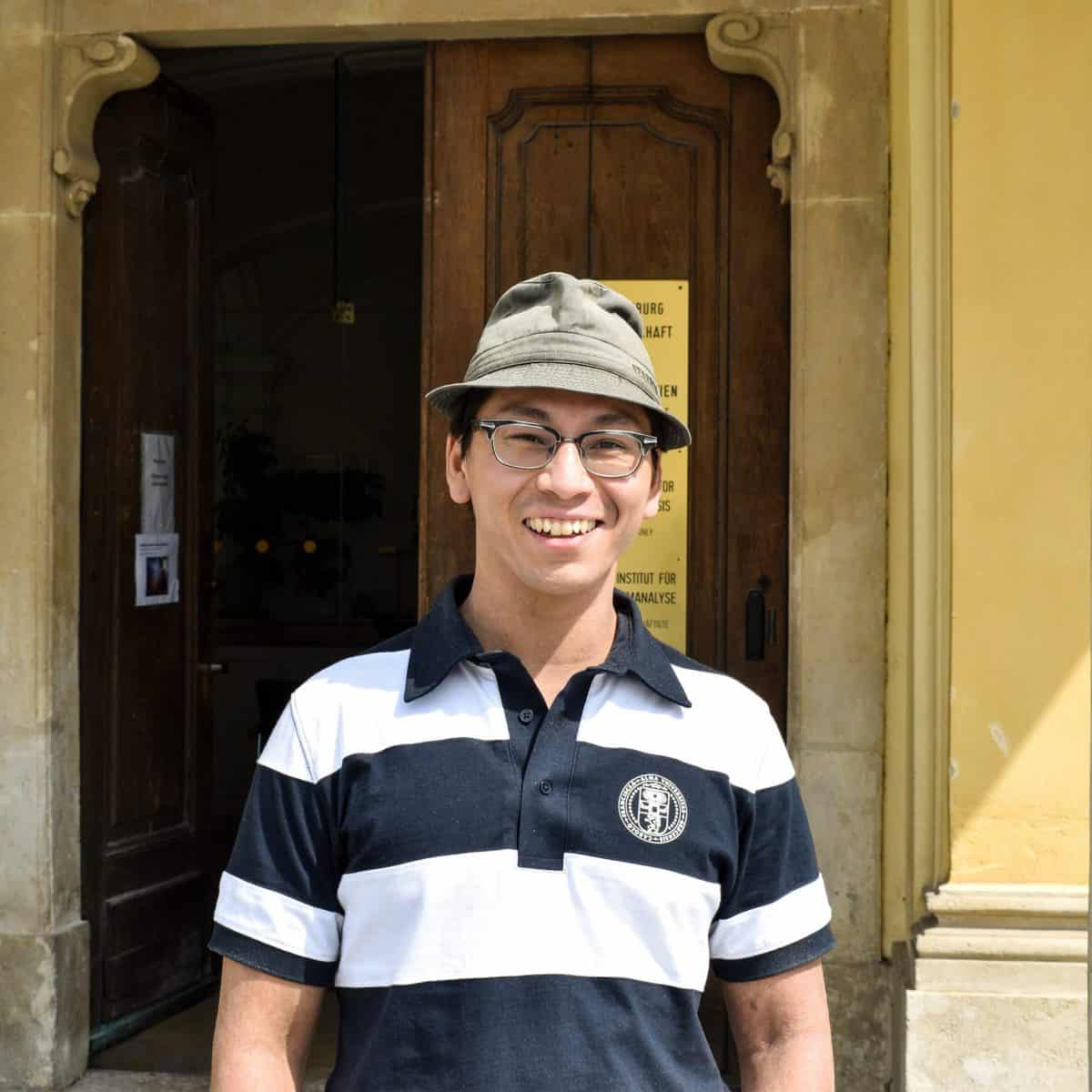
Kian Mintz-Woo, © Kedar Kulkarni | IIASA
How do you feel about joining YSSP as a philosopher?
I know that it is extremely unusual for a philosopher to join YSSP, and I’m really happy to be here. It is very stimulating to be surrounded by people with a different point of view. I appreciate that people are asking me about what philosophers do, or they’ve come across a philosophical text and want to know my opinion. It is extremely valuable to me to talk about my discipline to interested people.
You started out studying logic – how did you become interested in climate change?
I used to do research on abstract and systematic areas of mainstream philosophy. I enjoyed it, but was also interested in social issues. I think climate change is particularly important, because unlike most issues we have a very short time window to deal with it. Of course there are a lot of things we have to change in our society, but climate change is definitely an issue that can’t be put off anymore.
When I started my BPhil in Oxford, I initially worked on similarly abstract topics, but then I met John Broome, an expert in climate ethics. Doing a project with him was both a once-in-a -lifetime-opportunity and a possibility to marry my theoretical training with some of my real-world interests. What I am doing now is about as applied as philosophy can get—I’m on the edge of what some people would even call philosophy—and it is great fun!
What is your project about?
When talking about climate change, we often discuss two things: ways to limit the temperature increase on earth (mitigation), and ways to adapt to the changing conditions that accompany climate change (adaptation). However, we also increasingly have to consider effects of climate change that go beyond what we are able or willing to adapt to. We call this area of research and policy “Loss and Damage”.
We have to think about who is responsible for the Loss and Damage-related burdens that we are and will be facing. In my project, I argue that, conceptually, there is a strong link between historical responsibility for emissions of greenhouse gases and Loss and Damage. This is very relevant for policy as well: We don’t want the farmer who can no longer support himself because changing rain patterns have reduced his crop yield, or the small island nation that might be flooded in the future, to bear the risks related to climate change alone. However, the instruments that can help spread this risk globally require financial burdens.
Most of the discussions about who should be the bearers of these burdens have been in terms of nations, but an interesting paper from 2014 suggests that we should rethink that approach. The main findings of this paper are that only 90 companies producing oil, natural gas, coal, and cement were the source of 63% of historical CO2 emissions. As the number of these so-called carbon majors is so surprisingly small, considering them instead of nations in the discussions about funding might be a valid alternative.
Is it relevant if the effects of these emissions were known at the time?
That is an important question and I think that it should matter. The data we have goes back to 1854, so I feel that at least some of the time the emissions should be considered under the heading of excusable ignorance. We could start holding the carbon majors responsible after a certain year, maybe around 1980 or 1990, and part of my research is finding out how the selection of the carbon majors depends on the chosen point.
How does your work relate to the research going on in the IIASA RISK Program?
It is great being in the RISK group. My input as a philosopher is making conceptual suggestions and bringing in fairly blue-sky policy solutions. What I am getting from my supervisors are real-world implications of these suggestions, such as risk instruments that might be relevant for the implementation of my ideas. So together, we are aiming to make these abstract ideas policy-relevant.
Why should we apply philosophical concepts to problems like climate change?
Science can help us figure out which pathways are available, but scientists are often not very well trained in evaluating those beyond their economic-technical approach. Moral philosophers can bring in new perspectives for evaluating these options.
What I am doing at IIASA however, is taking a step back from the research that is going on in order to ask fundamental questions. I want to provide ambitious proposals, and find out what they would push us towards if we were trying to implement them. This often requires bringing concepts and results together from different areas of research to obtain a broader view on the problem.
What do you want to achieve by the end of the summer?
I hope to achieve a policy proposal that is ambitious but defensible. I want to develop a clear argument as to why the carbon majors are more responsible for Loss and Damage than for mitigation and adaptation. I think this approach is both new and quite important, especially for many developing countries and small island states.
Apart from your research project, what are you looking forward to most this summer?
I am getting married this month, so this is an especially exciting and busy summer for me!
Note: This article gives the views of the authors, and not the position of the Nexus blog, nor of the International Institute for Applied Systems Analysis.

You must be logged in to post a comment.