Jul 9, 2018 | Alumni, Communication, IIASA Network, South Africa, Systems Analysis, Young Scientists
By Sandra Ortellado, IIASA Science Communication Fellow 2018
In 2007, Sepo Hachigonta was a first-year PhD student studying crop and climate modeling and member of the YSSP cohort. Today, he is the director in the strategic partnership directorate at the National Research Foundation (NRF) in South Africa and one of the editors of the recently launched book Systems Analysis for Complex Global Challenges, which summarizes systems analysis research and its policy implications for issues in South Africa.
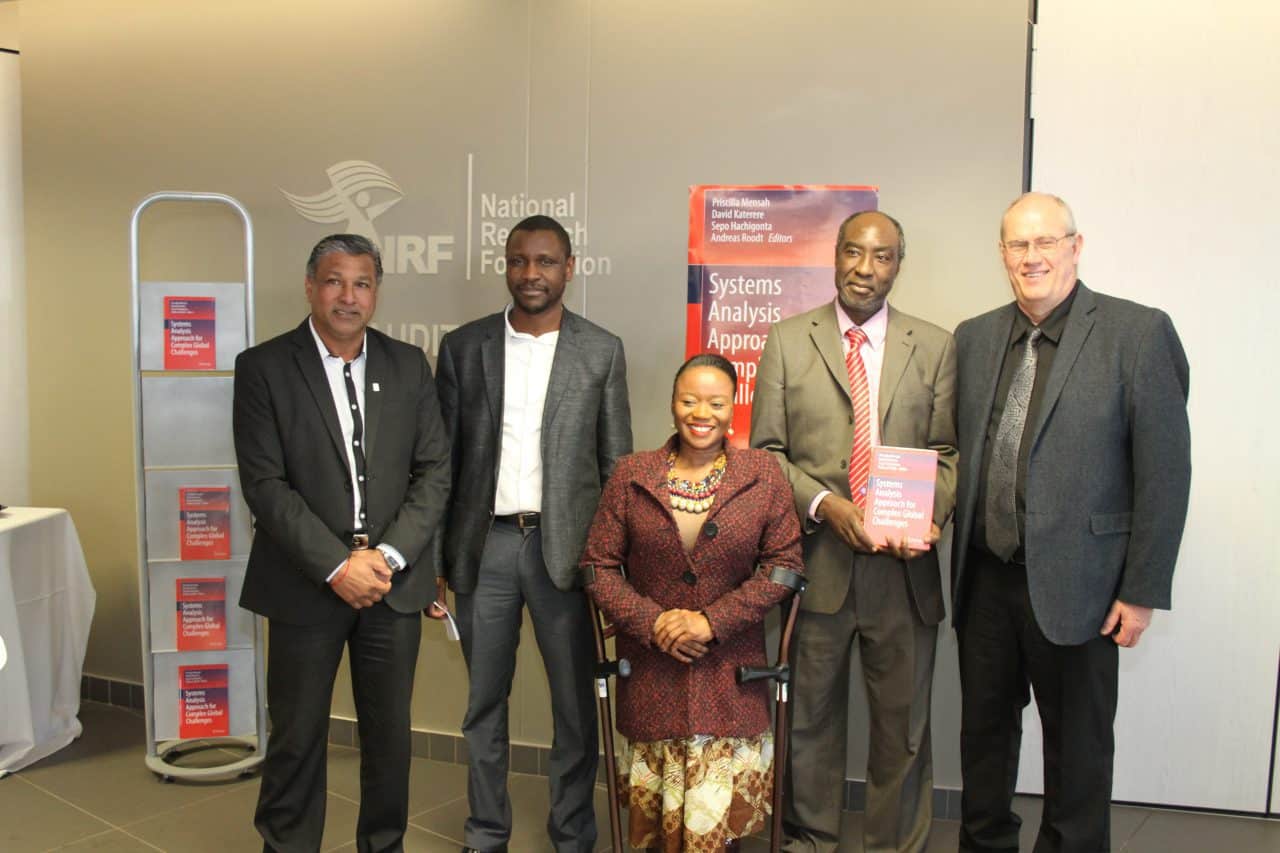
From left: Gansen Pillay, Deputy Chief Executive Officer: Research and Innovation Support and Advancement, NRF, Sepo Hachigonta, Editor, Priscilla Mensah, Editor, David Katerere, Editor, Andreas Roodt Editor
But the YSSP program is what first planted the seed for systems analysis thinking, he says, with lots of potential for growth.
Through his YSSP experience, Hachigonta saw that his research could impact the policy system within his home country of South Africa and the nearby region, and he forged lasting bonds with his peers. Together, they were able to think broadly about both academic and cultural issues, giving them the tools to challenge uncertainty and lead systems analysis research across the globe.
Afterwards, Hachigonta spent four years as part of a team leading the NRF, the South African IIASA national member organization (NMO), as well as the Southern African Young Scientists Summer Program (SA-YSSP), which later matured into the South African Systems Analysis Centre. The impressive accomplishments that resulted from these programs deserved to be recognized and highlighted, says Hachigonta, so he and his colleagues collected several years’ worth of research and learning into the book, a collaboration between both IIASA and South African experts.
“After we looked back at the investment we put in the YSSP, we had lots of programs that were happening in South Africa, and lots of publications and collaboration that we wanted to reignite,” said Hachigonta. “We want to look at the issues that we tackled with system analysis as well as the impact of our collaborations with IIASA.”
Now, many years into the relationship between IIASA and South Africa, that partnership has grown.
Between 2012 and 2015, the number of joint programs and collaborations between IIASA and South Africa increased substantially, and the SA-YSSP taught systems analysis skills to over 80 doctoral students from 30 countries, including 35 young scholars from South Africa.
In fact, several of the co-authors are former SA-YSSP alumni and supervisors turned experts in their fields.
“We wanted to use the book as a barometer to show that thanks to NMO public entity funding, students have matured and developed into experts and are able to use what they learned towards the betterment of the people,” says Hachigonta. The book is localized towards issues in South Africa, so it will bring home ideas about how to apply systems analysis thinking to problems like HIV and economic inequality, he adds.
“It’s not just a modeling component in the book, it still speaks to issues that are faced by society.”
Complex social dilemmas like these require clear and thoughtful communication for broader audiences, so the abstracts of the book are organized in sections to discuss how each chapter aligns systems analysis with policymaking and social improvement. That way, the reader can look at the abstract to make sense of the chapter without going into the modeling details.
“Systems analysis is like a black box, we do it every day but don’t learn what exactly it is. But in different countries and different sectors, people are always using systems analysis methodologies,” said Hachigonta, “so we’re hoping this book will enlighten the research community as well as other stakeholders on what systems analysis is and how it can be used to understand some of the challenges that we have.”
“Enlightenment” is a poetic way to frame their goal: recalling the age of human reason that popularized science and paved the way for political revolutions, Hachigonta knows the value of passing down years of intellectual heritage from one cohort of researchers to the next.
“You are watching this seed that was planted grow over time, which keeps you motivated,” says Hachigonta.
“Looking back, I am where I am now because of my involvement with IIASA 11 years ago, which has been shaping my life and the leadership role I’ve been playing within South Africa ever since.”
Jul 5, 2018 | Climate Change, Ecosystems, Environment
By Anatoly Shvidenko, senior researcher in the IIASA Ecosystems Services and Management Program
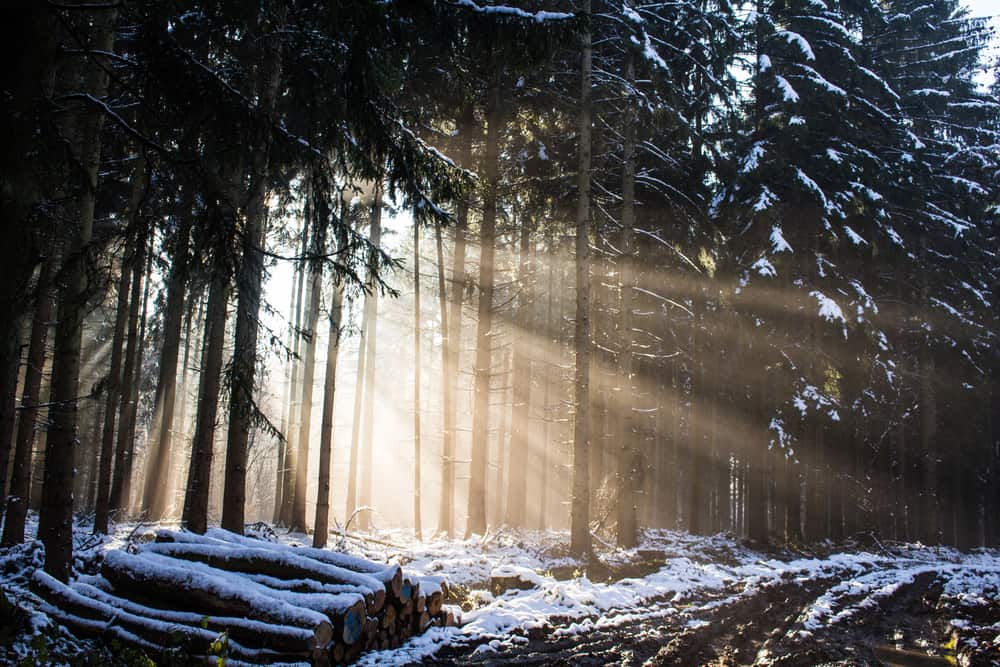
The forest region known as the circumpolar boreal belt comprises almost a third of the global forest area and about a fourth of the world’s wetlands. There are substantive structural, ecological and management similarities and connections between boreal and global mountain forests of high elevation. Specific features of both boreal and high-elevation forests – or as we started calling them cool forests – include evolutionary adjustments to cold climates; dominance of coniferous species; permafrost over huge territories; vulnerability to climate anomalies and ecological disturbances; large remote and practically unmanaged territories; and lack of infrastructure over vast areas. Under climate change, these landscapes are on the one hand exposed to extreme pressures and risks and on the other, they are decisive for our efforts to reach the climate goals. These cool forests could substantially help to cool down the climate. This is why I became a Cool Forest Ambassador.
© RikoBest | Shutterstock
A particular threat to global climate mitigation efforts is the thawing permafrost, which contains about 1,000 billion tons of carbon as methane and hydrates in the frozen grounds of the Northern Eurasian high latitudes alone. Furthermore, a number of models predict forest deaths over large areas, loss of biodiversity, and negative impacts on social hotspots in the highly populated southern (mid-latitude) ecotone of the boreal zone.
Since the most critical climate change on the planet is expected in continental regions of the boreal and mountainous regions, these forest and wetland landscapes require specific societal, scientific, and managerial attention. The current paradigm of co-evolution of people and forests calls for a transition to adaptive and risk-resilient sustainable forest management (ASFM), which is a complicated task, both mentally and professionally.
Diversity of forests, ownership, socioeconomic conditions, forest management practices, and policies for cool forests are extensive, as are the above-mentioned associated risks. Large differences prevail in stakeholder preferences, understanding, and the valuation of ecosystem services, as well as in understanding relevant strategies of implementing ASFM. We need to advocate the investigation of socioecological drivers that define current and future states, the resilience and vulnerability of forests, as well as the stability of forests and agro-forest landscapes. Moreover, we need to consider the close connection of cool forests with the specifics of surrounding landscapes within the paradigm of the multi-functional use of forests.

© IBFRA
About 20 countries have cool forests, but three of them comprise almost 90% of the total area: Russia 56%, Canada 27%, and the USA 6%. The starting point, preparedness, and capacity of these countries to introduce ASFM are substantially different, but the majority of them are lagging behind in terms of real progress in the proper direction. Cross-border analysis of national specifics and commonalities are needed to understand the potential and challenges of ASFM, as well as to identify problems that cannot be completely resolved by means of ASFM alone (e.g., slowdown of permafrost thaw). There is no silver bullet strategy that would allow us to reach all the goals of ASFM. The high uncertainty of climatic predictions and lack of knowledge on the behavior of boreal and high-elevation forests under new environmental conditions, require new operative information, as well as a new philosophy and management tools. In particular, new types of models are needed to present sufficient information for decision making within regional forest management systems. The IIASA Ecosystem Services and Management Program has intensively studied cool forests for the last three decades (large international projects included SIBERIA-II, Siberia-II, the Third Millennium Ecosystem Assessment etc.).
All pressing problems, hot topics, and required actions related to cool forests will be discussed at the 18th Conference of the International Boreal Forest Research Association “Cool forests at risk? The critical role of boreal and mountain ecosystems for people, bioeconomy, and climate”, taking place at IIASA from 17 to 20 September 2018. More information about this event is available on the conference website (IBFRA18.org). We invite scientists and stakeholders from policy, business, and civil society and all who are interested in the topic, to express their opinion about the most important and urgent actions that should be realized. Join me in signing-up as a Cool Forest Ambassador to bring this globally important problem to the attention of societies and governing circles globally.
Note: This article gives the views of the authors, and not the position of the Nexus blog, nor of the International Institute for Applied Systems Analysis.
Jun 29, 2018 | Communication, IIASA Network, United Kingdom, Women in Science
by Melina Filzinger, IIASA Science Communication Fellow
As a science communication fellow at IIASA, I had the opportunity to talk to Dame Anne Glover, who was recently made an IIASA distinguished visiting fellow. Originally a successful researcher in microbiology, she previously served as the first chief scientific adviser for Scotland, as well as the first chief scientific adviser to the president of the European Commission, and is now president of the Royal Society of Edinburgh.
© Anne Glover
In your roles as scientific adviser you had to know about a broad range of relevant scientific topics. How do you keep informed about topics that lie outside your own area of research?
Of course no-one can be an expert in all the different areas of science. As a microbiologist, I am very specialized, but I am also a generalist when it comes to other areas of research. I keep up to date by reading articles about lots of different topics, from climate change to chemical toxicity or Alzheimer’s research, just because I am curious and interested.
However, if a minister or policymaker asked me to brief them on a particular topic, I would consult organizations with expertise in that area and ask them questions until I felt that I understood the topic. Then I would translate that scientific, often jargon-filled research into something that makes sense to a non-specialist. Part of the role as scientific adviser is not so much being an expert as being a translator.
Do you follow any science publications aimed at a broad audience? What are your favorites?
There is an organization called Sense about Science that publishes reports on issues that are being discussed among the public. They also have a fabulous service called Ask for evidence. Anyone can go onto their website and type a question, for example “Do female contraceptive pills end up feminizing fish in water streams?”, and they have a panel of experts that can comment on that, give you the evidence, and explain why this issue might or might not be a problem. It’s fantastic! I often use these answers as a starting point to find out about something.
I follow several other popular news outlets as well, for example New Scientist or the science and nature section of the BBC news app. I don’t expect absolute accuracy from those, I just expect to get a first impression of a research area. I also use Twitter as a source of information, because people often tweet about interesting science articles.
You are very active on Twitter. Has social media been useful to you, and how can it be used effectively?
I came to Twitter kicking and screaming when I joined the European Commission as chief scientific adviser to the president. I just thought that I had way too much to do to spend time on social media. It was Jan Marco Müller, a former colleague and now head of the directorate office at IIASA, who convinced me that Twitter could actually be a good way to tell people what I was doing, especially since transparency about my work is very important to me.
Have I found it useful? Enormously so! When I was at the commission I used it to see what really got people excited, either in a good way or in a bad way. When people were against a new technology, it helped me to understand their reasons. Tweeting is also an opportunity for me to help other people by highlighting interesting and useful events or initiatives. It can even be a little bit addictive.
How can science communicators and journalists reach a wide audience without oversimplifying scientific content?
The biggest nervousness I see among scientists is that of oversimplification. That is because, if you do oversimplify, you’re not going to upset your lay audience, but you will upset your scientific audience. I struggled with this for quite some time myself. Generally speaking, I would always favor simplification, of course not to the point of saying something that’s not true. I would however encourage scientists to be less afraid of simplification when speaking to a non-scientific audience. You will never be able to please everyone, you can only do your best to make an abstract subject accessible and interesting to people.
Do you have any tips for young scientists to make their work visible to the public?
In many cities there are science centers, museums, and other places where people get together, and there is nothing, other than their own modesty, to stop a young scientist from offering to talk about their work there. If it seems too daunting to do that kind of thing on your own, you could maybe do it with some of your colleagues. There are lots of opportunities out there for young scientists. Nobody is going to give those opportunities to you, but nobody is going to stop you either! You just have to take them!
If you do take them, think about what audience you are trying to reach beforehand, for example, if you want to talk to children or young adults. Then just be creative in how you present your research–try to build a story. Two good things will come out of it: one is that even if only 50 people show up, and only five of them are interested in what you are saying, you will have transformed the lives of those five people and made them excited about something. That is an achievement. The second thing is, that if you are doing things like that, and the young scientist next to you isn’t, it makes you different, and you have added value. You will also gain experience in communicating, which in turn will make the impact of your science much greater in the future. Everybody wins really, and it can be good fun as well.
Note: This article gives the views of the authors, and not the position of the Nexus blog, nor of the International Institute for Applied Systems Analysis.
Jun 26, 2018 | History, Science and Policy
By Melina Filzinger, IIASA Science Communication Fellow
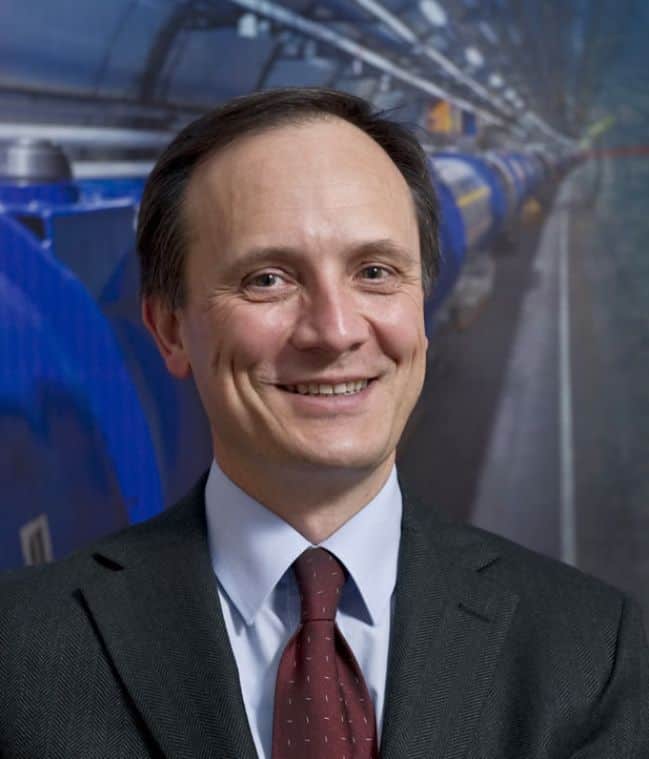
In his lecture at IIASA, Maurizio Bona, senior advisor for relations with parliaments and science for policy, and senior advisor on knowledge transfer at the European Organization for Nuclear Research (CERN) discussed the question “Science and diplomacy–two different worlds?”, focusing on the dual role of CERN as both a research laboratory and an intergovernmental institution.
Maurizio Bona ©CERN
According to Bona, international research centers like CERN and IIASA foster international and intercultural communication by bringing together people with different backgrounds and ideas to work on a common goal. In this context, these organizations act as communication channels where science is used as a universal language.
CERN was established in 1953 to carry out research on particle physics, but also to reunite a Europe that was divided after World War II, and to re-open the dialogue between European countries and beyond. While CERN was not involved in politics directly, an important point of the lecture was that science can provide a neutral field for dialogue and connect people that would not meet otherwise. In this way, international research institutes can contribute to science diplomacy in a very indirect and informal way.
IIASA was founded in 1972 to find solutions to global problems, and with a similar goal of using scientific cooperation to build bridges across the Cold War divide. Despite the vastly different research done at CERN and IIASA, both organizations have roots in science diplomacy that stem from the fact that today’s problems, regardless of whether they are fundamental or applied in nature, are often too complex to be solved by one country or discipline alone.
Even though CERN is a European organization, it attracts researchers from all over the world, like IIASA. In January 2018, 41% of scientific users (researchers using CERN facilities that are not paid by CERN) were from non-member countries and contributed their expertise as well as research equipment. In order to ensure that scientific advancement and not national interests are the basis of the research objectives at CERN, it is based on a simple but strong Convention that excludes military applications and ensures transparency. Additionally, CERN stays away from political affiliations.
Based on the success of the CERN model, the first particle accelerator in the Middle East, Synchrotron-Light for Experimental Science and Applications in the Middle East (SESAME), was established in 2004. Its organizational structure is based largely on that of CERN, and it was thought out explicitly as a way to bring together conflicting Middle Eastern countries, while at the same time advancing science. SESAME’s member states are Cyprus, Egypt, Iran, Israel, Jordan, Pakistan, Palestine, and Turkey and the facility has been open to scientific users from the Middle East and beyond since 2017.
Beyond fostering international and intercultural communication by bringing together people with different backgrounds and ideas to work on a common goal, international research institutes can also influence policy more directly. For example, CERN has been an observing member at the UN general assembly since 2012 and has had an influence on shaping the UN 2030 Agenda for Sustainable Development, advocating for the importance of education and fundamental research.
IIASA goes one step further, explicitly aiming to shape policies and help politicians make informed, evidence-based decisions. IIASA research has for example shaped European air pollution policy and has led to real improvements in the sustainable management of scarce resources in a number of countries. The institute’s independence and political neutrality are key for its credibility as an adviser to policy makers. IIASA is nongovernmental and is instead sponsored by its 23 national member organizations. Today IIASA member countries make up 71% of the global economy and 63% of the global population, making IIASA particularly well-suited to address global challenges.
Maurizio Bona closed his lecture with the following quote by Daniel Barenboim, a world-famous pianist and conductor:
“Let me tell you something: This is not going to bring peace. What it can bring is understanding, the patience, the courage, and the curiosity to listen to the narrative of the other.”
Daniel Barenboim, Ramallah concert, August 2005.
This quote was originally meant to be understood in the context of international collaboration in music, but is also applicable to science, and in fact to any endeavor that brings together people from different backgrounds to work towards a common goal.
The lecture left the audience with some open questions, like how to measure the impact of science on society, or how involved science should be in diplomacy. Some of these questions were picked up on in a lively discussion after the talk. For now, I think it is fair to conclude that the histories of both CERN and IIASA show that international research institutes can have a positive impact on society while remaining politically neutral and unbiased in their scientific goals.
Note: This article gives the views of the authors, and not the position of the Nexus blog, nor of the International Institute for Applied Systems Analysis.
Jun 4, 2018 | Demography, Postdoc, Poverty & Equity, Women in Science
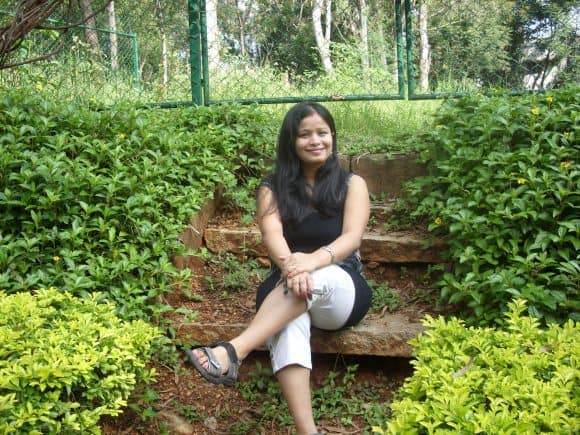
©Nandita Saikia
By Nandita Saikia, Postdoctoral Research Scholar at IIASA
Being an author of a research article on excess female deaths in India in Lancet Global Health, one of the world’s most prestigious and high impact factor public health journals, today I questioned myself: Did I dream of reaching here when I was a little school going girl in the early nineties in a remote village in North East India?
I am the fourth daughter of five. In a country like India, where the status of women is undoubtedly poorer than men even now, and newspapers are often filled with heinous crimes against women, you may be able to imagine what it meant being a fourth daughter. Out of five sisters, three of us were born because my parents wanted a son. My mother, who barely completed her school education, did not want more than two children irrespective of sex, but was pressurized by the extended family to go for a boy after a third daughter and six years of repeated abortions.
I was told in my childhood that I was the most unwanted child in the family. I was a daughter, terribly underweight until age 11, and had much darker skin than my elder sisters and most people from our area, who have fairer skin than average in India. At my birth, my father, a college dropout farmer, was away in a relative’s house and when he heard about the arrival of another girl, he postponed his return trip.
This is a real story, but just one of those still happening in India. The fact that the girls of India are unwanted was observed from the days of early 20th century when it was written in the 1901 census:
“There is no doubt that, as a rule, she [a girl] receives less attention than would be bestowed upon a son. She is less warmly clad, … She is probably not so well fed as a boy would be, and when ill, her parents are not likely to make the same strenuous efforts to ensure her recovery.”
Regrettably, our current study shows that negligence against “India’s daughter” continues to this day.
Discrimination against the girl child can be divided in two categories: before birth and after birth. Modern techniques now allow sex-selective abortion. Despite strong laws, more than 63 million women are estimated to be ‘missing’ in India and the discrimination occurs at all levels of society.
Our present study deals with gender discrimination after birth. We found that over 200,000 girls under the age of five died in 2005 in India as a result of negligence. We found that excess female mortality was present in more than 90% of districts, but the four largest states of North India (Uttar Pradesh, Bihar, Rajasthan, and Madhya Pradesh) accounted for two thirds of India’s total number.
I have to tell you that I was luckier than most girls. Although I was an unwanted child in our extended family, to my mother, this underweight, dark-skinned, little girl was as cute as the previous ones! She gave her best care to her daughter, and she named her “Rani” meaning “Queen” in Assamese. I am still called by this name in my family and in my village.
When I grew up, I asked her several times about her motive for calling me Rani. She always replied: “You were so ugly, the thinnest one with dark skin, I named you as “Rani” because I wanted everyone to have a positive image before seeing you! Also, it is the name of my favorite teacher in high school and she was also a very thin but bright lady!”
The positive conversations with my mother played a crucial role to my desire to have my own identity, and influenced greatly my positive image of myself and my belief that I could do something worthwhile with my life. Much later, when I started my PhD at International Institute for Population Sciences (IIPS), Mumbai, I was surprised to learn that in Maharashtra, one of the wealthiest states of India, second or third daughters are not even given a name, but instead are called ‘Nakusha’, meaning unwanted.
My parents were passionate about educating their daughters, even with their limited means. My father, who was disappointed at my birth, left no stone unturned for my education! By the time I completed secondary school, our village, as well as neighboring villages, congratulated me during the Bihu celebration (the biggest local gathering) for my good performance in school exams. My parents were proud of me by that time; yet, for some strange reason, they always felt themselves weaker than our neighbors who had sons.
Now, people from our village are proud of me not just because I teach in India’s premier university, or that I take several overseas trips in a year, but because they realize that daughters can equally bring renown to their village; daughters can be married off without a dowry; daughters can equally provide old age care to their parents; daughters too can buy property! Due to this attitude and lower fertility levels, many couples now don’t prefer sons over daughters. In a village of 200 households, there are 33 couples that have either one or two daughters, yet did not keep trying for sons. In my own extended family, no one chooses to have more than two children irrespective of their sex. The situation has changed in my village, but not everywhere.
What is the solution of this deep-rooted social menace? We cannot expect a simple solution. However, my own story convinces me that education can be a game changer, but not necessarily academic degrees. I mean a system by which girls realize their own worth and their capability that they can be economically and socially empowered and can drive their own lives. With the help of education, I made myself from an “unwanted” to a wanted daughter!
The purpose of sharing my story is neither self-promotion nor to gain sympathy, rather to inspire millions of girls, who face numerous challenges in everyday life just because of their gender, and doubt their capability, just like I did in my school days. They can make a difference if they want! Nothing can stop them!

You must be logged in to post a comment.