Marcia MacNeil, Blogger at the International Food Policy Research Institute (IFPRI), on a new comprehensive review by IFPRI and IIASA researchers
The world’s agricultural monitoring systems provide up-to-date information on food production to decision makers that is crucial to global and national food security. When prices become dangerously volatile—as they did during the food price crisis of 2007-2011—these systems spread critical information quickly that can reduce the risks of market and supply upheavals.
Monitoring is now better than ever, with improved access to the latest high-resolution satellite imagery and remote-sensing based products. But fundamental gaps remain, and no system currently provides the quantitative crop area and production forecasts ideally needed for food security interventions, according to a comprehensive review by experts including IFPRI Senior Research Fellow Liangzhi You, and led by IIASA researchers in the Ecosystems Services and Management Program
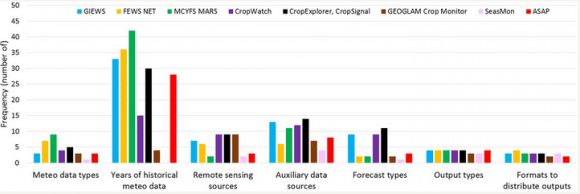
Using questionnaires and discussions with monitoring systems staff, the study measured the gaps in input data and models used, outputs produced, the role of the analysts, interaction with other systems, and the geographical scale at which the systems operate.
Figure 1. Agricultural Systems. Comparison of global and regional scale agricultural monitoring systems in terms of number of sources of input data used.
They found that although each system is tailored to meet the needs of different customers, there are many similarities between the systems. For example, nearly all the reviewed systems reported that cropland maps, crop calendars, and meteorological data were their most important sources.
The most glaring gaps among the systems were found in the data used for crop calendars and crop type maps.
Crop calendars list planting and harvesting dates for the crop types in a particular area. This information is key for keeping tabs on crop conditions, estimating farming area, forecasting yields, and more. It’s used to make decisions to mobilize food aid and move commodities to market, reducing food waste. But this data comes in many different, at-times incompatible forms.
Some data comes from household surveys and censuses, some from expert opinions, and some from satellites. This lack of consistent, validated data results in poor representation of geographic diversity and variability in location and timing in sowing and harvesting dates. Maps of crop types, another important source of data for monitoring systems, suffer from a similar lack of consistent data.
The world’s crop monitoring systems would benefit from greater data sharing, the study concludes—such as a shared repository of datasets. Opportunities for more precise data collection abound. The rapid rise in the use of smart phones and social media, even in once-inaccessible rural areas, offers opportunities for farmers to self-report geo-located crops and information such as planting dates, fertilizer application, irrigation, and expected yields.
Climate change raises the risks to crop production, and these monitoring systems are increasingly critical for decision making and early warning to head off future food crises. More, and better high-quality data will help ensure they can quickly and accurately produce potentially life-saving information.
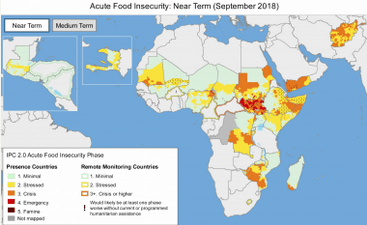
Figure 2. An image from the USAID Famine Early Warning Systems Network (FEWS NET) shows areas of acute near-term food insecurity. Such systems are crucial to monitoring and responding to potential food crises, but gaps remain, particularly for certain crops.
By Jessie Jeanne Stinnett, Co-Artistic Director of Boston Dance Theater
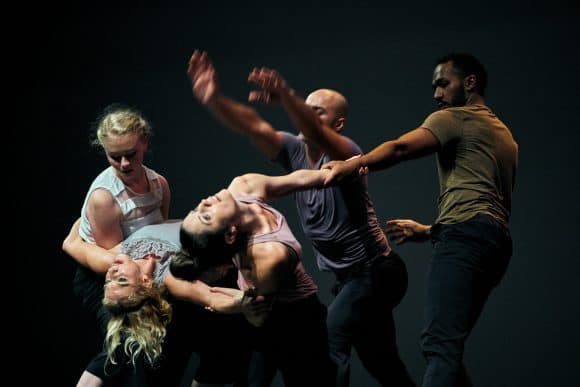
I recently had the privilege of artistically collaborating on Dancing with the Future, a project spearheaded by Gloria Benedikt and Piotr Magnuszewski of IIASA with Martin Nowak of Harvard University. The process involved five dancers joining two scientists to create an evening-length performance-debate that toured to Harvard University’s Farkas Hall and the United Nations Conference on Sustainable Development at Columbia University this fall. The essence of this interdisciplinary project was a product of Nowak’s published research on altruism and evolution. Nowak proposes: “Evolution is not only a fight. Not mere competition. Also cooperation, cooperation is the master architect of evolution. Now that we have reached the limits of our planet, can you cooperate with the future?”
What can I do to contribute to a global effort to create sustainable practices that yield cooperation with the future? Why do I dance and what kind of impact does my dancing have on my environment and myself? As a co-artistic director, entrepreneur, choreographer, and performing artist of the young and fast-growing contemporary dance company Boston Dance Theater (BDT), I am turning to projects that are on the innovative cross-section between the arts, technology, and other disciplines because they have the most potential to have meaningful impact on the level of the creative team, the audience, and beyond. I too, am searching for practices and partnerships for BDT that yield pathways for collective problem solving, or ‘super-cooperation’. As Nowak notes, “[evolutionarily speaking] humans are super-cooperators.”
Overall, Dancing with the Future has revealed to me that scientists, dancers, and policymakers can successfully sit at the same table (or in the same theater or conference hall), tackle the same issues, and productively collaborate toward unearthing sustainable solutions.
We all had to be open to compromises — this is not an easy task in a room full of expert-leaders. I set a mantra for myself to remember that we were creating something completely new. Each time my choreographer-dancer brain sent up a red flag, I chose selectively when to share my opinion with the group. I elected to practice the Buddhist teachings of Shunryu Suzuki, captured poetically in Zen Mind, Beginner’s Mind, “In the beginner’s mind there are many possibilities, but in the expert’s there are few.” This choice opened others and myself up to creative and peaceful solutions that I otherwise wouldn’t have seen.
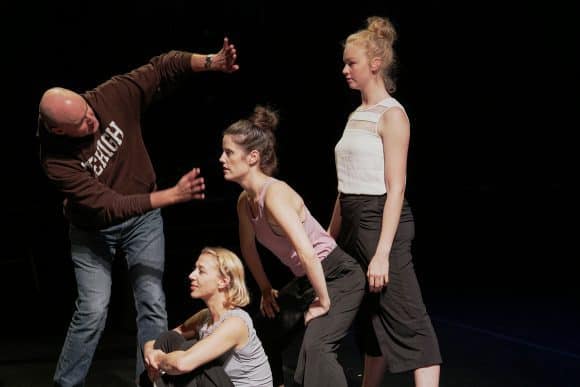
Conversely, I was able to offer constructive solutions at moments when working with the scientific material seemed to overwhelm the studio process, for example, dividing the existing text and music into segments and giving each of those segments a specific choreographic task that related to the content of the scientific text. This was a very simple concept that had to do with pacing and sculpting time. Once we counted out the music, it was easy for us to construct the movement score and see the overall arc of the piece.
I learned not to be afraid of using my voice and also listening deeply. It was, at first, very intimidating to be seated across from experts in fields outside of my own. I learned that scientists and policymakers can understand, respect, and respond to the decisions I make through a process of peaceful negotiation, even when we speak different languages, were born on different continents, and may have varying political opinions. My fear was ultimately unnecessary because the very nature of this project appeals to the humanity in us all.
This form of cross-disciplinary collaboration allows participants to see our own work in a new light and to discover new languages that are exciting because we have co-authored them. For the work to be successful, the dance, science, and debate components must all have equal weight and value. Otherwise, the movement and its choreographic structure becomes the visual representation of the science rather than an equal partner. When that happens, the magic of innovative collaboration falls flat into familiar territory.
During the process, we often referred to this Chinese proverb: “Tell me, and I’ll forget. Show me, and I’ll remember. Involve me, and I’ll understand.” Dancers understand this concept in a very concrete and visceral way. For scientists, policymakers, or the general audience to understand too, they must be involved as much as possible in the process of what we are doing. If we cannot for reasons of practicality, have them with us in the studio, then we must bring them into the process in another way. It is only by involving them as collaborators that we can generate large scale, super-cooperation.
Sometimes it feels like my dancer colleagues and I exist in a vacuum: we rehearse in the confines of the studio and historically perform on stages that make us appear as ‘other’ from the people we are performing for. Western concert dance has received criticism for being an inaccessible art form and according to the 2016 report from The Boston Foundation, is the most under-funded of Boston’s performing arts. Dancers aren’t typically trained to speak about their work, and often have a hard time receiving criticism. Contemporary dance in particular, can be challenging to general audience members because the language of the art and its conceptual frameworks are sometimes not evident in the work itself — many choreographers feel creatively stifled when asked to explain their work in language and wonder why the art work can’t speak for itself.
I have come to learn that these problems are not unique to dance. After our premiere of Dancing with the Future at Harvard University, scientists thanked me for helping them to understand new meaning within the scientific research presented through my performance. Their experience of live performance elicited a keen sense of empathy that drew them into deeper understanding of the scientific findings. This collaboration yielded a tri-fold, reciprocal impact for the artists, for the scientists, and for the public.
Our work helped to bridge the traditional gap between creative team and general audience member. It can be that when a member of the public enjoys a performance, they leave the venue with a good feeling and a nice memory as a souvenir. I believe that our art form has the power to do more — to make a greater impact and to be appreciated as an inherent and necessary aspect of our society and culture.
It is our civic responsibility to continue workshopping solutions toward global cooperation and cooperation with future generations. Dancing with the Future has encouraged me, on a micro scale, that this is a reasonable and plausible endeavor. With continued care, attention toward our common goals, compassion, listening, and risk-taking, we can understand one another through the process of creation regardless of what language we speak or where we were born. The next steps may be small, but nonetheless crucial. Next season, Boston Dance Theater will commission new works by three international choreographers with the stipulation that the pieces must speak to pressing global issues, and cross-disciplinary collaboration will be a cornerstone of that production.
Dancing with the Future has revealed to me that partnerships with super-cooperators such the teams at IIASA and Harvard’s Program for Evolutionary Dynamics can bring meaningful potential to catalyze change in me as an individual and in Boston Dance Theater as an organization, while enabling us to reach our extended communities. I can’t wait for the next project!
Note: This article gives the views of the author, and not the position of the Nexus blog, nor of the International Institute for Applied Systems Analysis.
By Reinhard Mechler, Deputy Program Director, IIASA Risk and Resilience Program
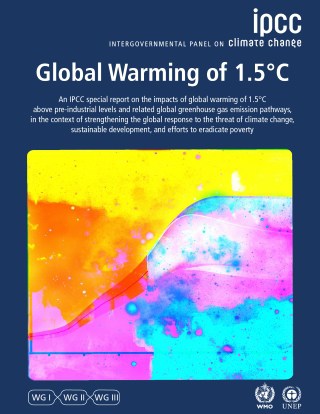
IPCC Special Report on Global Warming of 1.5°C
The Intergovernmental Panel on Climate Change (IPCC) just approved its Special Report on Global Warming of 1.5°C (SR15). It took long hours of discussions between the body of authors and representatives from about 130 IPCC member states gathered at the approval session in Korea, to get the highly anticipated report accepted. The report was requested by parties to the United Nations Framework Convention on Climate Change (UNFCCC) as set out in the Paris Agreement in 2015, that urged parties to limit warming to “well below” 2°C and pursue efforts towards 1.5°C of warming above pre-industrial levels. Countries that are severely vulnerable to climate change such as small-island states, expressed a particular need for the report. The drafted text of the summary for policymakers (SPM) remained largely intact throughout the approval session and the science was well respected by the parties (as has generally been the case for the IPCC). This bodes well for the IPCC’s process of reporting the most up to date information on climate science to national and international decision makers who closely review and comment on drafts of texts throughout the writing process.
The report, composed of five chapters and the SPM, discusses among other topics whether the Paris target of 1.5°C above pre-industrial temperature is still achievable; what the risks we face are at 1.5°C and 2°C of warming; what this will mean in terms of mitigation and adaptation; and what the synergies are between mitigation, adaptation and the Sustainable Development Goals (SDGs).
Below my take on how the SR15 answers some of these questions:
A stark warning… and indeed half a degree does make a difference
The world is on its way to breaching 1.5°C by around the 2040s, which will lead to further warming if current greenhouse gas emissions trends prevail and current nationally determined contributions (NDCs) are not upgraded. Warming can still be stabilized at 1.5°C, but it is an ambitious target that depends on halving emissions over the next 10 years and becoming carbon-neutral by 2050.
The report shows that we are already seeing serious consequences of a 1°C warming in the form of significant increases in some weather-related extreme events (such as the frequency, intensity, and/or amount of heavy precipitation in several regions), exacerbated sea level rise, and other effects on important terrestrial and oceanic systems. In terms of future warming, the report shows that a half-degree change, which we have actually seen over the last 50 years, indeed makes a difference. Risks will be higher than today at 1.5°C and will further increase at 2°C (and beyond).
Adaptation and its limits: A need for transformation?
In light of the above, adaptation is essential and needs to be ramped up. However, for the first time, the IPCC presents evidence on hard and soft limits to adaptation, of which some would already be reached at 1.5°C. Statement B6 of the SPM reads: “Most adaptation needs will be lower for global warming of 1.5°C compared to 2°C (high confidence). There are a wide range of adaptation options that can reduce the risks of climate change (high confidence). There are limits to adaptation and adaptive capacity for some human and natural systems at global warming of 1.5°C, with associated losses (medium confidence).”
So, what should we do in terms of adaptation in light of pervasive risks becoming increasingly severe and ultimately breaching adaptation limits? Statement A3.3 of the SPM suggests that, “Future climate-related risks would be reduced by the upscaling and acceleration of far-reaching, multi-level, and cross sectoral climate mitigation and by both incremental and transformational adaptation (high confidence).”
Throughout the document, the SR15 discusses what is needed in terms of standard adaptation (incremental) and transformational adaptation. An example of incremental adaptation is to continue building sea walls to manage increasing flooding from sea level rise. Adapting community and regional planning so that people, key assets, and buildings are moved out of harm’s way on the other hand, would be rather transformational–and often have a holistic and systemic component. The report also shows that more effort will be needed to better understand what transformational risk management processes may entail concretely.
Transformation: What does it take?
Transformational adaptation may not always be needed uniformly across the globe, but as the report shows, communities in regions vulnerable to sea-level rise risk, flooding, heat, and drought already clearly need significant support, and in a 1.5°C or 2°C world, much more would be needed. The report also shows that increasing investment in physical and social infrastructure is a key enabler of necessary transformations that enhance the resilience of communities and societies. Upgrading climate adaptation efforts will be fundamental to absorbing some climate change impacts and not critically affecting the achievement of the SDGs. What is more, the SR15 points out that the coordinated pursuit of climate resilience and development is the way forward to achieving the ambitious mitigation and adaptation targets set out, while seeking achievement of development goals such as those formulated in the 17 SGDSs.
Implications
Among others, three main implications for adaption (and climate risk) science, policy, and practice can be drawn:
Climate-related risks are becoming pervasive and significant with climatic change: The Paris call for limiting warming to 1.5°C should be heeded and remain the target for ambitious climate mitigation policy in order to avoid some risks from becoming irreversible and hard adaptation limits manifesting themselves.
Climate-related risks are becoming pervasive due to gaps in human, physical, financial, natural, and social capacity/capitals, and increased and targeted investments to strengthen these will be needed to push soft adaptation limits out.
Systemic approaches are needed to tackle high-level risks and consider synergies between adaptation, mitigation, and the SDGs as standard adaptation and disaster risk reduction may not be enough. Transformational approaches requiring large-scale and systemic change are useful in this regard.
The open question…
The final, open question for all of us is of course whether the report can be more than another wake-up call and truly be a game-changer for limiting warming to 1.5°C while ramping up adaptation efforts. The science is there. Broad-based dissemination efforts with policymakers and advisors, experts, the private sector, and civil society are being rolled out. The political will to live up to the massive mitigation and adaptation challenges needs to follow now. Little time remains, and if we truly want to limit warming to 1.5°C and mitigate the associated risks, we need to take decisive and bold steps towards carbon-neutrality and climate-resilience now.
Note: This article gives the views of the author, and not the position of the Nexus blog, nor of the International Institute for Applied Systems Analysis.
by Melina Filzinger, IIASA Science Communication Fellow
Yuping Bai is a participant of the IIASA Young Scientists Summer Program (YSSP) and a first year PhD candidate at the Chinese Academy of Sciences’ Institute of Geographic Sciences and Natural Resources Research. She is working with the Intergovernmental Panel on Climate Change (IPCC), the leading international body for the assessment of climate change, as a chapter scientist for their Special Report on Climate Change and Land. I recently had the chance to talk to her about her engagement as a chapter scientist.
What is the aim of the IPCC special report on climate change and land?
Compared to the IPCC comprehensive assessment reports, this special report really focuses in depth on the linkages and inter-relationship between climate change, land use, and food security. It aims to propose sustainable land-based solutions towards climate change mitigation and adaptation efforts. We all know that climate change is an important issue and the connections between climate change and land use change are extremely complex. The report will include many different topics like land degradation, desertification, greenhouse gas fluxes and food security. Understanding the links between these diverse issues is particularly important for informing decision making by governments, as well as private sectors, to address challenges in land use change and governance.
What is a chapter scientist?
Chapter scientists are early-career researchers that support the development process of the individual report chapters. IPCC asked for volunteers who are required to dedicate at least one-third full time equivalent over a 2.5-year period while working from their home institutions. The chapter scientists were chosen based on expertise, motivation, time availability, and experience in working in a multi-cultural context. There are ten chapter scientists in total working on the report, one or two for each chapter.
How do you contribute to the report?
I am assigned to Chapter 1, which provides the framing and context for the report. Part of my job has been organizational tasks, for example managing our referencing system, scheduling online meetings, tracking down key literature, assisting in the design and development of figures and tables, and assisting in compiling, revising, and organizing chapter contributions. On the other hand, I have also been involved in developing the overall concept of our chapter and can voice my ideas and express my views. Chapter 1 raises the key issues related to land use and sustainable land management for climate adaptation and climate resilience, and provides the concepts and definitions needed to understand the rest of the report.
In fact, many of these topics are closely related to my PhD research and my YSSP project. The YSSP experience significantly broadened my knowledge on climate change and land related topics, and at the same time deepened my understanding of the cross-scale complexity of the issues. After three months, I feel that I’m much better equipped to contribute to the future work for the chapter.
Why did you decide to volunteer so much of your time?
As a chapter scientist I have the chance to participate in discussions on some of the most pressing and important issues in the world. I also have the unique possibility to work with some of the world leading scientists in their respective fields. Therefore, I think it’s an important opportunity to make contacts and to gain insight into the work of the IPCC.
What has your experience been so far?
I’m the youngest one of the chapter scientists, so I felt a bit overwhelmed at first, particularly as I was suddenly rubbing shoulders with some of the brightest, most established academics and researchers on the planet. In this first half year, I attended the second lead author meeting and have been involved in the first draft of the report. During busy periods leading up to key deadlines, such as the submission of the drafts, my hours peaked, and the pressure built. But don’t let this frighten you. It is possible to learn on the job! It helped that everyone made me feel so welcome and valued. I have definitely learned a lot. My research is very specialized, and my work with the IPCC has helped me gain a broader view on climate change and the problems that are connected to it.
Note: This article gives the views of the author, and not the position of the Nexus blog, nor of the International Institute for Applied Systems Analysis.
by Melina Filzinger, IIASA Science Communication Fellow
Ecosystems worldwide are changed by the influence of humans, often leading to the extinction of species, for example due to climate change or loss of natural habitat. But it doesn’t stop there: as the different species in an ecosystem feed on each other and are thereby interconnected, the loss of one species might lead to the extinction of others, which can even destabilize the whole system. “In nature, everything is connected in a complex way, so at first glance you cannot be sure what will happen if one species disappears from an ecosystem,” says IIASA postdoc Mateusz Iskrzyński.
This is why the IIASA Evolution and Ecology (EEP) and Advanced Systems Analysis (ASA) programs are employing food-web modeling to find out which properties make ecosystems particularly vulnerable to species extinction. Food webs are stylized networks that represent the feeding relationships in an ecosystem. Their nodes are given by species or groups of species, and their links indicate how biomass cycles through the system by means of eating and being eaten. “This type of network analysis has a surprising power to uncover general patterns in complex relationships,” explains Iskrzyński.
Every one of these food webs is the result of years of intense research that involves both data collection to assess the abundance of species in an area, and reconstructing the links of the network from existing knowledge about the diets of different species. The largest of the currently available webs contain about 100 nodes and 1,000 weighted links. Here, “weighted” means that each link is characterized by the biomass flow between the nodes it connects.
Usually, food webs are published and considered individually, but recently efforts have been stepped up to collect them and analyze them together. Now, the ASA and EEP programs have collected 220 food webs from all over the world in the largest database assembled so far. This involved unifying the parametrization of the data and reconstructing missing links.
The researchers use this database to find out how different ecosystems react to the ongoing human-made species loss, and which ones are most at risk. This is done by removing a single node from a food web, which corresponds to the extinction of one group of species, and modeling how the populations of the remaining species change as a result. The main question is how these changes in the food web depend on its structural properties, like its size and the degree of connectedness between the nodes.
From the preliminary results obtained so far, it seems that small and highly connected food webs are particularly vulnerable to the indirect effects of species extinction. This means that in these webs the extinction of one species is especially likely to lead to large disruptive change affecting many other organisms. “Understanding the factors that cause such high vulnerability is crucial for the sustainable management and conservation of ecosystems,” says Iskrzyński. He hopes that this research will encourage more, and more precise, empirical ecosystems studies, as reliable data is still missing from many places in the world.
As a next step, the scientists in the two programs are planning to understand which factors determine the impact that the disappearance of a particular group of organisms has. They are going to make the software they use for their simulations publicly available, together with the database they developed.
Note: This article gives the views of the author, and not the position of the Nexus blog, nor of the International Institute for Applied Systems Analysis.


You must be logged in to post a comment.