Apr 7, 2016 | Environment
By Andrey Krasovskii, IIASA Ecosystems Services and Management Program
By 2090, the area burned by forest fires in the European Union could increase by 200% because of climate change. However, preventive fires could keep that increase to below 50%. Improved firefighting response could provide additional protection against forest fires. These findings were the result of modeling work we did for the EU Mediation project on projecting future burned areas and adaptation options in Europe. When we talk about these results, people often want to know more about how our model works, what assumptions it makes, and how reliable it is.
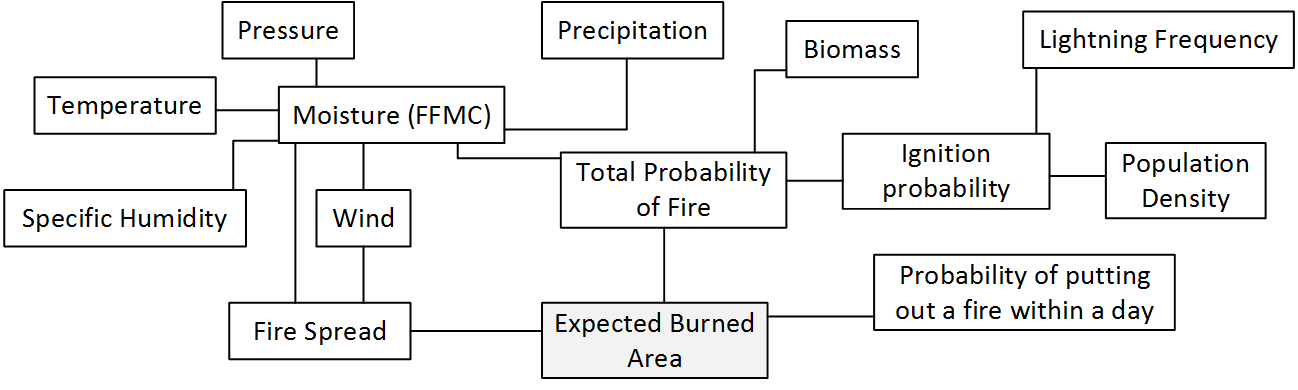
Figure 1. The WildFire cLimate impacts and Adaptation Model (FLAM) schematic – estimation of expected burned area.
The model is complex: every link in the schematic shown above represents a specific mathematical formula. These formulas have been developed by many researchers who studied how wildfire occurrence is related to climate, population, and biomass available for burning. Their results have been aggregated into mathematical relations and functions attempting to replicate real processes. The model code runs through the scheme with daily weather inputs in order to calculate the potential for fire ignition, spread, and burned areas. The model transforms spatial and intertemporal inputs into expected burned areas for 25km squares across the entirety of Europe. These squares can be summed up into geographic regions, e.g. countries, as well as burned areas can be aggregated over a given time period, e.g. 10 years.
It took days for our colleague Mirco Migliavacca to run the model during his work at the Joint Research Center of the European Commission. In fact, the scheme depicted in Figure 1 shows only a small piece of a larger picture reflecting the Community Land Model with the integrated fire module (CLM-AB), which he used. CLM-AB calculates all inputs in the indicated fire module, based on modeling processes in the global vegetation system. To speed up the running times for the case study focused on the wildfires in Europe, my colleague Nikolay Khabarov developed a standalone version of the fire model by decoupling the fire module from CLM-AB. When I joined the study, we had also found alternatives for input data, e.g. IIASA’s Global Forest Database, and implemented additional procedures in order to create our wildfire climate impacts and adaptation model (FLAM).
We used the historical data from satellite observations in order to validate modeling results. At the beginning many numerical experiments in CLM and FLAM did not give satisfactory results – there was either overestimation or underestimation of modeled burned areas compared to those reported in available datasets. One day a purely mathematical insight happened. We realized that in the fire algorithm implemented in FLAM, there is a parameter that can be factorized, mathematically speaking. This parameter, a probability of extinguishing a fire in a pixel in one day, was constant for Europe and set to 0.5. It became obvious that this parameter should vary with respect to a region. Factorization of this variable gave a possibility to avoid routine calculations, and use it for calibrating the model over a historical period. This can be done analytically by solving a corresponding polynomial equation. Analytical findings allowed us to introduce an effective calibration procedure and at the same time to estimate a firefighting efficiency on a country level. Further, using the advice of our colleagues Anatoly Shvidenko and Dmitry Schepaschenko, we have introduced adaptation options in the model, for example prescribed burnings, which firefighters use to reduce the fuel availability and, consequently, potential of a major fire.
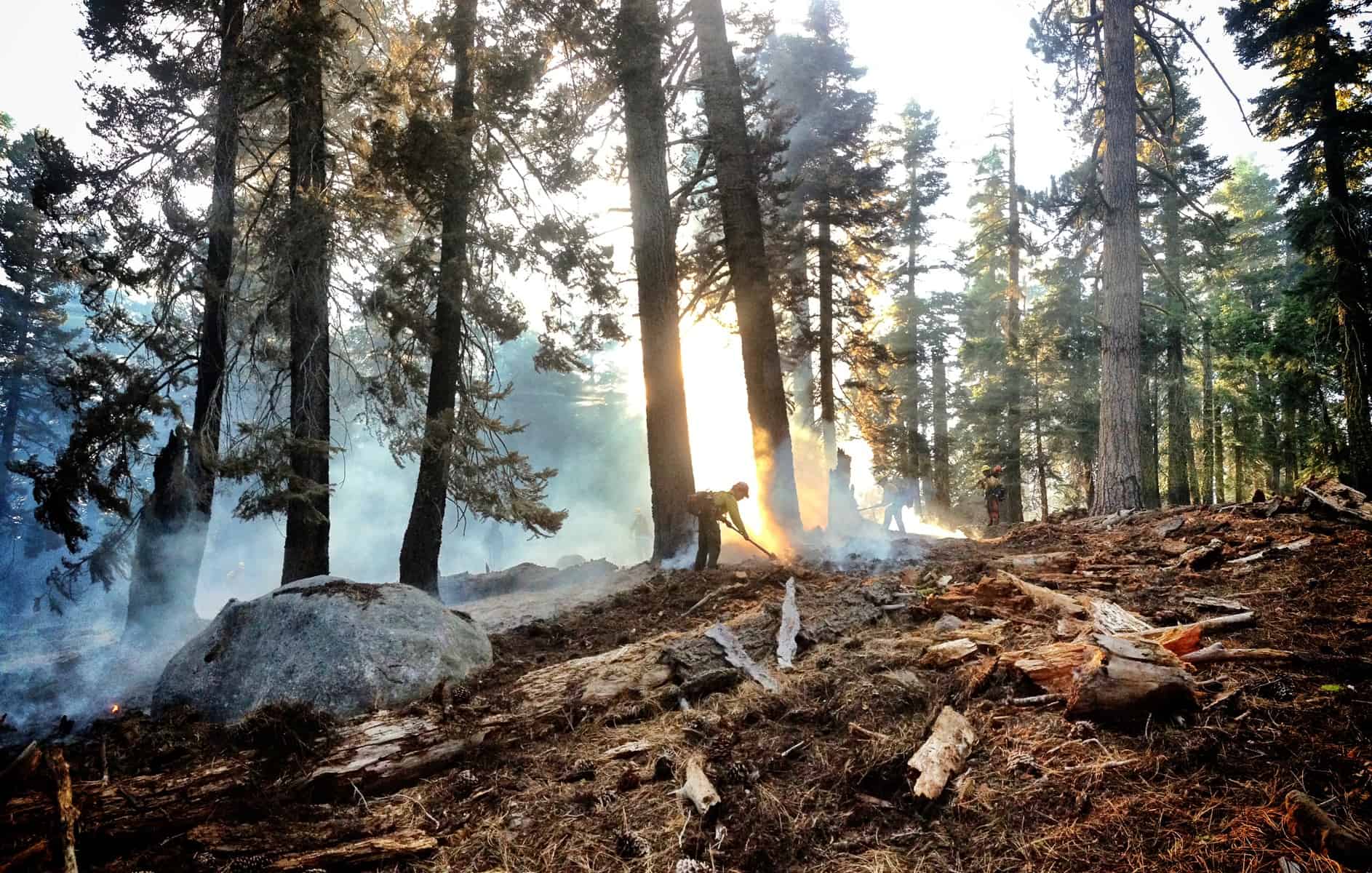
Prescribed burnings are one tool that can help prevent major wildfires. (cc) US Bureau of Land Management via Flickr
Once we had calibrated the model so that it adequately performed on the historical period (using historical climate data), we used climate scenarios to produce future projections. Currently, we are working on further improvements in modeling accuracy in annual burned areas by introducing additional regionally specific factors in the model. In the recent study published in the International Journal of Wildland Fire, we suggested improving the original model by modifying the fire probability function reflecting fuel moisture. This modification allows for a dramatic improvement of accuracy in modelled burned areas for a range of European countries.
Despite some success in modeling annual burned areas in Europe, we still have difficulties in predicting the extreme fires, in particular in some more arid and hence vulnerable regions such as Spain. However, we accept the challenge, because credible modeling results in terms of burned areas provide important information for assessing economic damages and CO2 emissions, due to climate and human activities. Our research has the potential to help society to realize these risks and undertake preventive measures. It also delivers an additional scientific value due to the fact, that fire risks must be included in forest management models.
I would like to thank all the study co-authors for their valuable contributions and efficient collaboration.
Reference
Krasovskii, A., Khabarov, N., Migliavacca, M., Kraxner, F. and Obersteiner, M. (2016) Regional aspects of modelling burned areas in Europe. International Journal of Wildland Fire. http://dx.doi.org/10.1071/WF15012
Note: This article gives the views of the interviewee, and not the position of the Nexus blog, nor of the International Institute for Applied Systems Analysis.
Mar 31, 2016 | Systems Analysis
By Melina Kourantidou, MSA 2015 participant, PhD student, Department of Environmental and Business Economics, University of Southern Denmark
In summer 2015 I participated in the Summer Academy on Economic Growth and Governance of Natural Resources in Lomonosov Moscow State University. I was inspired by the interdisciplinary lectures there as well as by recent developments in Arctic marine governance to propose a game-theoretical model for Arctic fisheries management.

While commercial fishing in the central Arctic Ocean is unlikely to become common anytime soon, fisheries management in the region includes complex decision making challenges. © Fernbach Antal – Fotolia | Dollar Photo Club
In July 2015, representatives from the five Arctic Ocean coastal states (Canada, Denmark, Norway, Russia and the United States) signed the Declaration Concerning the Prevention of Unregulated High Seas Fishing in the Central Arctic Ocean. In the declaration text it is clearly stated that “commercial fishing in the high seas portion of the central Arctic Ocean is unlikely to occur in the near future.” This approach increases the stature of the Precautionary Principle, a strategy that copes with possible risks in cases where scientific information is limited. The declaration is the first official attempt to regulate international waters of the Central Arctic Basin. While commercial fishing in the central Arctic Ocean is unlikely to become common anytime soon, fisheries management in the region includes complex decision making challenges, while it is also complicated by multiple factors, including transboundary fish stocks—those crossing boundaries of Exclusive Economic Zones (EEZs) — and straddling stocks (those typically found in the high seas adjacent to the EEZ) arising from the unsettled maritime boundary lines, thus often calling for the establishment of an effective bilateral or multilateral regime.
The contentious and divisive issue of how to handle Arctic fisheries has mostly been discussed so far in literature from a biodiversity standpoint rather than an economic one. Yet looking at the problem from an economic standpoint could help provide information that could prevent optimal use of resources and thus contribute to preventing irrational behaviors that may lead to the collapse or disruption of the ecosystem. Optimization theory provides critical insights for individual fishers or countries pursuing the most profitable strategy (higher payoffs). At the same time it can also prove useful for broader decision-making processes whereby all interested parties cooperate on the management of Central Arctic fish stocks.
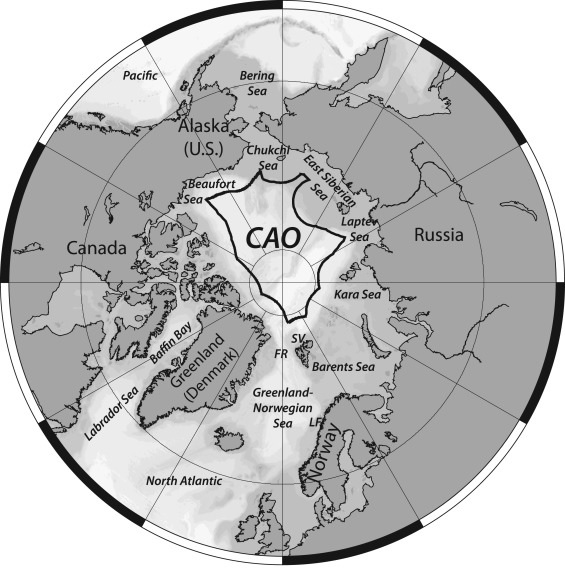
A map of the Central Arctic Ocean shows the many countries that border the ocean. © Shephard et al., 2016
Game theory can potentially contribute in a more complex setting, with two or more actors—states in our case—involved in fishing resource management and with each state being able to choose among a set of available options, with their payoff dependent on other states’ choices.
There are a number of different types of games available in the game theoretical framework. Given the existing risks and uncertainties over Arctic marine resources I would propose a differential game setting as a baseline scenario. A differential game is a mathematical formulation used for either conflict or cooperation where players’ strategies are changing over time.
A differential game seems suitable since there is an underlying assumption that the “Arctic players” involved make decisions at all time points and not necessarily in specific time intervals. Furthermore a repeated static game (players deciding simultaneously with no prior knowledge of other players’ choices), such as the Prisoner’s Dilemma, would probably not work as well here, since the payoff functions of our players would not be time-dependent.
If we are looking for a solution where all involved Arctic states agree to cooperate on the management of marine resources in the Central Arctic, we would probably need to solve it as a standard optimal control problem, through the use of maximum principle or dynamic programming. In other words the outcome of optimizing a joint welfare function should be examined regarding its efficiency, which brings together the different Arctic players in a joint effort to maximize their average individual welfare.
Another theory known as Nash equilibrium could provide useful insights with regard to incentives and motivations, especially in cases, like the one described here, where it is rather daunting to predict how different players will behave in a game. A Nash equilibrium comes down to a set of different strategies for each one of the players included in the game, indicating that neither player has incentive to change their choice (taking others’ choices as given) since their payoffs are not improving anyway.
An open-loop solution that gives Nash equilibrium would result in all players having absolutely no incentive to deviate from their specific strategic path, given the path of other players or in other words having the players at a Nash Equilibrium would make them unwilling to act differently, since they would be worse off if they did.
An Open Loop Nash Equilibrium can be examined where there is exclusive dependence on the time variable; if a player deviates from the equilibrium control, even if briefly, and decides to return to its former behavior, the equilibrium is broken. Conversely, in a feedback (or closed-loop) Nash Equilibrium which is strongly time consistent, the dependence lies on the current state of the system. Differential games can generally help towards answering whether a potential cooperative solution can be achieved through a Nash equilibrium of a non-cooperative game.
Yet another question is whether countries would prefer to cooperate instead of competing for fishing in the Central Arctic. A cooperative scenario would require a Net Present Value (sum of benefits minus sum of costs, both in present values) larger than the non-cooperative scenario, thus covering the opportunity costs arising from the cooperative case. If this condition is not satisfied we will have to accept that there will be a non-cooperative behavior up to the point that cooperation turns lucrative for all players.
Game theoretic approaches with regard to stock management have provided useful insights and directed new lines of inquiry, but the dynamically changing Arctic raises issues that call for coordinated responses, for example through the use of more robust tools such as evolutionary game theory. Given that many species are expected to expand to yet unexploited parts of Arctic waters, one major concern is the consequences of coastal states’ harvesting activities on society’s wellbeing, and the ways in which it will be made possible to leave a positive legacy for future generations.
Looking at the interplay of ecology and economic behavior is one way that scientists can begin to answer these questions. Meticulous research on strategies of defection, cooperation and enforcement can be a cornerstone for establishing and managing effective ways to protect the Arctic marine environment, taking into account the current dearth of research in existing and future biodiversity.
Read my full report on the MSA 2015 Web site (PDF)
Note: This article gives the views of the author, and not the position of the Nexus blog, nor of the International Institute for Applied Systems Analysis.
Mar 22, 2016 | Water
By Taher Kahil, IIASA Water Program
This year’s theme of the UN World Water Day is “Water and Jobs.” It focuses on how adequate water management can change workers’ lives. Indeed, water management and job creation are tightly linked. Nearly all jobs depend on water, and without reliable and safe access to water, neither small activities nor major global industries can endure. Similarly, labor is necessary to build, maintain, operate, and manage the water system, and to run water-based projects. Furthermore, job creation can be a thirsty business in both developing and developed countries. In many developing countries irrigation projects, requiring significant amounts of water, are considered the main engine for the economy and source of employment. In developed countries, less water is needed but it still requires sufficient quality for manufacturing and service projects creating job opportunities.
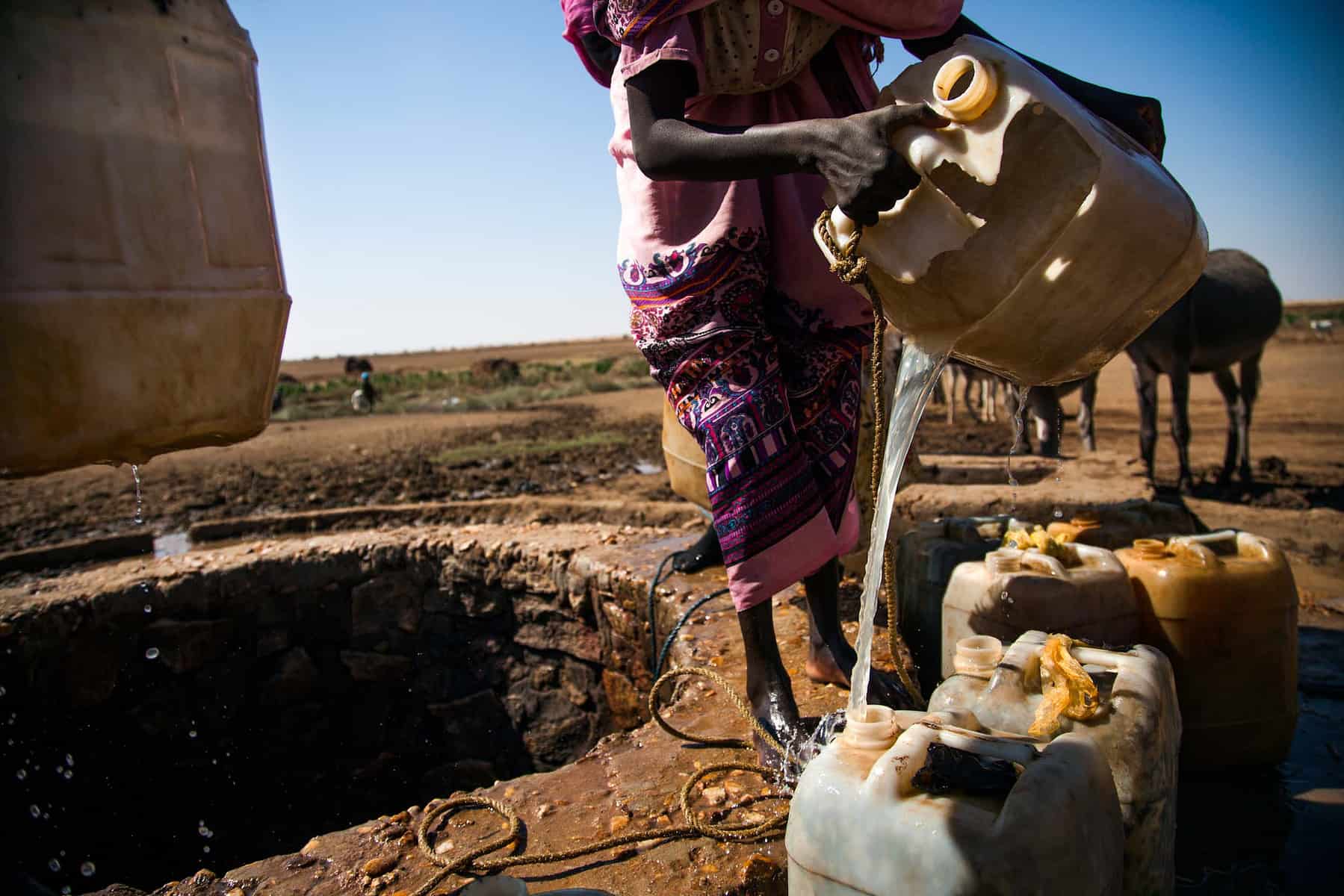
(cc) Albert Gonzlez Farran – UNAMID
Freshwater bodies such as rivers and aquifers supply the water that people and businesses rely on. But pressures on these bodies have been mounting worldwide during the last century. Population and economic growth have led to greater water use and increased pollution, with many basins around the world undergoing pervasive water shortages and quality degradation. Researchers expect the impacts of climate change to exacerbate these damages. At the same time, the global economy needs to continue growing to be able to adequately sustain the world’s rising population. However, the linkage between water and economic growth has increased global concerns about the impacts of water-related risks such as scarcity, droughts, floods, and pollution on economies’ ability to grow and create jobs. In fact, the World Economic Forum’s 2016 Global Risks Report ranks water as the highest global risk on economies over the next ten years.
When we talk about water and jobs, it is also important to mention that nearly 750 million people lack access to safe water and 2.5 billion live without adequate sanitation across the developing countries. People in these countries are constantly searching for water, which leaves limited time for productive work and skills building that yield better employment.
As we look towards the future, the link between water and employment becomes even more crucial. Water-related risks, which are expected to intensify due to climate change, will likely have adverse impacts on economy and employment, leading to major consequences beyond the water industry. For instance, researchers have linked the extreme drought in Syria between 2007 and 2010 to the uprising that began there in 2011. Several years of drought caused an extensive crop failure and massive losses of livestock, which resulted in 2 to 3 million people driven into unemployment and poverty. This situation contributed to a mass rural exodus into economically depressed cities, deepening existing instability in that country.
How do we avoid more crises like this? The complex and evolving water challenges of the future can only be addressed by investing in sustainable and integrated water management solutions such as those being identified and tested by the Water Futures and Solutions (WFaS) initiative at IIASA . WFaS is a cross-sector, collaborative, global initiative aimed at developing plausible scenarios of future water supply and demand, and identifying robust and no-regret portfolio of solutions for balancing water systems. The initiative brings together researchers and decision makers from governmental and non-governmental organizations as well as from the private industry and from a wide variety of sectors influencing water management. The potential water solutions include improved water policies and governance structures and the adoption of more innovative and environmentally friendly water technologies. Sustainable water resource management does not only address water-related risks, but it can also create green job opportunities for local and disadvantaged communities, for example in efficiency improvement works, in the production of alternative water sources, and in aquatic ecosystem restoration projects.

World Water Day © UN-Water
Note: This article gives the views of the author, and not the position of the Nexus blog, nor of the International Institute for Applied Systems Analysis.
Mar 18, 2016 | Alumni, Systems Analysis, Young Scientists
By Célian Colon, PhD student at the Ecole Polytechnique in France & IIASA Mikhalevich award winner
How can we best tackle risks in our complex and interconnected economies? With globalization and information technologies, people and processes are increasingly interdependent. Great ideas and innovations can spread like wildfire. However, so can turbulence and crises. The propagation of risks is a key concern for policymakers and business leaders. Take the example of production disruption: with global supply chains, local disasters or man-made accidents can propagate from one place to another, and generate significant impact. How can this be prevented?

Risk propagation is like a domino effect. Credit: Martin Fisch (cc) via Flickr
As part of my PhD research, I met professionals on the ground and realized that supply risk propagation is a particularly tricky issue, since most parts of the chains are out of their control. Supply chains can be very long, and change with time. It is difficult to keep track of who is working with whom, and who is exposed to which hazard. How then can individual decisions mitigate systemic risks? This question directly connects to the deep nature of systemic problems: everyone is in the same boat, shaping it and interacting with each other, but no one is individually able to steer it. Surprising phenomena can emerge from such interactions, wonderfully illustrated by bird flocking and fish schooling.
As an applied mathematician thrilled by such complexities, I was enthusiastic to work on this question. I built a model where firms produce and interact through supply chain relationships. Pen and paper analyses helped me understand how a few firms could optimally react to disruptions. But to study the behavior of truly complex chains, I needed the calculation power of computers. I programmed networks involving a large number of firms, and I analyzed how localized failures spread throughout these networks, and generate aggregate losses. Given the supply strategy adopted by each firm, how could systemic risk be mitigated?
With my collaborators at IIASA, Åke Brännström, Elena Rovenskaya, and Ulf Dieckmann, we have highlighted the key role of coordination in managing risks. Each individual firm affects how risks propagate along the chain. If they all solely focus on maximizing their own profit, significant amounts of risk remain. But if they cooperate, and take into account the impact of their decisions on the risk profile of their trade partners, risk can be effectively mitigated. Reducing systemic risks can thus be seen as a common good: costs are heterogeneously borne by firms while benefits are shared. Interestingly, even in long supply chains, most systemic risks can be mitigated if firms only cooperate with only one or two partners. By facilitating coordination along critical supply chains, policy-makers can therefore contribute to the reduction of risk propagation.
Colon’s model analyzes how firms produce and interact through supply chain relationships. Credit: Jan Buchholtz (cc) via Flickr
Drawing robust conclusions from such models is a real challenge. On this matter, I benefited from the experience of my IIASA supervisors. Their scientific intuitions greatly helped me focusing on the most fertile ground. It was particularly exciting to borrow techniques from evolutionary ecology and apply them to an economic context. Conceptually, how economic agents co-adapt and influence each other shares many similarities with the co-evolution of individuals in an ecological environment. To address such complex issues, I strongly believe in the plurality of approaches: by illuminating a problem from different angles, we can hope to see it more clearly!
Note: This article gives the views of the author, and not the position of the Nexus blog, nor of the International Institute for Applied Systems Analysis.
Mar 15, 2016 | Alumni, Environment, Young Scientists
By Carlijn Hendriks, Netherlands Organization for Applied Scientific Research (TNO) & IIASA Peccei award winner
Last summer, I participated in IIASA’s Young Scientist Summer Program, working with the Mitigation of Air Pollution and Greenhouse Gases and Ecosystems Services and Management programs. My research focused on what impacts the EU climate and air quality policy could have on ground level ozone around the middle of this century. While clean air policies should help reduce the pollution that can lead to ozone formation, we found that that climate change and energy policies will still increase ozone concentrations and damage by mid-century, unless stricter air pollution measures are implemented.

Ozone forms through reactions of various pollutants and chemicals in the atmosphere – a process that speeds up at higher temperatures. © Damián Bakarcic via Flickr
Ozone at ground level is an air pollutant, causing health and ecosystem problems. It is also an important component of summer smog. Ozone is not emitted into the atmosphere directly, but is produced when volatile organic carbons are oxidized in the presence of nitrogen oxides and light. Nitrogen oxides are released into the atmosphere mainly as a result of combustion processes (like car engines and industry), while non-methane volatile organic carbons (NMVOCs) come in large part from vegetation, especially broad-leaf trees and some fast-growing crops.
Part of the EU energy policy is to stimulate the use of sustainable biomass as an energy source. This could lead to expansion of commercial bioenergy crop production in plantations and an increasing use of forests. While this may help to reduce greenhouse gas emissions, it will also increase NMVOC emissions. At the same time, EU air quality policies aim to reduce emissions of air pollutants such as nitrogen oxides and man-made NMVOC. Because some steps in the ground level ozone formation process are driven by absorption of light and/or proceed faster with higher temperatures, climate change could lead to higher ground level ozone concentrations in the future.
The separate effects of these three trends on ground level ozone have been studied before, but the question remains: what will be the combined impact of a) an increase of bioenergy plantations, b) EU’s air quality policy and c) climate change on health and ecosystem damage from ground level ozone? And which of the trends is the most important? To answer these questions, I used three models to study two energy and air quality scenarios for Europe under current and possible future climate conditions.
Two energy scenarios calculated by the Price-Induced Market Equilibrium System (PRIMES) model form the basis of this work. We used a reference scenario and one in which Europe reaches 80% CO2 emission reduction in 2050. These energy scenarios were used as a basis to calculate air pollutant emissions with IIASA’s Greenhouse Gas and Air Pollution Interactions and Synergies (GAINS) model. Then we put the same scenarios into IIASA’s Global Biosphere Model GLOBIOM to obtain the change in land cover because of increasing bioenergy demand. I combined these datasets in chemistry transport model LOTOS-EUROS (the model of choice at my home institute, TNO) to calculate the impact on ground level ozone concentrations across Europe. To simulate ‘future climate’ we used the year 2003, in which Europe had a very warm summer, with temperatures 2-5 °C higher than normal.
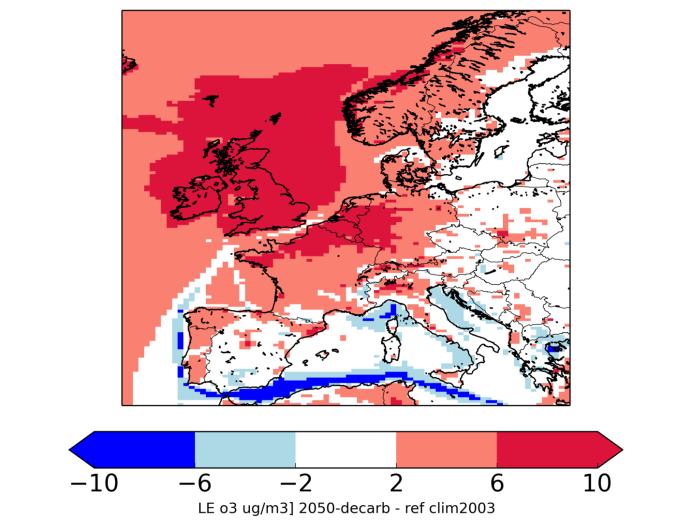
Difference in average ozone concentration (in µg/m3) between the current situation and the 80% CO2 reduction scenario in 2050 under future climate change conditions for the period April-September. Negative numbers mean a decrease in ozone levels.
We found that especially for the CO2-reduction scenario, the increase in bioenergy production could cause a slight increase in ozone damage. However, the impact of reduced emissions because of more stringent air quality policies far outweighs this effect, leading to a net reduction of ozone damage. The third effect, more efficient ozone formation in a warming climate, is so strong that in 2050 ozone damage to human health could be worse than today, especially for northwestern Europe. Stringent air quality policies close to a maximum feasible reduction scenario would be needed to make sure that health and ecosystem damage towards the middle of the century is smaller than it is today.
Note: This article gives the views of the author, and not the position of the Nexus blog, nor of the International Institute for Applied Systems Analysis.

You must be logged in to post a comment.