Sep 23, 2019 | Ecosystems, Environment, Sustainable Development
By Frank Sperling, Senior Project Manager (FABLE) in the IIASA Ecosystems Services and Management Program
Food and land use systems play a critical role in managing climate risks and bringing the world onto a sustainable development trajectory.
The UN Secretary General’s Climate Action Summit in New York on 23 September seeks to catalyze further momentum for climate change mitigation and adaptation. The transformation of the food and land use system will play a critical role in managing climate risks and bringing the world onto a sustainable development trajectory.
Today’s food and land use systems are confronted with a great variety of challenges. This includes delivering on universal food security and better diets by 2030. Over the last decades, great strides have been made towards achieving universal food security, but this progress recently grinded to a halt. The number of people suffering from chronic hunger has been rising again from below 800 million in 2015 to over 820 million people today [1]. Food security is however not only about a sufficient supply of calories per person. It is also about improving diets, addressing the worldwide increase in the prevalence of obesity, and how we use and value environmental goods and services.
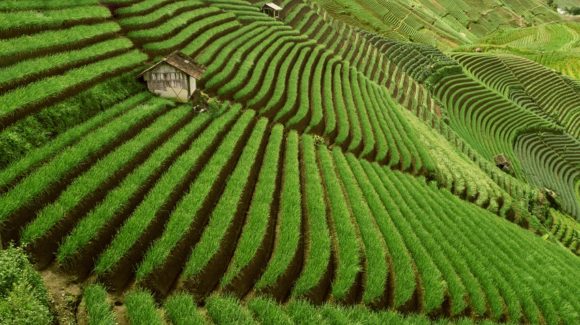
© Paulus Rusyanto | Dreamstime.com
Agriculture, forestry and other land use currently account for around 24% of greenhouse gas emissions caused by human activities [2]. Land use changes are also a major driver behind the worldwide loss of biodiversity [3]. Clearly, in light of population growth and the increasingly visible fingerprints of a human-induced global climate crisis and other environmental changes, business as usual is not an option.
Systems thinking is key in shifting towards more sustainable practices. A new report released by the Food and Land-Use System (FOLU) Coalition showcases that there is much to be gained. There are massive hidden costs in our current food and land use systems. The report outlines ten critical transitions, which can substantially reduce these hidden costs, thereby generating an economic prize, while improving human and planetary health.
The International Institute for Applied Systems Analysis (IIASA) contributed to the analytics underpinning the report [4], applying the Global Biosphere Management Model (GLOBIOM) [5]. A “better futures” scenario, which seeks to collectively address development and environmental objectives, was compared to a “current trends” scenario, which is basically a continuation of a business-as-usual scenario. The assessment illustrates that an integrated approach that acknowledges the interactions in the food and land use space, can help identify synergies and manage trade-offs across sectors. For example, shifting towards healthy diets not only improves human health, but also reduces pressure on land, thereby helping to improve the solution space for addressing climate change and halting biodiversity loss.
While understanding that the global picture is important, practical solutions require engagement with national and subnational governments. The challenge is to identify development pathways that address the development needs and aspirations of countries within global sustainability contexts. As part of FOLU, the Food, Agriculture, Biodiversity, Land and Energy (FABLE) Consortium was initiated to do exactly this. The FABLE Secretariat, jointly hosted by the Sustainable Development Solutions Network (SDSN) and IIASA, is working with knowledge institutions from developed and developing countries, to explore the interactions between national and global level objectives and their implications for pathways towards sustainable food and land use systems. Preliminary results from inter-active scenario and development planning exercises, so-called Scenathons, were recently presented in the FABLE 2019 report.
These initiatives highlight that acknowledging and embracing complexity can help reconcile development and environmental interests. This also entails rethinking how we relate to and manage nature’s services and their role in providing the foundation for the welfare of current and future generations. This is underscored by the prominent role nature-based solutions are given at the UN Secretary General’s Climate Action Summit. We need to move from silo-based, sector specific, single objective approaches to a focus on multiple objective solutions. In the land use space, this means embedding agriculture in the broader land use context, which accounts for and values environmental services, and linking to the food system where dietary choices shape human health and the demand for land.
Doing so will help bridge the international policy objectives of the UN Framework Convention on Climate Change (UNFCCC), the UN Convention on Combating Desertification (UNCCD), the Convention on Biological Diversity (CBD), and the Sustainable Development Goals (SDGs) enshrined in ‘The 2030 Agenda for Sustainable Development’. This represents an opportunity to create a new value proposition for agriculture and other land use activities where environmental stewardship is rewarded.
References
[1] Food and Agriculture Organization (FAO) et al. (2019). The State of Food Security and Nutrition in the World 2019. Safeguarding against economic slowdowns and downturns. Rome, FAO.
[2] Intergovernmental Panel on Climate Change (IPCC) (2019). Climate Change and Land. IPCC Special Report on climate change, desertification, land degradation, sustainable land management, food security, and greenhouse gas fluxes in terrestrial ecosystems. Intergovernmental Panel on Climate Change (IPCC).
[3] Intergovernmental Science-Policy Platform on Biodiversity and Ecosystem Services (IPBES) (2018). The IPBES assessment report on land degradation and restoration. Montanarella, L., Scholes, R., and Brainich, A. (eds.). Secretariat of the Intergovernmental Science-Policy Platform on Biodiversity and Ecosystem Services, Bonn, Germany. 744 pages.
[4] Deppermann, A. et al. 2019. Towards sustainable food and land-use systems: Insights from integrated scenarios of the Global Biosphere Management Model (GLOBIOM). Supplemental Paper to The 2019 Global Consultation Report of the Food and Land Use Coalition Growing Better: Ten Critical Transitions to Transform Food and Land Use. Laxenburg, IIASA.
[5] Havlik P, Valin H, Herrero M, Obersteiner M, Schmid E, Rufino MC, Mosnier A, Thornton PK, et al. (2014). Climate change mitigation through livestock system transitions. Proceedings of the National Academy of Sciences 111 (10): 3709-3714. DOI: 1073/pnas.1308044111 [pure.iiasa.ac.at/10970].
Note: This article gives the views of the author, and not the position of the Nexus blog, nor of the International Institute for Applied Systems Analysis.
Sep 4, 2019 | Austria, Environment, Risk and resilience, Women in Science
By Marlene Palka, research assistant in the IIASA Risk and Resilience Program
Marlene Palka discusses the work done by the IIASA FARM project, which has been investigating drought risk management in Austria for the past three years.
Future climate projections forecast an increase in both the frequency and severity of droughts, with the agricultural sector in particular being vulnerable to such extreme weather events. In contrast to most other climatic extremes, droughts can hit larger regions and often for extended periods – up to several months or even years. Like many other countries, Austria has been and is expected to be increasingly affected, making it necessary to devise a management strategy to mitigate drought damages and tackle related problems. The FARM project – a three year project financed by the Austrian Climate Research Program and run by the IIASA Risk and Resilience and Ecosystems Services and Management programs – kicked off in 2017 and has been investigating agricultural drought risk management both in a broad European context, and more specifically in Austria.
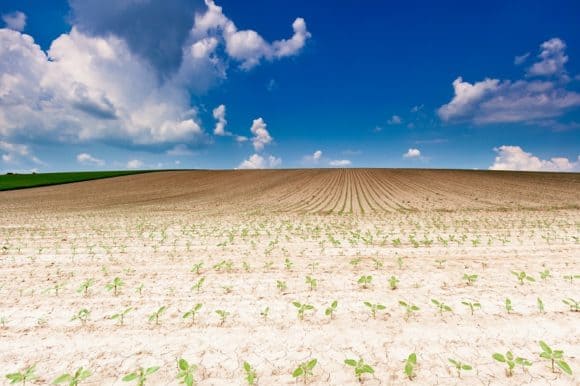
Young sunflowers on dry field © Werner Münzker | Dreamstime.com
Austria represents a good case study for agricultural drought risk management. Despite the agricultural sector’s rather small contribution to the country’s economic performance, it still has value and represents an important part of the country’s historical and cultural tradition. Around 80% of Austria’s total land area is used for agricultural and forestry activities. Equally important is its contribution to the preservation of landscapes, which is invaluable for many other sectors including tourism.
Globally, agricultural insurance is a widely used risk management instrument that is often heavily subsidized. Apart from the fact that the concept is increasingly being supported by European policymakers – the intention being that insurance should play a more prominent role in managing agricultural production risk – more and more voices from other sectors are calling for holistic management approaches in agriculture with the overall aim of increasing the resilience of the system.
There is a well-established mutual agricultural insurance company in Austria, which has high insurance penetration rates of up to 75% for arable land, and comparably high subsidies of up to 55% of insurance premiums. It is also encouraging to note that recent policy decisions support the timeliness of drought risk: in 2013, the Austrian government paid EUR 36 million in drought compensation to grassland farmers and in 2016, premium subsidies of 50% were expanded to other insurance products, including drought, while ad-hoc compensation due to drought was officially eliminated. In 2018, the subsidy rate was further increased to 55%. In light of these prospects, we investigated the management option space of the Austrian agricultural sector as part of the FARM project.
The 2018 Organisation for Economic Co-operation and Development (OECD) report on monitoring and evaluation of agricultural policies claims that efficient (drought) risk management in agriculture must consider the interactions and trade-offs between different on-farm measures, activities of the private sector, and government policies. The report further argues that holistic approaches on all management levels will be vital to the success of any agricultural management strategy.
In the course of our work, we found that agricultural drought risk management in Austria lacks decision making across levels. Although there is a range of drought management measures available at different levels, cooperation that includes farms, public and private businesses, and policy institutions is often missing. In addition, measures to primarily and exclusively deal with drought, such as insurance and irrigation, are not only limited, but (as we found) are also less frequently implemented.
As far as insurance is concerned, products are still being developed, and penetration rates are currently low. Drought risk is also highly uncertain, making it almost impossible to offer extensive drought insurance products. Irrigation is perceived as the most obvious drought management measure among non-agronomists. Simply increasing irrigation to deal with the consequences of drought could however lead to increased water demand at times when water is already in short supply, while also incurring tremendous financial and labor costs and additional stress to farmers. With that said, a large number of agricultural practices may also holistically prevent, cope with, or mitigate droughts. For example, reduced soil management practices are low in operating costs and prevent surface run-off, while simultaneously maintaining a soil structure that facilitates increased water holding capacity. Market futures might also stabilize farm income and therefore allow for future planning such as the purchase of irrigation equipment.
A workshop we held with experts from the Austrian agricultural sector further highlighted this gap. Thinking (not even yet acting) beyond the personal field of action was rare. The results of a survey we conducted showed that farmers were experiencing feelings of helplessness regarding their ability to manage the negative effects of droughts and other climatic extremes despite the implementation of a broad range of management solutions. One way to explain this could be a lack of cooperation across different management levels, meaning that existing efforts – although elaborate and well-proven – potentially reach their limit of effectiveness sooner rather than later.
Due to the more complex effects of any indirect/holistic drought management measure, we need tailored policies that take potential interdependencies and trade-offs into account. With evidence from the FARM project, my colleagues and I would like to emphasize an integrated risk management approach, not only at farm level but also in all relevant agencies of the agricultural sector in an economy. This will help to secure future production and minimize the need for additional public financial resources. Our findings not only contribute to ongoing high-level discussions, but also underpin the resulting claim for more holistic (drought) risk management with bottom-up data from our stakeholder work.
Note: This article gives the views of the author, and not the position of the Nexus blog, nor of the International Institute for Applied Systems Analysis.
Aug 8, 2019 | Data and Methods, Economics, IIASA Network, Russia
By Serguei Kaniovski, Economist with the Austrian Institute of Economic Research (WIFO)
Serguei Kaniovski and colleagues from IIASA and the Steklov Mathematical Institute of the Russian Academy of Sciences revisited a classic growth model in resource economics using recent advances in optimal control theory.
The late 1960s and early 1970s gave rise to Doomsday Models that predicted a collapse of Western Civilization under the pressure of over-population and environmental pollution. The very influential 1972 Club of Rome’s report on the “Limits to Growth” painted a gloomy picture, sparking an ongoing debate. One question was whether the scarcity of natural resources like fossil fuels would limit growth and cause a substantial decline in people’s standard of living.
The Doomsday reasoning was met with doubt by the economists of that time, leading the future Nobel Prize laureate and growth theorist, Robert Solow, to state that “the various Doomsday Models are worthless as science and as guides to public policy“. In a combined effort, economists developed a class of growth models with resource constraints. The conclusions they reached using the Dasgupta-Heal-Solow-Stiglitz (DHSS) modeling framework offered a more optimistic outlook.

© Kantver | Dreamstime.com
Economic applications have been well ahead of the mathematical theory used for identifying optimal economic policies, leaving some model solutions unexposed and some technical issues unsettled. The theory that allows us to identify optimal policies and describe the model dynamics was originally developed in the 1950s for engineering applications but has since become the main tool for analyzing economic growth models. These models however contain many features that are not standard to optimal control theory – a subfield of mathematics that deals with the control of continuously operating dynamic systems – which makes a fully rigorous analysis difficult. The key theoretical challenges are infinite planning horizons and nonstandard control constraints.
In our latest paper we offer a complete and rigorous analysis of the welfare-maximizing investment and depletion policies in the DHSS model with capital depreciation and arbitrary (decreasing, constant, and increasing) returns to scale. The investment policy specifies the portion of the final output to be invested in capital. A depletion policy says how fast a finite stock of exhaustible resources should be used. We prove the existence of a solution and characterize the behavior of solutions for all combinations of the model parameters using necessary rather than sufficient (Arrow’s theorem) optimality conditions.
In the main case of decreasing, constant, or weakly increasing returns to scale, the optimal investment and depletion policies converge to a constant share of output invested in capital and a constant rate of depletion of the natural resource. The optimal investment ratio decreases with the longevity of capital and impatience. The relationship between the optimal investment ratio and the output elasticity of produced capital is ambiguous. The performed analytical analysis identifies those relationships among model parameters that are critical to the optimal dynamics. In this, it differs from more conventional scenario-based approaches. From a practical point of view, application of the model to real data could be helpful for evaluating actual depletion and investment policies.
Strongly increasing returns to scale make it optimal to deplete the resource without investing in produced capital. Whether a zero-investment strategy is followed from the outset, from an instant of time, or asymptotically will depend on the sizes of the capital and resource stocks. In some special cases of increasing returns, welfare-maximizing investment and extraction policies may not exist under strong scale effects in resource use. This occurs when an initial stock of capital is small relative to the initial resource stock. It implies that it would have been impossible to formulate a welfare-maximizing policy in the early history of humanity, when produced capital was scarce and resources were abundant.
Reference
Aseev S, Besov K, & Kaniovski S (2019). Optimal Policies in the Dasgupta—Heal—Solow—Stiglitz Model under Nonconstant Returns to Scale. Proceedings of the Steklov Institute of Mathematics 304 (1): 74-109. [pure.iiasa.ac.at/15946]
Note: This article gives the views of the author, and not the position of the Nexus blog, nor of the International Institute for Applied Systems Analysis.
Jul 31, 2019 | Alumni, IIASA Network, India, Women in Science
By Nandita Saikia, Assistant Professor of Population Studies at Jawaharlal Nehru University, New Delhi, and former postdoctoral researcher at IIASA
IIASA alumna Nandita Saikia, looks back on the two years that she spent living in Austria while working as a postdoctoral researcher in the World Population Program.
The submission of my PhD thesis, marriage, taking up a university position, and becoming a mother, all happened rather quickly for me. By the time I realized that I wanted to experience working outside of my own country, a good five years had flown by from the day that I received my PhD. For a female academic, who is trying to balance family and work, a decision to move abroad was never going to be easy. It needed a lot of planning, not only in terms of the research topic that I wanted to pursue, but also in terms of organizing things in a way that would lead to the least disruption for the research students I was supervising and of course, my family.

Nandiita Saikia | © Nandita Saikia
With little hope and many conditions, I searched for postdoctoral positions on the websites of various institutes. I was amazed when I found an advertisement for a postdoc position at IIASA, which mentioned that it had extended application deadlines for another 18 months – specifically to accommodate female candidates on maternity leave. This gender sensitive rule made my application possible, and ultimately gave me a rich experience and memories that I will cherish forever.
Looking back at the past two years at IIASA, a long list of reasons why this was such an amazing time of my and my family’s lives, comes to mind. The institute is housed in a beautiful two hundred and seventy five year old castle in Laxenburg just outside of Vienna. As an IIASA employee, my family and I could access the green imperial park once meant for Austria’s iconic empress Sissi, at any time. Apart from massive, century old trees that may have shaded Sissi on her own visits, the park contains a spring, a waterfall, and a lake with numerous monuments to Austrian royal families that frequented it over the centuries. The lush green trees, the musical sound of the spring, together with chirping wild ducks and swans, the Laxenburg castles, the tall yellow church under the deep blue sky – all constantly stimulated the spirit of a nature lover like me.
In terms of the more practical aspects of working at IIASA, staff from administration were always available to address all our personal and professional issues efficiently and warmly. We were supported with everything from extending our visas, finding a suitable place to live, and communicating with my son’s school in German, to locating the right physician. The IIASA Communication Department also helped me to convey the meaning of my research in “non-technical language” to a wider audience, for whom the findings are ultimately meant.
The soul of IIASA is truly international and inter-disciplinary. From North to South, East to West, I met colleagues from all parts of the world. The overall research environment is conducive to doing quality research. Our program director, Wolfgang Lutz, extended all possible support for me to stay at IIASA for two years. I however still had enough freedom to manage my responsibilities in terms of the supervision of my PhD students back in India.
IIASA always encourages its employees to be active and fit and supports them to do this in numerous ways. There are a number of clubs and activities on offer, including yoga, a music club, a running club, a swimming club, cycling, German lessons, aerobics, and a tennis club. The institute also maintains a gym for staff members. Some of my colleagues even kept workout clothes in the office for when they could manage to participate in some of these activities amidst their busy schedules. Although it was of course not possible to be in all the clubs, you had a choice, which contributed to the overall “feel good” environment. Being an international research organization, IIASA celebrates the different cultures of its staff members by organizing themed social gatherings like Asia Day, Latin American Day, Canada Day, and Mediterranean Day, to name a few, during which staff have the chance to taste authentic homemade cuisines and see cultural music or dance performances by colleagues. My heart knew no bounds when I got a chance to perform a Bollywood number and an Indian folk dance with my international colleagues!
I also developed an affinity with the IIASA Women in Science Club, which often organized “Meet, Greet and Eat” sessions during which we had the opportunity to interact with established women scientists in an informal way. It was indeed an eye opener to learn about how they overcame common challenges either in their early or later careers.
During our stay, we fully experienced life in Vienna, which has repeatedly been ranked as the best city in the world to live in. The centrality of Vienna also helped us to explore many neighboring countries. In our second year, we lived in Laxenburg where we felt very much at home. We loved how smoothly the little town runs while offering everything needed for a high quality life when raising young children.
Our time at IIASA was extremely productive, but we still felt as if we were in Vienna for a two-year long vacation! If someone asks me whether they should consider IIASA for a post doc or the Young Scientists Summer Program, my answer will be: “Yes, don’t even think twice!”
Nandita Saikia was a postdoctoral researcher at IIASA from 2017 to 2019. More information available at www.nanditasaikia.com.
Note: This article gives the views of the author, and not the position of the Nexus blog, nor of the International Institute for Applied Systems Analysis.
Jul 22, 2019 | Air Pollution, China, India, Women in Science
By Shonali Pachauri, Senior Researcher in the IIASA Energy Program
Shonali Pachauri explains why data, indicators, and monitoring at finer scales are important to ensure that everyone benefits from policies and efforts aimed at achieving national and global development goals.
A world where no one is left behind by 2030, is the promise nations have made by adopting the United Nations’ Agenda for Sustainable Development. But how does one ensure that no one is left behind? It requires designing inclusive policies and programs that target the most vulnerable and marginalized regions and populations. Sound data and indicators underpin our current understanding of the status of development and are an important part of periodic reviews to determine the direction and pace of progress towards achieving agreed goals. These form the basis of informed decisions and evidence-based policymaking. While an exhaustive list of indicators has been prescribed to monitor progress towards the globally agreed goals, these have been largely defined at a national scale. These goals rely overwhelmingly on simple averages and aggregates that mask underlying variations and distributions.
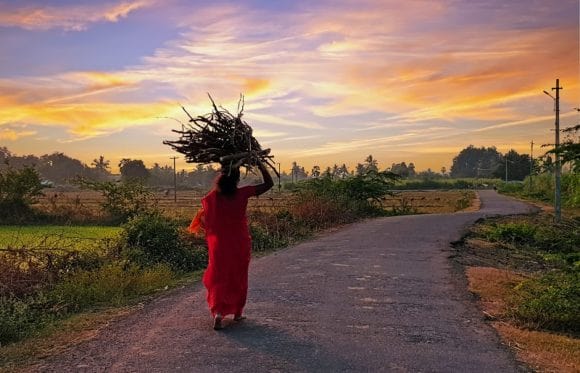
Indian woman walking home with fire wood © Devy | Dreamstime.com
Recent work I’ve been involved in makes the pitfalls of working with averages and aggregates alone abundantly clear. They can obscure uneven patterns of changes and impacts across regions and groups within the same nation. The overall conclusion of this work is that, even if the globally agreed goals are met by 2030, this is no guarantee that everyone will benefit from their achievement.
A recent Nature Energy – News & Views piece I was invited to write reports on a study that assessed the impacts of China’s recent coal to electricity program across villages in the Beijing municipal region. The program subsidizes electricity and electric heat pumps and has been rolling out a ban on coal use for household heating. The study found that the benefits of the program to home comfort, air quality, and wellbeing varied significantly across rich and poor districts. In poor districts, the study found that the ban was not effective as poor households were still unable to afford the more expensive electric heating and were continuing to rely on coal. Studies such as this one that help us understand how and why benefits of a program may vary across regions or population groups can aid policy- and decision makers in formulating more fair and inclusive policies.
In other recent research carried out with colleagues in the IIASA Energy Program, the Future Energy Program at the Fondazione Eni Enrico Mattei (FEEM) in Italy, and the Institute for Integrated Energy Systems at the University of Victoria, Canada, we developed a detailed satellite nightlights derived dataset to track progress with providing electricity access at a sub-national level in Africa. We found that while progress with electrification between 2014 and 2018 varied across nations, at a sub-national provincial level, disparities were even more pronounced. Even more surprising, while electricity access is generally higher and easier to extend in urban areas, we found urban pockets where access has stagnated or even worsened. This correlated with areas where in-migration of populations had been high. These areas likely include urban slums or peri-urban regions where expanding electricity access continues to be challenging. Furthermore, our analysis shows that even where access has been extended, there are regions where electricity use remains extremely low, which means that people are not really benefitting from the services electricity can provide.
In a final example, of research carried out with collaborators from the University of British Columbia and the Stockholm Environment Institute, we evaluated a large nationwide program to promote cooking with liquefied petroleum gas (LPG) in Indian households to induce a shift away from the use of polluting solid fuels. While this program specifically targets poor and deprived, largely rural households, our assessment found that although there has been an unprecedented increase in enrollments of new LPG customers under the program, this has not been matched by an equal increase in LPG sales. In fact, we found consumption of LPG by program beneficiaries was about half that of the average rural consumer. Moreover, when we examined how purchases were distributed across all new consumers, we found that about 35% of program beneficiaries purchased no refills during the first year and only 7% bought enough to substitute half or more of their total cooking energy needs with LPG. Clearly, the health and welfare benefits of a transition to cleaner cooking are still to be realized for most people covered by this program.
Analyses, such as the examples I’ve discussed here, clearly highlight that we need data, indicators, and monitoring at much finer scales to really assess if all regions and populations are benefitting from policies and efforts to achieve national and globally agreed development goals. Relying on aggregates and averages alone may paint a picture that hides more than it reveals. Thus, without such finer-scale analysis and an understanding of the distributional impacts of policies and programs, we may end up worsening inequalities and leaving many behind.
References:
[1] Pachauri S (2019). Varying impacts of China’s coal ban. Nature Energy 4: 356-357. [pure.iiasa.ac.at/15905]
[2] Falchetta G, Pachauri S, Parkinson S, & Byers E (2019). A high-resolution gridded dataset to assess electrification in sub-Saharan Africa. Scientific Data 6 (1): art. 110. [pure.iiasa.ac.at/15982]
[3] Kar A, Pachauri S, Bailis R, & Zerriffi H (2019). Using sales data to assess cooking gas adoption and the impact of India’s Ujjwala program in rural Karnataka. Nature Energy [pure.iiasa.ac.at/15994]
Note: This article gives the views of the author, and not the position of the Nexus blog, nor of the International Institute for Applied Systems Analysis.

You must be logged in to post a comment.