Jul 11, 2019 | IIASA Network, USA, Women in Science
Rachel Potter, IIASA communications officer, interviews retired NASA Astronaut and Principal of AstroPlanetview LLC, Sandra H Magnus on insights about our world she has gained from her time living on the International Space Station.

©NASA Photo / Houston Chronicle, Smiley N. Pool
Q: Can you tell us a bit about your specific areas of research as a scientist?
A: My PhD was on a new material system being investigated for thermionic cathodes, which are used as electron sources for satellite communication systems. My research was an effort to look at the system methodically and from a science viewpoint to understand physically what was going on in order to inform the design of more robust devices. If you can operate the cathode at a lower temperature, that means a longer life for it, which is a good thing for satellites! Post-PhD I was however admitted to the Astronaut Office and that, quite frankly, pretty much put an end to my career as a researcher, or at least as a principal investigator (PI). The work I did on the International Space Station was at the direction of other PIs who had proposed, and been granted, experiments in space.
Q: Your career has spanned a wide range of settings from the NASA Astronaut Corps to your current role as Principal of AstroPlanetview LLC – what is the common thread or focus that has run through your work?
A: Following my curiosity and looking for challenges. I always want to be challenged and feel that I am learning new things. If I feel that I have become stagnant, I start looking for how to change that situation.
Q: What have been the personal highlights of your career?
A: Clearly flying in space! I feel very fortunate, however, to have been in the Astronaut Office during the era of the space station. I enjoyed very much working in a collaborative, multicultural, international environment where we had a big team of people from around the world working on something that benefits the planet.
Q: What are the greatest lessons you have learned from seeing the Earth from space?
A: I was so excited to FINALLY be going into space after hoping to do just that for over 20 years. The Earth is our spaceship – a closed system in which everything on the planet affects, and is connected to everything else on the planet. An action somewhere means a reaction somewhere else, even if it is not always first order (and usually it is not). Also, the planet looks incredibly beautiful and very fragile – we have to take care of it!

© NASA STS-126 Shuttle Mission full crew photo (5 March 2008), Sandra H Magnus far left.
Q: What do you see as key to solving the complex problems the Earth faces in terms of sustainability?
A: Having the will to do it as a community. If you have the will, commitment and a clear, agreed-to, articulation of the common goal, we can pretty much accomplish anything we want to.
Q: How do you see IIASA being able to build bridges between countries across political divides?
A: Well, when we want to solve problems, it really is all about relationships at the end of the day. It is easy to demonize or keep your distance from abstract ideas or the ubiquitous “They” but when you meet people, understand them as individuals and the context of their backgrounds that lead them to have different views and approaches to life and solving problems, it is much easier to visualize how you can work together to tackle issues. The relationships are the bridges.
Q: What advice would you give to young women researchers wanting to make it into Aeronautics?
A: To young women (and young men, too, really) I would say, “If you have a dream to go do something, then you owe it to yourself to go for it and try it!” Never let anyone else define who you are or tell you what you can or cannot do – believe in yourself and give it a try. Maybe you will make it, maybe you will not, but it will be on your own terms, with you pushing yourself and regardless of the outcome you will have a deeper understanding of yourself, and that is always a good thing.
Sandra H Magnus visited IIASA on 21 June 2019 in cooperation with the US Embassy Vienna, to give a lecture entitled “Perspectives from Space” to IIASA staff and this year’s participants of the IIASA Young Scientists Summer Program. IIASA has a worldwide network of collaborators who contribute to research by collecting, processing, and evaluating local and regional data that are integrated into IIASA models. The institute has 819 research partner institutions in member countries and works with research funders, academic institutions, policymakers, and individual researchers in national member organizations.
Notes:
This article gives the views of the authors, and not the position of the Nexus blog, nor of the International Institute for Applied Systems Analysis.
Jun 12, 2019 | Economics, Energy & Climate, Eurasia, Young Scientists
By Dmitry Erokhin, Research Assistant in the IIASA Advanced Systems Analysis Program
Dmitry Erokhin shares his thoughts on the promotion of economic progress and security through energy cooperation, good governance, and connectivity in the digital era.
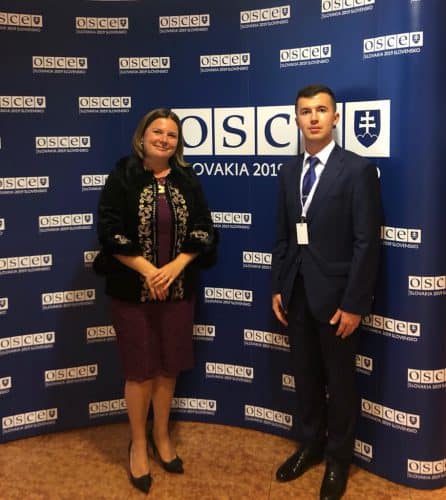
Nadejda Komendantova and Dmitry Erokhin at the OSCE EEF meeting in Bratislava © Dmitry Erokhin
From 27 to 28 May 2019, Bratislava hosted the Second Preparatory Meeting of the 27th Economic and Environmental Forum of the Organization for Security and Cooperation in Europe (OSCE EEF) on “Promoting economic progress and security in the OSCE area through energy cooperation, new technologies, good governance and connectivity in the digital era”.
As part of my work on digitalization in Greater Eurasia, I was particularly interested in attending this meeting.
A major part of the event was devoted to questions surrounding energy security, which is a very important factor of cooperation in the OSCE area. All 57 participating states across North America, Europe, and Asia are interested in stable energy supply. Doing energy right is a way to promote progress, security, and prosperity. Orientation towards sustainable development, limiting the use of conventional energy sources, oil conflicts, and cyber attacks make both energy demanders and suppliers search for new solutions. In this regard, the use of renewable resources promises long-term benefits in terms of energy efficiency, new jobs, as well as a secure and resilient energy sector. This is however not possible without peace, which makes the protection of infrastructure crucial. There is no prosperity without peace and no peace without prosperity.
I found it particularly valuable that new technologies were included in the discussion. Blockchain – a system in which a record of transactions made in bitcoin or another cryptocurrency are held across several computers that are linked in a peer-to-peer network – along with big data, are creating new opportunities in the energy sector, for example, in terms of new forms of energy trading. However, they can also pose some risks as they create certain dependencies, thus raising questions of sustainability. For instance, automated driving raises many regulatory issues on how to ensure against cyber attacks and missiles, or how to divide responsibilities between producers and users. Advanced technologies have to be employed safely and efficiently. International organizations could play a vital role in enacting common standards and regulatory norms for digitalization and connectivity in this regard. One grand example here is the single window recommendation, which is a trade facilitation idea that enables international traders to submit regulatory documents at a single location. The idea is that such a system would facilitate trade through good governance.
The establishment of regional communication platforms and the development of science, research, and innovations are of particular importance. Key agents need to talk about secure and clean energy. This could be achieved through intra-institutional cooperation and inclusive dialogue. I believe that institutions like IIASA can play a huge role here.
Talking about new technologies, it is an important task to conduct studies on barriers to trade, especially in the context of blockchain and machine learning technologies in digital trade in order to detect inefficiencies at borders and improve market access. In the energy field, there are many controversial estimates (simultaneously in favor of conventional and renewable energy sources), which also make independent reputable studies essential.
Nadejda Komendantova, a researcher with the Advanced Systems Analysis Program at IIASA also represented the institute at the OSCE meeting, where she moderated a session on protecting energy networks from natural and man-made disasters. The sessions’ participants discussed the impact of these factors on energy security, analyzed opportunities and threats for secure energy networks connected with new technologies, raised questions of resilience, and talked about the mitigation of threats through effective policies and cooperation. The OSCE Critical Energy Infrastructure Protection (CEIP) Digital Training Platform was presented during the session.
To conclude, I would like to emphasize that we need more such constructive and fruitful discussions to catalyze trust, growth, security and connectivity. Partnerships create political will and make open dialogue and mutual support very important. I believe that organizations like IIASA are key to making this possible.
Note: This article gives the views of the author, and not the position of the Nexus blog, nor of the International Institute for Applied Systems Analysis.
May 24, 2019 | Energy & Climate, Poverty & Equity, Sustainable Development
By Pallav Purohit, researcher with the IIASA Air Quality and Greenhouse Gases Program
More than 300 million people in Hindu Kush Himalaya-countries still lack basic access to electricity. Pallav Purohit writes about recent research that looked into how the issue of energy poverty in the region can be addressed.
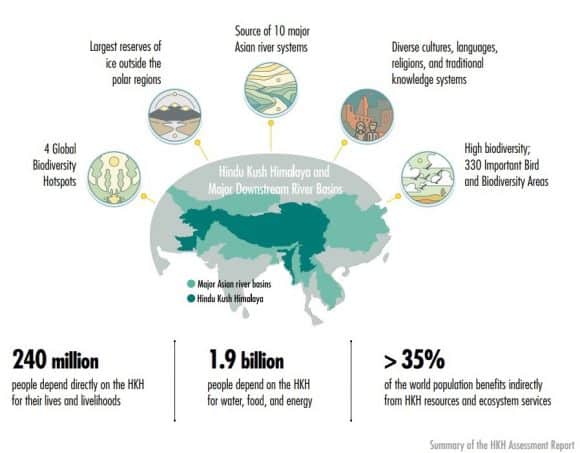
The Hindu Kush Himalayas is one of the largest mountain systems in the world, covering 4.2 million km2 across eight countries: Afghanistan, Bangladesh, Bhutan, China, India, Myanmar, Nepal, and Pakistan. The region is home to the world’s highest peaks, unique cultures, diverse flora and fauna, and a vast reserve of natural resources.
Ensuring access to affordable, reliable, sustainable, and modern energy for all – the UN’s Sustainable Development Goal (SDG) 7 – has however been especially elusive in this region, where energy poverty is shockingly high. About 80% of the population don’t have access to clean energy and depend on biomass – mostly fuelwood – for both cooking and heating. In fact, over 300 million people in Hindu Kush Himalaya-countries still lack basic access to electricity, while vast hydropower potentials remain largely untapped. Although a large percentage of these energy deprived populations live in rural mountain areas that fall far behind the national access rates, mountain-specific energy access data that reflects the realities of mountain energy poverty barely exists.
Source: Wester et al. (2019)
The big challenge in this regard is to simultaneously address the issues of energy poverty, energy security, and climate change while attaining multiple SDGs. The growing sectoral interdependencies in energy, climate, water, and food make it crucial for policymakers to understand cross-sectoral policy linkages and their effects at multiple scales. In our research, we critically examined the diverse aspects of the energy outlook of the Hindu Kush Himalayas, including demand-and-supply patterns; national policies, programmes, and institutions; emerging challenges and opportunities; and possible transformational pathways for sustainable energy.
Our recently published results show that the region can attain energy security by tapping into the full potential of hydropower and other renewables. Success, however, will critically depend on removing policy-, institutional-, financial-, and capacity barriers that now perpetuate energy poverty and vulnerability in mountain communities. Measures to enhance energy supply have had less than satisfactory results because of low prioritization and a failure to address the challenges of remoteness and fragility, while inadequate data and analyses are a major barrier to designing context specific interventions.
In the majority of Hindu Kush Himalaya-countries, existing national policy frameworks currently primarily focus on electrification for household lighting, with limited attention paid to energy for clean cooking and heating. A coherent mountain-specific policy framework therefore needs to be well integrated in national development strategies and translated into action. Quantitative targets and quality specifications of alternative energy options based on an explicit recognition of the full costs and benefits of each option, should be the basis for designing policies and prioritizing actions and investments. In this regard, a high-level, empowered, regional mechanism should be established to strengthen regional energy trade and cooperation, with a focus on prioritizing the use of locally available energy resources.

© Kriangkraiwut Boonlom | Dreamstime.com
Some countries in the region have scaled up off-grid initiatives that are globally recognized as successful. We however found that the special challenges faced by mountain communities – especially in terms of economies of scale, inaccessibility, fragility, marginality, access to infrastructure and resources, poverty levels, and capability gaps – thwart the large-scale replication of several best practice innovative business models and off-grid renewable energy solutions that are making inroads into some Hindu Kush Himalayan countries.
This further highlights an urgent need to establish supportive policy, legal, and institutional frameworks as well as innovations in mountain-specific technology and financing. In addition, enhanced multi-stakeholder capacity building at all levels will be needed for the upscaling of successful energy programs in off-grid mountain areas.
Finally, it is important to note that sustainable energy transition is a shared responsibility. To accelerate progress and make it meaningful, all key stakeholders must work together towards a sustainable energy transition. The world needs to engage with the Hindu Kush Himalayas to define an ambitious new energy vision: one that involves building an inclusive green society and economy, with mountain communities enjoying modern, affordable, reliable, and sustainable energy to improve their lives and the environment.
References:
[1] Dhakal S, Srivastava L, Sharma B, Palit D, Mainali B, Nepal R, Purohit P, Goswami A, et al. (2019). Meeting Future Energy Needs in the Hindu Kush Himalaya. In: The Hindu Kush Himalaya Assessment. pp. 167-207 Cham, Switzerland: Springer. ISBN 978-3-319-92287-4 [pure.iiasa.ac.at/15666]
[2] Wester P, Mishra A, Mukherji A, Shrestha AB (2019). The Hindu Kush Himalaya Assessment: Mountains, Climate Change, Sustainability and People. Cham, Switzerland: Springer. ISBN 978-3-319-92287-4.
Note: This article gives the views of the author, and not the position of the Nexus blog, nor of the International Institute for Applied Systems Analysis.
May 17, 2019 | Alumni, Risk and resilience, Young Scientists
By Tobias Sieg, IIASA Young Scientists Summer Program alumnus
IIASA Young Scientists Summer Program alumnus Tobias Sieg explains how risk assessments considering uncertainties can substantially contribute to better risk management and consequently to the prevention of economic impacts.

© Topdeq | Dreamstime.com
According to the World Economic Forum’s Global Risk Landscape 2018, extreme weather events and natural disasters are ranked among the top three global risks. For many regions, hydro-meteorological risks – in other words, weather or water related events like cyclones or floods that pose a threat to populations or the environment – constitute the biggest threat. This calls for a comprehensive scientific risk assessment with a particular focus on large associated uncertainties.
Assessing the risk of hydro-meteorological hazards without considering these uncertainties, is like entering a pitch-dark labyrinth. You have no idea where you are and where you will end up. If you enter with a flashlight, you might still not immediately know exactly where you will end up, but at least you can assess your possibilities for finding a way out.
We should all care to see those possibilities and to identify uncertainties, since the consequences of hydro-meteorological hazards can have severe impacts on socioeconomic systems, and global- and climate change could favor the occurrence of floods. An increase in extreme weather events, such as heavy precipitation can be expected along with an increasingly warmer climate. In combination with uncontrolled socioeconomic development, these extreme weather events could potentially trigger more intense hazardous flood events in the future. Appropriate management of their consequences is therefore required, starting from today, while pro-actively thinking about the future. To that end, risk management policy and practice need reliable estimates of direct and indirect economic impacts.
The reliability of existing estimates is usually quite low and, what is maybe even worse, they are not communicated properly. This may signal a false sense of certainty regarding the prediction of future climate-related risks.
In two recent studies, my co-authors and I developed and applied a novel method, which specifically focuses on the communication of the reliability of economic impact estimates and the associated uncertainties. The proposed representation of uncertainties enables us to shed some light on the possibilities of how a specific event can affect economic systems. As a Young Scientists Summer Program (YSSP) participant with the IIASA Risk and Resilience Program, I applied the method together with my supervisors Thomas Schinko and Reinhard Mechler, to estimate the overall economic impacts of a major flood event in Germany in 2013.
The estimated overall economic impacts comprise both direct and indirect impacts. Direct impacts are usually caused by physical contact of the floodwater with buildings, while indirect impacts can also occur in regions that are not directly affected by a flood. For example, obstructions of the infrastructure can lead to delayed deliveries, in turn leading to negative impacts for the production of goods outside the flooded areas. The crucial novelty of this method is the integrated assessment of direct and indirect economic impacts. In particular, by considering how the uncertainties associated with the estimation of direct economic impacts propagate further into the estimates of indirect economic impacts.
Being able to reproduce what has happened in the past is essential to making credible predictions about what could potentially happen in the future. A comparison of reported direct economic impacts and model-based estimates reveals that the estimation technique already works quite reliably. The good news is that anyone can help to increase the predictive reliability even further. The method uses the crowdsourced OpenStreetMap dataset to identify affected buildings. The more detailed the given information about a building is, the more reliable the impact estimations can get.
Our study reveals that the potential of short-term indirect economic impacts (without considering recovery) are quite high. In fact, our results show that the indirect impacts can be as high as the direct economic impacts. Yet, this varies a lot for different economic sectors. The manufacturing sector, for instance, is much more affected by indirect economic impacts, since it is heavily dependent on well-functioning supply chains. This information can be used in emergency risk management where decisions have to be made about giving immediate help to companies of a specific sector to reduce high long-term indirect economic impacts.
We are now looking at different possibilities of how flood events could affect the economic system. Having a range of possibilities of the relation between these impacts makes them transferable between different regions with similar economic systems. Our results are therefore also relevant more broadly beyond the German case. This representation of uncertainties can help to get to a more credible and consistent risk assessment across all spatial scales. Thus, the method is able to potentially facilitate the fulfillment of some of the calls of the UN Sendai Framework for Disaster Risk Reduction.
Detailed risk assessments considering uncertainties can substantially contribute to better risk management and consequently to the prevention of economic impacts – direct and indirect, both now and in the future.
References:
[1] Sieg T, Schinko T, Vogel K, Mechler R, Merz B & Kreibich H (2019). Integrated assessment of short-term direct and indirect economic flood impacts including uncertainty quantification. PLoS ONE 14(4): e0212932. [pure.iiasa.ac.at/15833]
[2] Sieg T, Vogel K, Merz B & Kreibich H (2019). Seamless estimation of hydro-meteorological risk across spatial scales. Earth’s Future. https://doi.org/10.1029/2018EF001122
Note: This article gives the views of the author, and not the position of the Nexus blog, nor of the International Institute for Applied Systems Analysis.
May 3, 2019 | Data and Methods, Risk and resilience, Women in Science
By Junko Mochizuki, researcher with the IIASA Risk and Resilience Program
IIASA researcher Junko Mochizuki writes about her recent research in which she and other IIASA colleagues developed an indicator to help identify vulnerable countries that should be prioritized for human development and disaster risk reduction interventions.
© Yong Hian Lim | Dreamstime.com
Working as part of an interdisciplinary team at IIASA, it is not uncommon for researchers to uncover disciplinary blind spots that would otherwise have gone unnoticed. This usually leads to a conversation that goes something like, “If only we could learn from the other disciplines more often, we can create more effective theories, methods, and approaches.”
My recently published paper with Asjad Naqvi from the IIASA Advanced Systems Analysis Program titled Reflecting Risk in Development Indicators was the fruit of such an exchange. In one afternoon, our coffee conversation hypothesized various reasons as to why the disaster risk discipline continued to create one risk indicator after another while the development community remained silent on this disciplinary advancement and did not seem to be incorporating these indicators into ongoing research in their own field.
Global ambitions such as the Sustainable Development Goals (SDGs) and Sendai Framework for Disaster Risk Reduction call for disaster mainstreaming, in other words, that disaster risk be assessed and managed in combination with any development planning efforts. For various reasons, we however continue to measure development and disasters separately. We know that globally the poor are more exposed to risk and that disasters hurt development, but there was not a single effective measure that captured this interlinkage in an easy-to-grasp manner. Our aim was therefore to demonstrate how this could be done using the information on disasters and development that we already have at our disposal.
The Human Development Indicator (HDI) is a summary measure of average attainment in key dimensions of human development – education, life expectancy, and per capita income indicators – that are used to rank countries into four tiers of human development. Using the HDI as an example, Asjad and myself compiled global datasets on human development, disaster risk, and public expenditure, and developed a method to discount the HDI indicator for 131 countries globally – just as others have done to adjust for income– and gender-inequality. Discounting the HDI indicator for education, for instance, involves multiplying it by the annual economic value of the average loss in terms of education facilities, divided by the annual public expenditure on education. We did this for each dimension of the HDI.
Conceptually, the indicator development was an intriguing exercise as we and our reviewers asked interesting questions. These included questions about the non-linearity of disaster impact, especially in the health sector, such as how multiple critical lifeline failures may lead to high death tolls in the days, weeks, and even months following an initial disaster event. Other issues we examined were around possibilities for the so-called build-back-better approach, which offers an opportunity to create better societal outcomes following a disaster.
Our formulation of the proposed penalty function hardly captures these complexities, but it nevertheless provides a starting point to debate these possibilities, not just among disaster researchers, but also among others working in the development field.
For those familiar with the global analysis of disaster risk, the results of our analysis may not be surprising: disasters, unlike other development issues (such as income- and gender inequalities for which HDI have been reformulated), have a small group of countries that stand out in terms of their relative burdens. These are small island states such as Belize, Fiji, and Vanuatu, as well as highly exposed low and lower-middle income countries like Honduras, Madagascar, and the Philippines, which were identified as hotspots in terms of risk-adjustments to HDI. Simply put, this means that these countries will have to divert public and private funds to pay for response and recovery efforts in the event of disasters, where these expenses are sizeable relative to the resources they have in advancing the three dimensions of the HDI indicator. Despite their high relative risk, the latter countries also receive less external support measured in terms of per capita aid-flow.
Our study shows that global efforts to promote disaster risk reduction like the Sendai Framework should be aware of this heterogeneity and that more attention in the form of policy support and resource allocation may be needed to support groups of outliers. Finally, although the cost of most disasters that occur globally are small relative to the size of most countries’ national economies, further sub-national analysis will help identify highly vulnerable areas within countries that should be prioritized for development and disaster risk reduction interventions.
Reference:
Mochizuki J & Naqvi A (2019). Reflecting Disaster Risk in Development Indicators. Sustainability 11 (4): e996 [pure.iiasa.ac.at/15757]
Note: This article gives the views of the author, and not the position of the Nexus blog, nor of the International Institute for Applied Systems Analysis.

You must be logged in to post a comment.