Mar 19, 2015 | IIASA Network, Sustainable Development
By Joost Vervoort, Environmental Change Institute, University of Oxford
“Vision is the most vital step in the policy process. If we don’t know where we want to go, it makes little difference that we make great progress. Yet vision is not only missing almost entirely from policy discussions; it is missing from our whole culture.” Donella Meadows
In the face of increasing human pressures on the planet, in a time that is now described as the Anthropocene, the need to finding pathways toward a sustainable and just global future is critical. In 2015, the world’s nations agree on a set of Sustainable Development Goals (SDGs) – aiming to subscribe to a global narrative on a desired future of human development in all its dimensions.

Vervoort, center, speaks with Tanzanian policy makers at a workshop organized as part of CCAFS’ PACCA project (Policy Action for Climate Change Adaptation). The scenarios used in this workshop were developed with regional stakeholders and quantified by IIASA’s GLOBIOM model and IFPRI’s IMPACT model. Photo Credit: E. van de Grift
The World in 2050 project aims to support the vision of the SDGs by quantifying it and assessing its feasibility through model simulations covering a range of development and environmental dimensions. The goal is to use top science to show that a better world is possible, and explore what transformations and trade-offs are needed to achieve that future. The world’s top modelling groups on population, energy, food, water, technology and other sectors have been invited to join forces for this project.
At a first meeting at IIASA in Laxenburg from 10 to 12 March 2015, the project organizers brought together world-leading modelling teams as well as representatives of global organizations like the OECD, the IMF, the Global Environment Facility and the World Energy Council. A number of us also had experience with using future scenarios for policy and strategy development.
The meeting had two purposes: to outline a way forward for the project, and to allow modelling teams to update each other on their most recent work. Excellent presentations on many dimensions of global change led many to believe that the combination of these modelling efforts would be able to provide a strong exploration of the feasibility of the SDGs. Recommendations were also made to find ways to integrate highly relevant, but not easily quantifiable, dimensions of human development, such as conflict, governance, cultural and value changes and issues of gender inequality. Other challenges that were highlighted had to do with the fact that the future is fundamentally uncertain, and systems models can have difficulty anticipating the impacts of future drivers that are not part of the current scope of concern. The solution to such challenges can be a reflexive approach to integrating model simulation and qualitative information, such as stories about future pathways, that can try to take such dimensions and uncertainties into account and also make clear what they don’t capture.

The launch workshop for the World in 2050 project involved researchers from a number of key institutions. Credit: Matthias Silveri / IIASA
What I saw as perhaps the key conversation in the meeting, however, is one that characterizes many discussions about how to productively engage with the challenges of the future. Is it better to build one unifying vision, or to develop many different future scenarios from the perspectives of a wide range of actors? In the context of the World in 2050 project, developing a single, quantified vision for the SDGs has the benefit of harnessing the power of the best global change research to create a powerful, deeply examined notion that a better world is possible, supported by the voices of global-level organizations. An alternative approach that we discussed was to engage regional and national decision-makers first and build and quantify a diversity of visions and pathways from the perspectives of these actors. The benefit of this approach is that national and regional decision makers may be more likely to perceive this quantitative visioning as useful, and that there is space for and ownership of diverse notions of a better future based on different sets of values.
The leaders of the World in 2050 project took these considerations into account and proposed a way forward: focus on a single global, quantified vision first, to kick-start dialogues about the feasibility of a transformative future at the global level by providing top-level science. Jeffrey Sachs, as one of the project leaders, argued that the SDGs will already involve many interactive processes that allow for a diversity of ideas and conversations at national and regional levels on how to achieve these goals; and that rather than trying to support all SDG-related work, the World in 2050 project would have the most complementary value if it provided its clear, quantified global vision first. Then, a next phase of the project will be to connect to global regions and to national-level processes and find out how the insights from the project can be used. Many of us in the meeting indicated that we have strong networks at regional and national levels that can support this phase. From the beginning of the global modelling project, Sachs and colleagues already envision a strong need to have regional diversity in the analysis, to make sure its results are relevant at that level.
”Also clear from the discussions was that this vision should not just be aimed at policy makers, but that it should speak powerfully to people in all walks of life. Widespread public support for such a vision could be a strong contributor to political momentum. Several speakers referred to the impact of the 1972 “Limits to Growth” study, which, though controversial, stimulated thinking and action around environmental change and sustainability worldwide. Innovative communication approaches that powerfully engage people with the vision will be crucial – if future visions can be made real in an experiential sense, they have a much stronger chance of changing behavior and decisions.
Collaborations across international networks
The World in 2050 project plans to build on the excellent simulation-based work on transformation pathways toward SDGs done by the Dutch Environment Assessment Agency.
It will be very interesting to see the global vision take shape and to help connect it to regional and national action and strategy. With IIASA colleagues from the GLOBIOM team, the CGIAR’s Climate Change, Agriculture and Food Security program is helping decision makers in Africa, Asia and Latin America develop better policies using socio-economic and climate scenarios, and from our experience, working with future pathways that are inspiring as well as feasible is very attractive to governments and other actors.
Other interactions with complementary projects can be explored – for instance, the “Bright Spots – Seeds of a Good Anthropocene” project takes an opposite, bottom-up approach to future visioning – collecting local “seed” practices with global, transformative potential and combining them to foster dialogues about a better Anthropocene. A similar process for bottom-up transformation pathways on the future of food in Europe also involves IIASA researchers.
References
Meadows, Donella, J. Randers and D. Meadows. Limits to Growth. New York: Universe Books, 1972.
Note: This article gives the views of the author, and not the position of the Nexus blog, nor of the International Institute for Applied Systems Analysis.
Feb 19, 2015 | Air Pollution
Fabian Wagner is a researcher in IIASA’s Mitigation of Air Pollution and Greenhouse Gases (MAG) Program. He is currently on sabbatical as a visiting professor at Princeton University.
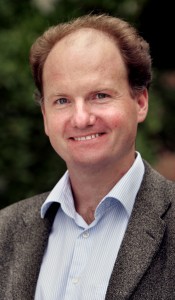
Fabian Wagner
Credit: Princeton University
What’s your role at Princeton?
I have a joint appointment with two institutions within the university, and one of my roles is to improve the communication between these: I am a visiting professor at the relatively young Andlinger Center for Energy and the Environment (ACEE), and a visiting lecturer at the Woodrow Wilson School of Public and International Affairs (WWS). The ACEE is part of the engineering school, so there I mostly interact with engineers, while the WWS mostly hosts economics, lawyers, and political scientists. At WWS I am part of the Science, Technology and Environmental Policy (STEP) Program.
What’s a typical day for you at Princeton?
Over the year I am teaching a fair amount, more than the average Princeton faculty. That is, I am not doing a sabbatical in the usual sense of the word. I am basically constantly preparing lectures for courses I am teaching on energy technologies, the energy and water nexus, and energy policy. I am also supervising undergraduate and graduate students on their theses. During the semester there are more seminars, brown bag lunches and breakfasts than one can realistically attend.
How does your work at the university differ from your work at IIASA?
Here the projects I am involved in do not have strict deadlines: The next deadline is always the next lecture. The exceptions are the days by which grades need to be submitted. As a professor I advise students, but they go away and do their research themselves. It is fascinating to see how smart they are and how quickly they absorb ideas and can apply them. Oh, and I have no supervisor who guides what I do.
What do you miss about IIASA?
I miss the team spirit of the MAG group, and the more international outlook on issues. What I do not miss is the long commute from Vienna to Laxenburg—here I live on campus and can walk to either one of my offices in three minutes.

Princeton University campus. Credit: Princeton University
What are you doing at a university that you would not normally do at IIASA?
I attend a lot more seminars, and in general – because the work here is less funding-driven – there is a great deal of room for intellectual curiosity. I also work with corporate partners of the university. While at Princeton, I’m working with a local energy utility on a project to model the future electricity system and electricity market in New Jersey and neighboring states to support the further development of their Energy Master Plan.
Here I have a lot of freedom in deciding what projects to engage in and how to spend my time. In my experience Princeton is very open to cross-cutting activities. IIASA is small, so the number of approaches, methods and modes of thinking are limited. On the other hand, much of the work at Princeton is not so holistic and integrated as IIASA’s work, and some activities here lack a critical mass and long-term engagement.
When you come back to IIASA, what would you want to bring with you from your experience at Princeton?
The courses that I teach here are more on the turf of IIASA’s energy and water programs, so I hope to be able to interact with them more in the future. Also, in addition to the specific things I am learning I also hope to bring back some inspiration to IIASA colleagues to think about the value of changing perspectives from time to time, and about the space of possible career moves.
Note: This article gives the views of the interviewee, and not the position of the Nexus blog, nor of the International Institute for Applied Systems Analysis.
Feb 17, 2015 | Water
By Luzma Fabiola Nava, Colosio Fellow and Research Scholar, IIASA Water Program
(Spanish version, Bionero.org)

Albuquerque, New Mexico. Credit: Luzma Fabiola Nava
The Rio Grande/Rio Bravo River has been considered the most endangered river in North America and one of the most endangered rivers globally for a long time. Problems include drought and water scarcity, the degradation of water quality, loss of river habitats, and over-exploitation of groundwater. The water allocation regime between the US and Mexico is over a hundred years old and not adequate any longer. It consists mainly of allocating transboundary watercourses and facing environmental issues within a fragmented structure.
The challenge of my research is the design of policy directions to adapt water management mechanisms and foster stakeholder involvement across the river basin. Focusing on stakeholder views, I examine their competing perspectives and interests on water management and environmental protection.
Water managers at the state and federal levels, researchers and practitioners, and environmentalists suggest an alternative approach to reverse environmental degradation and preserve water resources. The Rio Grande/Rio Bravo River is a magical desert river. The river flows through primarily arid environments which, over time, have been appropriated for diverting water and meeting water needs and hydraulically developed. Some people argue that developing the desert and making it habitable and productive has accentuated the fragility of the river environment resulting in ecosystem degradation and diminished quality of life. Also, because of intensive dam-building, the river has been fragmented into sub-basins dividing the water management process and increasing the lack of coordination between agencies across the basin. River fragmentation is highly correlated with poor water quality and loss of biodiversity.

The Rio Grande River near Albuquerque, New Mexico. Credit: Luzma Fabiola Nava
Some stakeholders, such as state water management agencies and researchers, suggest that the biggest environmental threats are the longer periods of drought and the overuse of groundwater, but others, such as some environmental NGO’s and state agencies (mainly in the New Mexico Lower Rio Grande) denounce citizens‘ lack of motivation and say that greater public awareness is needed. Poor participatory citizenship in the water resources decision-making process reflects the disconnection between the river and the citizens’ perceptions. Citizens do not perceive that there is a water-environmental problem since they are accustomed to seeing a dry river, yet when they turn on the tap in their houses, there is always water available. In my interviews, some people described the Rio Grande as a vagabond, an old man; as an outsider, a homeless, as the poorest river. For these stakeholders, the biggest challenge to reverse the current environmental degradation would be to provide education in water and environmental issues in order to build broad citizen awareness across the basin. I personally think that fostering public awareness, in this fragmented area, could have a genuinely important multiplying effect to solve environmental-water related problems across the river basin.

The Rio Grande River near Mesilla, New Mexico. Credit: Luzma Fabiola Nava
Reference
Nava, Luzma Fabiola and Samuel Sandoval-Solis. 2014. Multi-Tiered Governance of the Rio Grande/Bravo Basin: The Fragmented Water Resources Management Model of the United States and Mexico, International Journal of Water Governance, IJWG, Vol. 2., No. 1, Baltzer Science Publishers, DOI: 10.7564/13-IJWG23.
Note: This article gives the views of the author, and not the position of the Nexus blog, nor of the International Institute for Applied Systems Analysis.
Feb 11, 2015 | Risk and resilience
By Junko Mochizuki, IIASA Risk, Policy and Vulnerability Program
As economic losses due to natural disasters rise globally, there is an increasing consensus that the impacts of public and private investments on disaster risk must properly be monitored and evaluated. Such “risk-sensitive investment” is increasingly recognized as good practice in both public and private sector decision making. As we look beyond the Post-2015 development agenda, the incorporation of risk is increasingly becoming a crucial element to sustainable and resilience development throughout the world.

Risk reduction measures such as bamboo shelters and protected water sources can mitigate risks during and following a disaster ©EU/ECHO Malini Morzaria via Flickr
While risk sensitive investment will likely receive great fanfare at the World Conference on Disaster Risk Reduction to be held in Sendai next month, the prospects for achieving such investments are still distant for many developing countries. Despite much recent progress to collect and analyze natural disaster damage, loss, and risk information globally, data quality remains largely poor for these countries. Many developing countries also lack the expertise to interpret and use such data effectively. Even when capacity exists at the technical staff level, political will and financial capacity may not be sufficient to use risk information tangibly and invest in risk reduction activities.
My participation at a recent workshop in Madagascar, the Training Program on Disaster Risk Assessment and Optimization of Public Investments in Reducing Economic Losses in January confirmed my sense of this inadequate on-the-ground reality. With a per capita GDP of approximately $460 per year, Madagascar is one of the poorest countries and, located in the western corner of the Indian Ocean, one of the most highly exposed to natural disaster risk. In 2008 for example, three consecutive cyclones caused more than $330 million in damage and losses. The annual average loss (AAL) from cyclone wind alone is estimated to be $74 million or nearly 1% of the country’s GDP. After two days of capacity-building training on risk assessment and investment decision-making tools such as IIASA’s Catastrophe Simulation (CATSIM) model and Probabilistic Cost-Benefit Analysis (CBA), discussions by technical staff centered around how to fill the large gap between the reality of where they stand now and where they should be in the future.
At the workshop, the participants asked questions such as “How can we strengthen contingency funding and the mainstreaming of disaster risk reduction at the same time?” and “What can a cash stripped government do when donors themselves do not seem to allocate funding based on the tangible needs of a country’s natural disaster risks?”

Workshop in Madagascar. Credit: Junko Mochizuki
Given the unique constraints facing developing countries, solutions must be tailored to their specific needs, however much of the know-how and technological options that have worked in the developed world cannot be easily replicated in a country like Madagascar. There are no easy answers, but the participants’ earnest opinions certainly gave me a positive impression that they are serious about taking disaster risk into account in their development.
As we deliberate the post-2015 goals on climate change, disaster risk reduction, and sustainable development, it is vital that the international community consider these important questions: Given the unique constraints of developing countries, what can our state-of-the-art science produce as usable and useful information for the realities of their decision making? There are more dialogues to be had and research to be conducted incorporating their viewpoints. This workshop provided an important opportunity to exchange ideas and a glimpse into the real challenges of risk sensitive investment in the developing world.
Note: This article gives the views of the author, and not the position of the Nexus blog, nor of the International Institute for Applied Systems Analysis.
Feb 9, 2015 | Food & Water
Within the next few decades, the world will need to increase food production to support a growing population also striving for higher shares of animal protein in their nutrition. But food production always affects the environment: Nitrogen runoff from fertilizer has led to major pollution of waterways around the world, while deforestation to extend cropping areas and methane emissions from livestock increase the amount of greenhouse gases in the atmosphere, adding to the problem of climate change. In order to increase food production, without further increasing nitrogen pollution and greenhouse gas emissions, agricultural systems will need to innovate.
In a recent study, IIASA researcher Wilfried Winiwarter explored the range of solutions for future agriculture, researching current literature for ideas and innovations, and examining their feasibility and potential.
“I call this a science fiction paper,” says Winiwarter. “It’s not about what exists and can be implemented immediately, but about the possible innovations that could conceivably be developed in the long-term.”
The study focused on innovations ranging from seemingly simple behavioral changes to radical technological fixes as discussed in more detail below. It reviewed existing scientific literature, mostly peer-reviewed, including design studies that quantified potential environmental effects of such innovations.
Precision Farming
Precision farming refers to technological solutions to improve yields and reduce waste in farming. On the one hand, precision farming can refer to the mechanization of agriculture that may not be environmentally benign, but on the other side, to optimized processes that reduce losses and impacts on the environment.
“Much is already happening,” says Winiwarter. For example, milk production in Europe now occurs mainly in large sheds, with indoor cows, not with free-ranging cows in idyllic meadows. While this industrial approach to agriculture makes food cheaper and more abundant, it also raises questions about animal welfare, and the massive scale of such operations can lead to increased greenhouse gas emissions.
Precision farming can also be used to reduce the amounts of fertilizers or irrigation used, for example, using soil sensors or other high-tech infrastructure to detect exactly what is needed and apply no more than necessary.
Genetic Modification
Genetic modification (GM) of crops allows scientists to equip organisms with certain traits in a much more directed way than traditional breeding. It presents the potential to increase yields, provide drought or pest resistance, or introduce additional nutrients to foods that lack them. GM is already widely used in some crops (mostly to increase pesticide resistance and thus also pesticide application), but in Europe the subject is controversial and GM foods are viewed negatively
Winiwarter notes that the side effects of genetic modification are in general not well understood, and thus possible impacts are quite unpredictable.
Urban Gardening
The study looked into the growing popularity of urban gardening, the “green” trend to grow food in individual gardens inside cities. While urban gardening is generally considered environmentally benign due to small-scale, low transport needs and high personal motivation, Winiwarter notes that it doesn’t have the potential to produce staple food required to feed large populations. One key background study calculated that urban gardens had the potential to produce 10% or less of the food needed in a given city.
“You need space to produce food,” says Winiwarter.
Vertical Farming
As people move to cities and land becomes scarcer, one logical concept is to construct skyscraper “farms” with multiple levels of vegetables growing in hydroponic or aeroponic tanks – like giant, multistory greenhouses. “Compared to an open field, you could produce 200 times as much food on the same space,” explains Winiwarter. “In a city like Vienna, you could conceivably produce all the food for the city within city limits.”
Another advantage of vertical farming is that it could be organized to avoid waste: whereas fertilizer in a field runs off or percolates through the soil into the water table, a vertical farm would employ nutrient solutions that could be contained and recycled.
However, the sunlight needed for photosynthesis could not so easily be multiplied. Instead, the process would require artificial light, which means enormous amounts of energy – even if efficient LED lighting could be employed. “The question is where you would get that energy,” he says.

Cultured meat can now be grown in laboratories – but will it ever make sense on a large scale?
Cultured Meat
Another radical idea for food production is to take meat production off the farm, and instead culture animal cells in petri dishes to grow artificial meat in a laboratory in a nutrient solution. Indeed, the first hamburger from cultured meat was produced in 2013. But Winiwarter notes that meat from the laboratory may not be less resource-intensive than the real thing, since it would need energy, heat, light, and nutrients, which all would make the process extremely expensive, even under ideal conditions. He says, “Upscaling such a process may come with a number of negative surprises – from sanitary issues to pollution as a side-effect of tackling potential health threats. Little is known on the potential environmental effects in a life cycle.”
Dietary Changes
“In general, meat has a higher environmental footprint than a vegetarian diet,” says Winiwarter. “It takes more area to produce feedstock for an animal than it would to produce vegetarian food for humans.”
Europe in particular has a high level of meat consumption, Winiwarter explains, so cutting meat consumption in the region has a large potential. In much of the highly populated areas of Asia, people consume a mostly vegetarian diet. As these countries become richer, increased consumption of meat and milk production is observed when people tend to copy European lifestyle. If Europeans were able to cut down on meat consumption and treat themselves with a more healthy diet, positive environmental effects may even spread to world regions where European food patterns may serve as an example.
Agriculture, like a high-tech industry, will continue to develop dynamically in the future. Many paths of development can be imagined, and have been described in scientific or other literature. “There is no ‘silver bullet’ to resolve the environmental damage of agriculture”, Winiwarter says. Instead, future innovations will need to be carefully monitored and evaluated for potential environmental effects, in order to minimize damage of nitrogen pollution and maintain livelihood on earth.
Reference
Winiwarter W, Leip A, Tuomisto HL, Haastrup P. 2014. A European perspective of innovations towards mitigation of nitrogen-related greenhouse gases. Current Opinion in Environmental Sustainability. http://www.sciencedirect.com/science/article/pii/S1877343514000396
By Katherine Leitzell, IIASA Science Writer


You must be logged in to post a comment.