Dec 23, 2015 | Evolution, Food & Water
Mikko Heino is a researcher in the IIASA Evolution and Ecology Program who over the past 18 years has worked on the problem of fisheries-induced evolution, showing that selective harvesting of bigger fish can lead to evolutionary changes towards smaller and faster-maturing fish populations. A new review by Heino and colleagues explores the accumulated evidence on the topic, and future directions for new research.
What is fisheries-induced evolution?
In agriculture we are used to thinking about selective breeding: farmers select the best animals or plants to breed, in order to improve their fitness or select for certain traits in the next generation. They are intentionally trying to improve the stock used for breeding. In fisheries, the opposite happens: fishermen usually try to catch the fish that are more valuable—bigger and heavier. Consequently, those valuable kinds of fish are less likely to reproduce and contribute to the next generations.
It’s not intentional, and maybe because we don’t see the fish that are left behind, people are not used to thinking of this as selective breeding—and they may not realize that in the long term it could harm the productivity of the whole fishery.
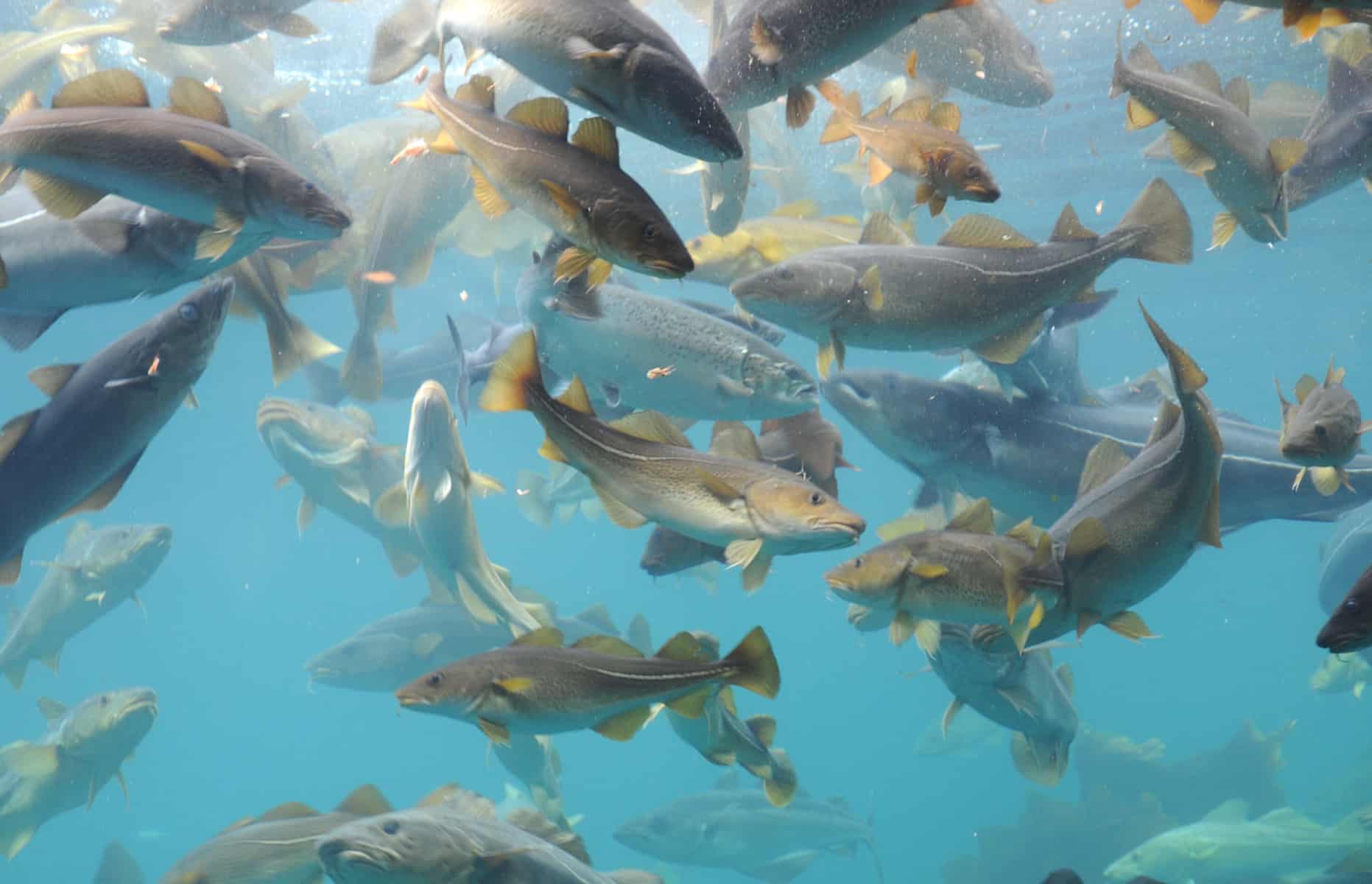
Atlantic cod are among the best-studied and most important fisheries worldwide (Credit: © davidyoung11111 | Dollar Photo Club)
What kinds of evolutionary changes do your research show that you would see from fisheries?
Most of our data comes from fisheries institutions. We have a lot of data on maturation—the age at which fish start to reproduce. Studies show that heavily harvested fish populations may mature faster and start reproducing earlier. There’s also some data on growth, showing that fisheries pressures can lead to slower growth rates, with fish staying smaller.
In recent years, experimental studies have shown that fishing is also selective with respect to behavioral traits. Some fish are bolder than others and those bolder fish may be more likely to be captured by gillnets or traps, because bold fish are more explorative, they like to investigate things, and by doing so they may end up in a trap. But at the same time, they may be better in escaping fishing gear like a trawl.
Why is it important that we understand what’s happening with fisheries-induced evolution?
At one level it’s important because changes in these kind of traits will affect the productivity of fish stocks—and based on our current knowledge, these changes are often negative, leading to lower productivity. However, some parts of these changes may be positive in the short term, because they may enable fish stocks to tolerate higher levels of fishing without collapsing. Yet in the long term, we would expect fisheries-induced evolution to lead to reduced productivity, and lower yields. And that’s quite worrying, because fish are an important part of the human diet, especially in many coastal developing countries.
What are the major questions remaining in this research?
One big question arises from the fact that evolution of course implies genetic change. In fisheries, we are observing this evolution at the level of phenotypes—visible, directly measurable characteristics. To be sure that we really observe evolutionary change, we also need to understand the genetic basis for these kinds of changes.
How can you do that?
There are ongoing projects trying to look at it the genetics of fisheries-induced evolution. But it’s a lot more difficult than it sounds because life-history traits and behavioral traits are affected by many genes. It’s not like there’s one gene for early maturation. There are probably tens if not hundreds of genes that have some influence on maturation. And that means that at the level of a single gene we may not see very much change at all. And trying to identify those changes and separate those from random drift, and from changes caused by other factors, is actually quite difficult.
Sequencing genomes is easy nowadays, but finding a signal in the resultant large amounts of data is not simple. If you have more data, you also get more false positives. Basically, either you need to sequence a lot of individuals, so you can separate the different signatures. The other possibility is to try to analyze data from selection experiments, because in an experiment you can try to exaggerate the changes. That’s maybe the most fruitful avenue in the short term.

Evidence for fisheries-induced evolution: research shows fisheries-induced evolution in many fish populations, including marine and freshwater species. (Credit: Heino & Dieckmann, 2015)
What can fisheries managers do to avoid unintended evolutionary changes?
We’re currently exploring that question. We more or less know that it’s not possible to avoid all types of evolutionary responses. But we can still try to minimize harmful changes, by fishing in a way that does not cause much negative change in productivity.
Of course, fisheries-induced evolution will not be the only thing we care about when managing fish stocks. It has to be seen together with other objectives. Yet the simplest way of reducing unwanted evolutionary changes is to keep fishing pressure at moderate levels. That’s the single easiest and most certain way of reducing unwanted evolution, and that’s in agreement with what scientists recommend from other perspectives too.
What are the dangers of failing to account for fisheries-induced evolution?
The danger is that it’s much easier to cause these changes than to reverse them—on practical time scales, these changes are more or less irreversible. So whatever changes we cause, will be around for many generations to come. That’s a reason to be precautionary. We don’t have absolute certainty that this is happening, but there’s a large body of research showing that it is quite likely to happen, and since if it’s happening it’s more or less irreversible, then we should avoiding it even before we have full scientific certainty.
There is quite a similarity between climate change and fisheries-induced evolution. Both processes happen on long timescales—at the level of a few years, the change is not much. But it is a change that will accumulate, and if you let that happen for longer periods, you end up having very significant changes. So it’s easy and attractive to ignore it in the short term, but that’s a dangerous position in the long term.
Reference
Heino M, Pauli BD, Dieckmann U (2015). Fisheries-induced evolution. Annual Reviews in Ecological Systems. 46:461-480. doi: 10.1146/annurev-ecolsys-112414-054339
Note: This article gives the views of the interviewee, and not the position of the Nexus blog, nor of the International Institute for Applied Systems Analysis.
Dec 21, 2015 | Demography
In recent years the world has been in the grips of the worst refugee crisis since the horrors of WWII. Between January and August 2015 over 44,000 people applied for asylum in Austria alone. While much attention has been focused on immigration and asylum policies, there is a lack of data on the actual people; what are their backgrounds, qualifications, and expectations?
To address this, IIASA scientists are working with colleagues from the Wittgenstein Centre for Demography and Global Human Capital (IIASA, VID/ÖAW, WU). Together the three institutions have designed a questionnaire for refugees in Austria, the first survey of its kind in German-speaking countries.
The team—consisting of over 40 researchers, students, and volunteers—is aiming for around 500 interviews with people seeking asylum in Austria, and the survey is carried out in Arabic, Farsi, and English. Zakarya Al Zalak, IIASA researcher in the World Population Program, former director of the Damascus Statistical Technical Institute, and a Syrian himself, speaks to science writer Daisy Brickhill about directing the work.
Why are you carrying out this survey?
We know almost nothing about the refugees as individuals. Who are these people? How much education have they received? What are their qualifications? What are their hopes and values? This kind of information is vital, because it can assist policymakers to design strategies to help these people integrate into Austrian society.
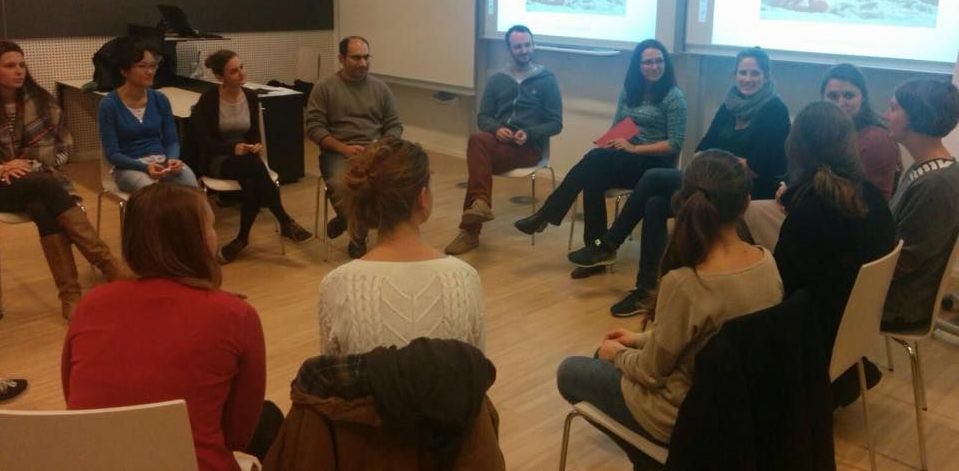
Training for the survey. Photo credit: Judith Kohlenberger
What kind of questions do you ask?
There are six sections to our questionnaire. The first covers demography—things like age, sex, ethnicity, and religion. Even on these basic characteristics there is very little data. The second is about education. How long did they stay in school? What are their qualifications?
For the third section we focus on employment, asking whether they had a job before leaving their native country, and what their profession was. This will help assess the skills these people can bring to the Austria, and where they might be able to work. This is particularly important for integration, as it can help policymakers see where they might fit in to Austria’s workforce.
We use all kinds of questions and measures to get the most information possible. For example, when asking about health, we test the participants’ hand-grip strength. Previous IIASA research has shown that this is related to markers of aging, future disability, cognitive decline, and the ability to recover from hospital stays.
In the fifth section we ask about family. This is important because although many refugees are men travelling alone, they may be planning to bring their family once they have made a life for themselves.
You mentioned attitudes and values, how do you find out about these things with a simple questionnaire?
In the last section of the questionnaire we use several different approaches to explore attitudes. We ask whether they would mind if their children were taught about other religions at school, for instance. We also ask about their views on abortion and gender equality, among other things.
What are the next steps?
We finish sampling soon, so we are hoping to publish the preliminary results in January 2016. However, the most important part of the work is in the next stage. We have asked for participants’ contact details, and our plan is that we will reconnect with these people after some time, eight or nine months, say. At that point we can ask more about how they are finding life in Austria, and whether integration is going well. Have they taken a German language course, for example? Do they have work? Have they received training?
If we are unable to reach some people for follow-up there is a possibility of recruiting new participants. Although we will not have the data from the initial survey we can still ask them how long they have been here, and how their integration is going.
It must be difficult seeing your fellow Syrians in such dire straits.
Before coming to Austria, I worked with refugees in my own country. It seems strange to think of now, but at that time there were Iraqi people who had fled to Syria to seek asylum. Now, we are finding people who are “double refugees,” first fleeing to Syria from Iraq and then, as the situation in Syria worsened, from Syria to Austria. It must be an extremely hard journey. I very much hope this work helps policymakers to make things easier for them.
Austrian Academy of Sciences Press Release
This article gives the views of the author, and not the position of the Nexus blog, nor of the International Institute for Applied Systems Analysis.
Dec 15, 2015 | Demography
By Raya Muttarak, IIASA World Population Program
This blog was previously posted on the GMR’s World Education Blog
Not only have climate scientists agreed that humans are contributing to climate change, but recent evidence also points out that the rate of warming is happening much faster now than it ever has before. This is why, at the UN Climate Conference in Paris this month, world leaders sought to reach a new international agreement on climate change, essentially to keep global warming below 2°C (or 3.6°F). Rising temperatures pose threats on food and water security, infrastructure, ecosystems and health and, as a previous blog on this site shows, increases the risk of conflict. With an upsurge in the frequency and intensity of extreme weather events and the potential for rapid sea level rise, both mitigating human-related exacerbation of climate change, and adapting to its devastating effects are key priorities. This is where education comes in.
Both mitigation and adaptation require technological, institutional and behavioral responses. Correspondingly, the Intergovernmental Panel on Climate Change highlighted the value of a mix of strategies to protect the planet, which combine policies with incentive-based approaches encompassing all actors from the individual citizen, to national governments and international communities. Because, while national and sub-national climate action plans are fundamental, changing individual behaviour also lies at the heart of responses to climate change.
At the individual level, barriers to the adoption of mitigation and adaptation measures include a lack of awareness and understanding of climate change risk, doubt about efficacy of one’s action, lack of knowledge on how to change behavior and lack of financial resources to implement changes. Accordingly, there are many sound reasons to assume that different education strategies can help overcome these barriers both in direct and indirect manners.
First, directly formal schooling is a primary way individuals acquire knowledge, skills, and competencies that can influence their mitigation practices and adaptation efforts. Schooling provides a unique environment to engage in cognitive activities such as learning to read, write, and use numbers.
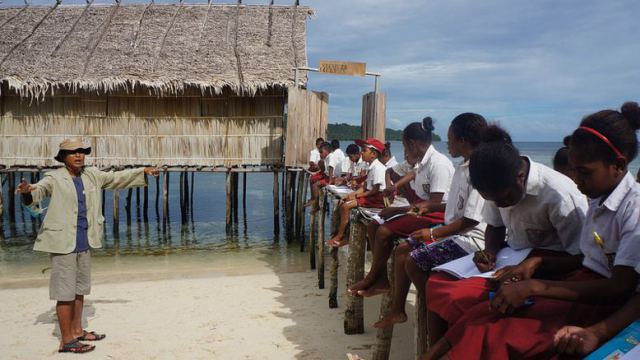
Students in Indonesia learn about living with nature. Credit: Nur’aini Yuwanita Wakan/EFAReport UNESCO
As students move to higher grades, cognitive skills required in school become more progressively demanding and involve meta-cognitive skills such as categorization, logical deduction and cause and effect. This abstract cognitive exercise alters the way educated individuals think, reason, and solve problems. Indeed, experimental studies have shown that higher-order cognition improves risk assessment and decision making. These are relevant components of reasoning related to risk perception and making choices about mitigation and adaptation actions.
Furthermore, education enhances the acquisition of knowledge, values and priorities as well as the capacity to plan for the future and allocate resources efficiently. Schooling can help individuals adopt, for instance, disaster preparedness measures by improving their knowledge of the relationship between preparedness and disaster risk reduction. Moreover, educated individuals may have better understanding of what measures to undertake. Recent evidence also shows that education can change time preferences such that more educated people are more patient, more goal-oriented and thus make more investments (e.g., financial, health or education investments) for their future. Such forward-looking attitudes can influence adoption of mitigation actions or adaptation measures where benefits may only be expected by future generations.
Apart from the direct impacts, education may indirectly reduce vulnerability or promote mitigation actions through other means. Firstly, education improves socio-economic status as education generally increases earnings. This allows individuals to have command over resources such as purchasing costly disaster insurance, living in low risk areas and quality housing, installing renewable energy sources at home or being willing to pay carbon taxes.
Secondly, many empirical studies have shown that people with more years of education have access to more sources and types of information. The level of education is not only highly correlated with access to weather forecasts and warnings but the more educated are better able to understand complex environmental issues such as climate change than less educated counterparts.
Knowing where to get information on how to reduce emissions or what adaptations to take allows individuals to change their behaviour appropriately. Indeed, there is evidence that good understanding of climate change or environmental knowledge are associated with climate change mitigation behaviours such as consumption of climate-friendly food, owning fuel-efficient vehicles and conservation behaviour.
In addition, more educated individuals also have higher social capital. A perception of risk and motivations to take preventive action are more likely to be communicated via social networks and through social activities. Evidently, through increasing socio-economic resources, facilitating access to information and enhancing social capital, education can promote and foster sustainable lifestyle and consumption.
Despite these potential benefits on climate action, education has not yet been sufficiently prioritized as a fundamental instrument to fight climate change. Recently researchers at the Wittgenstein Centre for Demography and Global Human Capital based in Vienna have produced convincing empirical evidence that education, particularly (at least) secondary school, is important for reducing vulnerability to climate change. By showing that education enhances disaster responses, reduces loss and damage and facilitates recovery after disasters, it was argued that part of Green Climate Fund should be spent to promote universal secondary education.
Likewise, education has also been shown to be an important determinant of sustainable lifestyle and consumption. As another blog on this site has shown recently, individuals with a higher level of education are more likely to be concerned about climate change and consequently more likely to take actions to reduce greenhouse gas (GHG) emissions. The Figure below clearly demonstrates how the number of mitigation actions increases with years of schooling. Not only do the highly educated carry out more mitigating actions, education also interacts with concern about climate change. In other words, given the same level of concern about climate change, the highly educated are doing even more to reduce GHG emissions than those with lower education.
Figure 1: Number of mitigation actions taken by years of schooling and concern about climate change
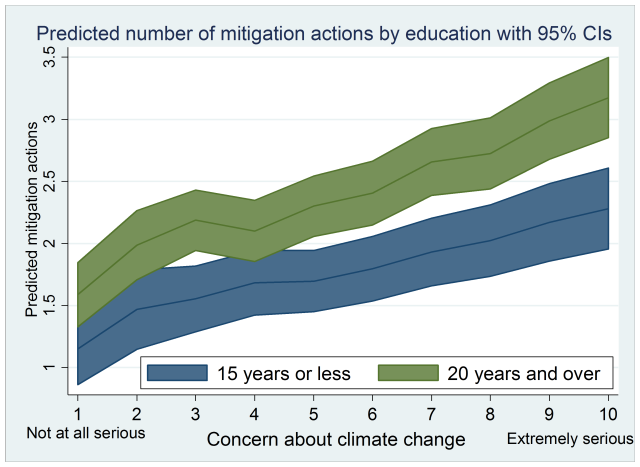
Notes: Own calculation. Estimated from multilevel models with country random effects. Source: Pooled Eurobarometer Surveys (2008, 2009, 2011, 2013).
Responding to the challenges of climate change is going to require action on multiple fronts. Ignoring the impacts of education on climate change is no longer an option. Promoting universal secondary education should be given a high priority on the agenda as we look forward past last week’s Paris meeting.
This article gives the views of the author, and not the position of the Nexus blog, nor of the International Institute for Applied Systems Analysis.
Dec 4, 2015 | Climate Change, Science and Policy
By IIASA Director General and CEO Professor Dr. Pavel Kabat. This article was originally published in the Huffington Post.
I was at the Kyoto climate talks in 1997. I remember doing the calculations, going through the proposals long into the night. I remember the moment of: “We did it. We have an international, legally binding agreement.” I remember the euphoria.
But I also remember what happened after that. As the years passed after Kyoto I saw that the reality of implementation was far from what we had envisaged. As a scientist in the field I took part in many government discussions, and I grew frustrated at the inability of institutions and governments to comply with the agreements.
More than empty promises?
These failures do not mean that Paris will just be the next in a string of ineffective climate talks. A global, UN-level agreement on climate change is necessary, and I believe Paris will deliver it. But I do not see it as providing more than a direction. Yes, we will have an agreement, but our unrelenting focus from Paris onward must be on how to implement it. And that will require a major change in our way of thinking.
Policymakers, climate scientists and society as a whole, must abandon the idea of climate change as a single, discrete issue, to be dealt with using “climate policy.” We cannot think about the future without thinking about climate change. On the other hand, we cannot deal with climate change without considering the future social and economic context. Ultimately, if we do not make climate adaptation and mitigation part of the mainstream development agenda, we will fail again.
Take the Green Climate Fund. An excellent initiative agreed at the 2009 Copenhagen climate talks, it assists developing countries in climate change adaptation. But it is designated as “climate change” money. Let’s say a dike in Bangladesh is being extended, will we advise that only 25 cm of the 40 cm extension be covered by the climate fund because technically that is all that is needed for climate change, and the rest is just “general development”?
Frankly, we shouldn’t care. We shouldn’t spend time or money on such questions. We need an institutional and financial framework within which we are able to say yes, there is a climate objective, but there is also a development objective, and a security objective, together these make up a whole, and we will invest in infrastructure accordingly.

Paris is just the beginning
To ensure that climate change adaptation and mitigation become integral to development, governance also must change. Future strategy cannot consist only of centralized agencies issuing endless targets. Municipalities and small regions have an important part to play. Local efforts will also be more likely to engage people, because they are closer to personal experiences. In fact, while we scientists and politicians talk in dusty rooms, younger generations are already exploring new, bottom-up solutions, such as crowd-funding and joint ownership.
Investment from the private sector is also key. In the Earth Statement, written by an alliance of 17 global-change scientists, including myself, we state that: We must unleash a wave of climate innovation for the global good, and enable universal access to the solutions we already have.
The good news is that at this moment, making the transition to a decarbonized world is still a major opportunity. We can leave behind the idea that we must put aside money to protect our economy against the threat of climate change. Investing in these global transitions can actually be hugely beneficial, both economically and socially. Changing the fundamental narrative of climate change from threat to an opportunity will trigger major innovations and transitions to sustainable economic development.
Climate science must change too. We already know the basic facts. We know that to have at least a 66% chance of keeping the temperature increase below 2°C, our greenhouse gas emissions should drop by 40-70 % between 2010 and 2050.
The next report from the Intergovernmental Panel on Climate Change, and climate research in general, now needs to get at the real issue: implementation. How do we achieve our goals in the institutional, social, and economic context? That is where the main focus should be.
Achieving a stable, sustainable future is possible. If it wasn’t, I would be doing something else with my life. I am convinced that the Paris talks will result in an important, international agreement; but the real solution lies beyond Paris, and beyond the UN altogether. It lies in integrating climate into all development and funding decisions, in giving entrepreneurs and local municipalities the space they need to innovate, and encouraging private investment into climate-friendly development. It is a great opportunity for humanity.
This article gives the views of the author, and not the position of the Nexus blog, nor of the International Institute for Applied Systems Analysis.
Nov 30, 2015 | Climate Change, Risk and resilience
By Thomas Schinko and Reinhard Mechler, IIASA Risk, Policy and Vulnerability Program
Discussions on dealing with the already palpable as well as future burdens from climate change have moved into the spotlight of international climate policy. They are being tackled as part of the climate negotiations via the Warsaw International Mechanism (WIM) for Loss and Damage associated with Climate Change Impacts (Loss and Damage Mechanism), a measure for dealing with impacts and adaptation related to extreme climate events and slow onset events that was agreed in 2013. Debate on the scope, framing and on how the mechanism will eventually be implemented is still continuing, and is heavily framed around moral issues such as compensation, liability, and a need for attributing disasters to climate change, which is a difficult and complex issue.
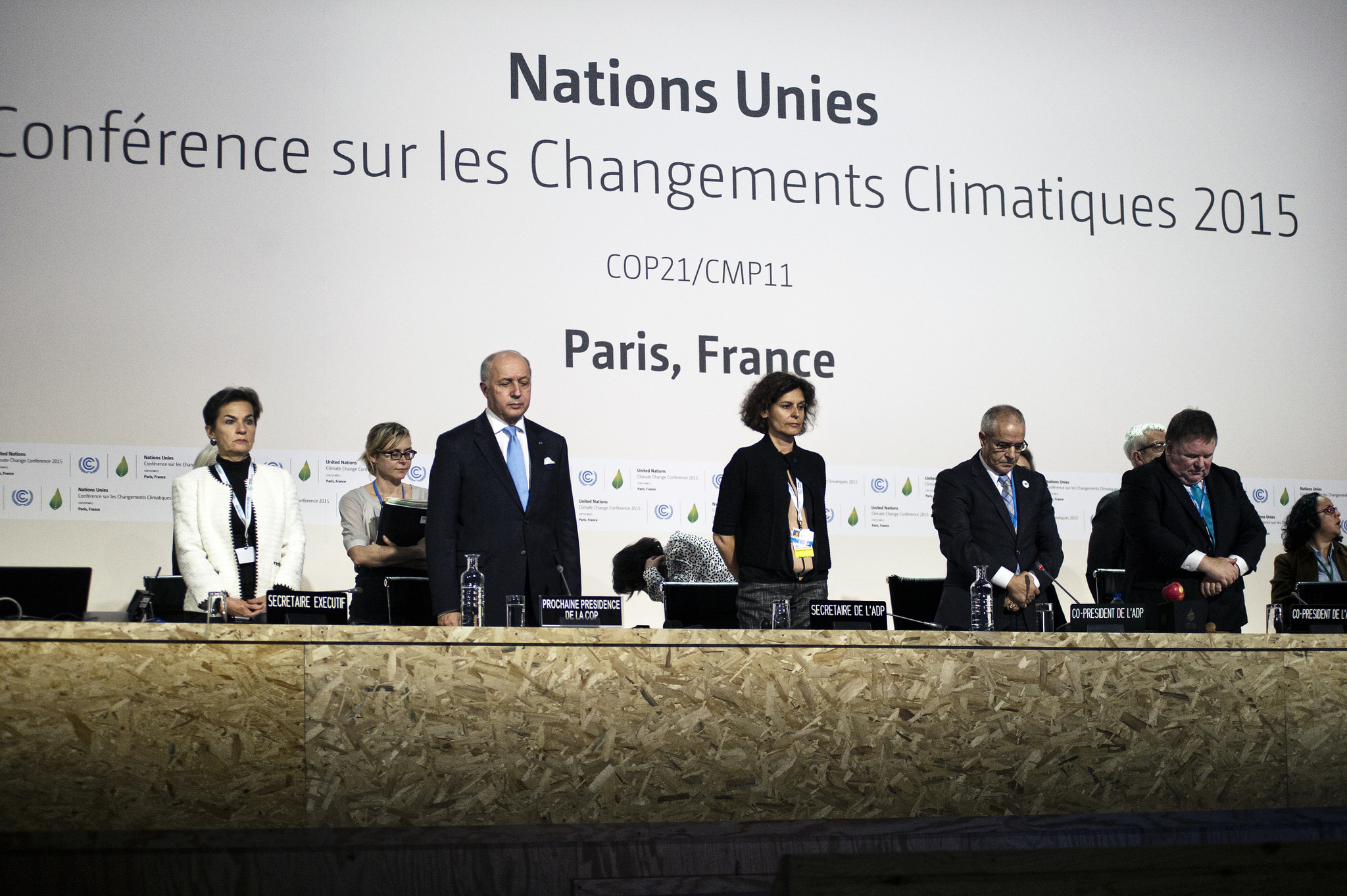
Opening of COP 21 on 29 November 2015. Photo: Benjamin Géminel via Flickr
To help move this contentious debate forward, we recently organized a meeting at IIASA to set up a broad scientific network to support work under the Loss and Damage Mechanism with rigorous and evidence-based research.
Since the first climate negotiations, climate justice has been a major source of contention, with countries disagreeing on the level of responsibility for climate change and the extent to which developed and developing countries should contribute to the solutions. These discussions have predominantly focused on climate mitigation responses, but over the last few years, impact and risk issues have moved into the limelight.
Discussions in the run-up to the 21st Conference of the Parties to the Climate Convention (COP 21) in Paris make it clear that answering key questions revolving around climate justice and climate finance will be pivotal for the conference to deliver on any global climate change agreement.
Even though some rich countries currently appear to acknowledge the central role of a mechanism covering losses and damages within a new global climate agreement to be negotiated at COP 21 in Paris, huge reservations remain. With changing climates, extreme weather events are likely to increase in frequency as well as in intensity. The global North fears exposure to soaring claims for financial compensation by countries of the global South, which will be facing the most severe risks from climate change. In fact, even the meaning and nature of Loss and Damage is still being debated – some suggest the Loss and Damage mechanism should be part of adaptation, while others want it to focus on residual risks that remain after adaptation efforts have been taken. For example, it could finance potential climate-induced migration.
Discussion of compensation raises complex issues about liability, and would presumably require attribution of losses and damages to emitters. Indeed, climate science has been making great progress in attribution research. Recent work has shown a significant human element in mega-events such as superstorm Sandy in 2013 in the US or the Australian heatwave in 2013. Yet, as our kick-off meeting reconfirmed, linking anthropogenic greenhouse gas emissions to extreme weather events and to risks for people and property will remain extremely complex, not least as risks from climate-related events are shaped by many factors, including climate variability, rising exposure of people and assets, as well as socio-economic vulnerability dynamics. While the basic case for climate justice has been made, the concrete, enforceable case remains much harder to establish.
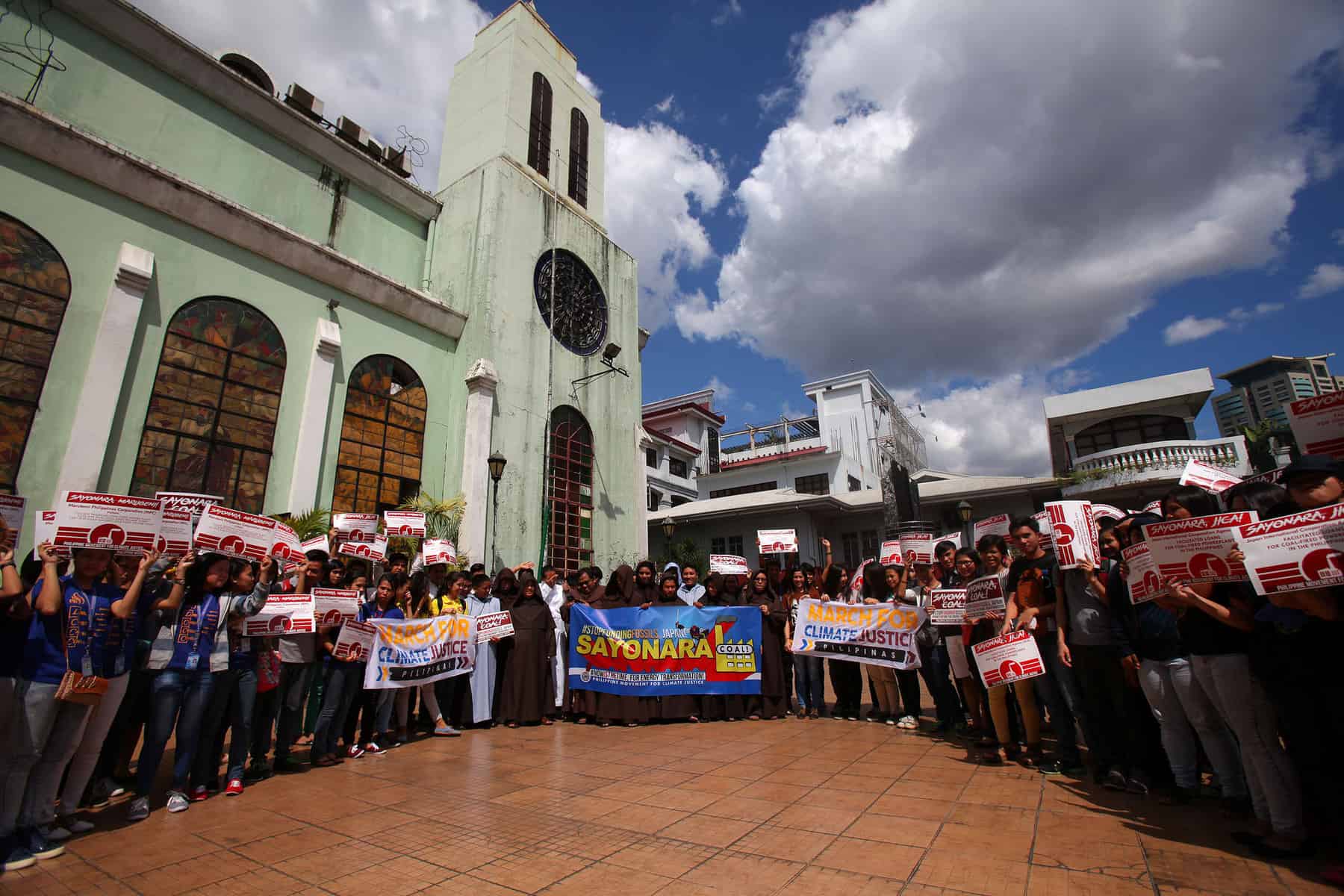
A protest for “climate justice” at Quezon City, Philippines on 14 November 2015. Photo: RB Ibañez via Flickr
For these good reasons and to not derail the debate by fixating on questions regarding liability, the debate has extended beyond the narrow focus on compensation – the omnipresent elephant in the room of the UNFCCC process. The meeting at IIASA, which brought together 14 researchers from 10 institutions and 8 countries, also suggested that for a productive discussion, it makes sense to focus broadly on managing various climate risks by fostering current policies and practices while keeping the climate justice debate in close consideration.
This proposal essentially suggests to build on a long history of managing climate-related (and geophysical driven) extremes by employing a broad portfolio of different disaster risk management tools, including financial instruments such as insurance or regional risk pools. As identified also by the IPCC’s 5th assessment report, building on this body of knowledge and practice for comprehensively tackling existing and increasing extremes, holds a lot of promise and has seen international support, e.g. by the Sendai Framework for Action.
The discussion at IIASA focused on these two angles – climate justice and climate risk management – and worked out the following specific foci and building blocks for an evidence-based research approach to support the operationalization of the Loss and Damage Mechanism:
- Articulation of principles and definitions of Loss and Damage, including ethical and normative issues central to the discourse (e.g. liability and responsibility).
- Definition of the Loss and Damage space vis-á-vis the adaptation space.
- Research on the politics and institutional dimensions of the debate.
- Defining the scope for dealing with sudden-onset risk versus slow-onset impacts.
In the coming months the novel network effort will tackle these issues and questions in order to provide actionable but research-based input into the Loss and Damage deliberations.
Note: The authors thank the researchers present at the kick-off event at IIASA for their input on the topic and this blog post: Florent Baarsch (Climate Analytics, Berlin), Laurens Bouwer (Deltares, Delft), Rachel James (University of Oxford), Stefan Kienberger (University of Salzburg), Ana Lopez (University of Oxford), Colin McQuistan (Practical Action, Rugby), Jaroslav Mysiak (FEEM, Venice), Ilan Noy (University of Wellington), Joeri Roegelj (IIASA), Olivia Serdeczny (Climate Analytics, Berlin), Swenja Surminski (LSE, London), Koko Warner (UNU-EHS, Bonn)
References
Bouwer LM (2013). Projections of future extreme weather losses under changes in climate and exposure. RiskAnalysis 33(5):915–930
Herring, S.C., Hoerling, M.P., Peterson, T.C., Stott P.A. (eds) (2014). Explaining extreme events of 2013 from a climate perspective. Special Supplement to the Bulletin of the American Meteorological Society 95(9)
James, R., Otto, F., Parker, H., Boyd, E., Cornforth, R. Mitchell, D. and M. Allen (2014). Characterizing loss and damage from climate change. Nature Climate Change 4: 938-39
Mechler, R. Bouwer, L., Linnerooth-Bayer, J., Hochrainer-Stigler, S., Aerts, J., Surminski, S. (2014). Managing unnatural disaster risk from climate extremes. Nature Climate Change 4: 235-237
Peterson, T.C., Hoerling, M.P., Stott, P.A., Herring, S.C. (2013). Explaining Extreme Events of 2012 from a Climate Perspective. Bull. Amer. Meteor. Soc., 94: S1–S74. doi: http://dx.doi.org/10.1175/BAMS-D-13-00085.1
Trenberth, K.E., Fasullo, J.T., Shepherd, T.G. (2015). Attribution of climate extreme events. Nature Climate Change 5: 725–730. doi:10.1038/nclimate2657
This article gives the views of the author, and not the position of the Nexus blog, nor of the International Institute for Applied Systems Analysis.

You must be logged in to post a comment.