Sep 21, 2016 | Demography
By Raya Muttarak, IIASA World Population Program
Taking action on climate change is one top priority of the Sustainable Development Goals (SDGs), especially since its adverse impacts can undermine sustainable development. At the same time, reducing gender inequalities and empowering women and girls is fundamental in making progress across all the goals.
These two issues are also closely linked: in certain circumstances, women are more vulnerable to the effects of climate change than men, for example, due to weaker physical ability, lower socioeconomic status, and greater social, economic and political barriers in coping capacity.
This is why, in recent work, we have been exploring the differential impacts of climate change on subgroups of population such as by gender, age, education, and income. The rising number of households headed by women across the world and, in particular, in southern Africa calls for special attention to their economic welfare. In general female-headed households are more likely to be in poverty. Under the context of the changing climate, it is likely that weather extremes, rainfall variability, and natural disasters associated with climate change will exacerbate economic disadvantages of female-headed households.
Female-headed households are more economically vulnerable to climate-related shocks for three big reasons, which researchers call a “triple burden”. First, persistent gender disparities in the labor market and other productive activities, including limited access to formal credit markets and land contribute to greater economic disadvantage for female-headed households. Second, these households often have a higher total dependency ratio–that is, women take care of a higher proportion of dependent children and the elderly. Third, women who are heads of households with no other adult help have a “double day burden” where they have to fulfil both domestic duties and make money outside the home. That means that female heads face greater time and mobility constraints and may have to work fewer hours or choose lower-paying jobs.
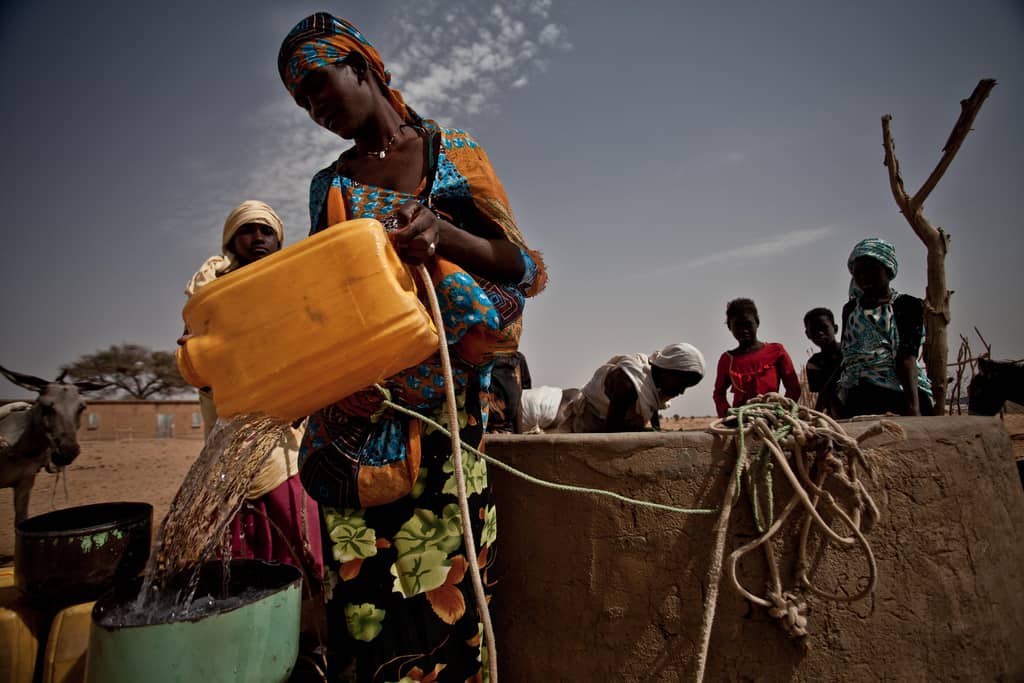
Female-headed households are more economically vulnerable to climate-related shocks for three big reasons, which researchers call a “triple burden”.
Photo: Pablo Tosco/Oxfam
Add climatic shocks to an already disadvantaged family, and the livelihood disruption can be a catastrophe. However, there have been very few studies of how female-headed households actually fare in the context of climate change. In our new study published in World Development, we used household survey data from South Africa and local rainfall data over the period 2006-2012 to examine how female-headed households fare economically when facing variation in rainfall. The study provides new empirical evidence on economic welfare of households headed by women following climatic shocks.
The new and unique part of our study is that we are able to control for observed and unobserved characteristics of households using a statistical technique called fixed effects estimation, which enables us to control for the household-specific effects on income. It also lets us account for different income trajectories in households with different demographic compositions. Furthermore, we were able to evaluate the impacts of income shock on economic vulnerability of female-headed households using rainfall variability as an exogenous source of risk. Income loss due to other variables such as death of a household member or losing a job are likely to be endogenously determined by household characteristics, that is, female heads have lower level of education and hence are more likely to fall into unemployment. But because rainfall variation is not connected to household factors, we were able to measure the causal effect of climate variability on incomes, comparing different household types.
Our study shows that female-headed households in South Africa are indeed more vulnerable to climate variability than households headed by two adults, and not just because of the greater economic disadvantages that they start with. Even after controlling for household socioeconomic characteristics, female heads still fare worse when facing economic shocks. This might be due to limited access to family support and protective social networks who can step in to help in time of crisis.
Our analysis also reveals that not all types of female-headed households are vulnerable to rainfall variability. This finding is especially important for designing a policy to reduce vulnerability of female-headed households. Given different routes into female headship, we show that never-married female heads, women with a non-resident spouse (for example, where the husband has moved to work in another region), and widows have greater economic vulnerability to climate variability. The group of female-headed households where the female head has never been married is the largest of these groups. Households with adults of both genders where the female works but the male does not work and households of separated or divorced women are no more vulnerable than male-headed households.
We also found that vulnerability to climate impacts is related to the effect of rainfall on agriculture. We find that female-headed households face greater economic vulnerability only in the districts where rainfall has a large effect on loss in agricultural yields. Regardless of household engagement in agriculture, crop losses in a district can affect food and livelihood security through surges in food prices and shortfalls in local demand.
Although our study focuses on South Africa, the results showing that female-headed households are more vulnerable to climate variability call for particular interventions to their vulnerability in the context of climate change. The number of female-headed households is rising, with an exceptionally high proportion in southern African countries (36.3% in Lesotho (2006), 43.9% in Namibia (2013), 47.9% in Swaziland (2007). As climate variation and extremes also increase, policies to reduce vulnerability to climate change need to explicitly consider the plight of this subgroup of population.
References
Flatø, M., Muttarak, R., & Pelser, A. (2016). Women, weather, and woes: The triangular dynamics of female-headed households, economic vulnerability, and climate variability in South Africa. World Development. doi:10.1016/j.worlddev.2016.08.015
Muttarak, R., Lutz, W., & Jiang, L. (2015). What can demographers contribute to the study of vulnerability? Vienna Yearbook of Population Research, 13, 1–13. doi:10.1553/populationyearbook2015s001
Rosenhouse, S. (1989). Identifying the poor : is “headship” a useful concept? (No. LSM58) (pp. 1–62). Washington, DC: The World Bank. http://documents.worldbank.org/curated/en/1989/07/442370/identifying-poor-headship-useful-concept. Accessed 24 February 2015
Note: This article gives the views of the author, and not the position of the Nexus blog, nor of the International Institute for Applied Systems Analysis.
Sep 2, 2016 | Communication, Sustainable Development, Women in Science
By Daisy Brickhill, IIASA science writer and editor.
“If you are the first to break a glass ceiling, you’re the one who gets scratched.” Tarja Halonen is a first for many things. She was the first female trade unions lawyer in Finland, the first female foreign minister for the country, and its first female president. She was also the first ex-president to spend her sabbatical at IIASA, meeting staff and discussing the institute’s work.
With a career rooted in social justice and a firm commitment to human rights, Halonen was eager to engage all at IIASA in discussions on equality and diversity, both within the institute and in wider society.
Damaging gender stereotyping was a theme which was touched on often in the Women in Science session, a meeting of female scientists from all disciplines and of all ages from around the institute. Halonen spoke of her own experiences of the monotonous gender pigeon-holing she experienced in politics “If you are married as a female politician you are either there because you have a strong man behind you or you are neglecting your family. And your appearance is always fair game. I remember the media saying that my handbag was too big. I was betraying the people of Finland with my big handbag!”
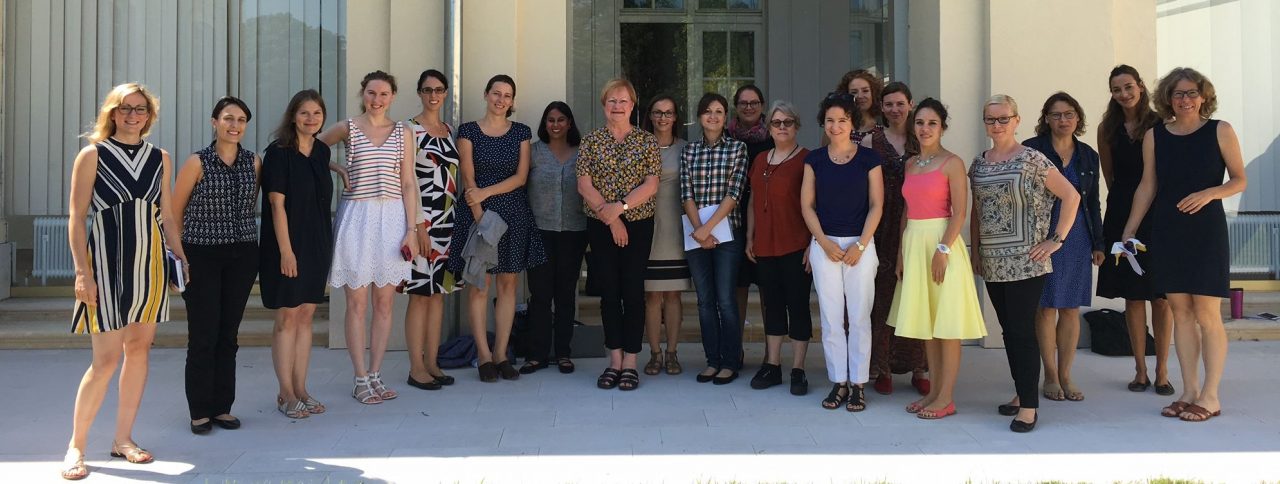
Women in science session with President Halonen at IIASA. © Michaela Rossini | IIASA
A key stereotype that can strongly affect both women and men is that childcare is “women’s work,” and as such unimportant. Parents of both genders should be supported to be active members of their own family. Men are often excluded from this—there is no statutory paternity leave in Austria, for instance—and women, expected to take on the majority of caring, are in turn excluded from their careers at a key point, especially if childcare services are poor or prohibitively expensive.
So how do we change things? All participants were eager to discuss ways of improving the situation. We can start by working from the bottom up, Halonen urged, doing everything we can in our immediate environments to improve things. Discuss diversity and equality issues as often as you can with as many people as you can. Be aware of your own unconscious biases, perhaps attend training to help challenge yourself, not just about gender but all types of diversity. Build pressure by enlisting the help of those outside your workplace too—visitors, funders, boards, and committees.
At this point in the Equality and Diversity session the door opened to admit IIASA Director General and CEO Professor Pavel Kabat, and Halonen turned to him with a twinkle in her eye: “Ah Pavel, we are so pleased to see you! You have come at exactly the right time, we were just discussing how we can change you and the whole institution.”
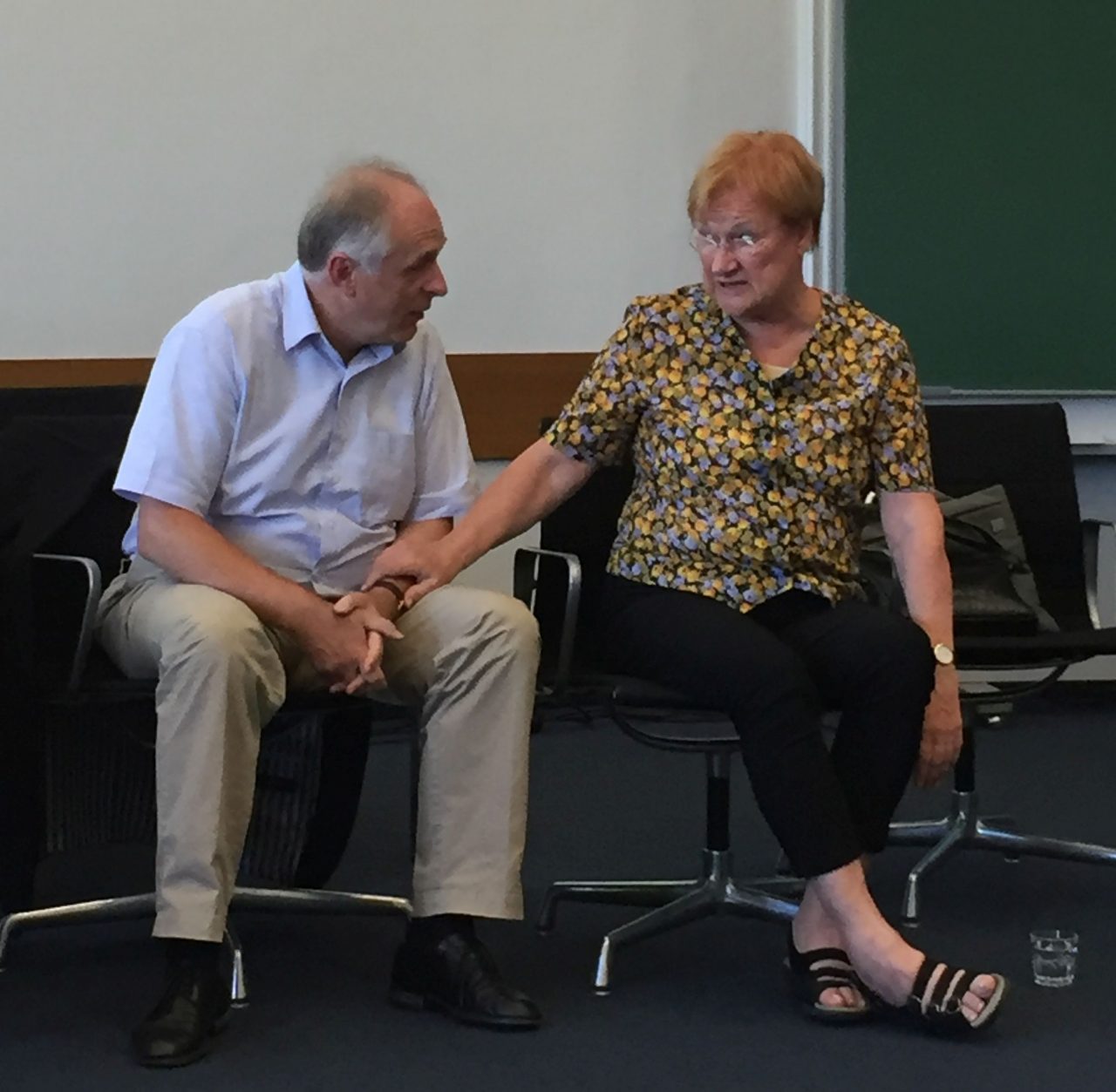
President Halonen and Prof. Dr Kabat © Katherine Leitzell | IIASA.
Engaging with the discussion, Kabat said “We are looking into improving things at IIASA, especially through our new human capital management.”
Importantly, the case is not hard to make: diversity and equality is good for everyone. “Even if we limit our argument to money alone we can still see clear benefits,” says Halonen. “Giving women more equality in Finland actually caused a rise in the country’s GDP. Turns out it wasn’t a smart financial decision to exclude half the population.” What a surprise.
Top-down measures also have their part to play. Quotas for gender balance—on panels or in committees for instance—can be controversial but they needn’t be, says Halonen briskly. “Set the limits at 40:60 in either direction, and remember, quotas are not the end point, they are a step towards something.” Seeing women in positions of power is important not just as role models for other women, it is important for men, young men and boys in particular, who will grow up happy to work for a female boss, and benefit from collaborations with female colleagues based on mutual respect.
Compulsory paternity leave is another controversial top-down measure that may help change attitudes. One participant in the Equality and Diversity session said that he would welcome this, and not only on a personal level. “I can imagine it would benefit not just the individual fathers and children but society as a whole, IIASA should do studies on this.”
There is hope in the air. As part of the Sustainable Development Goals all 193 member states of the UN have agreed that we need to achieve gender equality. Despite this, change won’t come as a single revolution, Halonen warned, it will come bit by bit as attitudes and rules slowly change. IIASA, as a thought-leader on sustainability transformations, can be a pioneer. After all, having equality and diversity at IIASA, an institute that aims to tackle problems across the globe, bridging cultures, peoples and genders, can only improve our science.
Further info
Dialogue session with Fischer, Halonen, and young scientists: World Leaders and future thought leaders
Lecture by Her Excellency Tarja Halonen
Note: This article gives the views of the author, and not the position of the Nexus blog, nor of the International Institute for Applied Systems Analysis.
Aug 23, 2016 | Science and Art, Science and Policy
Gloria Benedikt was born to dance. She started at the age of three and since the age of 12 she has been training every day—applying the laws of physics to the body. But with a degree in government and an interest in current affairs, Benedikt now builds bridges between these fields to make a difference, as IIASA’s first science and art associate.
Conducted and edited by Anneke Brand, IIASA science communication intern 2016.
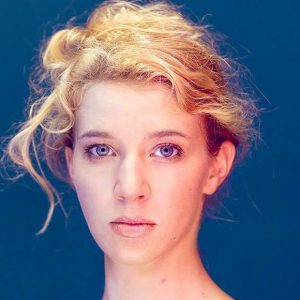
Gloria Benedikt © Daniel Dömölky Photography
When and how did you start to connect dance to broader societal questions?
The tipping point was when I was working in the library as an undergraduate student at Harvard University. I had to go to the theater for a performance, and thought to myself: I wish I could stay here, because there is more creativity involved in writing a paper than in going on stage executing the choreography of an abstract ballet. I realized that I had to get out of ballet company life and try to create work that establishes the missing link between ballet and the real world.
To follow my academic interest, I could write papers, but I had another language that I could use—dance—and I knew that there is a lot of power in this language. So I started choreographing papers that I wrote and rather than publishing them in journals, I performed them. The first work was called Growth, a duet illustrating how our actions on one side of the world impact the other side. As dancers we need to concentrate and listen to each other, take intelligent risks and not let go. If one of us lets go, we would both fall on our faces.
What motivated you make this career change?
We as contemporary artists have to redefine our roles. In recent decades we became very specialized, which is great, but we lost our connection to society. Now it’s time to bring art back into society, where it can create an impact. I am not a scientist. I don’t know exactly how the data is produced, but I can see the results, make sense of it and connect it to the things that I am specialized in.
How did you get involved with IIASA?
I first started interdisciplinary thinking with the economist Tomáš Sedláček who I met at the European Culture Forum 2013. A year later I had a public debate with Tomáš and the composer Merlijn Twaalfhoven in Vienna. Pavel Kabat, IIASA Director General and CEO, attended this and invited me to come to IIASA.
What have you done at IIASA so far?
For the first year at IIASA I created a variety of works to reach out to scientists and policymakers and with every work I went a step further. This year, for the first time I tried to integrate the two groups by actively involving scientists in the creation process. The result, COURAGE, an interdisciplinary performance debate will premiere at the European Forum Alpbach 2016. In September, I will co-direct a new project called Citizen Artist Incubator at IIASA, for performing artists who aim to apply artistic innovation to real-world problems.
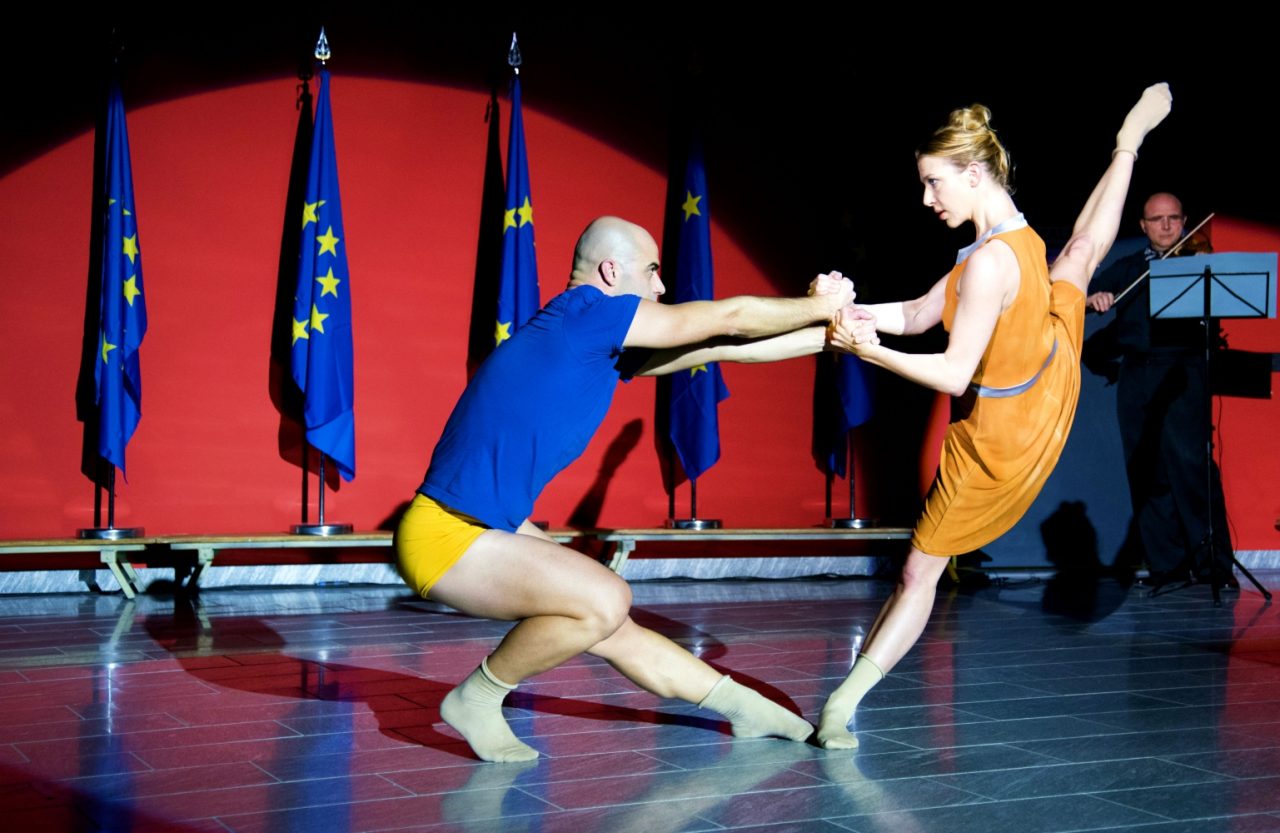
Gloria and Mimmo Miccolis performing Enlightenment 2.0 at the EU-JRC. The piece was specifically created for policymakers. It combined text, dance, and music, and reflected on art, science, climate change, migration and the role of Europe in it. © Ino Lucia
How do scientists react to your work?
The response to my performances at the European Forum Alpbach 2015 and the European Commission’s Joint Research Centre (EU-JRC) was extremely positive. It was amazing to see how people reacted—some even in tears. Afterwards they said that they didn’t understand what I was trying to say for the past two days, but the moment that they saw the piece, they got it. Of course people are skeptical at first—if they were not, I will not be able to make a difference.
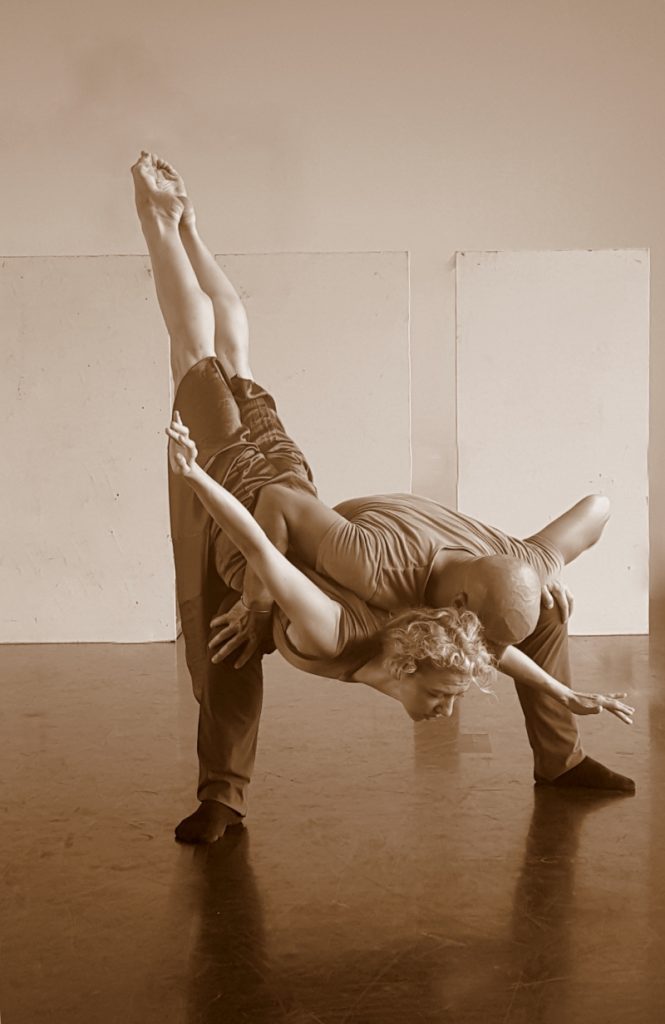
Gloria and Mimmo Miccolis rehearsing at Festspielhaus St. Pölten for COURAGE which will premiere at the European Forum Alpbach 2016.
What are you trying to achieve?
I’m trying to figure out how to connect the knowledge of art and science so that we can tackle the problems we face more efficiently. There are multiple dimensions to it. One is trying to figure out how we can communicate science better. Can we appeal to reason and emotion at the same time to win over hearts and minds?
As dancers we can physically illustrate scientific findings. For instance, in order to perform certain complicated movements, timing is extremely critical. The same goes for implementation of the Sustainable Development Goals.
Are you planning on doing research of your own?
At the moment I am trying something, evaluating the results, and seeing what can be improved, so in a way that is a type of research. For instance, some preliminary results came from the creation of COURAGE. We found that if we as scientists and artists want to work together, both parties will have to compromise, operate beyond our comfort zones, trust each other, and above all keep our audience at heart. That is exactly what we expect humanity to do when tackling global challenges. We have to be team players. It’s like putting a performance on stage. Everyone has to work together.
More information about Gloria Benedikt:
Benedikt trained at the Vienna state Opera Ballet School, and has a Bachelor’s degree in Liberal Arts from Harvard University, where she also danced for the Jose Mateo Ballet Theater. Her latest works created at IIASA will be performed at the European Forum Alpbach 2016 as well as the International Conference on Sustainable Development in New York.
www.gloriabenedikt.com
Fulfilling the Enlightenment dream: Arts and science complementing each other
Note: This article gives the views of the interviewee, and not the position of the Nexus blog, nor of the International Institute for Applied Systems Analysis.
Aug 19, 2016 | Science and Policy, Young Scientists
By Anneke Brand, IIASA science communication intern 2016.
For Malgorzata (Gosia) Smieszek it’s all about making sound decisions, and she is not afraid of using unconventional routes in doing so. She applies this rule to various aspects of her fast-paced life. Whether it is taking the right steps in trail running races, skiing or relocating to the Arctic Circle to do a PhD.
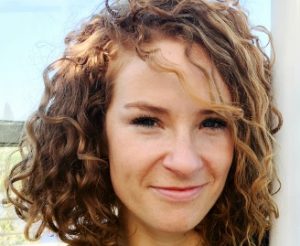
Gosia Smieszek © J. Westerlund, Arctic Centre
Gosia’s passion for the Arctic began to evolve during a conversation with a professor at a time when she was contemplating the idea of returning to academia. “I remember, when he said the word Arctic, I thought: yes, that’s what I want to do. True, before I was interested in energy and environmental issues, but the Arctic was certainly not on my radar. So I went to the first bookstore I found, asked for anything about the North and the lady, after giving me a very confused look, said she might have some photo books. So I left with one and things developed from there.”
In 2013 Gosia joined the Arctic Centre of the University of Lapland in Rovaniemi, Finland. Living there is not always easy, but hey, if you get to see the Northern Lights, reindeers and Santa Claus on a regular basis, it might be worth enduring long times of darkness in winter and endless sunshine in summer. With temperatures averaging −30°C, Rovaniemi is the perfect playground for Gosia.
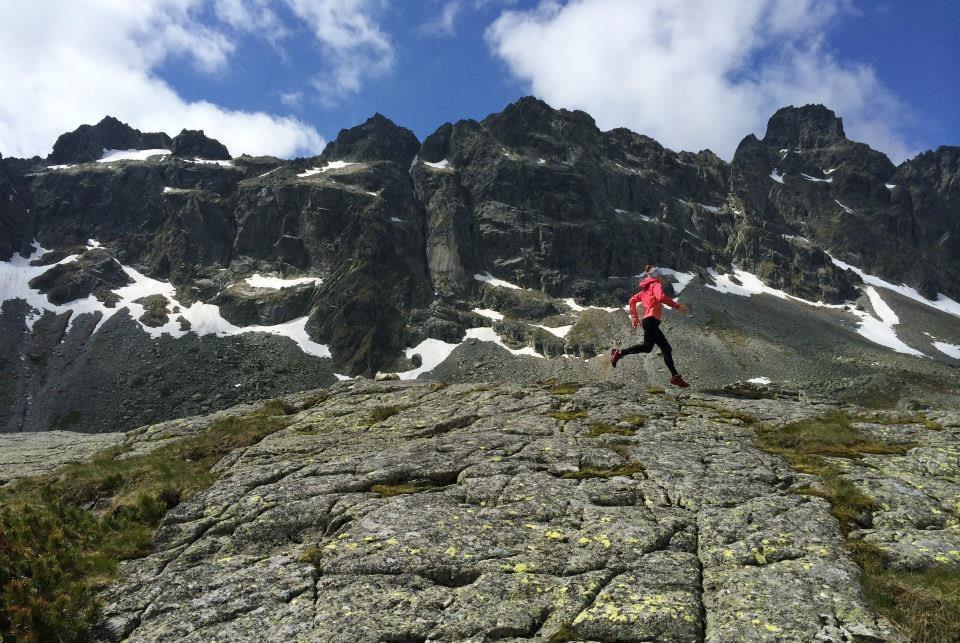
Running is one of Gosia’s favorite sports. She has competed in a few marathons, but her biggest race to date is the Butcher’s Run, an ultra trail of 83km over the Bieszczady mountains in Poland. Here she is running in the Tatra mountains. © Gosia Smieszek
Gosia grew up in Gliwice, a town in southern Poland, before moving to Kraków where she completed her undergraduate degree in international relations and political science. This was just before Poland’s accession to the EU, so it was the perfect time to pursue studies in this field.
She continued her studies in various locations including Belgium, France, Poland, and Austria. Before continuing her education and later working at the College of Europe, she also gained working experience as a translator at a large printing house in her home town in Poland.
For her PhD Gosia focuses on the interactions between scientists and policymakers, with the aim of enhancing evidence-based decision making in the Arctic Council. Scientific research on the Arctic has been conducted for decades, but “when it comes to translating science into practice it is still a huge challenge―on all possible levels,” she says.
“Scientists and policymakers have their own, very different, universes—with their own stories, goals, timelines, working methods and standards. It is better than in the past, but still extremely difficult to make these two universes meet.”
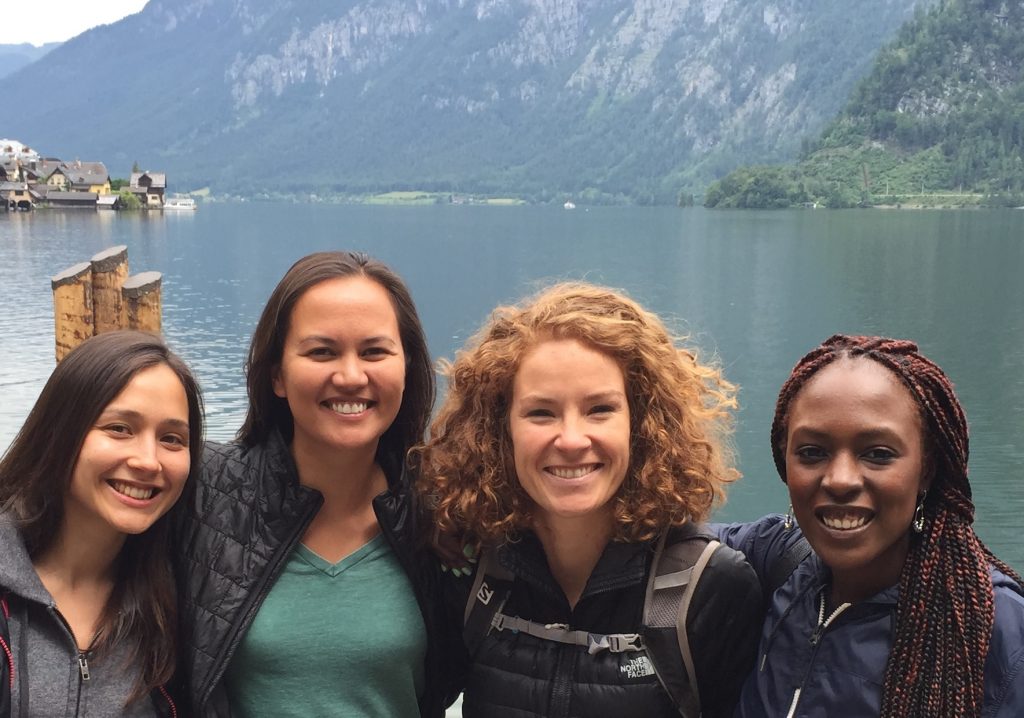
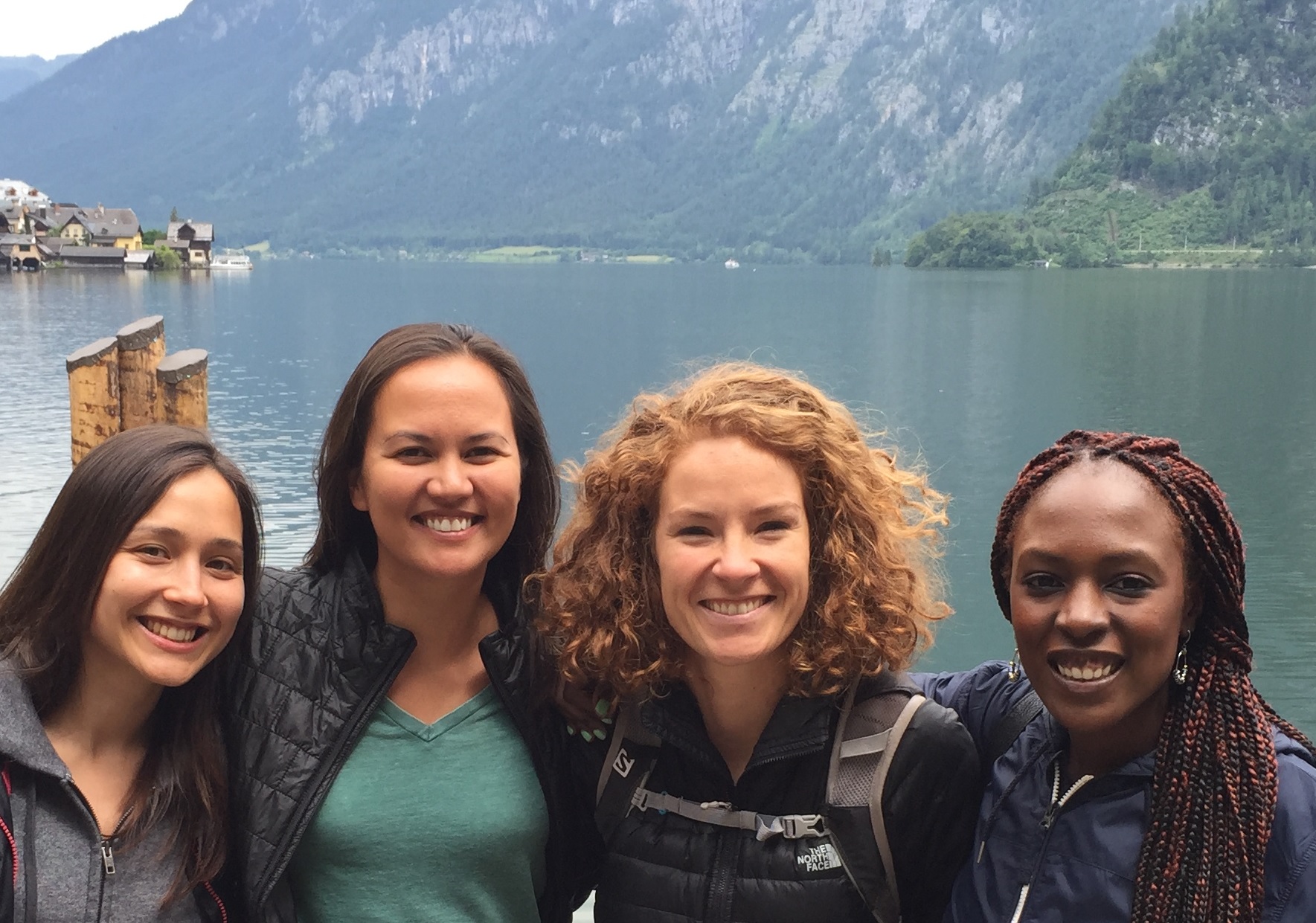
Gosia with fellow YSSPers, Dina, Stephanie and Chibulu during a visit to Hallstadt. © Chibulu Luo
As part of the Arctic Futures Initiative at IIASA, Gosia investigates and maps the structural organization of the Arctic Council and aims to determine the effectiveness of interactions between scientists and policymakers, as well as ways to improve the flow of knowledge and information between them.
Because of the nature of her work, Gosia spends almost half her time away from home, but you will never find her traveling without running shoes, swimming gear, and something to read. Diving, one of her greatest passions, has taken her to amazing places like Cuba and the Maldives, where meeting a whale shark face-to-face topped her list of underwater experiences.
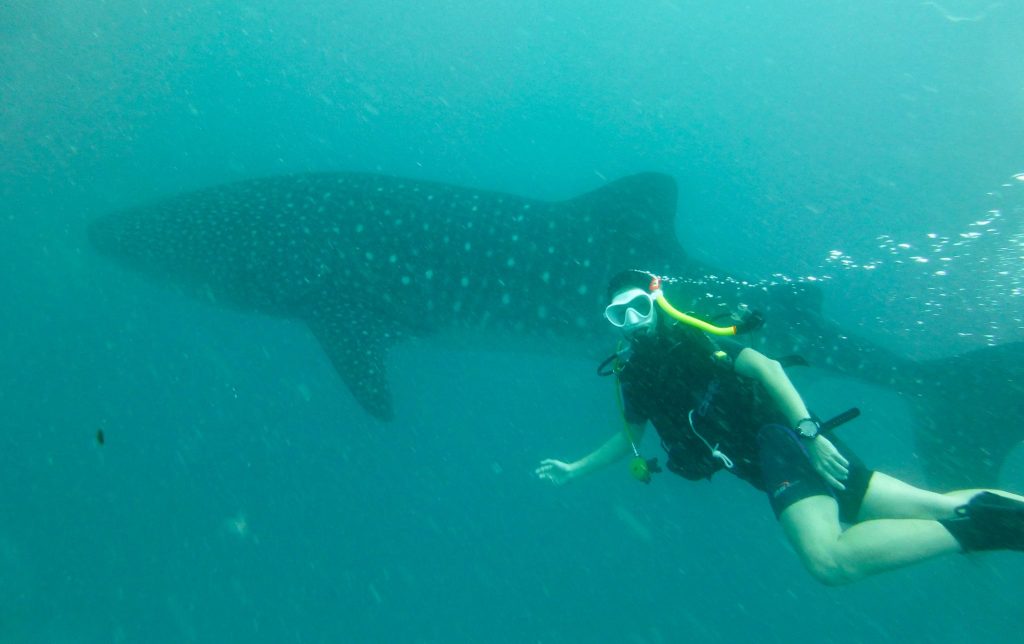
Gosia swimming with a whale shark. © Eiko Gramlich
Gosia is truly hoping to make a difference with her research on science-policy interface. She says: “To me, trying to bridge science and policy is a truly fascinating endeavor. Exploring these two worlds, seeking to understand them and learning their ‘languages’ to enable better communication between them is what drives me in my research. So hopefully we can learn from past mistakes and make things better—this time.”
Note: This article gives the views of the author, and not the position of the Nexus blog, nor of the International Institute for Applied Systems Analysis.
Aug 3, 2016 | Climate Change, Risk and resilience
By Adriana Keating, research scholar in the IIASA Risk and Resilience Program.
People have been playing games for fun for many thousands of years. But recently some have been designed not to escape from reality, but to improve it. As the world is becoming more and more complex, and the future more and more uncertain, serious games can be used as innovative tools for learning, decision making, improving effective collaboration and developing strategies for success. With games, we can communicate complex realities and learn from our mistakes without costs.
Systems thinking is required to tackle the challenge of managing both flood risk and development: to live in harmony with floods. Games provide the perfect avenue for exploring these challenges. Games that engage participants have been shown to be very successful and powerful dissemination instruments—with broader outreach than traditional reports. In a team made up of myself, Piotr Magnuszewski from the Water Program, Adam French from the Advanced Systems Analysis and Risk and Resilience Programs, and collaborators from the Zurich Flood Resilience Alliance, we have been developing a game that can help build flood resilience in developing countries.
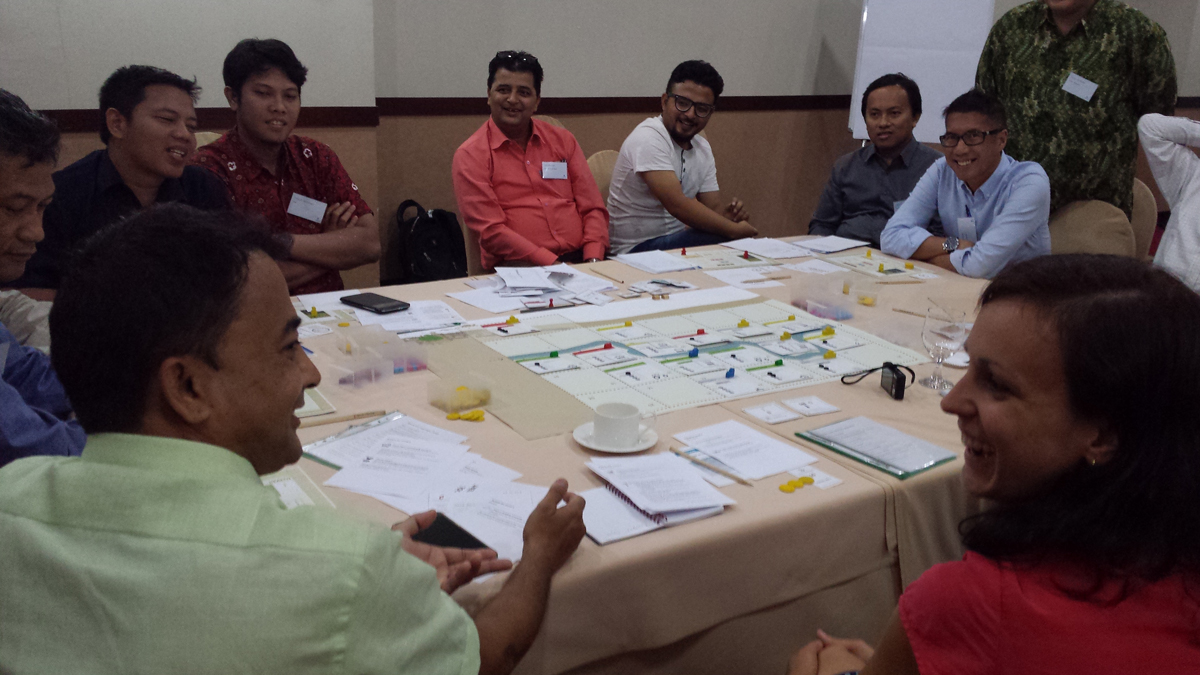
The game provoking discussion at a workshop in Jakarta. © Adriana Keating
Because games are experienced as something that feels real, more information is retained, learning is faster, and an intuition is gained about how to make real decisions. Critically, the IIASA Flood Resilience Game is designed to help participants— such as NGO staff working on flood-focused programs—to identify novel policies and strategies which improve flood resilience. In its current form it is a board-game played by at least eight players, who each take on a role as a member of a flood prone community. The direct interactions between players create a rich experience that can be discussed, analysed, and lead to concrete conclusions and actions. This allows players to explore vulnerabilities and capacities—citizens, local authorities and NGOs together—leading to an advanced understanding of interdependencies and the potential for working together.
The game draws on IIASA research on the deep-seated challenges in the typical approach to flood risk management. It allows players to experience, explore, and learn about the flood risk and resilience of communities in river valleys. It lets them experience the effects on resilience of investments in different types of “capital”—such as financial, human, social, physical, and natural. The impacts of flood damage on housing and infrastructure are also an important part of the game, as well as indirect effects on livelihoods, markets, and quality of life.
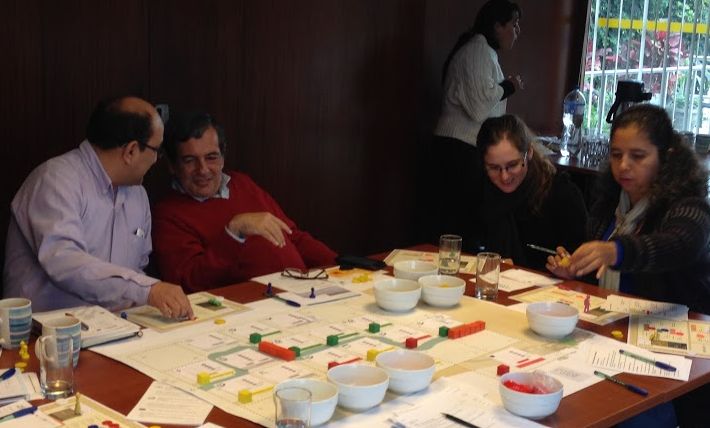
Players in Peru. © Adam French.
Playing the game can also improve understanding of the influence of preparedness, response, reconstruction on flood resilience. Importantly, it demonstrates the benefits of investment in risk reduction before the flood strikes, such as via land use planning and flood proofing homes. The effects of institutional arrangements, such as communication between citizens and with government, also become clearer during the course of the game.
Finally, participants can explore the complex outcomes on the economy, society and the environment from long-term development pathways. This highlights the types of decisions needed to avoid creating more flood risk in the future, incentivizing action before a flood through enhancing participatory decision-making. All these complex ideas are experienced with simple, concrete game elements that participants can connect with their daily realities.
From a researcher’s perspective, observing game play deepens our understanding of stakeholder motivations in relation to flood resilience. The game also contributes to better understanding and use of IIASA research via the Zurich flood resilience measurement tool, a ground-breaking approach to resilience measurement.
After several field tests in Jakarta and Lima with staff from the NGOs Practical Action, Red Cross Indonesia, the International Federation of Red Cross and Red Crescent Societies, Mercy Corp, Plan and Concern Worldwide, the game is now being refined. The next version will be released soon, and the possibility of a mobile application to allow players to handle more complex dynamics while interacting in the workshop is being explored.
The game was developed in collaboration with the Centre for Systems Solutions, Poland, and with funding from the Zurich Flood Resilience Alliance.
Note: This article gives the views of the author, and not the position of the Nexus blog, nor of the International Institute for Applied Systems Analysis.


You must be logged in to post a comment.