Oct 6, 2016 | Alumni, Systems Analysis
Chibulu Luo, PhD Student in the Department of Civil Engineering at the University of Toronto, and a 2016 participant in the IIASA Young Scientists Summer Program
We cannot think about sustainable development without having a clear agenda for cities. So, for the first time, the world has agreed – under the UN’s Sustainable Development Goals (SDGs) and the New Urban Agenda – to promote more sustainable, resilient, and inclusive cities. Achieving this ambitious target is highly relevant in the context of African cities, where most future urban growth will occur. But it is also a major challenge.
Of the projected 2.4 billion people expected to be added to the global urban population between now and 2050, over half (1.3 billion) will be in Africa. The continent’s urban communities will experience dramatic shifts in living and place significant pressure on built infrastructure and supporting ecosystem services. As many cities are yet to be fully developed, newly built infrastructure (estimated to cost an additional US$30 to $100 billion per year) will impact their urban form (i.e. the configuration of buildings and open spaces) and future land use.
In order to realize the SDGs, African cities, in particular, need an ecosystem-based spatial approach to urban planning that recognizes the role of nature and communities in enabling a more resilient urban form. In this regard, more comprehensive understanding of the dynamics between urban form and the social and ecological aspects of cities is critical.
Unfortunately, research to investigate these relationships in the context of African cities has been limited. That’s why, as a Young Scientist at IIASA, I sought to address these research priorities, by asking the following questions: What is the relationship between urban form and the social and ecological aspects of African cities? How has form been changing over time and what are the exhibiting emergent properties? And what factors are hindering a transition towards a more resilient urban form?
Fundamentally, my research approach applies a social-ecological system (SES) lens to investigate these dynamics, where resilience is defined as the capacity of urban form to cope under conditions of change and uncertainty, to be able to recover from shocks and stresses, and to retain basic function. At the same time, resilience is characterized by the interplay between the physical, social, and ecological performance of cities.
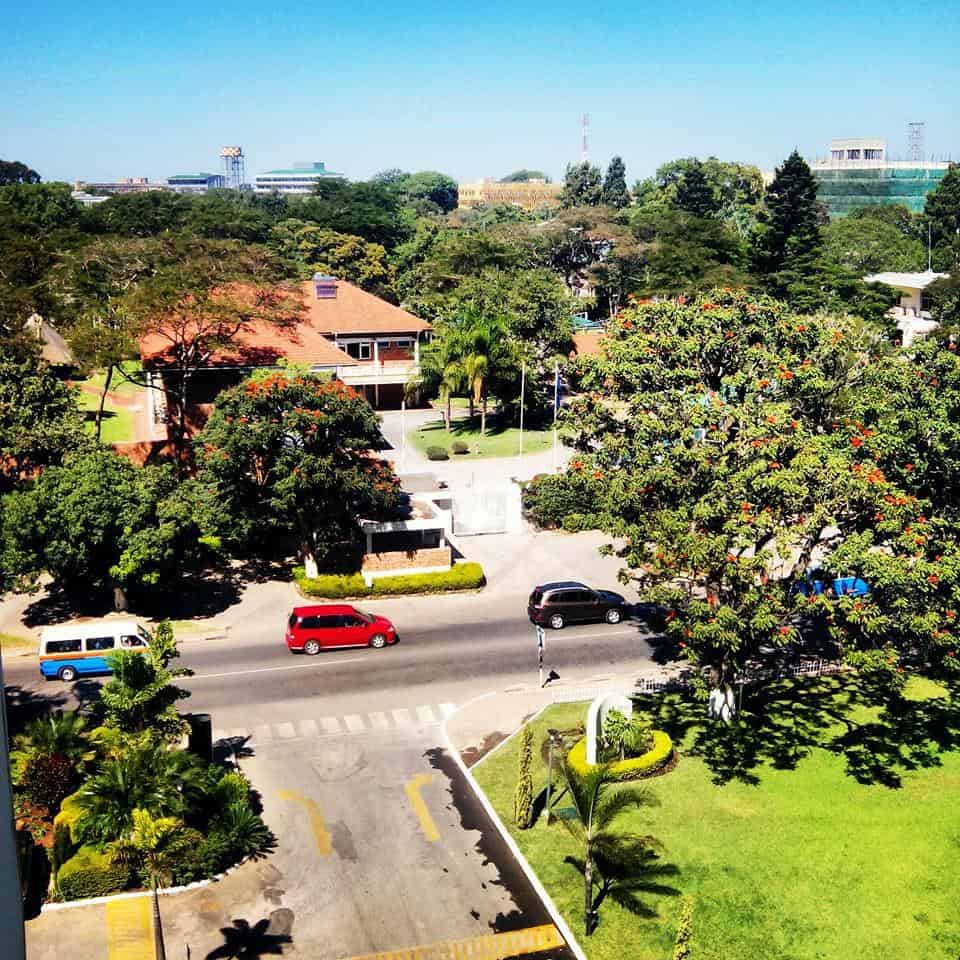
Resilient urban forms are spatially designed to support social and ecological diversity, such as preserving and managing urban greenery
Photo Credit: Image of Lusaka, Zambia, posted on #BeautifulLusaka Facebook Page
Currently, Africa’s urbanization is largely unplanned. Urban expansion has led to the destruction of natural resources and increased levels of pollution and related diseases. These challenges are further compounded by inadequate master plans – which often date back to the colonial era in many countries – and capacity to ensure equitable access to basic services, particularly for the poorest dwellers. Consequently, over 70% of people in urban areas live in informal settlements or slums.
My summer research focused on the specific case of Dar es Salaam, Tanzania, and Lusaka, Zambia – two cities with very different forms, and social and ecological settings. I used the SES approach to develop a more holistic understanding of the local dynamics in these cities and emerging patterns of growth. My findings show that urbanization has resulted in high rates of sprawl and slum growth, as well as reductions in green space and increasing built-up area. This has ultimately increased vulnerabilities to climate-related impacts such as flooding.
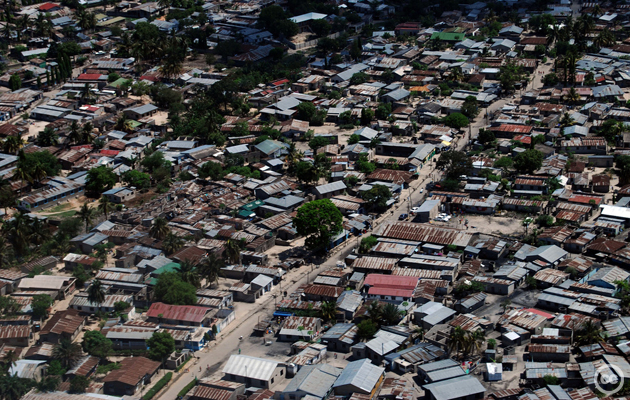
Densely built slum in Dar es Salaam due to unplanned urban development
Photo Credit: tcktcktck.org
Using satellite images in Google Earth Engine, I also mapped land cover and urban forms in both cities in 2005 and 2015 respectively, and quantitatively assessed changes during the 10-year period. Major changes such as the rapid densification of slum areas are considered to be emergent properties of the complex dynamics ascribed by the SES framework. Also, urban communities are playing a significant role in shaping the form of cities in an informal manner, and are not often engaged in the planning process.
Approaches to address these challenges have been varied. On the one hand, initiatives such as the Future Resilience for African Cities and Lands (FRACTAL) project in Lusaka are working to address urban climate vulnerabilities and risks in cities, and integrate this scientific knowledge into decision-making processes. One the other hand, international property developers and firms are offering “new visions for African cities” based on common ideas of “smart” or “eco“ cities. However, these visions are often incongruous with local contexts, and grounded on limited understanding of the underlying local dynamics shaping cities.
My research offers starting point to frame the understanding of these complex dynamics, and ultimately support more realistic approaches to urban planning and governance on the continent.
References
Cobbinah, P. B., & Darkwah, R. M. (2016). African Urbanism: the Geography of Urban Greenery. Urban Forum.
IPCC (b). (2014). Working Group II, Chapter 22: Africa. IPCC.
LSE Cities. (2013). Evolving Cities: Exploring the relations between urban form resilience and the governance of urban form. London School of Economics and Political Science.
OECD. (2016). African Economic Outlook 2016 Sustainable Cities and Structural Transformation. OECD.
The Global Urbanist. (2013, November 26). Who will plan Africa’s cities? Changing the way urban planning is taught in African universities.
UNDESA. (2015). Global Urbanization Prospects (Key Findings).
Watson, V. (2013). African urban fantasies: dreams or nightmares. Environment & Urbanization.
Note: This article gives the views of the author, and not the position of the Nexus blog, nor of the International Institute for Applied Systems Analysis.
Oct 4, 2016 | Climate Change, Food
By David Leclère, IIASA Ecosystems Services and Management Program
August was the warmest ever recorded globally, as was every single month since October 2015. It will not take long for these records to become the norm, and this will tremendously challenge food provision for everyone on the planet. Each additional Celsius degree in global mean temperature will reduce wheat yield by about 5%. While we struggle to take action for limiting global warming by the end of the century to 2°C above preindustrial levels, business as usual scenarios come closer to +5 °C.
However, we lack good and actionable knowledge on this perfect storm in the making. Despite the heat, world wheat production should hit a new record high in 2016, but EU production is expected to be 10% lower than last year. In France, this drop should be around 25-30% and one has to go back to 1983 to find yields equally low. Explanations indeed now point to weather as a large contributor. But underlying mechanisms were poorly anticipated by forecasts and are poorly addressed in climate change impacts research.
©Paul Townsend via Flickr
Second, many blind spots remain. For example, livestock has a tremendous share in the carbon footprint of agriculture, but also a high nutritional and cultural value. Yet, livestock were not even mentioned once in the summary for policymakers of the last IPCC report dedicated to impacts and adaptation. Heat stress reduces animal production, and increases greenhouse gas emissions per unit of product. In addition, a lower share of animal products in our diet could dramatically reduce pollution and food insecurity. However, we don’t understand well consumers’ preferences in that respect, and how they can be translated in actionable policies.
How can we generate adequate knowledge in time while climate is changing? To be able to forecast yields and prevent dramatic price swings like the 2008 food crisis? To avoid bad surprises due to large missing knowledge, like the livestock question?
In short: it will take far more research to answer these questions—and that means a major increase in funding.
I recently presented two studies by our team at a scientific conference in Germany, which was organized by a European network of agricultural research scientists (MACSUR). One was a literature review on how to estimate the consequences of heat stress on livestock at a global scale. The other one presented scenarios on future food security in Europe, generated in a way that delivers useful knowledge for stakeholders. The MACSUR network was funded as a knowledge hub to foster interactions between research institutes of European countries. In many countries, the funding covered travels and workshops, not new research. Of course, nowadays researchers have to compete for funding to do actual research.
So let’s play the game. The MACSUR network is now aiming at a ‘Future and Emerging Technologies Flagship’, the biggest type of EU funding: 1 billion Euros over 10 years for hundreds of researchers. Recent examples include the Human Brain Project, the Graphene Flagship, and the Quantum Technology Flagship. We are trying to get one on modeling food security under climate change.

© Sacha Drouart
Such a project could leapfrog our ability to deal with climate change, a major societal challenge Europe is confronted with (one of the two requirements for FET Flagship funding). The other requirement gave us a hard time at first sight: generating technological innovation, growth and jobs in Europe -but one just needs the right lens. First, agriculture already sustains about 44 million jobs in the EU and this will increase if we are serious about reducing the carbon content of our economy. Second, data now flows at an unprecedented speed (aka, big data). Think about the amount of data acquired with Pokemon Go, and imagine we would harness such concept for science through crowdsourcing and citizen-based science. With such data, agricultural forecasts would perform much better. Similarly, light drones and connected devices will likely open a new era for farm management. Third, we need models that translate big data into knowledge, and not only for the agricultural sector. Similarly, models can also be powerful tools to confront views and could trigger large social innovation.
To get this funding, we need support from a lot of people. The Graphene project claimed support from than 3500 actors, from citizens to industrial players in Europe. We have until end of November to reach 3500 votes, at least. If you think EU should give food security under climate change the same importance as improving the understanding of the human brain, or developing quantum computers, we need you. This will simply never happen without you! Please help us out with two simple actions:
- Go the proposal, and vote for/comment it (see instructions, please highlight the potential for concrete innovations)!
- Spread the word – share this post with your friends, your family, and your colleagues!
Note: This article gives the views of the author, and not the position of the Nexus blog, nor of the International Institute for Applied Systems Analysis.
Sep 29, 2016 | Climate Change
By Anni Reissell, IIASA Arctic Futures Initiative
It is that time of the year again – in late summer and early fall the media is covering the Arctic sea ice extent. Whether it is another record-breaking low like 2005, 2007, or 2012, or in second place, like this year (see for example New York Times, Guardian), the news is not good.
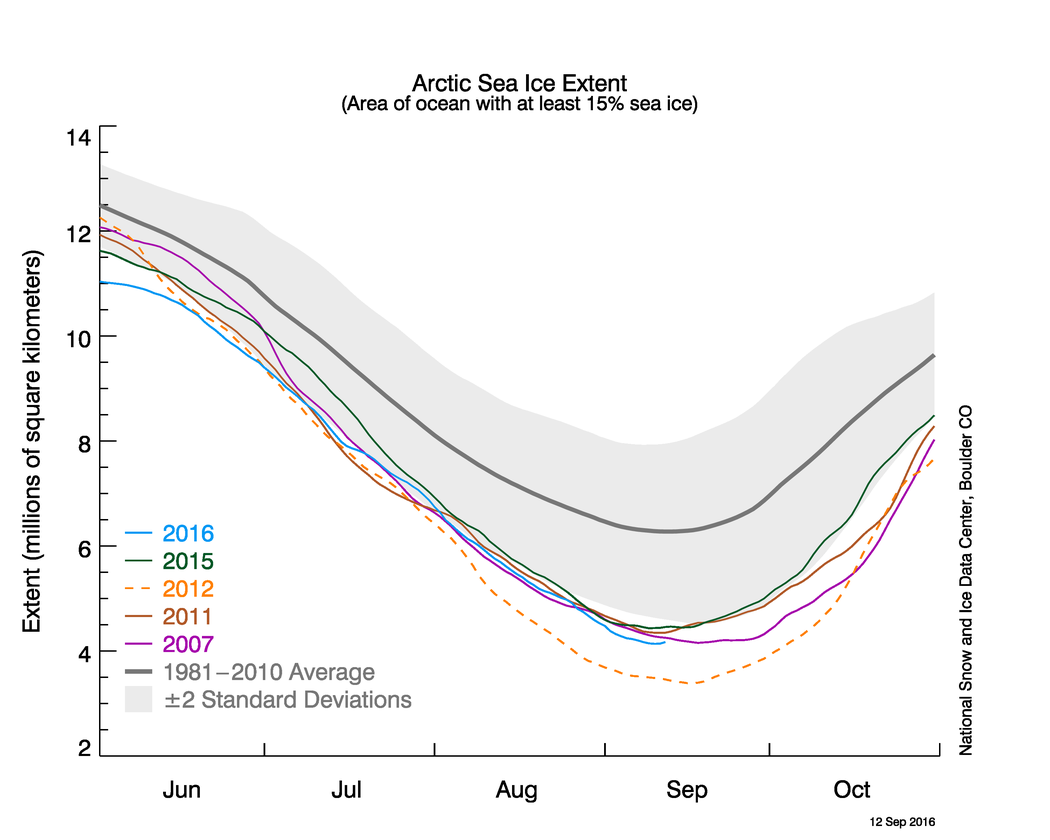
The minimum Arctic sea ice extent this year tied for second-lowest. Credit: National Snow and Ice Data Center
And again, we hear many speculations on when we will start to experience an ice-free Arctic Ocean during summertime. Will it be 2030, 2050?
Are we stuck in keeping track and recording, observing the change, how fast or slow it is from year to another? Or is something different this year?
I believe that yes, there is a bit of a difference – and a bit more hope. We are in the post-Paris climate agreement (COP21) and UN Sustainable Development Goals (SDG) world.
Today, 48% of 196 nations have formally bound their governments to the Paris agreement, and it is anticipated that by the end of the year, the required 55 nations responsible for 55% of emissions globally will have formally committed to the Paris agreement. This is when the agreement takes legal force, although implementation is another issue and a new story.
I attend scientific meetings, and meetings gathering science, policy, and business stakeholders. Way too often when I attend those meetings, the participants again state that we must do this and we must do that, but they are not prepared to give concrete help and concrete suggestions. They do not talk about the possibility to commit themselves to anything other than stating the need or supervising the statement of needs, leaving the planning of implementation and search for resources happily to some unnamed others.
The Arctic today is in the spotlight not just in the sense that the world’s attention is briefly focused there: it is melting fast under the effect of a variety of physical forces that concentrate warming in the Arctic region. What could we do to help cool the Arctic more quickly?
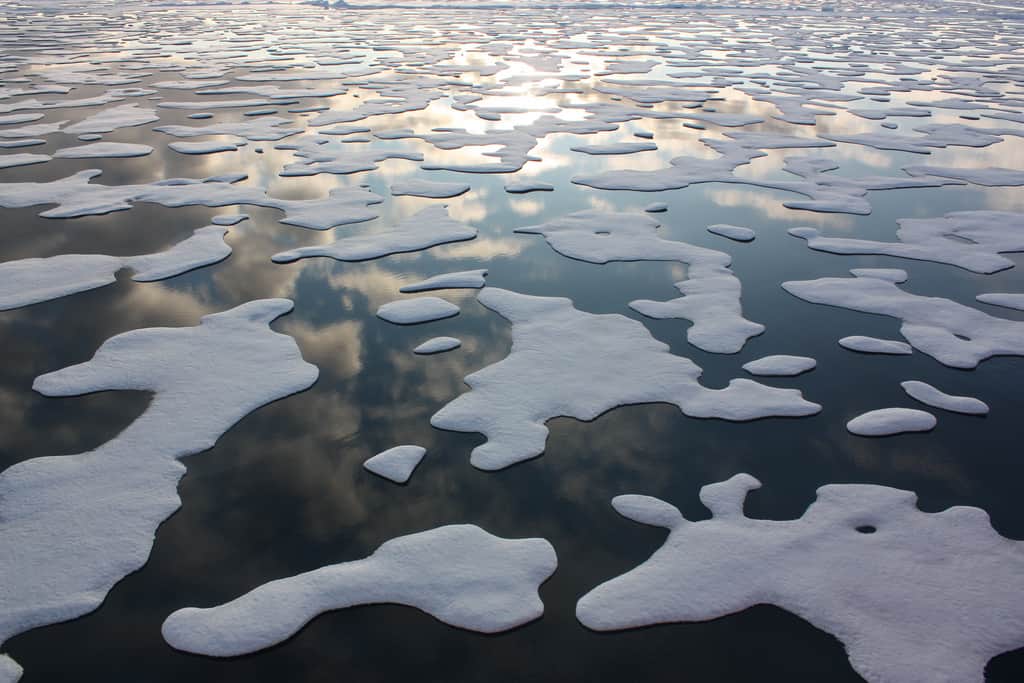
Melting sea ice in the Arctic, during a 2011 research cruise. Credit: NASA Goddard Space Flight Center
Reducing greenhouse gas emissions through agreements and voluntary implementation by nations, ramping up the use of renewable energy sources and developing new technology, and then waiting for greenhouse gases to decrease in the atmosphere–this will all take a long time. And it will be much longer before we experience the impacts of the emissions reductions. But in parallel to these slow but indispensable developments, there are faster ways of helping out the Arctic in particular. And as a co-benefit, we can clean the air, improve our health, helping the rest of the world as well.
About 25% of the current warming of the Arctic is attributed to black carbon, that is, soot coming from incomplete combustion of fossil fuels.
The main culprit for the man-made black carbon in the Arctic surface atmosphere is gas flaring, wasteful burning of gas in the oil and gas industry. Gas flaring has been found to contribute to 42% of the annual mean black carbon surface concentrations in the Arctic, hence dominating the black carbon emissions north of 66oN.
A large part of the warming experienced in the Arctic is due to black carbon emissions from the eight Arctic nations and the region north of approximately 40oN, including European Union, Russia, Ukraine, China, Canada, and part of the USA.
The USA and Canada have agreed to end routine gas flaring by 2030. My hope is that the IIASA Arctic Futures Initiative could get together science, policy and business stakeholders from the Arctic nations in order to tackle this problem, with other concerned parties, and with countries not yet involved in discussions.
Reference
Stohl, A., Aamaas, B., Amann, M., et. al. (2015). Evaluating the climate and air quality impacts of short-lived pollutants, Atmos. Chem. Phys., 15, 10529-10566, doi:10.5194/acp-15-10529-2015, 2015.
Note: This article gives the views of the author, and not the position of the Nexus blog, nor of the International Institute for Applied Systems Analysis.
Sep 28, 2016 | IIASA Network
By Daniel McMurray, BA LLB MIL Global Event Lead – Impact Hub, Managing Director & Global Head of Communications – Enterprise IQ Pty Ltd
“It is paradoxical, yet true, to say, that the more we know, the more ignorant we become in the absolute sense, for it is only through enlightenment that we become conscious of our limitations. Precisely one of the most gratifying results of intellectual evolution is the continuous opening up of new and greater prospects”.
– Nikola Tesla
It is hard not to feel that we live at a pivotal moment in history, with the world racing toward an epochal crossroad.
In one direction lies the path of reason, science, community and progress. A world where growing systemic challenges like climate change, resource scarcity, overpopulation, inequality, and environmental degradation can be addressed through logic, evidence, and rational, creative, and collaborative action. Where the ingenuity, collective genius, and relentless optimism of humanity can resolve complex problems such as poverty, disease, and ecological collapse, creating abundance of energy, health, education and well-being for all.
In the other direction, lies a different path. One of regression, unreason, and parochialism. A fact-free, fearful and frightening world of separation, science denialism, and superstition, ruled over by demagogues offering glib, unworkable solutions, convenient scapegoats to blame, and soothing illusory retreat into fragmented tribal realms.
Which path we collectively choose to follow will determine the trajectory of the 21st century and beyond. Will we choose the enlightened path of working together collectively, collaboratively, and consciously for the greater good? Or will we choose the path of darkness, disintegrating into unconscious, unreasonable and irrational behavior that hastens systemic collapse?
At such a pivotal moment, the choice of “New Enlightenment” as the theme for the recent European Forum Alpbach was a timely, prescient and crucial framing.
Attending the forum with my European-based colleagues from Impact Hub – a globally connected network of social entrepreneurs, innovators, and change-makers as official partners for the event – inspired hope that the path of enlightenment, reason and collaborative action is fundamentally achievable.
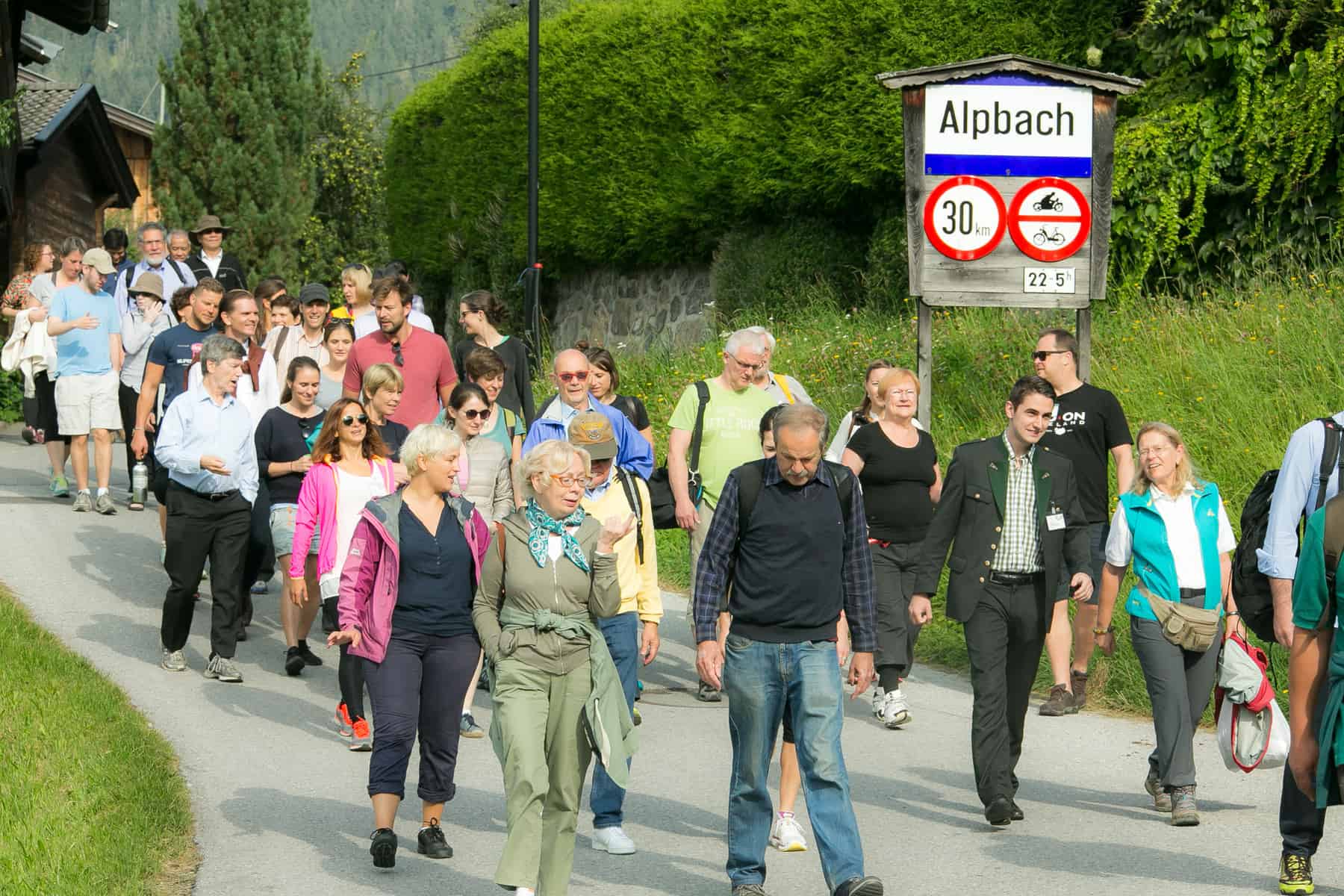
Members of the Alpbach Laxenburg Group and Impact Hub hike in Alpbach, Austria in August 2016. © Matthias Silveri | IIASA
One of the highlights of the event for our contingent was a facilitated hike into the Tyrolean alps with Pavel Kabat (Director General & CEO of IIASA) and other key thought leaders from the Alpbach Laxenburg Group – including Jeffrey Sachs (Director of The Earth Institute from Columbia University), Tarja Halonen (the former President of Finland), Björn Stigson (former President of the WBCSD), Justin Yifu L in (Director of the Centre for New Structural Economics at Peking University), Pascal Lamy (former Director-General of the WTO), and many more cross-sectoral leaders from business, government, NGOs and civil society.
Gathered together in the scenic environs of the Boglalm Chalet, this diverse and eclectic group focused our discussion around how we can work together to achieve the Sustainable Development Goals.
Professor Sachs’ definition of an “entrepreneur” struck a chord. He described entrepreneurs as those with the vision to take elements from diverse sources, creatively combining and re- combining in new ways, key insights from different sectors, research fields, technologies, or existing systems to present a new solution or way of thinking.
In that group, representing a mix of the established elite and the challengers of tomorrow, the old and the new from business, government, science, social enterprise, and civil society, it was refreshing to feel the positive energy and inspired thinking that can come from embracing and making space for an open, cross -pollination of ideas.
It brought to mind a universal truth – that humanity is at its best when we work together collaboratively, breaking down barriers, dissolving silos of thought and entrenched interests and, like Professor Sachs’ concept of real entrepreneurship, combining ideas in new, innovative and creative ways. The path of enlightenment is not the domain of any one group. Political leaders can’t fix things alone – lacking the power, methodologies, community currency, and instruments required. They need business leaders, scientists, innovators, and change-agents from the social sector and civil society to bridge the gaps in dialogue, bring fresh insights and recombine them in radically new ways.
As Albert Einstein famously said, “We cannot solve our problems with the same level of thinking that created them”. The path of enlightenment can only be reached through collaborative action. It is a conscious choice and one that we must come together to choose in order to avert catastrophe.
“Really, the only thing that makes sense is to strive for greater collective enlightenment”.
Elon Musk
Note: This article gives the views of the author, and not the position of the Nexus blog, nor of the International Institute for Applied Systems Analysis.
Sep 26, 2016 | Water
By Luzma Fabiola Nava, IIASA Water Program
North American leaders have recently announced initiatives on climate change, clean energy, the environment, and migration. But lacking from these discussions is a much-needed focus on the shared water resources that bind these countries. The Paso del Norte is a boundary region between the USA and Mexico where cooperation and joint action are needed to secure reliable and sustainable shared water resources.

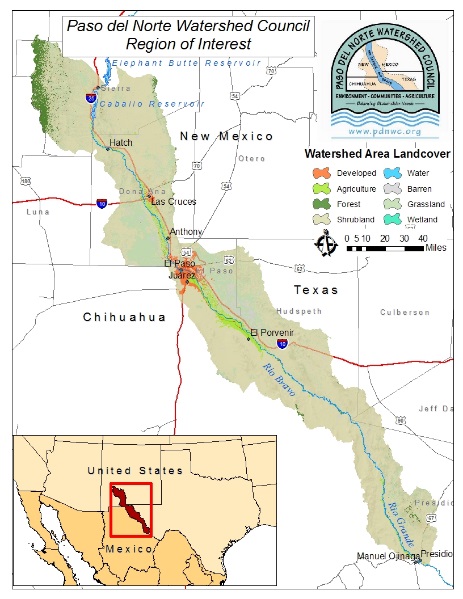
Image: Paso Del Norte Watershed Council: http://www.pdnwc.org/
The Paso del Norte (PdN) emblematizes an important regional focus of attention. It is located right at the midpoint of the USA-Mexico border and the Rio Grande/Bravo basin. The region extends approximately 550 km along the Rio Grande from Elephant Butte Reservoir in southern New Mexico to the confluence of the Rio Conchos in Presidio County, Texas. With a population of 2.5 million, the Paso del Norte constitutes one of the largest international cross-border regions in the world and the largest boundary metropolitan area between three states (New Mexico, Texas and Chihuahua), and two countries (the USA and Mexico).
Water is scarce in the channelized Paso del Norte. The Paso del Norte is one of the most irrigation intensive and environmentally damaged regions in the Rio Grande Basin. With an average rainfall of only about 150mm and increasing evaporation rates, crops such as maize, alfalfa, pecans, chili, and cotton are growing in this semi-arid region. Water competition is intensifying due to constant agricultural water use and growing urban water demands. Climate change is expected to reduce water availability, affect the quality of aquatic environments, and accentuate sustained drought and water scarcity.
Water scarcity will greatly worsen in the Paso del Norte region if current water policies and regulations persist and climate projections prove correct. Without new international cooperation, cross-border regions like the Paso del Norte, which includes the major cities of Las Cruces, El Paso, and Ciudad Juarez, will face a water resource crisis, as climate change and population growth place greater pressure on an already precarious system. This is why laws and regulations governing water in the Paso del Norte need to be adapted to this reality.
If we want to prevent a water crisis in this binational region, we should start working together to build institutional resilience by means of enabling regional openness and flexibility of the existing ensemble of rules and policy processes. Creating resilient water institutions in the Paso del Norte region will help the design of an ad-hoc regional basin management approach, featuring increased dialogue and coordination among all relevant parties aiming to secure water in the region. A coordinated and sustained binational effort – from the states and non-state actors- is of paramount importance to find solutions to shared problems and adapt the way water resources are being managed across the border.
The Paso del Norte Task Force, created in 1998, represents the most appropriate regional water stakeholder group with a high potential to advance sustainable water management in the region—but it needs to be revitalized. A new injection of funds could prevent this group from falling silent. . Through a collaborative effort, the Paso del Norte Task Force is in the best position to make the most effective use of the existing technical capacities and water infrastructures to adapt the management of water in the region. Its reactivation is essential to prepare an ad hoc water management plan for the region, and better respond to the challenge of securing adequate water supplies.

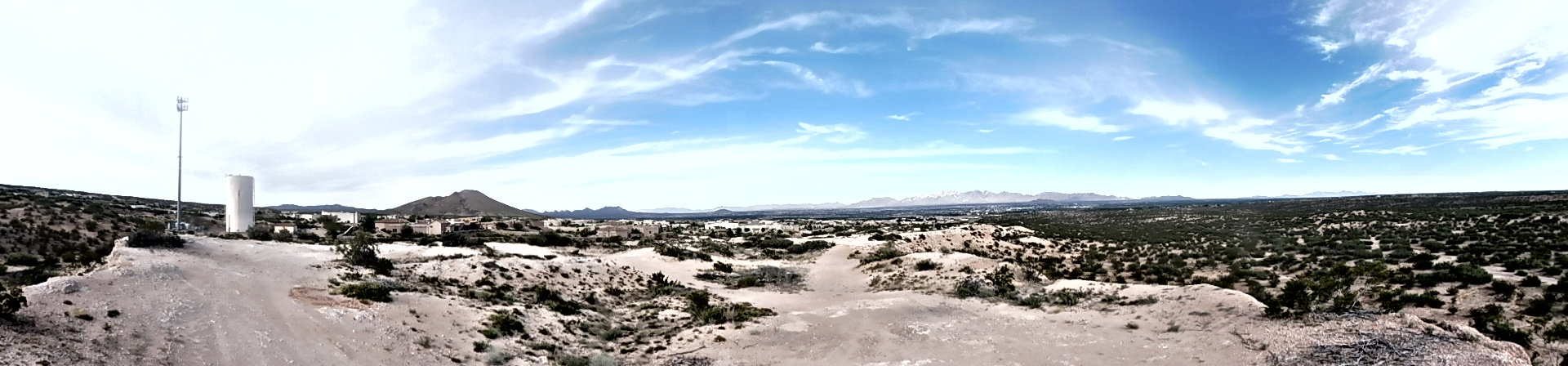
The Rio Grande/Bravo Basin ©Luzma Fabiola Nava | IIASA
References
Nava, L.F.; Brown, C.; Demeter, K.; Lasserre, F.; Milanés-Murcia, M.; Mumme, S.; Sandoval-Solis, S. 2016. Existing Opportunities to Adapt the Rio Grande/Bravo Basin Water Resources Allocation Framework. Water, 8, 291.
US Bureau of Reclamation. SECURE Water Act Section 9503(c) — Reclamation Climate Change and Water 2016. Available online: http://www.usbr.gov/climate/secure/ (Accessed on August 21, 2016).
Boyd, E. 2012. “Adapting to global climate change: evaluating resilience in two networked public institutions”, Adapting Institutions: Governance, Complexity and Social–Ecological Resilience, ed. Emily Boyd and Carl Folke. Published by Cambridge University Press, 244 – 263 p.
Note: This article gives the views of the author, and not the position of the Nexus blog, nor of the International Institute for Applied Systems Analysis.

You must be logged in to post a comment.