Nov 16, 2017 | Alumni, IIASA Network, Young Scientists
Lauren Hale, now professor of Family, Population and Preventive Medicine at the Stony Brook University School of Medicine talks about her time at the IIASA Young Scientist Summer Program in 1996, and her new role as part of the IIASA US National Member Organization.
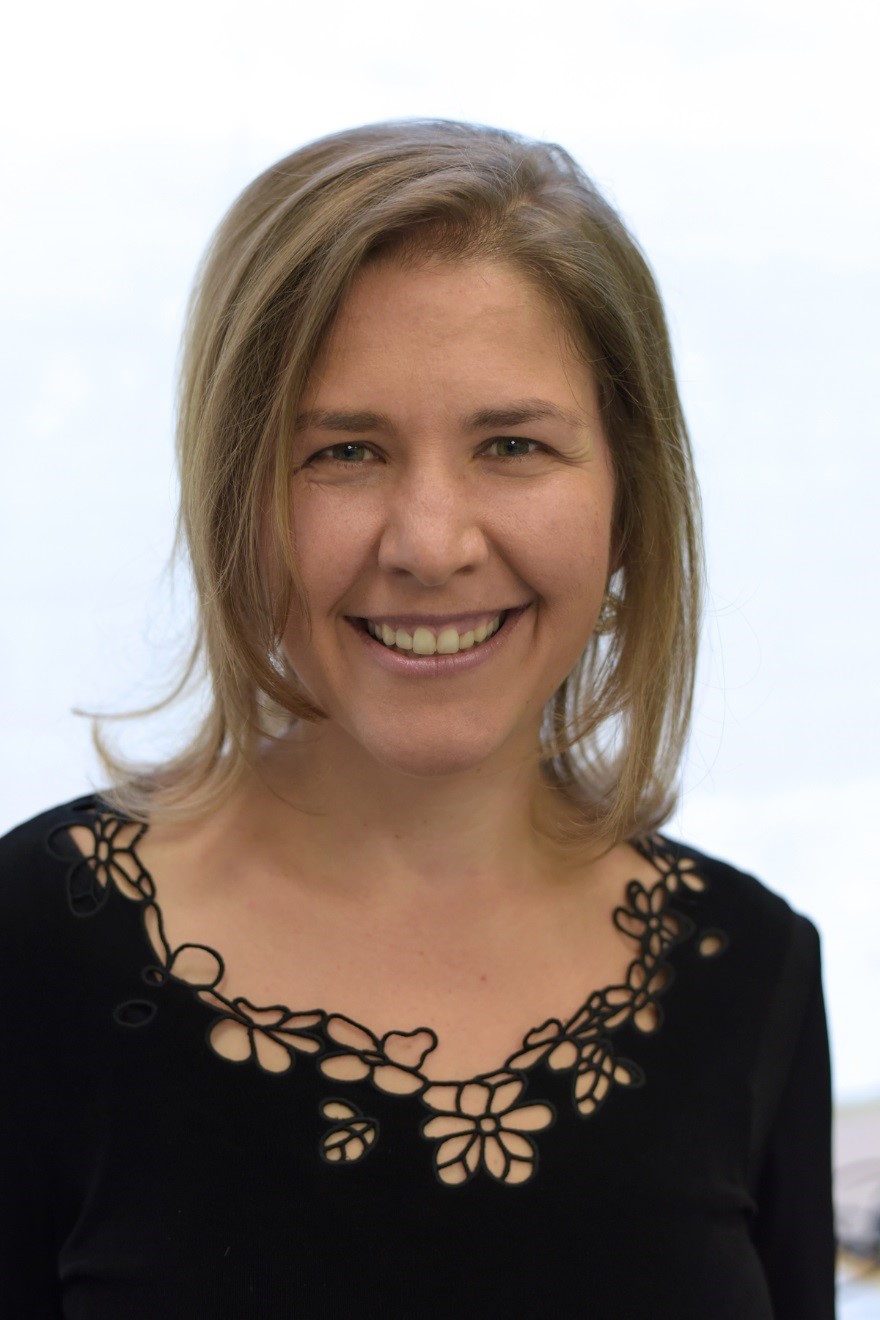
©Lauren Hale
As a professor at Stony Brook University School of Medicine, I study how sleep is a mechanism through which policy and social factors can affect mental and physical health. I find that differences in sleep patterns across the population are contributing to disparities in health and wellbeing. My current study of nearly 1000 teens from across the USA seeks to understand the contributing factors (including school start times and screen-based media) of insufficient sleep and health concerns among the young. In addition, I serve on the board of directors of the National Sleep Foundation, and I’m the founding editor-in-chief of the academic journal, Sleep Health, which, ironically, has cut into my own sleep health.
Out of the thousands of colleges and universities in the USA where I could have ended up, it is a fortuitous coincidence that, just across the road, my initial IIASA mentor Warren Sanderson teaches in the Economics Department also at Stony Brook University. He still visits IIASA for three months every summer and continues to play a supportive role in my professional life.
I might never have pursued postgraduate work had it not been for my early experiences at IIASA. I had the unique opportunity to join IIASA for the Young Scientists Summer Program while still an undergraduate (long story). It was an incredible opportunity, as a college junior, to find myself within a week of my arrival in the summer of 1996, seated around a table with the world’s top demographers at an international workshop on world population projections. I credit Wolfgang Lutz for being so inclusive with the YSSPers. I found everything about systems dynamics and population modeling novel and exciting. For my summer project, I modeled the dynamics of tourism and fish populations off the coast of the Yucatan. Thankfully, I had enormous guidance and support from my mentor Warren Sanderson, and co-YSSPer Patricia Kandelaars. Patricia and I were both Aurelio Peccei scholars and invited back for a second summer, during which we pretended we were still in the YSSP program, joining for many heurigen evenings and other memorable weekend excursions.
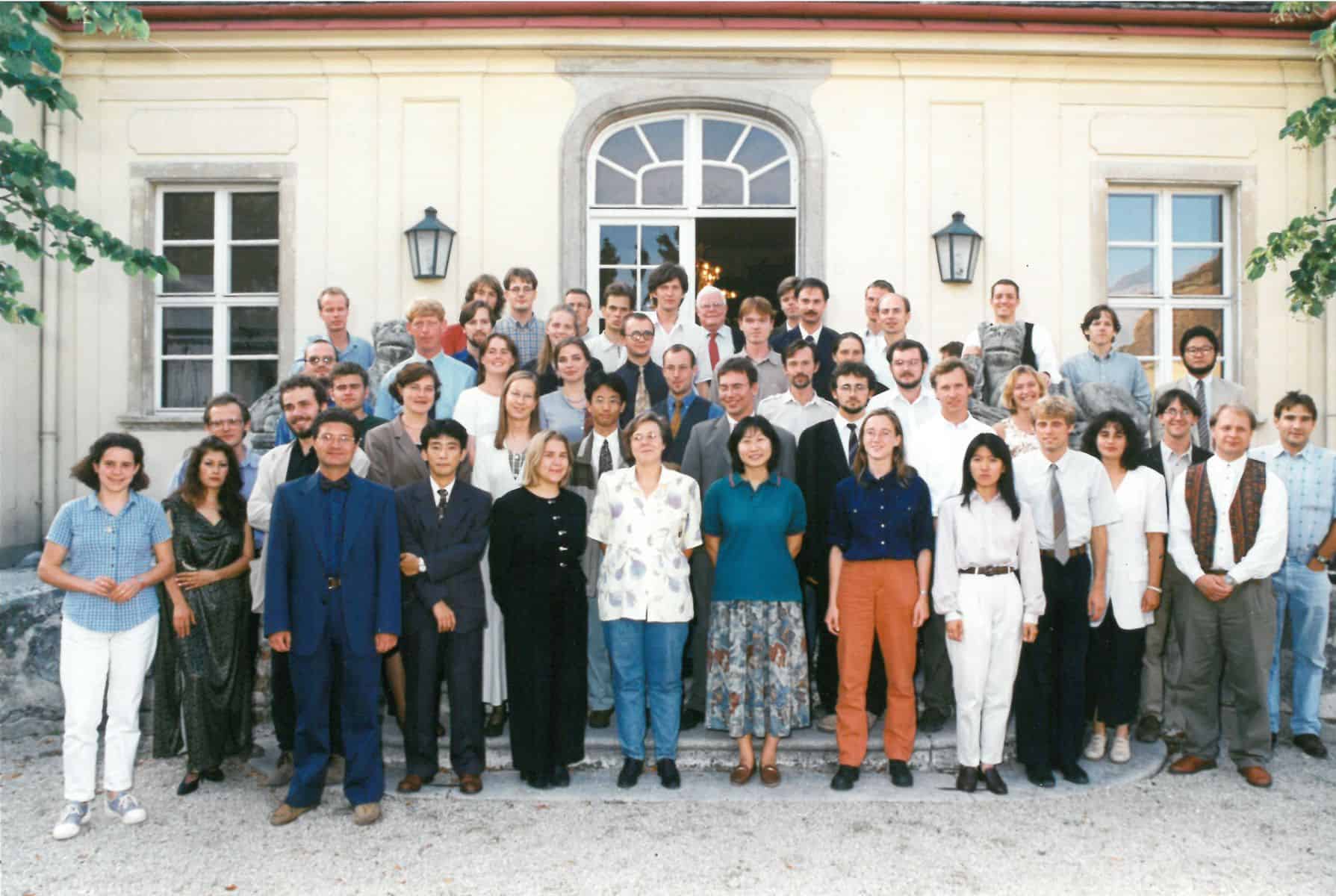
Class of 1996 Young Scientists Summer Program © IIASA
Thanks to my positive experiences at IIASA, I entered a PhD program at Princeton University to pursue population studies, followed by a postdoctoral fellowship at the RAND Corporation, in Santa Monica, California. Although population sleep health research seems far afield from the interplay between fish and tourism in Mexico, I see a link to my experiences at IIASA, which is where I was introduced to systems thinking with policy relevance. Recently, I was honored to be invited to join the US National Member Organization for IIASA. Once again, I sought advice from Warren Sanderson, who encouraged me to accept the opportunity. I’m looking forward to giving back and reconnecting with IIASA.
Further info: Other YSSP stories.
Note: This article gives the views of the author, and not the position of the Nexus blog, nor of the International Institute for Applied Systems Analysis.
Nov 14, 2017 | Climate Change, Risk and resilience
By Thomas Schinko, research scholar in the IIASA Risk and Resilience Program.
The hurricanes that swept across the Atlantic in the last few months had terrifying, and in Irma’s case record-breaking, power. They flattened homes and destroyed electricity grids, flooded schools and even threatened the integrity of whole nations. Could some of that immense power provide the impetus we need to switch from talking about climate-related risks and damages to doing something about them proactively?
On top of the hurricanes, in just the last two months the world has seen major flooding in Asia, and scorching heatwaves in southern Europe. While climate-related risks are shaped by many factors, the science shows that climate change is loading the dice, making certain extreme events more likely, and providing more favorable conditions for their formation.
Many are pessimistic about our abilities or inclination to heed the wake-up call. They worry that current political divisions and governance structures will leave us dead in the water.
I have hope. I have been working with colleagues on a way forward on managing climate-related risks that defuses the political nature of the debate and helps forging a stakeholder compromise. At all governance levels and all across the globe, disaster risk management has a long and proven track record for dealing with climate-related and other geophysical extremes, such as earthquakes and volcanic eruptions. This established and politically uncontroversial setting is the point of departure for the concept of ‘climate risk management’. This new concept aims to deal with disaster risk reduction and climate change adaptation at the same time, providing a way to circumvent the political hurdles and strengthen global ambitions to tackle climate-related risks.
Aligning climate change adaptation and disaster risk management
In the medium to long term, climate change and adaptation must be incorporated into all kinds and levels of decision and policy making. We can achieve this by increasing understanding of the risks of climate change, and adjusting policy and practice over time according to the latest knowledge and expertise. The importance of climate change is already being recognized in diverse decisions and policies. Just recently, for example, Hong Kong Airport announced that the project to build a third runway incorporated sea level rise projections by the Intergovernmental Panel on Climate Change, and based on that will include the construction of a sea wall, standing at least 21 feet above the waterline.
Broad stakeholder participation
Putting climate risk management into practice requires balancing the perceptions of climate-related risks of all involved. This calls for a process that involves the participation of those in politics, public administration, civil society, private sector and research.

Putting climate risk management into practice requires balancing the perceptions of climate-related risks of all involved. © Aleksandr Simonov
This may sound excessively time consuming, or even impossible, but it’s not. I know that because I am involved in helping to apply climate risk management in the context of flood risk in Austria. We are only just embarking on the process, and it is lengthy, involving extensive collaboration with relevant ministries, departments, and the private sector—such as insurance companies—but ultimately it can help to co-create a strong policy for the future.
Despite considerable uncertainties in establishing a strong causal link to anthropogenic climate change as risk driver, by employing climate-relevant science to decision making on existing short-term risks we were able to kick-start a process to act on flood risk in the country. This includes critically reflecting on existing policy tools, such as the Austrian disaster fund, and injecting aspects of climate-related risk into long-term budget planning processes.
New solutions to tackle increasing levels of climate risk
As risks increase, however, moving beyond incremental adjustments of existing policy tools is imperative, and totally new solutions will have to be found. Tackling erosive and existential climate-related risks, which lead to the complete loss of people’s and communities’ livelihoods, would require truly transformational action. Such risks are currently discussed under the Warsaw International Mechanism for Loss and Damage associated with Climate Change Impacts, which was established in 2013 at the 19th Conference of the Parties to the UN Framework Convention on Climate Change.
For the case of increasingly intolerable flood risk this could mean that in the future raising dikes might not suffice and governments may need to start supporting alternative livelihoods (for example, switching from farming to services sectors); providing climate-resilient social protection schemes; or assisting with voluntary migration. This requires climate risk management to be a learning process itself; flexible towards adjusting to any ecological, societal or political transformations.
Towards transformational climate risk management
To tackle the substantial challenges imposed by increasing climate-related risks, truly transformational thinking is needed. By accounting for underlying socioeconomic and climate-related drivers of risk, as well as for different stakeholder perceptions, climate risk management allows compromises to be achieved that translate into concrete but adaptable action.
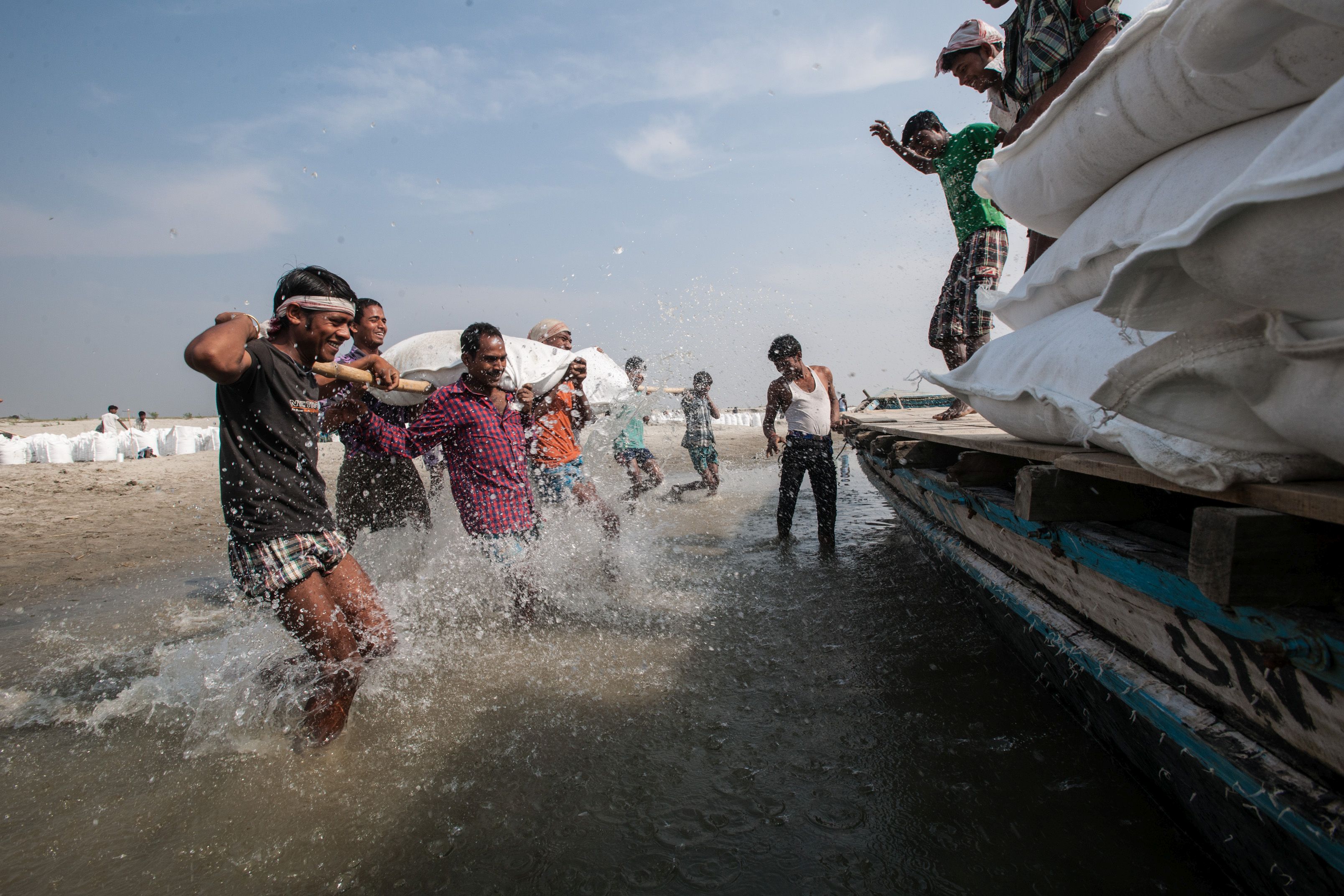
Assam Integrated Flood and Riverbank Erosion Risk Management Investment Program in India. © Asian Development Bank
Transformational thinking requires reframing of the overall problem over time. Reframing, in this context, refers to a change in the collective view on climate-related risks and how to tackle those. Taking again flood risk as a case in point, comprehensive flood risk management plans that are based on broad stakeholder participation processes and that allow for adaptive updates over time could be created. In the short term, re-evaluating existing measures may lead to an incremental adjustment of existing flood risk management efforts. The transformative notion comes in over time via proactively discussing trends in climate-related risks, which might eventually lead to the design of new policies and implementation measures, potentially also requiring alternative governance structures.
What is needed next is to provide space and resources for putting climate risk management processes, such as outlined here, into action. It would be a wise decision to seize the historic chance provided by the current alertness to the issue and start taking proactive action on today’s and future losses and damages due to climate-related risks.
Note: This article gives the views of the author, and not the position of the Nexus blog, nor of the International Institute for Applied Systems Analysis.
Oct 31, 2017 | Health, Wellbeing
By Anastasia Aldelina Lijadi, research scholar in the IIASA World Population Program
What does happiness mean? The concept of “happiness” has somewhat abstruse meanings in different languages. Some suggest the idea of luck or good fortune (German, Norwegian, French, Korean, Russian, Japanese, Chinese) and others intimate satisfaction of one’s desires or wishes and goals and enjoyable experiences (Italian, Portuguese, Spanish). Anthropologists, economists, linguists, psychologists, sociologists, and other researchers from various disciplines are still struggling to operationalize the concept, and ensure that enhanced quality of life is a realistic and obtainable goal for human kind.
As part of the project Empowered Life Years, at the World Population Program at IIASA, the concept of happiness has been identified as one of the conditions for sustainable human wellbeing, along with health, literacy, and being out of poverty. Being the newest in the team, I was privileged to attend the 15th annual conference of International Society for Quality-of-Life Studies (ISQOLs) to attend lectures and presentations and better comprehend the concept of happiness and how this research-based knowledge can contribute to people’s wellbeing.
Six supports for happiness
The distinguished keynote speaker Prof. John F. Helliwell specified six prerequisites for a human being to be happy, which are material (such as food and shelter), relationships, mental and physical health, freedom from oppression, generosity, and trust. His studies showed that mental and physical health is more effective in increasing happiness than raising income or ending unemployment. Moreover, people are more generous (i.e., show strong altruism or pro-social behavior such as donating blood, or care for environment) when they have a good social relationships within their community.
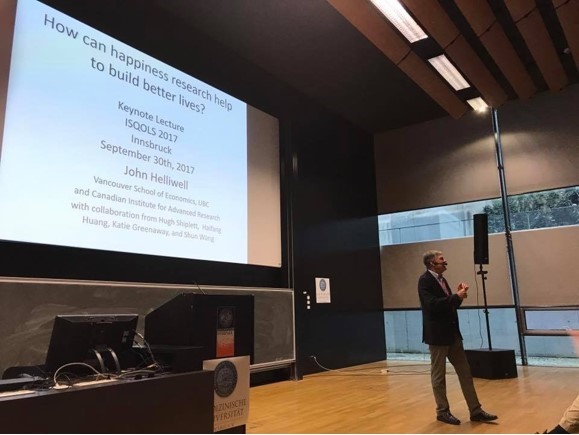
Keynote lecture at the ISQOLs conference. © Anastasia Aldelina Lijadi | IIASA
Measuring Happiness beyond GDP: How and for whom?
It is hard to tell what does cause (un)happiness in a country when wealth has failed to fully explain it. The Easterlin Paradox claims that a society’s economic development and its average level of happiness are not linked beyond a certain level of income that satisfies basic needs. This is the case in Latin America, as Prof. Mariano Rojas, president of ISQOLs, pointed out in his presentation. Bhutan also fits this theory, said Prof. Shrotyia Vikar Kumar of the University of Delhi, as it has controversially the highest happiness index in the world despite low GDP.
In addressing income inequality, Prof. Richard Wilkinson of the London School of Economics, stressed that the story is the same in unequal societies worldwide: men in poorer households feel low, outcast, and very sensitive to what others think about them, wives loathe their husbands, and children ashamed of their condition. We witness a higher discrepancy in health, crime, infant mortality, and civic participation between rich and poor communities. The rich also rate themselves better than poorer people, and are more likely to search for ‘status goods’ in google!
Prof. Antonella Delle-Fave, University of Milan, urged us to review the construct of happiness before trying to measure it. She also criticized the polarizing and overused concepts of hedonic and eudemonic happiness. Hedonic happiness is based on the experience of pleasure or positive feelings while generally avoiding any painful experiences. Eudemonic happiness is the notion of wellbeing based on the pursuit of personal fulfillment and realizing one’s potential by engaging in meaningful activity. Delle-Fave found that many researchers use a mix of variables derived from both concepts.
Prof. Richard Layard, author of Happiness: Lessons from a New Science, stated that happiness evolves over the life course. A simple cross-sectional correlation study cannot explain the evolution of happiness throughout life course, and Layard urged future research to employ an interdisciplinary approach to find the determinants of happiness. This will help policymakers to create meaningful, accessible, and age-sensitive opportunities for promoting quality of life throughout a lifetime.
Prof. Delle-Fave added that bottom-up qualitative research is needed to define happiness, eliciting voices directly from the source: “After learning from university, we need to learn from people.” I will use this powerful yet simple advice in my work on Empowered Life Years at IIASA.
Note: This article gives the views of the author and not the position of the Nexus blog, nor of the International Institute for Applied Systems Analysis.
Sep 19, 2017 | Citizen Science, Food, Sustainable Development
By Myroslava Lesiv, IIASA Ecosystems Services and Management Program.
The public can contribute considerably to science by filling the gaps of missing information in many research areas, for example, monitoring land use, biodiversity, or forest degradation. Crowdsourcing campaigns organized by research institutions bring together citizens interested in science and help solving research questions to the benefit of the whole world.
This June, the IIASA Geo-Wiki team ran the Global Field Size campaign, encouraging citizen scientists to classify field sizes on satellite images. Its aim was to develop a global field sizes dataset, which will be used as input to create an improved global cropland field size map for agricultural monitoring and food security assessments. The field sizes dataset can also help us determine what types of satellite data are needed for agricultural monitoring in different parts of the world.
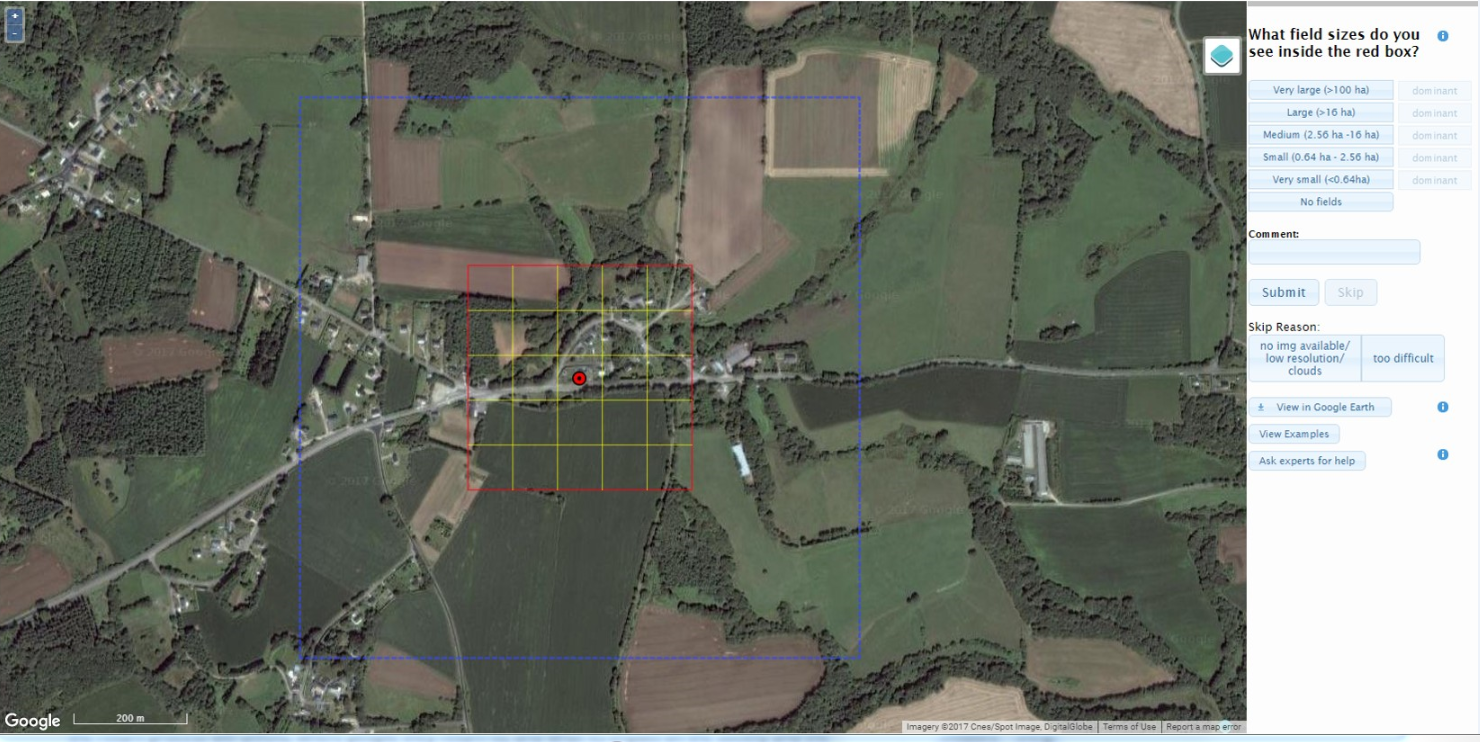
Geo-Wiki interface for collecting field size data. Background layer: Google Maps.
Why are field sizes so important? They provide us with valuable information to tackle challenges of food security. A recent study showed that more than a half the food calories produced globally comes from smallholder farmers, who often make up the most vulnerable parts of population, living in poverty. Within this scope, the field size dataset fills the gaps of missing information, especially for countries that have a limited food supply and lack a well-developed agricultural monitoring system.
The Global Field Size campaign has been one of the most successful crowdsourcing campaigns run through the Geo-Wiki engagement platform. Within one month, 130 participants completed 390,000 tasks – that is, they classified the field sizes in 130,000 locations around the globe!
So we can see that crowdsourcing is powerful, but can we trust the data? Is it accurate enough to be used in different applications? I think it is! The Geo-Wiki team has significant experience in running crowdsourcing campaigns; one of the key lessons we have learned from previous Geo-Wiki campaigns is the importance of training the public to increase the quality of the crowdsourced data.
This campaign was designed so that the participants learned over time how to delineate fields in different regions of the world, and, at the same time, pay special attention to the quality of their submissions. At the end of the campaign, the majority of participants gave us a feedback that, to them, this campaign was indeed a learning exercise. From our end, I have to add, this was also a challenging campaign, as fields are so diverse in shape, continuity of coverage, crop type, irrigation, etc.
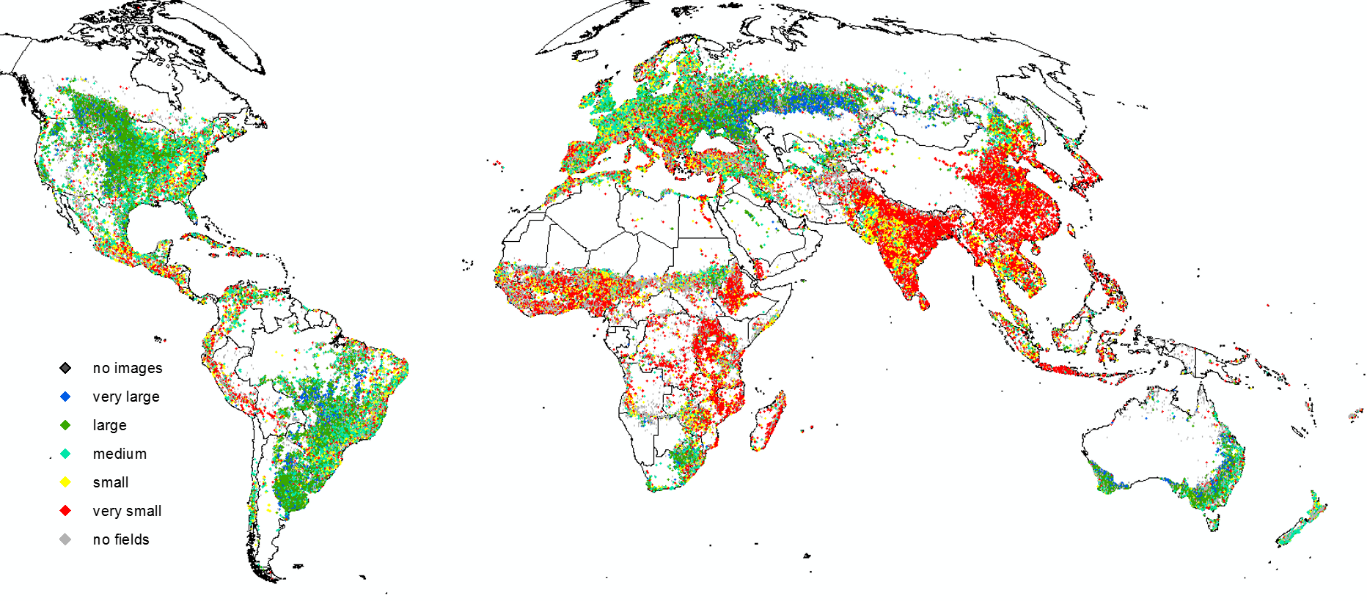
Global distribution of dominant field sizes. Cartography by Myroslava Lesiv. Country boundaries: GAUL. Software: ArcMap 10.1.
During the campaign, the crowd was asked to identify whether there were fields in a certain location, and determine the relevant field sizes by the visual interpretation of very high-resolution Google and Bing imagery. A “field” was defined as an agricultural area that included annual or perennial croplands, fallow, shifting cultivation, pastures or hayfields. The collected data can also be used to identify areas falsely mapped as cropland.
Now the team is focused on summarizing the results of the campaign, processing the collected field size data, and preparing them for scientific publication. We will ensure that the published dataset is of high quality and can be used by others with confidence!
This article gives the views of the author, and not the position of the Nexus blog, nor of the International Institute for Applied Systems Analysis.
Sep 1, 2017 | Sustainable Development
By Verena Rauchenwald, IIASA Air Quality and Greenhouse Gases Program.
“This is just the beginning…” were the visionary words of Henrik Skovby, one of the founders of the global innovation lab UNLEASH, at the UNLEASH Award show in Aarhus, Denmark, on 21 August 2017. Honorary guests, such as the Prime Minister of Denmark, Lars Løkke Rasmussen, the Danish Crown Princess Mary, and Ashton Kutcher, US actor and investor, came to Aarhus to deliver awards to UNLEASH’s top teams with the best ideas on how to achieve the UN Sustainable Development Goals (SDGs) by 2030.
The UNLEASH innovation lab invited 1000 international ‘talents’, aged 18-35, to Denmark for 10 days, to undergo a unique innovation creation procedure facilitated by Deloitte, one of UNLEASH’s partners. As one of the selected talents, I had the privilege of spending a few days at one of Denmark’s Højskole (a Danish community college) where the concept of lifelong learning really comes to life. These community colleges’ principles go back to the Danish philosopher Grundtvig, who believed that education should be available to everyone. Nowadays, many young adults choose to live and learn at Højskole for four to five months at a time, to learn about themselves and various themes. Tests do not exist, instead participants are encouraged to go to their classes and are given a certificate in the end.
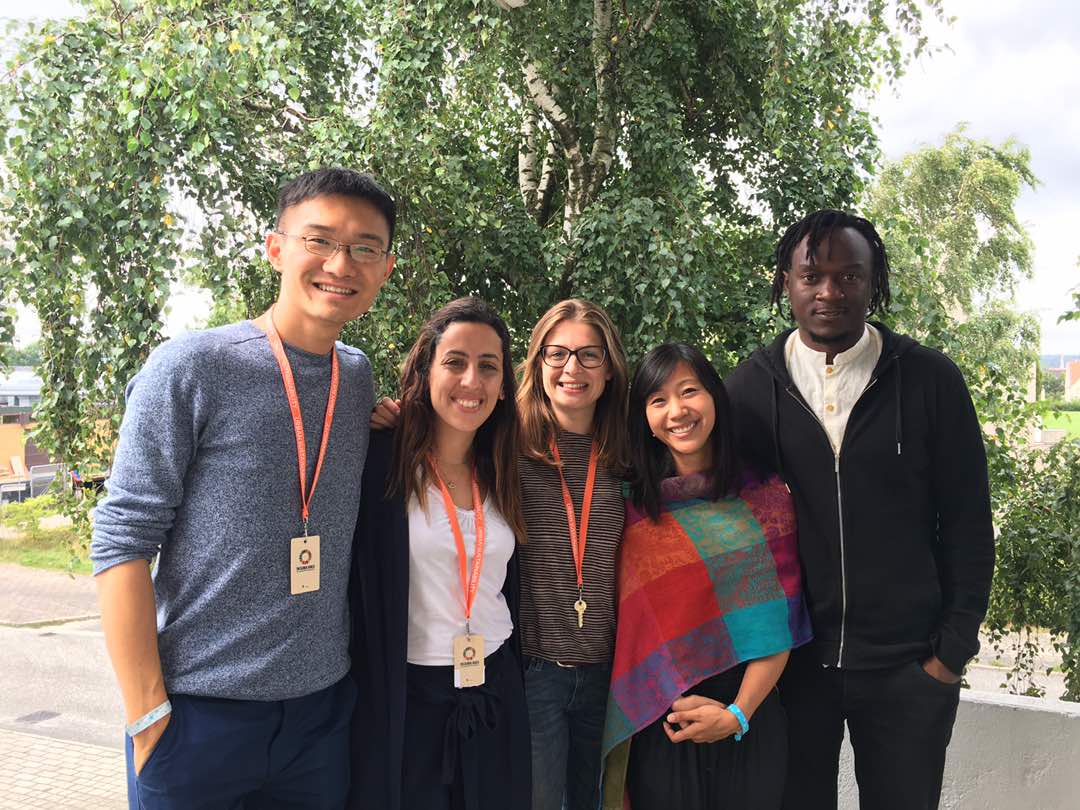
Our team in Copenhagen. Left to right: Jerry Zhu, Nazly Abdel Azim, Verena Rauchenwald, Tiffany Yu, Raymond Besiga © Jerry Zhu
For the innovation process, I was grouped together with brilliant minds from Shanghai, Cairo, Kampala and San Francisco. Our team worked on the SDG 11: “Make cities and human settlements inclusive, safe, resilient and sustainable.” Among other sub goals, the SDG 11a further aims to “support positive economic, social and environmental links between urban, peri-urban and rural areas by strengthening national and regional development planning.” After many hours of brainstorming and discussions, our group agreed on the following problem statement: Small-scale farmers in Eastern Africa have difficulties selling their produce to urban businesses.
From there on, we interviewed Eastern African farmers, intermediaries and urban businesses via phone to understand their needs. We found that efforts to cut out intermediaries are often not beneficial as they hold many connections on both sides and take care of the logistics. Furthermore, farmers often do not know what to produce and therefore plant a variety of crops of smaller quantities. As a solution, we came up with a digital platform that supports the overall information flow between the actors. It communicates via text message between farmers and intermediaries and through online forms between intermediaries and urban businesses. This way, all actors win through increased business based on a better match between supply and demand, and less produce is wasted.
The many hours of work and pitching of our ideas to UNLEASH’s facilitators, experts and investors were accompanied by daily sessions of singing in the morning (a Højskole tradition), immense cooperative efforts to help each other, and a shared drive to make the world a better place for all. As a result, a strong, collaborative, global community was born.
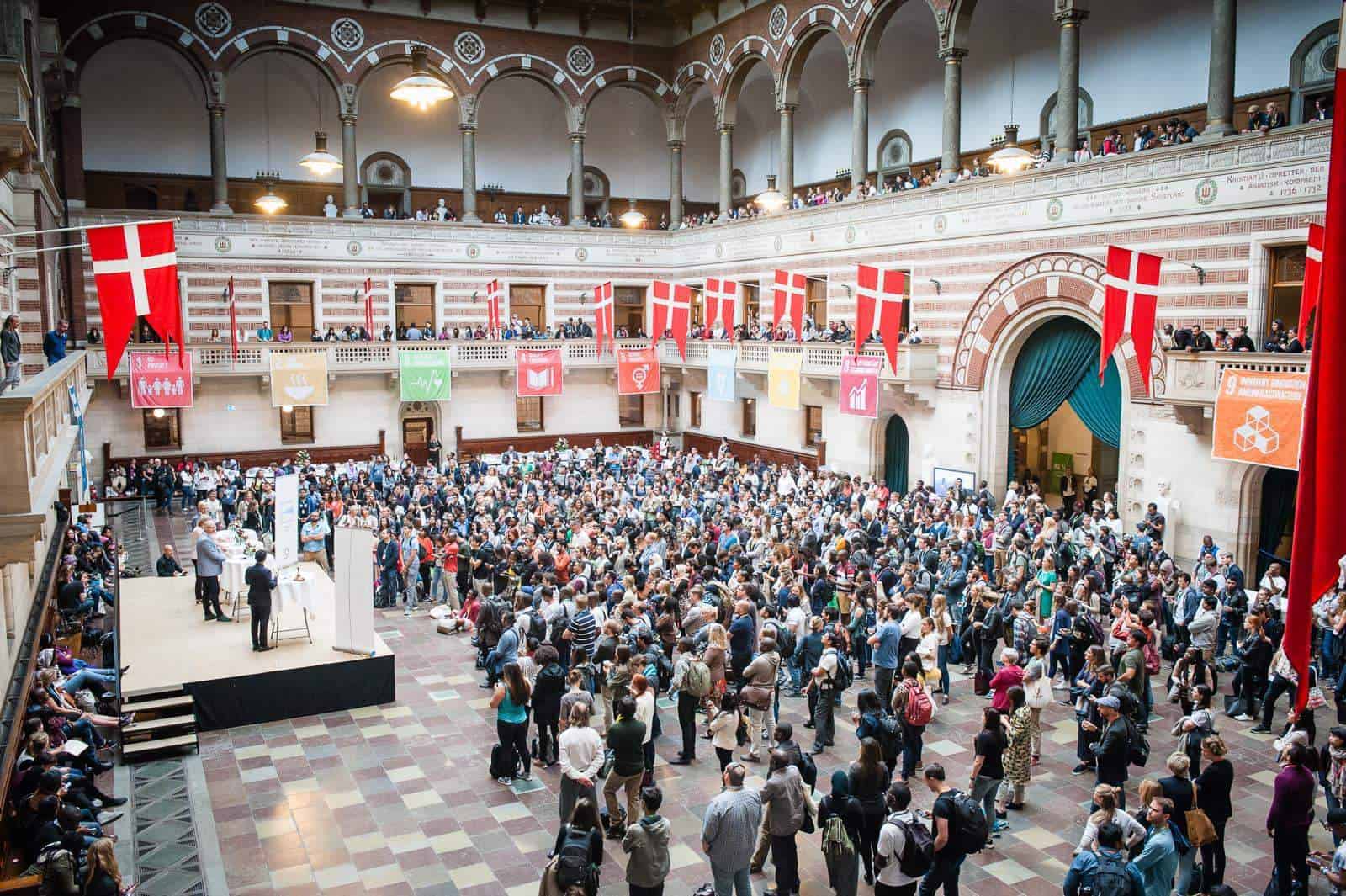
Our welcome to Copenhagen © Jerry Zhu
Following Henrik Skovby’s vision, the UNLEASH organization announced that they would continue to support the UNLEASH community and their ideas for at least one more year, both financially and through advisory services. From now on the UNLEASH innovation lab will take place once a year until the year 2030, when the 17 SDGs need to be fulfilled. My hope is that more initiatives such as UNLEASH will arise, and young people will become empowered to act upon their beliefs and consequently guide our world into a sustainable future.
This article gives the views of the author, and not the position of the Nexus blog, nor of the International Institute for Applied Systems Analysis.

You must be logged in to post a comment.