Aug 31, 2017 | Air Pollution, Health
By Caroline Njoki, IIASA Science Communication Fellow 2017
The Olympic Games creates a spectacle that enthralls the world every four years. Countries enter a competitive bidding process to select a new host, hoping to enhance their international image and attract tourism. Among many other preparations, the host nation commits to meeting recommended air quality standards to safeguard the health of athletes, visitors, and residents.
Studies indicate that air pollution can affect performance and compromise the health of those engaged in competitive sports and outdoor physical activities. Through his presentation at IIASA in July, Professor Tong Zhu from the College of Environmental Sciences and Engineering at Peking University expounded on health effects arising from a major air pollutant: particulate matter measuring 2.5 microns or less, known as PM2.5.
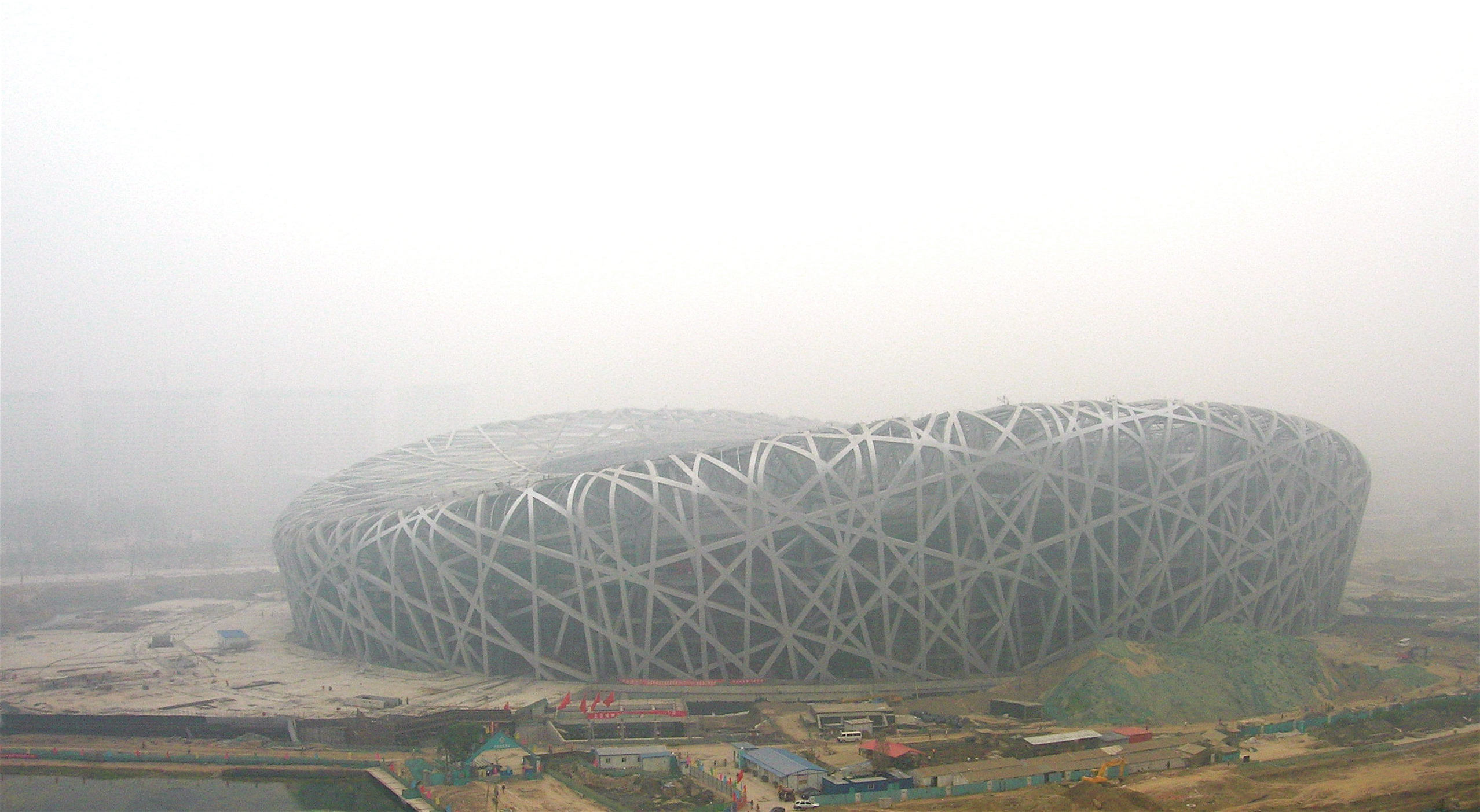
The Bird’s Nest Stadium, Beijing Olympics 2008 © rytc | flickr
PM2.5 is made up of fine particles smaller than human hair, pollen or mold. These tiny particles are released into the atmosphere from many sources: burning solid fuels and waste, wildfires, emissions from industry, vehicles, construction and mining, volcanic eruptions, and dust. ‘‘It is difficult to tackle particulate matter as its chemical composition changes when it mixes with other substances in the air. It can also be transported far from the different sources depending on weather conditions and topography,’’ said Zhu.
Once inhaled, the minute particles travel deep into the lungs and enter the bloodstream, leading to impaired brain, respiratory, and heart function. Lung cancer, stroke, chronic obstructive pulmonary disease and lowered life expectancy are all associated with PM2.5 exposure. Taking part in oxygen-demanding physical activities such as long-distance races, jogging, and cycling requires breathing more through the mouth than nose. This increases the likelihood of inhaling harmful pollutants, especially in areas where concentrations are high.
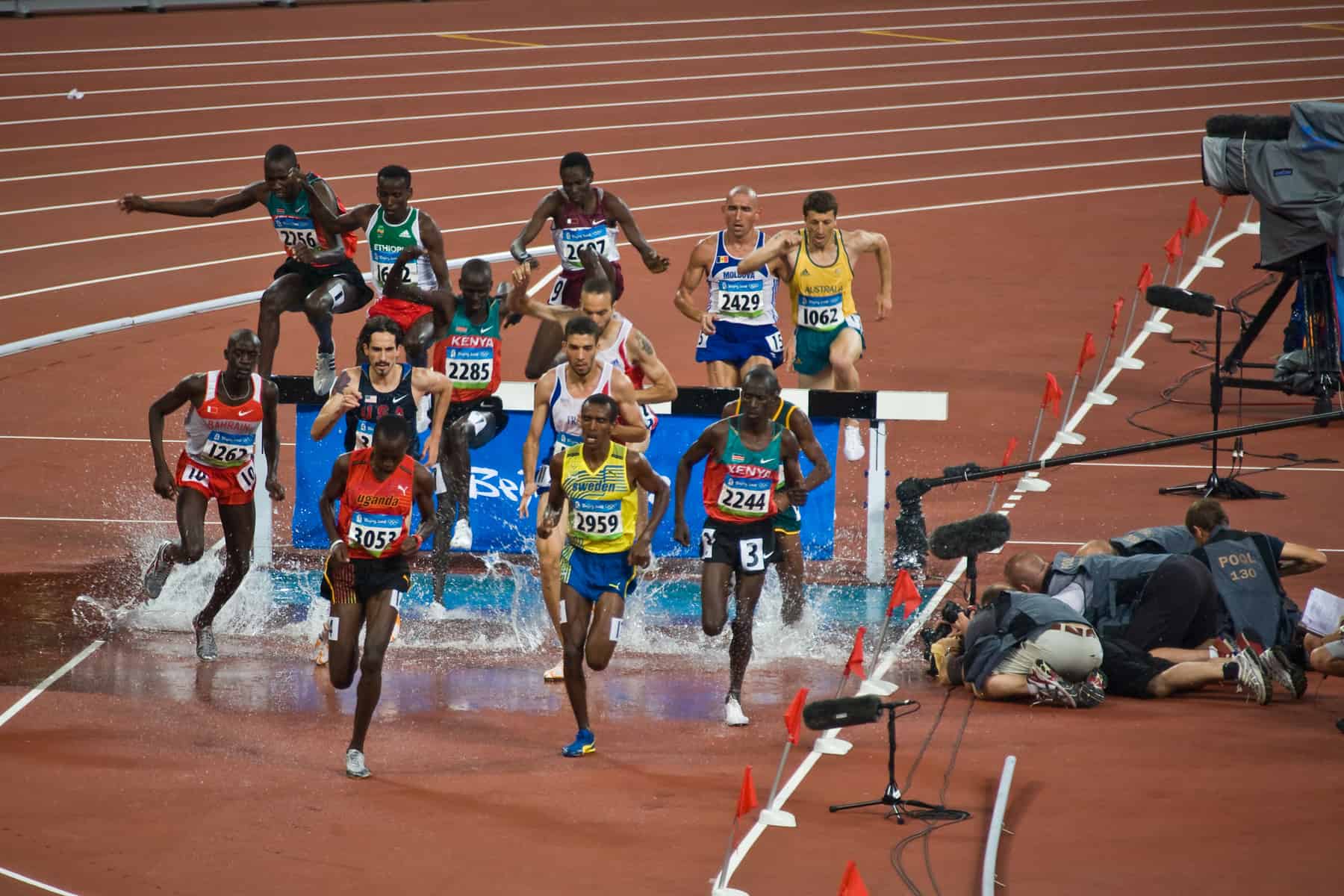
Hosting international sport events such as the Olympics Games comes with commitment to improve air quality standards to safeguard the health of athletes, visitors, and residents © Pete Niesen | Shutterstock
China is a densely populated and industrialized country with coal as the main source of energy. Eighty-three percent of China’s population live in regions whose PM2.5 levels exceed World Health Organization’s guidelines, compared to 32% of the world population. Use of coal for domestic heating goes up during the winter, generating more particulate matter pollution indoors. In 2010, 1.2 million people died in China as a result of particulate matter pollution; it was the country’s fourth leading cause of death after diet, high blood pressure, and smoking. ‘‘Electricity would be a better option but is highly priced, hence the preference for biomass fuels by residents. Phasing out coal and switching to renewable energy and cleaner production technologies would greatly alleviate the problem,’’ said Zhu.
Zhu was involved in several initiatives to improve air quality in preparations for the 2008 Beijing Olympics. Measures included temporary relocations of more polluting industries and complete shutdown of coal plants, limiting construction projects, and transport restrictions. For instance, public transport and cycling was promoted to cut the number of vehicles on the road and reduce emissions.
Although short term, steps taken to reduce PM2.5 and other pollutants also benefited locals living in Beijing and adjacent cities that were selected as sporting and training venues. This meant fewer people seeking outpatient and inpatient medical services, and fewer deaths. The economy also benefited from a healthy labor force.

Professor Tong Zhu and Verena Rauchenwald from the Air Quality and Greenhouse Gases Program after the presentation on health effects of PM2.5 at IIASA © Caroline Njoki | IIASA
IIASA’s own work on air pollution spans 30 years, has shaped EU air pollution policy, and is now being applied to Asian countries including China. The IIASA Greenhouse Gas and Air Pollution Interactions and Synergies model enables countries to identify and select suitable cost-effective measures to tackle air pollution and reduce associated health problems.
The PM monitoring in China, which was initiated for the Olympic Games, using both satellite and ground-based observations, continues and has been expanded to cover more sites in the country. Information generated about air quality status is now distributed to concerned authorities to develop or reinforce regulatory measures. Air quality alerts enable residents know when it is safe to engage in outdoor activities or adopt safety measures.
China anticipates cleaner air from implementation of long-term policies and programs already in place. Investing in air quality means healthier people and alongside that, lively stadiums with athletes and cheering crowds, more medals, and world records.
References
Rich DQ, Kipen HW, Huang W, Wang G et al (2012). Association Between Changes in Air Pollution Levels During the Beijing Olympics and Biomarkers of Inflammation and Thrombosis in Healthy Young Adults. JAMA 307 (19): 2068-78
West JJ, Cohen A, Dentener W, Brunekreef B et al (2016). What We Breath Impacts Our Health: Improving Understanding of the Link Between Air Pollution and Health. Environmental Science and Technology 50: 4895-4904
Zhu T (2017). Health Effects of PM2.5 in China: Scientific Challenges and Policy Implications. Presentation by Professor Tong Zhu on 11 July 2017 at IIASA.
This article gives the views of the author, and not the position of the Nexus blog, nor of the International Institute for Applied Systems Analysis.
Aug 30, 2017 | Environment, Food & Water, Young Scientists
By Parul Tewari, IIASA Science Communication Fellow 2017
Two things are distinctly noticeable when you meet Cornelius Hirsch—a cheerful smile that rarely leaves his face and the spark in his eyes as he talks about issues close to his heart. The range is quite broad though—from politics and economics to electronic music.

Cornelius Hirsch
After finishing high school, Hirsch decided to travel and explore the world. This paid off quite well. It was during his travels, encompassing Hong Kong, New Zealand, and California, that Hirsch started taking a keen interest in economic and political systems. This sparked his curiosity and helped him decide that he wanted to take up economics for higher studies. Therefore, after completing his masters in agricultural economics, Hirsch applied for a position as a research associate at the Austrian Institute of Economic Research and enrolled in the PhD-program of the Vienna University of Economics and Business to study trade, globalization, and its impact on rural areas. Currently, he is looking at subsidies and tariffs for farmers and the agricultural sector at a global scale.
As part of the 2017 Young Scientists Summer Program at IIASA, Hirsch is digging a little deeper to analyze how foreign direct investments (FDI) in agricultural land operate. “Since 2000, the number of foreign land acquisitions have been growing—governmental or private players buy a lot of land in different countries to produce crops. I was interested in knowing why there are so many of these hotspots in the world— sub-Saharan Africa, Papua New Guinea, Indonesia—why are people investing in these areas?,” says Hirsch.
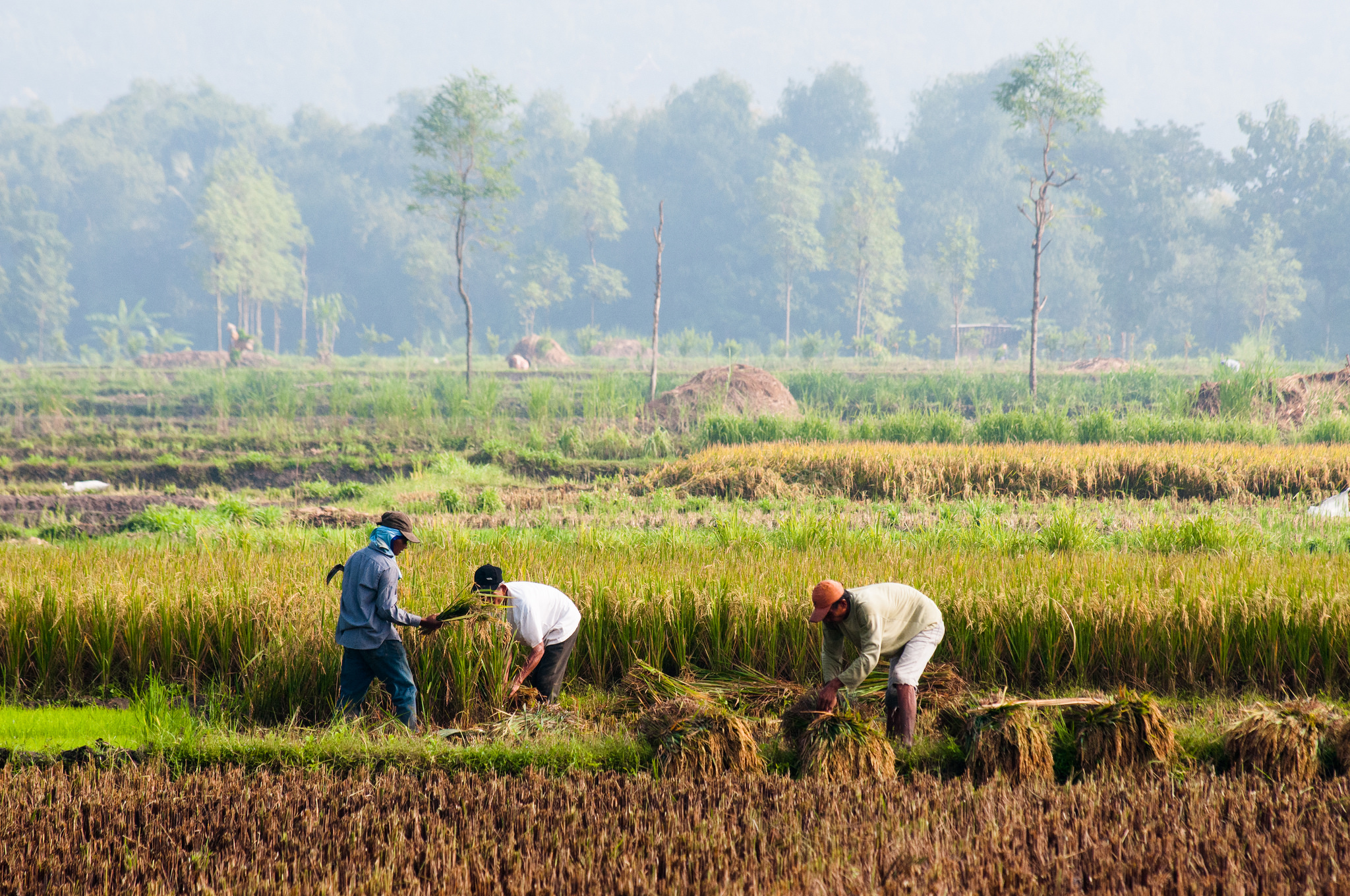
Farming in one of the large agricultural areas in Indonesia ©CIFOR I Flickr
Increased food demand from a growing world population is leading to an increased rate of investment in agriculture in regions with large stretches of fertile land. That these regions are largely rain-fed make them even more attractive for investors as they save the cost of expensive irrigation services. In fact, Hirsch argues that “the term land-grabbing is misleading. It should actually be water-grabbing as water is the foremost deciding factor—even more important than simply land abundance.”
Some researchers have found an interesting contrast between FDI in traditional sectors, such as manufacturing, and the ones in agricultural land. While investors in the former look for stable institutions and good governmental efficiency, FDI in land deals seems to target regions with less stable institutions. This positive relationship between corruption and FDI is completely counterintuitive. Hirsch says that one reason could be that “sometimes weaker institutions are easier to get through when it comes to such vast amount of lands. A lot of times these deals and contracts are oral and have no written proof—the contracts are not transparent anyway.”
For example in South Sudan, the land and soil conditions seem to be so good that investors aren’t deterred despite conflicts due to corrupt practices or inefficient government agencies.

One of the indigenous communities in Madagascar, a place which is vulnerable to land acquisitions © IamNotUnique I Flickr
One area that often goes unnoticed is the violation of land rights of indigenous communities. If a government body decides to sell land or give out production licenses to investors for leasing the land without consulting the actual community, it is only much later that the affected community finds out that their land has been given away. Left with no land and hence no source of livelihood, these communities are forced to migrate to urban areas.
A strain of concern enters his voice as Hirsch talks about the impact. “Land as big as two times the area of Ecuador has been sold off in the past—but it accounts for a tiny percentage of the global production area.” With rising incomes and greater consumption of meat, a lot of land is used to produce animal feed crops. “This is a very inefficient way of using land,” he says.
During the summer program at IIASA, Hirsch is generating data that will help him look at these deals in detail and analyze the main factors that are taken into consideration before finalizing a land deal. At the moment he is only able to give an overview of land-grabbing at the global level. With more data on the location of the deals he can look at the factors that influence these decisions in the first place such as the proximity between the two countries involved in agricultural investments and the size of their economies.
While there is always huge media coverage when a scandal about these land acquisitions comes out in the open, Hirsch seems determined to dig deeper and uncover the dynamics involved.
About the researcher
Cornelius Hirsch is a research associate at the Austrian Institute of Economics and Research (WIFO). At IIASA he is working under the supervision of Tamas Krisztin and Linda See in the Ecosystems Services and Management Program (ESM).
This article gives the views of the author, and not the position of the Nexus blog, nor of the International Institute for Applied Systems Analysis.
Aug 23, 2017 | Communication
Michaela Maier is a professor of applied communication psychology at the Institute of Communication and Media Psychology, University of Koblenz-Landau, Germany. Her work spans many forms of communication from crisis to election coverage to participatory decision making. She talks to IIASA Science Writer and Editor Daisy Brickhill.
Why is it important to communicate scientific uncertainty?
For us as researchers scientific uncertainty is something very natural that we consider all the time. We assess things like quality of samples used or numbers of replications, we justify and evaluate our research by taking into account a wider body of literature that may or may not show similar results. However, the degree of scientific uncertainty is not something that the public is so aware of. It is quite likely that it has not have been part of their education to learn the methods of evaluating the degree of (un)certainty of scientific evidence.

© Michaela Maier
Despite that, the public will almost definitely experience situations where they will have to evaluate uncertainty. As patients they might have to give their consent to a new medical treatment; as consumers they might need to decide whether to buy products that include, say, nanotechnology or genetically modified plants. Also as citizens—scientific evidence is relevant to many political decisions and as a voter you have to decide about these policies on election day. There are many situations where laypeople have to make judgements based on scientific findings—and we should communicate about the (un)certainty of this evidence in terms that people can understand.
Communicating uncertainty and how it works in one field or for one result can also give people the tools to understand and make judgments about other cases. Uncertainty can cover many things – is the sample large enough to draw any firm conclusions? Is it really representative of the whole population you are interested in?
When communicating complex topics, scientists and journalists can be nervous that talking about uncertainty will undermine the public’s interest or trust in the research – you’ve done some research on this?
Yes, we used communication of uncertainty around the safety of nanotechnology as a case study. Before the experiment we asked the participants a series of questions on how interested they were in science in general, in getting engaged in citizen science projects for example, or how likely they were to go to science museums. We also asked about their trust in scientists using measures of their perceptions of scientists’ competence, willingness to protect the public from technological risks, and honesty. We then sent them media reports over the course of six weeks, and after that we gave them the surveys again.
We found that communicating uncertainty didn’t undermine interest in science. In fact, what we found was that for a certain group of people the interest in science increased when uncertainty was discussed in the media reports they read. These people have what is called a low ‘need for cognitive closure.’ This means they are more open-minded and have a willingness to consider new or inconsistent information.
And did it undermine trust?
Communicating uncertainty didn’t seem to make any difference to the level of trust in scientists in people with either high or low need for cognitive closure. Ultimately our work showed that you won’t harm interest in science or trust in scientists by communicating uncertainty. It might not make much difference to some people but for others they will become even more engaged. It’s a very positive message.
Outside of an experimental environment are there any ways of engaging people with these complex issues of uncertainty?
It’s certainly a challenge for us to find the right formats. Narrative structures are an important format to pursue I think. There is a lot of evidence that narrative structures—storytelling—help people deal with complex information and that they really learn from it. Narrative structures focus more on the characters, they have a storyline, they might give the audience a chance to identify with the researcher, for instance.
This article gives the views of the author, and not the position of the Nexus blog, nor of the International Institute for Applied Systems Analysis.
Aug 22, 2017 | Climate Change, Environment, Postdoc
By Katya Perez Guzman, IIASA CONACYT postdoctoral fellow in the Advanced Systems Analysis Program
Extractivism, a mode of economic growth currently practiced by many developing countries, is the phenomenon of extracting natural resources from the Earth to sell as raw materials on the world market. It is a central cause of many environmental problems, such as deforestation, loss of habitat and biodiversity, water, soil, and air pollution. Any study of these topics is therefore incomplete if it does not take this model of development into account.
Climate change is no exception, and it is my goal at IIASA to investigate the links between extractivism and climate change mitigation policies for Mexico. To start this search, it is relevant to ask whether the drivers of CO2 emissions might be different in countries that practice extractivism to those that do not. During my PhD, which examined the basic drivers of CO2 emissions in Mexico as a fossil fuel producer and exporter, I suggested that the answer is yes.
Even when there are as many causes of CO2 emissions as there are economic activities, CO2 emissions can be linked to four main drivers: population, GDP per person, the energy use per unit of GDP, and the CO2 emitted by each unit of energy consumed. The greater the value of these variables, and the faster their growth, the more CO2 emissions (all other things being equal). These four factors can then be incorporated into a model known as the Kaya identity, which aims to explain CO2 emissions at a global level.
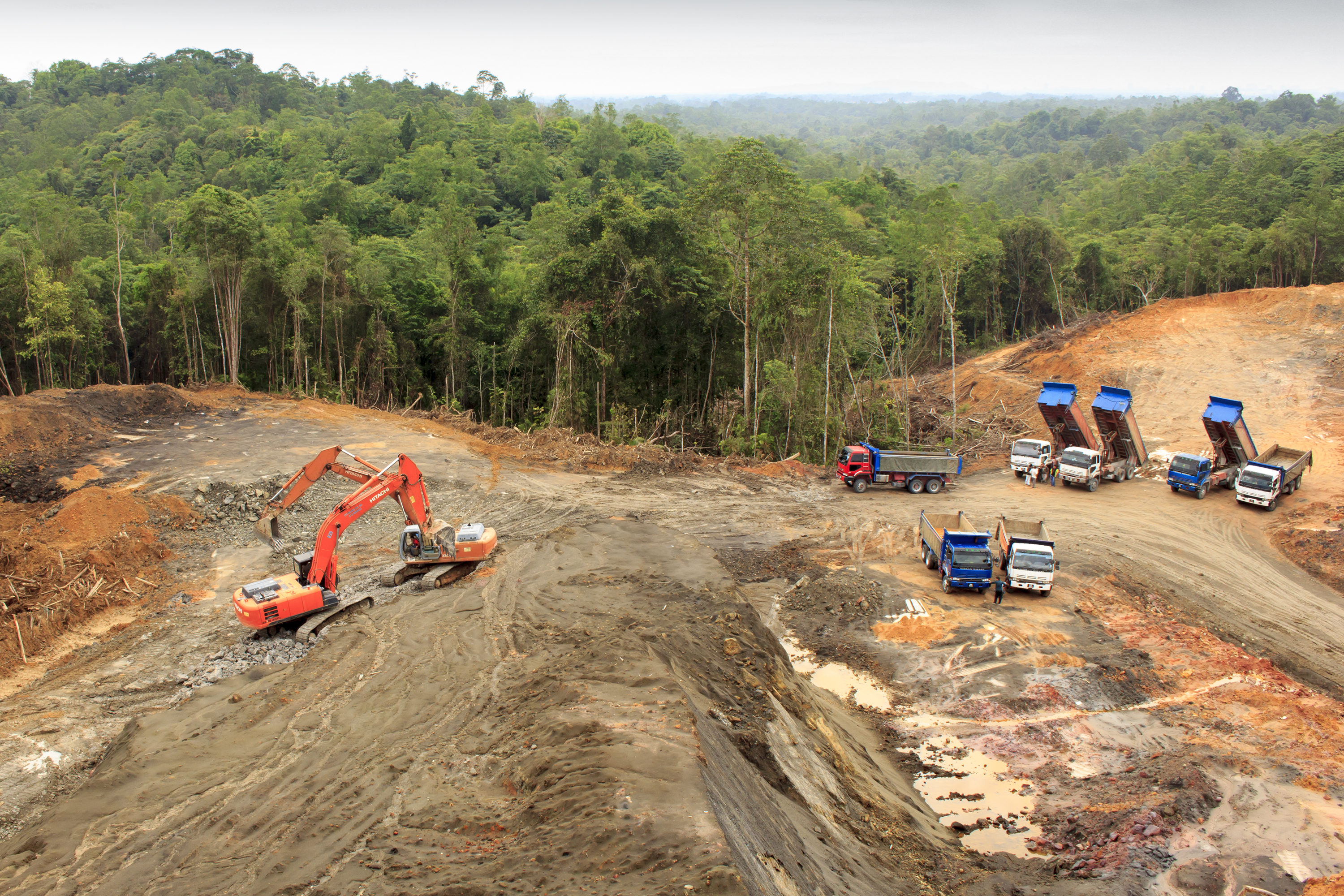
Deforestation in Malaysia. © Rich Carey | Shutterstock
For fossil fuel producers and exporters, these four elements of the Kaya identity may vary in idiosyncratic patterns across various periods, for example during booms and busts. There is a possible positive relationship between oil abundance and increased population growth, namely because of increased migration to oil production sites. For GDP per capita, a phenomenon known as the natural resource curse describes how production and export of fossil fuels can harm economic growth in the long term, although this debate is still not settled. Alongside this, various analyses have linked fossil fuel production with higher energy consumption, especially during boom times.
Lastly, a proposed carbon curse relates higher abundance of fossil fuels to higher “carbon intensity”—the amount of CO2 emissions per unit of GDP. The carbon curse may be a result of four mechanisms. First, the predominance of a fossil fuel production sector which emits a lot of CO2 itself. Second, crowding out effects in the energy generation sector, forming a barrier to newer renewable energy sources. Third, crowding out effects in other sectors of the economy—a phenomenon known as the “Dutch Disease” because when the Netherlands discovered its Groningen gas field in 1959 the economic boom that followed the gas exports resulted in a decline in manufacturing and agriculture. Finally, less investment in energy efficiency technologies and more subsidies for national fossil fuel consumption can also bring on the carbon curse.
It is therefore crucial to account for the links between extractivism and climate change related topics: for mitigation, but just as importantly for vulnerability and adaptation. If the past can be used to shape the future, a measure of the carbon curse could help national and international policymakers to determine how close an oil-extractive economy can get to being a low carbon economy.
This article gives the views of the author, and not the position of the Nexus blog, nor of the International Institute for Applied Systems Analysis.
Aug 16, 2017 | Climate Change, Young Scientists
By Parul Tewari, IIASA Science Communication Fellow 2017
As climate change warms up the planet, it is the Arctic where the effects are most pronounced. According to scientific reports, the Arctic is warming twice as fast in comparison to the rest of the world. That in itself is a cause for concern. However, as the region increasingly becomes ice-free in summer, making shipping and other activities possible, another threat looms large. That of an oil spill.

©AllanHokins I Flickr
While it can never be good news, an oil spill in the Arctic could be particularly dangerous because of its sensitive ecosystem and harsh climatic conditions, which make a cleanup next to impossible. With an increase in maritime traffic and an interest in the untapped petroleum reserves of the Arctic, the likelihood of an oil spill increases significantly.
Maisa Nevalainen, as part of the 2017 Young Scientists Summer Program (YSSP), is working to assess the extent of the risk posed by oil spills in the Arctic marine areas.
“That the Arctic is perhaps the last place on the planet which hasn’t yet been destroyed or changed drastically due to human activity, should be reason enough to tread with utmost caution,” says Nevalainen
Although the controversial 1989 Exxon Valdez spill in Prince William Sound was quite close to the Arctic Circle, so far no major spills have occurred in the region. However, that also means that there is no data and little to no understanding of the uncertainties related to such accidents in the region.
For instance, one of the significant impacts of an oil spill would be on the varied marine species living in the region, likely with consequences carrying far in to the future. Because of the cold and ice, oil decomposes very slowly in the region, so an accident involving oil spill would mean that the oil could remain in the ice for decades to come.

Thick-billed Murre come together to breed in Svalbard, Norway. Nevalainen’s study so far suggests that birds are most likely to die of an oil spill as compared to other animals. © AllanHopkins I Flickr
Yet, researchers don’t know how vulnerable Arctic species would be to a spill, and which species would be affected more than others. Nevalainen, as part of her study at IIASA will come up with an index-based approach for estimating the vulnerability (an animal’s probability of coming into contact with oil) and sensitivity (probability of dying because of oiling) of key Arctic functional groups of similar species in the face of an oil spill.
“The way a species uses ice will affect what will happen to them if an oil spill were to happen,” says Nevalainen. Moreover, oil tends to concentrate in the openings in ice and this is where many species like to live, she adds.
During the summer season, some islands in the region become breeding grounds for birds and other marine species both from within the Arctic and those that travel thousands of miles from other parts of the world. If these species or their young are exposed to an oil spill, then it could not only result in large-scale deaths but also affect the reproductive capabilities of those that survive. This could translate in to a sizeable impact on the world population of the affected species. Polar bears, for example, have, on an average two cubs every three years. This is a very low fertility rate – so, even if one polar bear is killed, the loss can be significant for the total population. Fish on the other hand are very efficient and lay eggs year round. Even if all their eggs at a particular time were destroyed, it would most likely not affect their overall population. However, if their breeding ground is destroyed then it can have a major impact on the total population depending on their ability and willingness to relocate to a new area to lay eggs, explains Nevalainen.
Due to lack of sufficient data on the number of species in the region as well as that on migratory population, it is difficult to predict future scenarios in case of an accident, she adds. “Depending on the extent of the spill and the ecosystem in the nearing areas, a spill can lead to anything from an unfortunate incident to a terrible disaster,” says Nevalainen.
©katiekk I Shutterstock
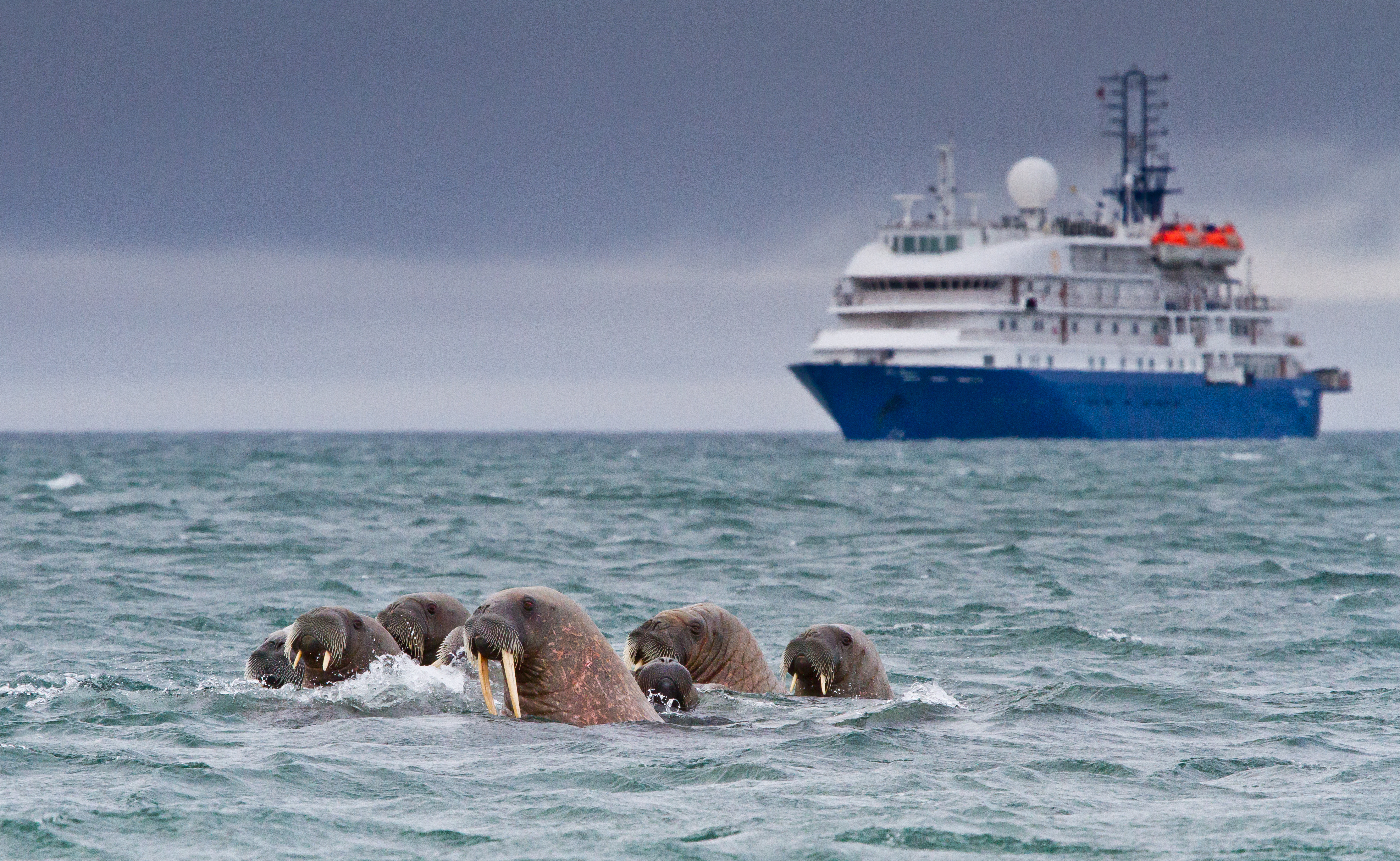
It might even affect the food chain, at a local or global level. “If oil sinks to the seafloor, some species run the risk of dying or migrating due to destroyed habitat – an example being walruses as they merely dive to get food from the sea floor,” adds Nevalainen. As the walrus is a key species in the food web, this has a high probability of upsetting the food chain.
When the final results of her study come through, Nevalainen aims to compare different regions of the Arctic and the probability of damage in these areas, as well as potential solutions to protect the ecosystem. This would include several factors. One of them could be breeding patterns – spring, for instance, is when certain areas need to be cordoned off for shipping activities, as most animals breed during this time.
“At the moment there are no mechanisms to deal with an oil spill in the Arctics. I hope that it never happens. The Arctic ecosystem is very delicate and it won’t take too much to disturb it, and the consequences can be huge, globally,” warns Nevalainen.
About the Researcher
Maisa Nevalainen is a third- year PhD student at the University of Helsinki, Finland. Her main focus is on environmental impacts caused by Arctic oil spills, while her main research interests include marine environment, and environmental impacts of oil spills among others. Nevalainen is working with the Arctic Futures Initiative at IIASA over the summer, with Professor Brian Fath as her supervisor and Mia Landauer and Wei Liu as her co-supervisors.
This article gives the views of the author, and not the position of the Nexus blog, nor of the International Institute for Applied Systems Analysis.

You must be logged in to post a comment.