Nov 7, 2017 | Data and Methods, Food, Postdoc, Water
By Valeria Javalera Rincón, IIASA CONACYT Postdoctoral Fellow in the Ecosystems Services and Management and Advanced Systems Analysis programs.
What is more important: water, energy, or food?
If you work in the water, energy or agriculture sector we can guess what your answer might be! But if you are a policy or decision maker trying to balance all three, then you know that it is getting more and more difficult to meet the growing demand for water, energy, and food with the natural resources available. The need for this balance was confirmed by the 17 Sustainable Development Goals, agreed by 193 countries, and the Paris climate agreement. But how to achieve it? Intelligent cooperation is the key.
The thing is that water, energy, and food are all related in such a way that are reliant on each other for production or distribution. This is the so-called Water-Energy-Food nexus. In many cases, you need water to produce energy, you need energy to pump water, and you need water and energy to produce, distribute, and conserve food.
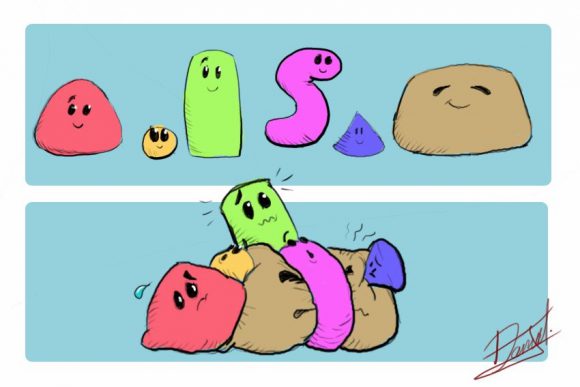
Many scientists have tried to relate or to link models for water, agriculture, land, and energy to study these synergic relationships. In general, so far, there are two ways that this has been solved: One is integrating models with “hard linkages” like this:
© Daniel Javalera
In the picture there are six models (let’s say water, land use, hydro energy, gas, coal, food production models) that are then integrated into just one. The resulting integrated model then preserves the relationships but is complex, and in order to make it work with our current computer power you often have to sacrifice details.
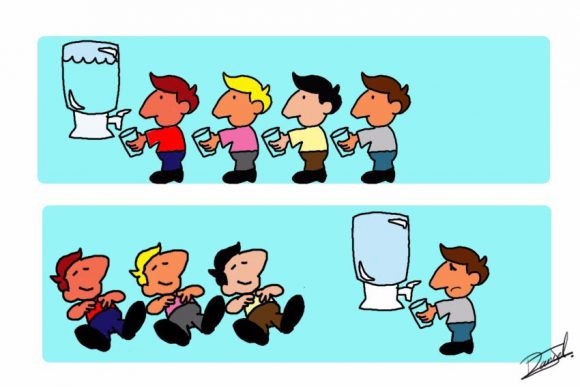
Another way is to link them is using so-called “soft linkages” where the output of one model is the input of the next one, like this:
© Daniel Javalera
In the picture, each person is a model and the input is the amount of water left. These models all refer to a common resource (the water) and are connected using “soft linkages.” These linkages are based on sequential interaction, so there is no feedback, and no real synergy.
The intelligent linker agent
But what if we could have the relations and synergies between the models? It would mean much more accurate findings and helpful policy advice. Well, now we can. The secret is to link through an intelligent linker agent.
I developed a methodology in which an intelligent linker agent is used as a “negotiator” between models that can communicate with each other. This negotiator applies a machine-learning algorithm that gives it the capability to learn from the interactions with the models. Through these interactions, the intelligent linker can advise on globally optimal actions.
The knowledge of the intelligent linker is based on past experience and also on hypothetical future actions that are evaluated in a training process. This methodology has been used to link drinking water networks, such as Barcelona’s drinking water network.
When I came to IIASA, I was asked to apply this approach to optimize trading between cities in the Shanxi region of China. I used a set of previously development models which aimed to distribute water and land available for each city in order to produce food (eight types of crops) and coal for energy. The intelligent linker agent optimizes trading between cities in order to satisfy demand at the lowest cost for each city.
The purpose of this exercise was to compare the solutions with those from “hard linkages” – like those in the first picture. We found that the intelligent linker is flexible enough to find the optimal solution to questions such as: How much of each of these products should each city export/import to satisfy global demand at a global lower economic and ecological cost? What actions are optimal when the total production is insufficient to meet the total demand? Under what conditions is it preferable to stop imports/exports when production is insufficient to supply the demand of each city?
The answers to these questions can be calculated by the interaction with the models of each city just by the interfacing with the intelligent linker agent, this means that no major changes in the models of each city were needed. We also found that, under the same conditions, the solutions using the intelligent linker agent were in agreement with those found when hard linking was used.
My next challenge is to build a prototype of a “distributed computer platform,” which will allow us to link models on different computers in different parts of the world—so that we in Austria could link to a model built by colleagues in Brazil, for example. I also want to link models of different sectors and regions of the globe, in order to prove that intelligent cooperation is the key to improving global welfare.
References
Xu X, Gao J, Cao G-Y, Ermoliev Y, Ermolieva T, Kryazhimskiy AV, & Rovenskaya E (2015). Modeling water-energy-food nexus for planning energy and agriculture developments: case study of coal mining industry in Shanxi province, China. IIASA Interim Report. IIASA, Laxenburg, Austria: IR-15-020
Javalera V, Morcego B, & Puig V, Negotiation and Learning in distributed MPC of Large Scale Systems, Proceedings of the 2010 American Control Conference, Baltimore, MD, 2010, pp. 3168-3173. doi: 10.1109/ACC.2010.5530986
Valeria J, Morcego B, & Puig V, Distributed MPC for Large Scale Systems using Agent-based Reinforcement Learning, In IFAC Proceedings Volumes, Volume 43, Issue 8, 2010, Pages 597-602, ISSN 1474-6670, ISBN 9783902661913, https://doi.org/10.3182/20100712-3-FR-2020.00097.
Morcego B, Javalera V, Puig V, & Vito R (2014). Distributed MPC Using Reinforcement Learning Based Negotiation: Application to Large Scale Systems. In: Maestre J., Negenborn R. (eds) Distributed Model Predictive Control Made Easy. Intelligent Systems, Control and automation: Science and Engineering, vol 69. Springer, Dordrecht
Javalera Rincón V, Distributed large scale systems: a multi-agent RL-MPC architecture, Universitat Politècnica de Catalunya. Institut d’Organització i Control de Sistemes Industrials,Doctoral thesis. 2016. http://upcommons.upc.edu/handle/2117/96332
Note: This article gives the views of the author and not the position of the Nexus blog, nor of the International Institute for Applied Systems Analysis.
Sep 25, 2017 | Water, Young Scientists
By Parul Tewari, IIASA Science Communication Fellow 2017
Mexico City has been experiencing a major water crisis in the last few decades and it is only getting worse. To keep the water flowing, the city imports large amounts of water from as far as 150 kilometers.
Not only is this energy-intensive and expensive, it creates conflict with the indigenous communities in the donor basins. Over the last decade, a growing number of these communities have been protesting to reclaim their rights to water resources.
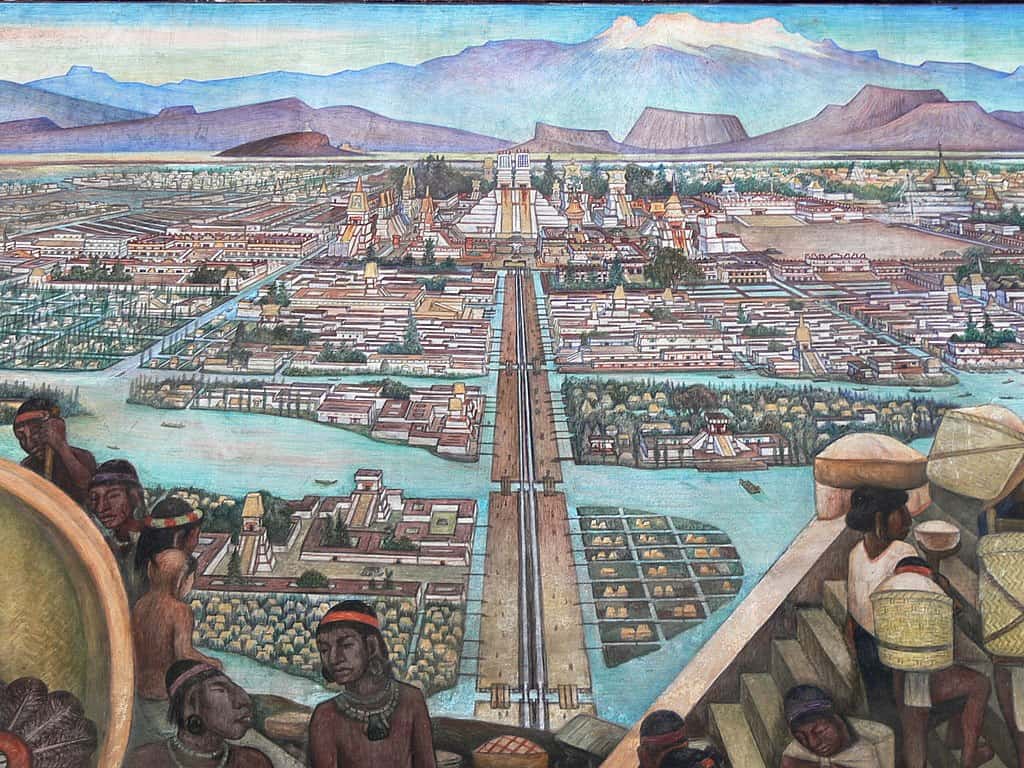
The ancient city of Tenochtitlan as depicted in a mural by Diego Rivera
(cc) Wikimedia Commons
As part of the 2017 Young Scientists Summer Program at IIASA, Francine van den Brandeler studied the struggle that Mexico City is facing as it tries to provide water to its growing population and expanding economy. Local aquifers have been over-exploited, so water needs to be imported from distant sources, with high economic, social, and environmental impacts. Van den Brandeler’s study assesses the effectiveness of water use rights in promoting sustainable water use and reducing groundwater exploitation in the city.
“A few centuries back, Tenochtitlan, the place where Mexico City stands today, was known as the lake city,” says Van den Brandeler. The Aztecs had developed a sophisticated system of dikes and canals to manage water and mitigate floods. However, that changed quickly with the arrival of the Spaniards, who transformed the natural hydrology of the valley. As the population continued to grow over the next centuries, providing drinking water became an increasing challenge, along with controlling floods. As the lake dried up, people pumped water from the ground and built increasingly large infrastructure to bring water from other areas.
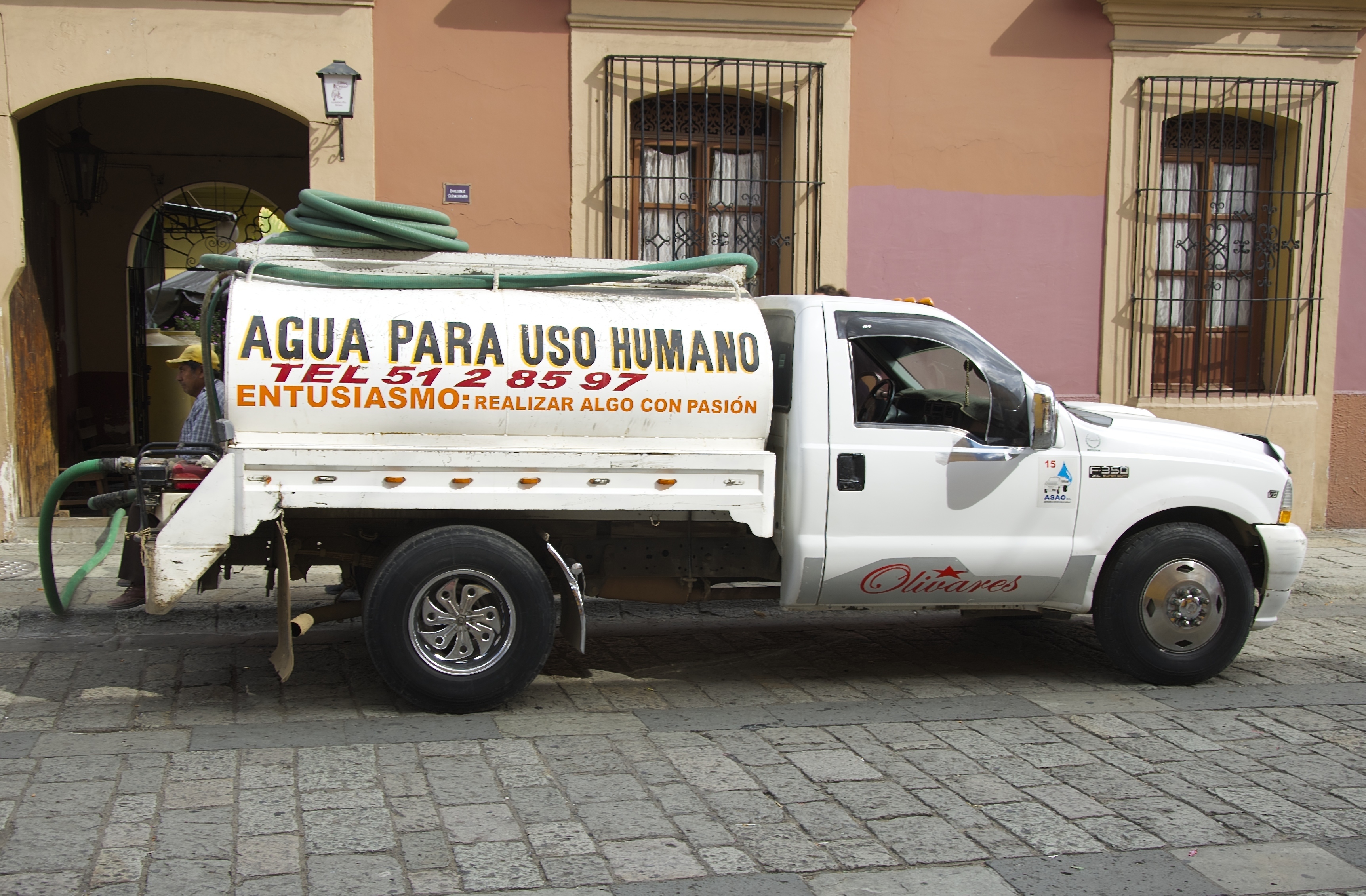
Communities from lower-income groups, living in informal settlements on the outskirts of the metropolitan region are more vulnerable to this scarcity. Many live on just few liters of water every day, and do not have access to the main water supply network, instead relying on water trucks which charge several times the price of water from the public utility.
“In wealthier areas people consume much more than the average European does every day. It is a question of power and politics,” says van den Brandeler. “The voices of marginalized communities go unheard.”
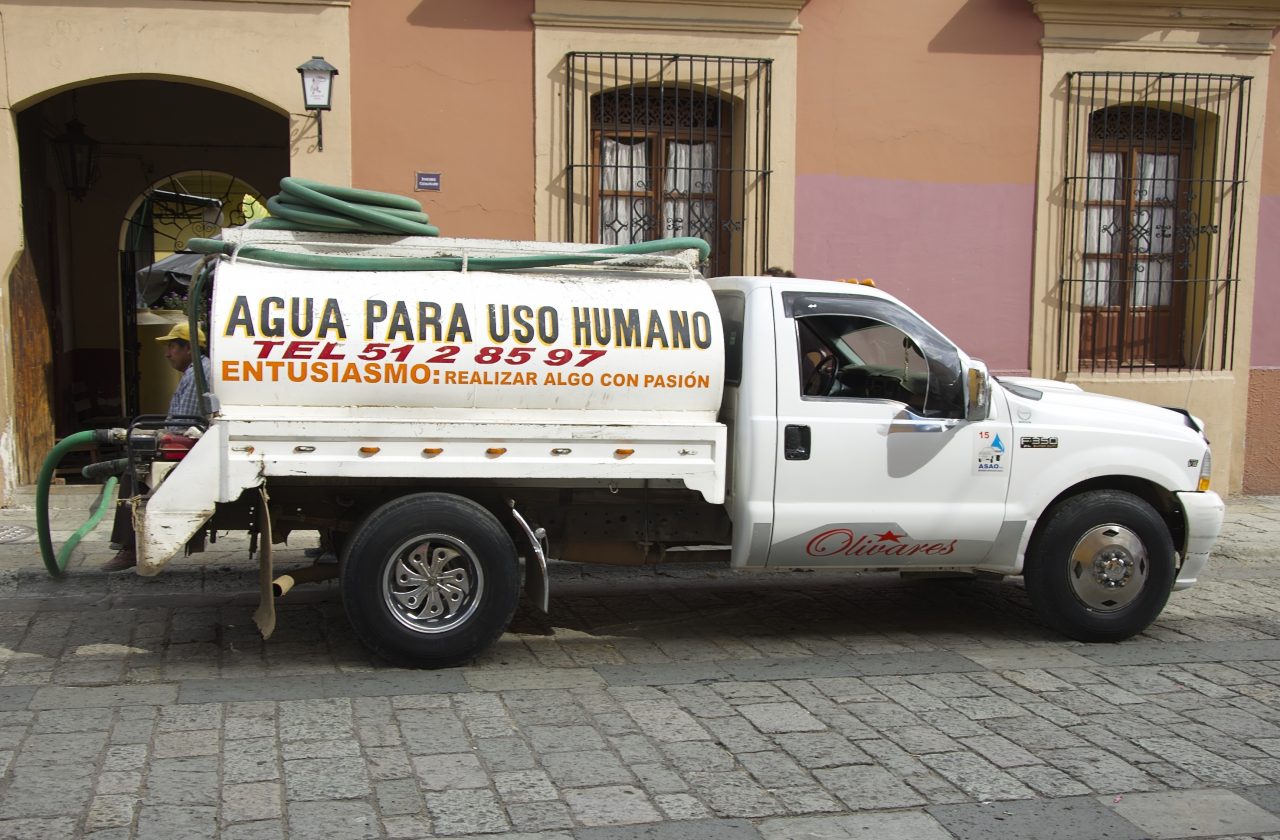
Many people rely on delivery service for drinking water.
© Angela Ostafichuk | Shutterstock
The more one learns about the situation, the more complicated it becomes. The import of water started in the 1940’s. But with a massive increase in population in the last couple of decades, the deficits have become much worse.
The government’s approach has been to find more water rather than rehabilitating or reusing local surface and groundwater sources, or increasing water use efficiency, says van den Brandeler. Therefore wells are being drilled deeper and deeper—as much as 2000 meters into the ground—as the water runs out.
Some people have started initiatives to harvest rainwater, but it is not considered a viable solution by those in charge. “A lot of it has to do with their worldview and general paradigm. The people working at the National Water Commission and the Water Utility of Mexico City have been trained as engineers to make large dams and put pipes in the ground. They don’t believe in small-scale solutions. In their opinion when millions of people are concerned, such solutions cannot work,” says van den Brandeler.
Although the city gets plenty of rain during the rainy season, it goes directly into the drainage system which is linked to the sewage system. This contaminates the water, making it unusable. At the same time, almost 40% of the water in Mexico City’s piped networks is lost due to leakages.
Policy procedures and institutional functioning also remain top-down and opaque, van den Brandeler has found. One of the policy tools for curbing excess water use are water permits for bulk use, for agriculture, industry, or public utilities supplying water. Introduced in the 1940s, lack of proper enforcement has created misuse and conflicts.
For example, while farmers also require a permit that specifies the volume of water they may use each year, they do not pay for their water usage. However, it is difficult to monitor if farmers are extracting water according to the conditions in the permit. Since they do not pay a usage fee, there is also less incentive for the National Water Commission to monitor them. As a result, a huge black market has cropped up in the city where property owners and commercial developers pay exorbitant prices to buy water permits from those who have a license. Since the government allows the exchange of permits between two willing parties, they make it appear above-board. However, it has contributed to the inequalities in water distribution in the city.
With the water crisis worsening every year, Mexico City needs to find a solution before it runs out of water completely. Van den Brandeler is hopeful for a better future as she studies the contributing factors to the problem. She hopes that the water use permits are better enforced and users are given stronger incentives to respect their allocated water quotas. Further, if greater efforts are made within the metropolis to repair decaying infrastructure and scale up alternatives such as rainwater harvesting and wastewater reuse, the city won’t have to look at expensive solutions if adopted in a decentralized manner.
About the Researcher
Francine van den Brandeler is a third year PhD student at the University of Amsterdam in Netherlands. Her research is on the spatial mismatches between integrated river basin management and metropolitan water governance – the incompatibility of institutions and biophysical systems-, which can lead to fragmented water policy outcomes. Fragmented decision-making cannot adequately address the issues of sustainability and social inclusion faced by megacities in the Global South. She aims to assess the effectiveness of policy instruments to overcome this mismatch and suggest recommendations for policy (re)design. At IIASA she was part of the Water Program and worked under the supervision of Sylvia Tramberend and Water Program Director Simon Langan.
This article gives the views of the author, and not the position of the Nexus blog, nor of the International Institute for Applied Systems Analysis.
Sep 21, 2017 | Eurasia
By Evgeny Vinokurov, Director of the Centre for Integration Studies at the Eurasian Development Bank, member of the IIASA-led project, Challenges and Opportunities of Economic Integration within a Wider European and Eurasian Space
An Italian nursery riddle goes: “Why does the heron stand on one leg? Because if it takes away the second leg, it will fall down!” An ornithologist will tell you that herons have incredibly strong legs. The EAEU, consisting of Armenia, Belarus, Kazakhstan, Kyrgyzstan, and Russia is not a heron – it does need to stand firmly on two legs. In this case, one leg is the European Union, and the other leg is the People’s Republic of China. An economist will tell you that the strength of “economic legs” underpinning the countries which make up the Eurasian Economic Union (EAEU) can be described, at best, as fair to middling: the heavy reliance on oil and gas is not particularly wholesome. That is why Russia and its EAEU partners need to establish close economic ties with both the EU and China.

© Galushko Sergey | Shutterstock
Both partners are critically important for the EAEU. The EU remains its largest trade partner: in 2016 it accounted for 50% of total exports from, and 41% of total imports to the Eurasian Union. EAEU member states are interested in expanding the inflow of European investment capital, transfer of EU technologies, and stable EU demand for energy. The EAEU, in turn, is the third largest EU trade partner (after the US and China); accordingly, the EU may be interested in liberalization of trade with the EAEU (establishment of a free trade agreement), reduction of non-tariff barriers in EAEU member states (with a view to increase EU exports), and stability of EAEU power supplies.
At the same time, the EAEU’s “turn to the East” is slowly gaining momentum: Asia-Pacific Economic Cooperation (APEC) countries,first and foremost, China and Association of Southeast Asian Nations (ASEAN) countries, are beginning to overtake the EU. By the end of 2016, the Eurasian Union had imported 1.5% more goods from APEC countries (42.3% of total imports, mostly from China, Korea, and ASEAN countries) than it did from EU countries. It is also important for EU investors to understand that they are exposed to an ever-increasing risk of losing EAEU markets due to the inflow of capital from the leading Asian economies.
These matters have been subjected to rigorous applied analysis in Challenges and Opportunities of Economic Integration within a Wider European and Eurasian Space, a project initiated by IIASA in 2014. It advanced an independent dialogue platform to facilitate interaction between representatives of supranational bodies, expert and business communities of the two unions. The project is designed to help its European and Eurasian participants find common ground with respect to a possible inter-union trade and economic agreement.
According to project publications , it is advisable to reach a comprehensive agreement covering a much broader range of partnership domains than that associated with a standard free trade area. According to the latest calculations by European and Russian experts, an EU-EAEU free trade agreement would produce a positive impact. However, experts from the Information and Forschung (IFO) institute in Munich point out that EAEU agriculture and automotive industry may suffer heavy losses. This demonstrates that it is necessary to work out a quite structurally complex solution offering asymmetric advantages to the two sides.
Relations with China display completely different patterns. Two following “tracks” are especially important.
The first relates to the ongoing negotiations on a non-preferential agreement on trade and economic cooperation between the EAEU and China, envisaging reciprocal minimization of barriers in customs regulations and the financial sector, and intensification of investment cooperation. Talks have already been underway for one year, and are expected to continue for another year or two.
The second track deals with realization of the One Belt One Road initiative. It involves implementation of large-scale joint infrastructure projects, primarily in transportation. EAEU’s participation in the One Belt One Road initiative is very promising for its member states, especially for Russia and Kazakhstan, which need to remove infrastructural limitations inhibiting railroad carriage of containerized cargoes. The EAEU continues to face the issue of insufficient investment capital allocation to container logistical hubs. Kazakhstan will also need to eliminate bottlenecks in its transportation and logistics infrastructure, primarily by building modern container terminals. These are but several of the numerous problems facing the EAEU.
We are looking at One Belt One Road in the broad Greater Eurasia context. Higher efficiency of Greater Eurasian land transportation corridors could enhance trade and generate numerous industrial opportunities. This is particularly relevant for landlocked countries and regions (all Central Asian countries, Russian Urals and Western Siberia).
Russia and its EAEU partners need to establish close economic cooperation ties with both the European Union and China. The EAEU will have to learn to balance between those two poles, making ample use of economic vistas presented by the tripartite cooperation setup, and “capitalize on contradictions.” If the EAEU manages to reach this overarching goal, its foreign economic policy would be successful.
This article gives the views of the author, and not the position of the Nexus blog, nor of the International Institute for Applied Systems Analysis.
Sep 12, 2017 | Science and Art, Systems Analysis
By Gerid Hager, IIASA Ecosystems Services and Management Program
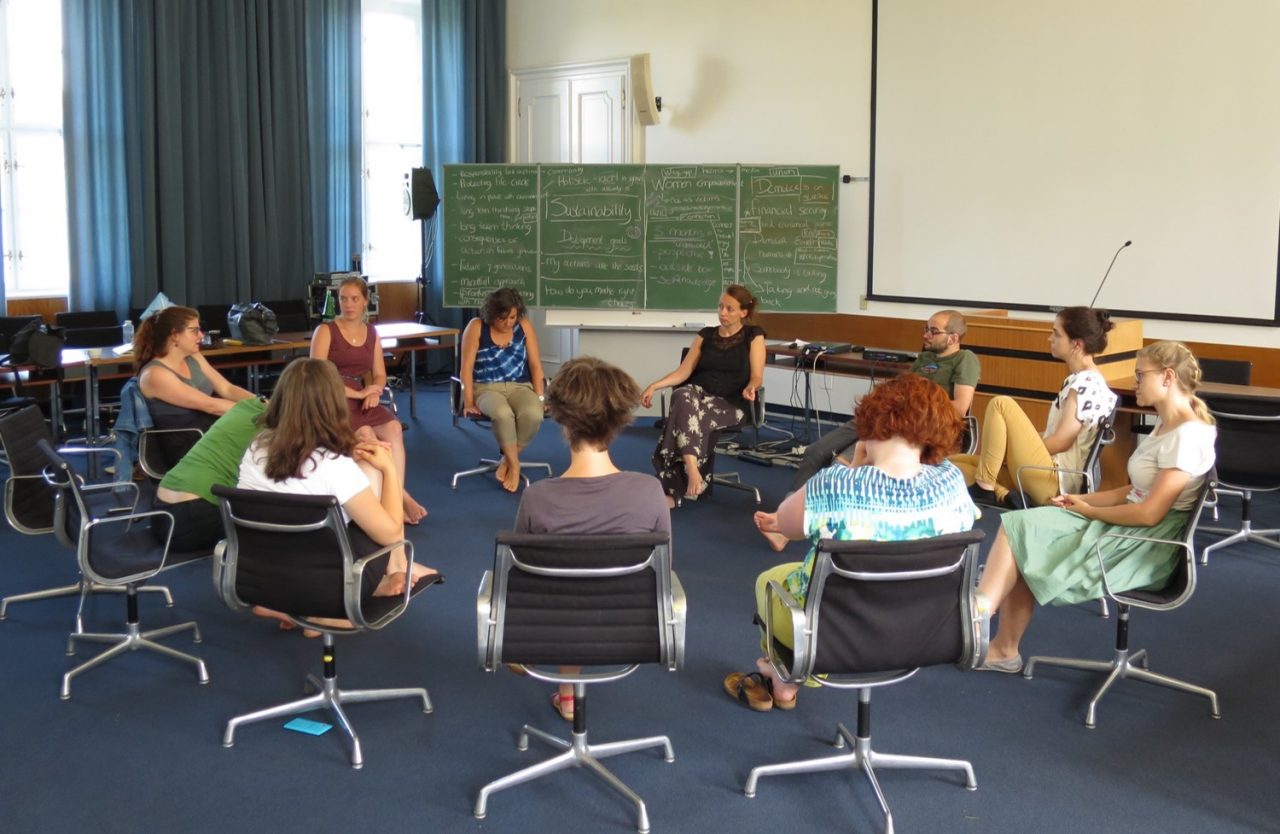
©Gerid Hager | IIASA
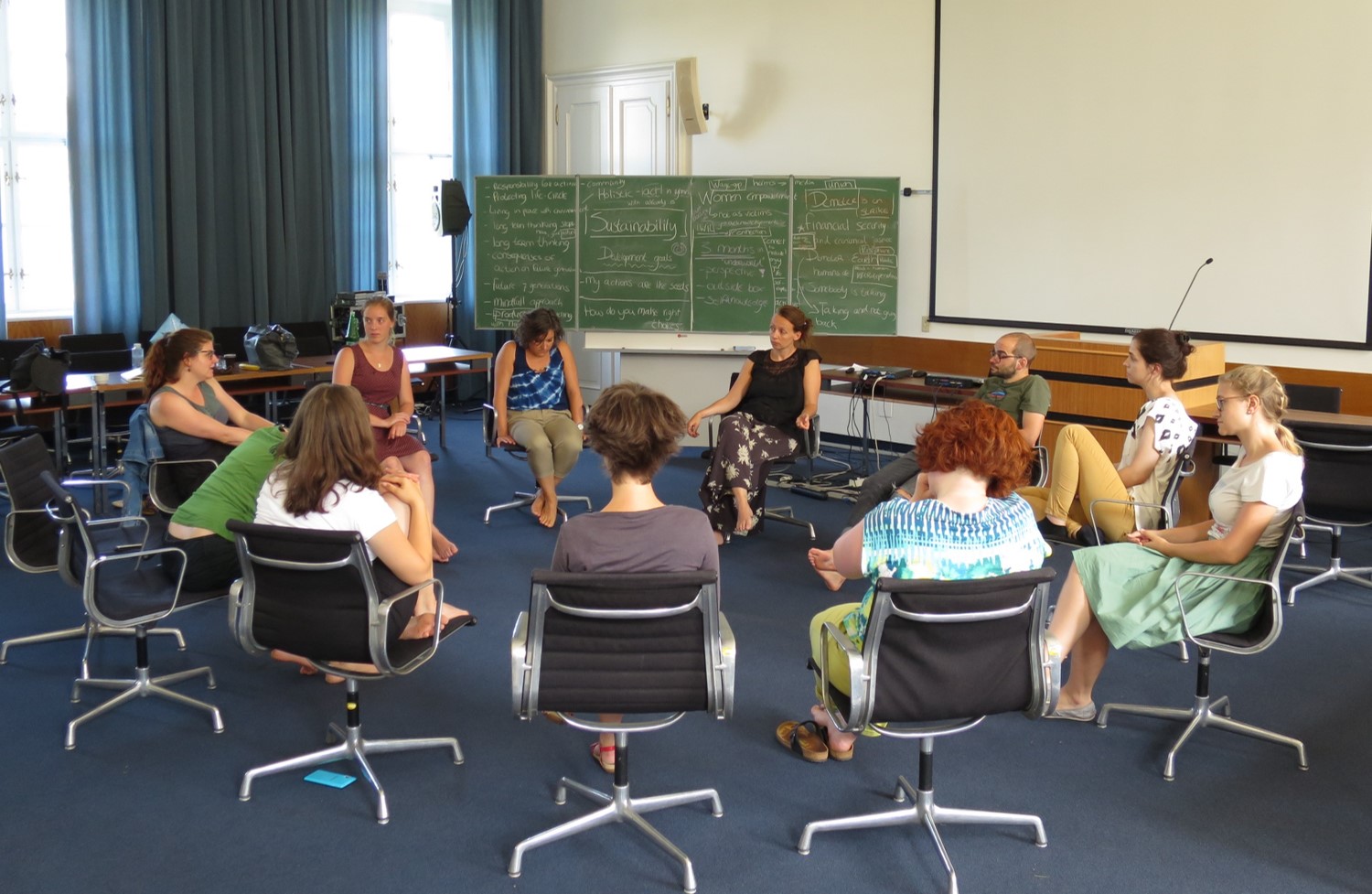
In July, Miranda Lakerveld, a music drama artist and founder of the World Opera Lab, visited IIASA to run two storytelling workshops with young actors in civil society and youth policy, as well as with YSSP students and IIASA staff. Miranda first came to IIASA in September 2016 as part of the Citizen Artist Incubator.
After the workshops in July, Miranda and I sat down for a chat.
Gerid: Miranda, in the workshop you shared how you approach storytelling in your artistic practice. You said: “I’m looking for moments that feel true, I pick them up and weave them together into new stories.” Then, a participant exclaimed: “Stories are not true!” It seems a contradiction, but possibly this is the very nature of stories. They might not be true, giving accurate accounts of past events, but they carry truths in them, which we so often can’t capture otherwise. You’ve been working with myths for a long time: What value do you see in them today, as we’re trying to navigate between “alternative facts” and often incomprehensible scientific writing?
Miranda: Yes, this was a short reflection on the methodology I have developed and applied in many different contexts over the last eight years. It uses comparative mythology as a starting point. The aim of the method is to create a meaningful creative exchange that can involve people from all walks of life. Myths are examined from the perspectives of different cultures, and through this intercultural lens, we find symbols and archetypes that resonate as ‘true’ across cultures.
The ‘post-truth’ era made us extra aware of the divides between communities and I believe such an embodied practice of mythology can be an inspiring place for people to meet. I think the renunciation of facts and scientific insight is a symptom of people feeling left out and angry. Using myths and stories can be one way to bring people together and find common truths.
This workshop was part of the Systems Thinking for Transformation project and we wanted to search for “systems stories” in ancient narratives. We arrived at a very personal story of endurance and adaptation, pondered the power of great nature and cyclical behavior on a very large scale, and discussed economic justice and its relation to sustainable development. How does one story from Greek mythology – the Hymn to Demeter – lead to such diverse considerations?
The development of myths and folk stories has very specific characteristics, which I like to compare to ecosystems. Symbols and characters create organisms in constant interaction with their environments. Through time, myths change, in fertile circumstances the stories flourish, and layers of meaning are added.
Participants relate the Greek myth to myths from their own cultural backgrounds, and then to their personal histories. Interestingly, in the encounter between the myth and a group, some deeply felt preoccupations spring up from under the surface. I am still not sure how this happens. It probably has to do with a combination of embodiment of the characters, the richness of the archetypes, and the mise en scène, which represents the people inside the larger system.

Majnun & Leyla- World Opera Lab 2016- photo by Fouad Lakbir
One integral part of systems thinking is to be able to consider and explore multiple perspectives on a problem or situation. How does the embodiment exercise come in to this?
Slipping into different characters from the story is an essential part of the process. It unlocks the creative imagination and is related to action in society. The Greek root-word for drama is “dran”, which means “to act”. Through embodiment we can take the position of another character or force in the system. The performing arts make this possible: we can take on different roles, understand new parts, and at the same time experience the whole system from a new perspective.
There are other examples of how art and science meet through storytelling. A researcher at Berkeley University teamed up with story artists from PIXAR to help researchers create better stories about their research. What interests you in working with scientists and what is the role of storytelling?
I think the collaboration between art and science could go far beyond creating stories about research. We see very different approaches of creating and transmitting knowledge. So we have to deal with this tension but an inclusive society also means we should value these differences. The academic world has created an intricate system of validating knowledge leading to very specialized fields of research. Artists work on larger ideas, but the output cannot necessarily be validated. We are trying to grasp truths about the same river, but we work from opposite river banks. I think we can build bridges and increase our ability for insight and action by telling stories together.
This article gives the views of the author, and not the position of the Nexus blog, nor of the International Institute for Applied Systems Analysis.
Sep 4, 2017 | Science and Art
By Merlijn Twaalfhoven, composer, musician, entrepreneur, and member of the Alpbach-Laxenburg Group, which held its annual retreat last week on the sidelines of the European Forum Alpbach 2017 Political Forum.
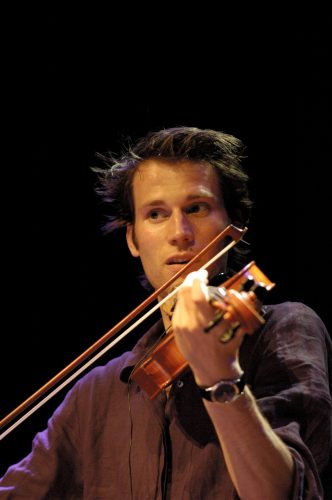
Merlijn Twaalfhoven ©Merijn van der Vliet
Imagine you bring a group of people together, ask them to sit down, give them a drink and then pose the following question: how can we enact transformative social change towards enhanced sustainability and equity?
What would be the looks on their faces? Who would speak up? Last week, I happened to be present in such a group. We sat down, had a glass of water and started. None of us hesitated. We all brought our statements, relevant experience, passionate insights. Those with the task to structure the exchange begged us to find constraint, and called for more digestible sizes of our contributions.
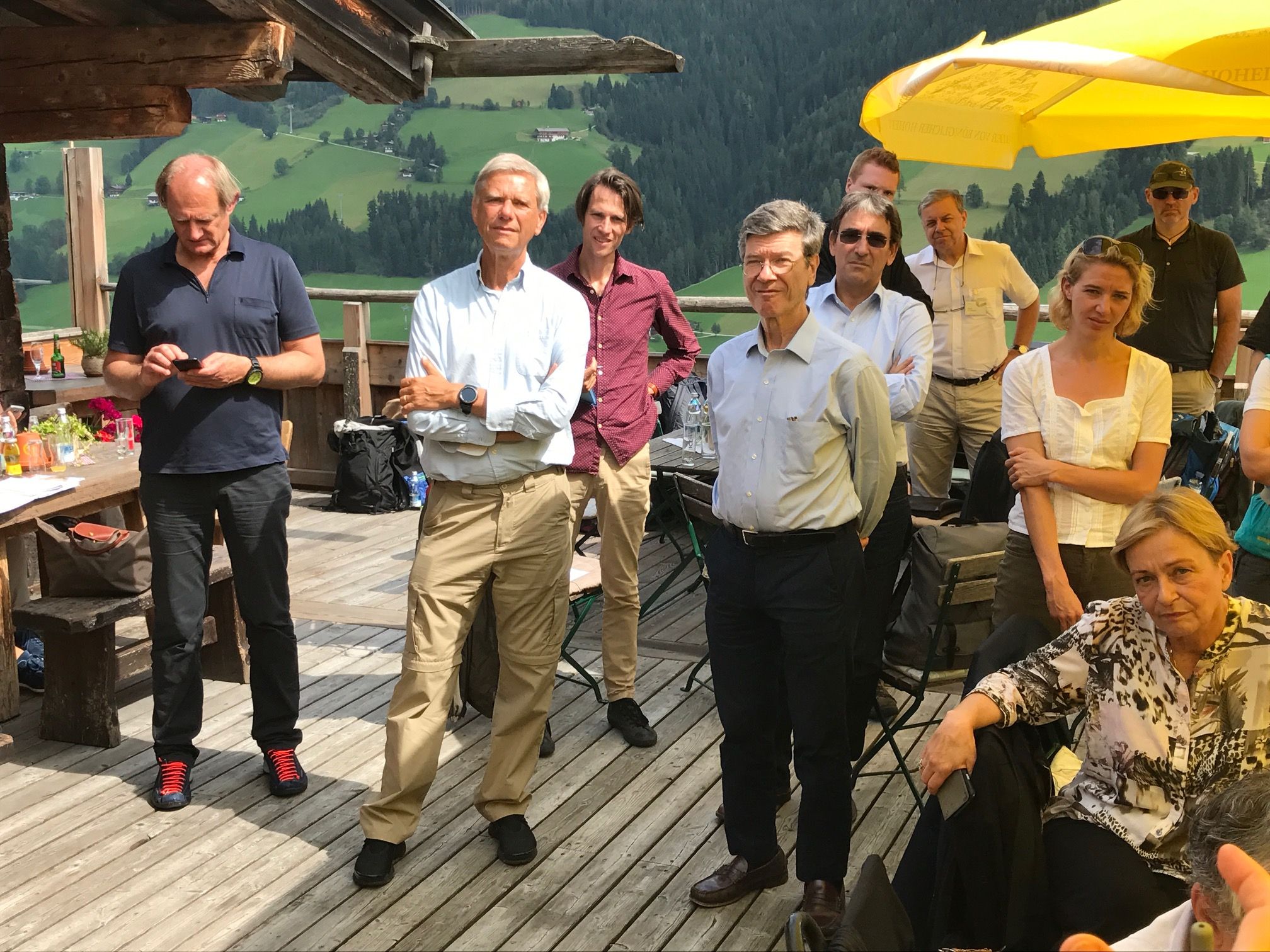
It’s one of the most exciting places on Earth at the end of August: The Alpbach-Laxenberg Group brings scientists, politicians, business leaders, and other experts together for three days of deep conversations about today’s most urgent challenges. It was a tremendous privilege to travel to this beautiful mountain village, join these wonderful people and discuss the future of our planet.
We could hardly breathe. Our conversations tumbled over each other, from the future of computer technology to publication frenzy in academia, from ecological farming in Egypt to outreach of art in Brussels. I could see the pieces of world’s jigsaw coming together. It became apparent that we have the knowledge, the insights, and the technology that’s needed for a sustainable world. We might even find investments, governmental support, or access to the most influential circles at the WTO or the UN. We felt how currents of knowledge start to flow when all these wires connect.
But on way back to the lowlands, the mountains slowly disappearing in my train window, I felt ambivalent.
Did we discuss the right questions? I saw so much strength. Strong voices, strong ideas. Hard data, clear evidence. But we almost drowned in ideas, visions, and possibilities.
The question that we did not pose was: what is our weakness? We are comfortable with wicked problems, global strategies, and impactful solutions. But can we perceive our own frailty? Do we have a sense of the limitations of our knowledge?
A mountain village is the best place to take a breath. To inhale fresh air. I’m afraid we exhaled too much. It was no doubt valuable emanation. We couldn’t stop giving answers. But we missed the opportunity to find better questions. I had the feeling we gathered as experts to play Jeopardy! against computer Watson. We battled to answer any question.
But is this our most effective role? Who has more influence: the person giving an answer or he or she who can formulate the question? In posing questions lies our ability to connect knowledge to curiosity. Any good story will have a captivating query at its base. Only when we can make a strong case for sustainability, can we mobilize our society to become involved.
When a child is missing, the whole village wakes up to search. When will our global village wake up and unite to fight for a sustainability revolution? What might be the most activating murder case that can bind us and make us embark on a heroic quest?
Last days in Alpbach, it was like musicians joining together. We unpacked our instruments and tuned our strings. It was a wonderful sound indeed. We resonated. But this was not yet the performance. The audience is waiting – distracted by their smartphones – until the moment we start truly playing together and deliver a story that’s tremendous, enchanting and mesmerizing.
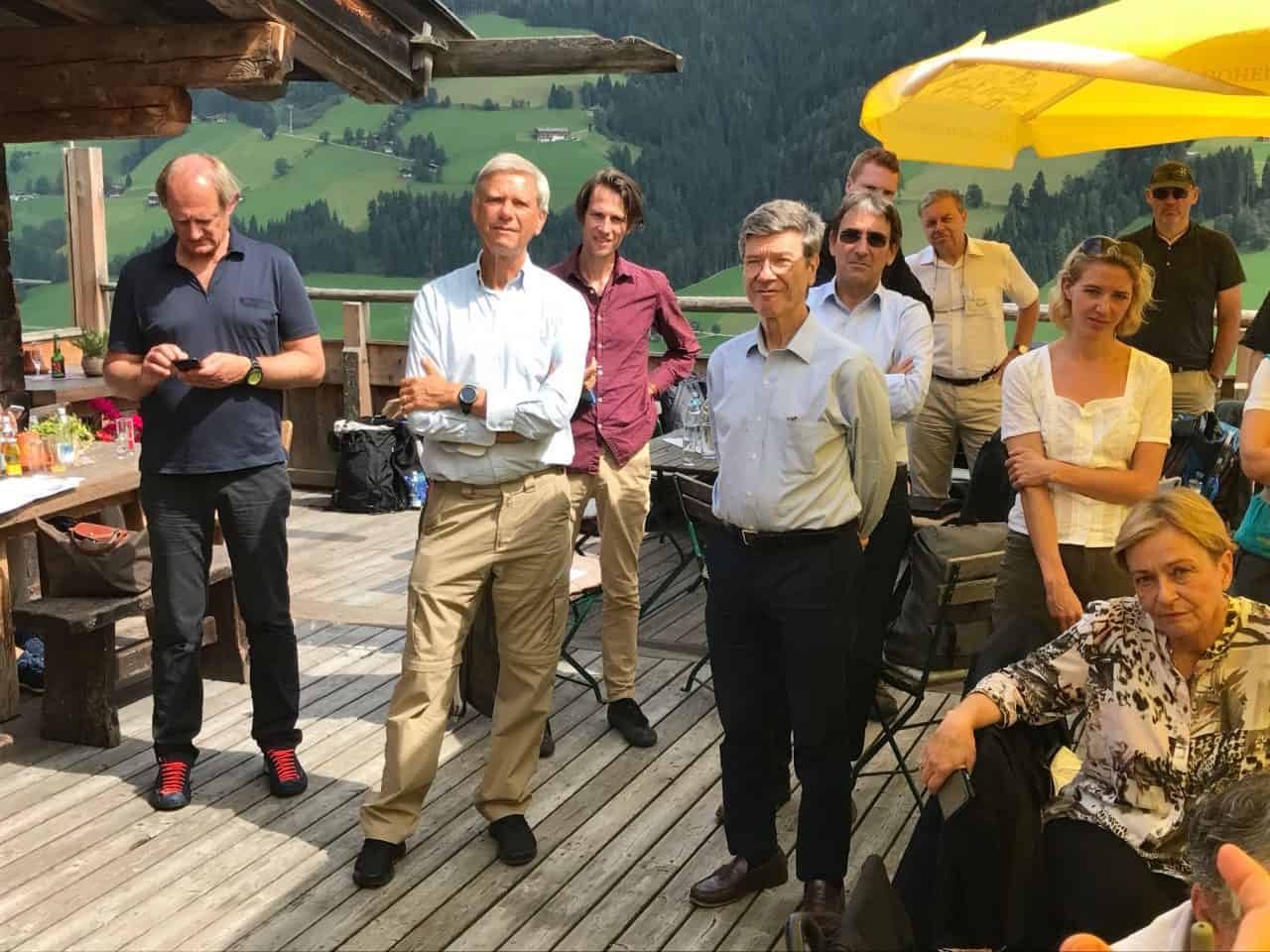
Alpbach-Laxenburg Group members debating on Monday 28 August, 2017. From left to right: Hermann Hauser, Partner at Amadeus Capital Partners Ltd., Jeff Sachs, Director of The Earth Institute at Columbia University and IIASA Distinguished Visiting Fellow, Merlijn Twaalfhoven Composer and Cultural Entrepreneur, Amsterdam, Gloria Benedikt, dancer, choreographer, and Associate for Science and Arts at IIASA, and Milena ´ic Fuchs, Faculty of Philosophy, University of Zagreb; former Minister of Science and Technology of Croatia. © Patrick Zadrobilek | IIASA
Merlijn Twaalfhoven
Composer, musician, enterpreneur.
UNESCO prize (2011).
Working on What Art Can Do – a collection inspiring examples of the work of artists around 17 Sustainable Development Goals.
http://merlijntwaalfhoven.com
http://whatartcando.org
https://twitter.com/Merlijn12H
This article gives the views of the author, and not the position of the Nexus blog, nor of the International Institute for Applied Systems Analysis.




You must be logged in to post a comment.