Nov 27, 2019 | Climate, Climate Change, Communication, Environment, IIASA Network, Women in Science
Award-winning climate communicator Katharine Hayhoe, an atmospheric scientist, professor of political science at Texas Tech University, and director of the Climate Center, discusses the importance of effective science communication in overcoming barriers to public acceptance of climate change in a recent interview with Rachel Potter, IIASA communications officer.
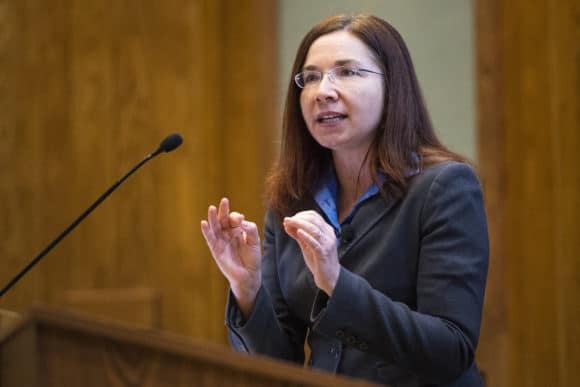
© Chris.Soldt | Boston College.MTS.Photography
Q: Can you tell us a bit about your specific areas of research as a scientist?
I study what climate change means to people, in the places where we live: how it is affecting our water supply, our health, our air quality, the integrity of our infrastructure, and other human and natural systems. Often when people think about climate change they think about polar bears or people who are living on low-lying islands in the South Pacific. I bring climate change down from the global scale to the local level because when we understand that it is an ‘everything issue’, that’s when we understand that we need to act.
Q: You have been widely recognized as a remarkable communicator. What do you see as key to effective science communication?
I believe effective communication begins with connecting and identifying shared values, and ends with talking about solutions. With climate change, sometimes people are overt in their opposition by outright saying the science isn’t real. More often however, it is passive opposition where people feel the problem is too big and there is nothing they can do to fix it. We need to present people with solutions that are practical and viable – in other words, actions that they can engage in.
Q: Why is science communication important?
Science communication explains how the world works. Today we are conducting an unprecedented experiment with our planet, the only one we have. Understanding this is one of the most important things anyone can do as a human being living on Earth.
Q: Can you briefly outline what you see as trends in public and political opinion with regard to human-induced climate change?
Our world is becoming increasingly polarized and we are dividing into tribes. It is happening with many issues and in many places around the world. When the world is changing so quickly, many of us feel uncomfortable with the rate of change, so we retreat to a more tribalized, divided society where we feel comfortable. But by doing so, we focus on the tiny fraction of what divides us rather than the vast preponderance of what unites us, because it makes us feel more secure to do so.
Climate change is a casualty of this fracturing, tribalism, and polarization that is happening – most notably in the US because there are only two political parties, so the tribalization there is much more obvious. In the US, the best predictor of whether people agree with the facts that: climate is changing, humans are responsible, and the impacts are serious, is not how much they know about science, it’s simply where they fall on the political spectrum. This politicization of science is also happening in the UK, Austria, across Europe, Canada, Australia, and Brazil.

© IIASA Katherine Hayhoe with members of the IIASA Women in Science Club
Q: How can this polarization and the barriers to dealing with climate change be challenged?
Climate change is a human issue – it doesn’t care if we are liberal or conservative, rich or poor, although the poor are being more affected than the rich. It affects all of us and almost everything we care about. For that reason, we must emphasize what unites us rather than what divides us. We need to challenge the idea that the solutions to climate change pose a bigger threat to our wellbeing, our comfort, the quality of our lives, our identity and who we are, than the impacts.
We must expose the myths that underlie inaction around climate change and examine them in an objective way. Will it really ruin our economy to fix climate change? Will it take us back to the Stone Age? If we don’t tackle the myths directly, they will continue to thrive in our sub-conscious. For example, in Canada there is an idea that a carbon tax will destroy the economy. I like to point out that there were four provinces in Canada that had a price on carbon before it became a federal policy, and those four provinces have led the country in terms of economic growth and output.
Q: What part do you see IIASA playing in being able to build bridges between countries across political divides?
IIASA stands in a key position at a pivotal time. It is a truly international organization in terms of its mandate, structure, governance, and the people that work here. Climate change is a global problem and IIASA is a global institution that can offer both big-picture and regionally-specific insights into climate impacts and solutions.
Katharine Hayhoe visited IIASA on 4 October 2019 to give a lecture titled, Barriers to Public Acceptance of Climate Science, Impacts, and Solutions, to IIASA researchers and to meet with the IIASA Women in Science Club. IIASA has a worldwide network of collaborators who contribute to research by collecting, processing, and evaluating local and regional data that are integrated into IIASA models. The institute has 819 research partner institutions in member countries and works with research funders, academic institutions, policymakers, and individual researchers in national member organizations.
Note: This article gives the views of the author, and not the position of the Nexus blog, nor of the International Institute for Applied Systems Analysis
Nov 21, 2019 | Air Pollution, Environment, Food & Water, Indonesia, Women in Science
By Adriana Gómez-Sanabria, researcher in the IIASA Air Quality and Greenhouse Gases Program
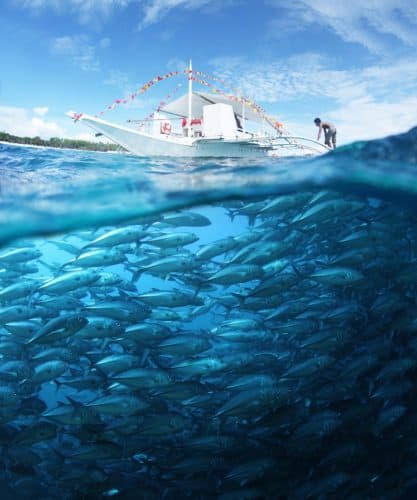
Adriana Gómez-Sanabria discusses the results of a new study that looked into the impacts of implementing various technologies to treat wastewater from the fish processing industry in Indonesia.
© Mikhail Dudarev | Dreamstime.com
To reduce water pollution and climate risks, the world needs to go beyond signing agreements and start acting. Translating agreements and policies into action is however always much more difficult than it might seem, because it requires all players involved to participate. A complete integration strategy across all sectors is needed. One of the advantages of integrating all sectors is that it would be possible to meet different objectives, for example, climate and water protection goals in this case, with the same strategy.
I was involved in a study that assessed the impacts of implementing various technologies to treat wastewater from the fish processing industry in Indonesia when involving different levels of governance. This study is part of the strategies that the government of Indonesia is evaluating to meet the greenhouse gas mitigation goals pledged in its Nationally Determined Contribution (NDC), as well as to reduce water pollution. Although Indonesia has severe national wastewater regulations, especially in the fish processing industry, these are not being strictly implemented due to lack of expertise, wastewater infrastructure, budgetary availability, and lack of stakeholder engagement. The objective of the study was to evaluate which technology would be the most appropriate and what levels of governance would need to be involved to simultaneously meet national climate and water quality targets in the country.
Seven different wastewater treatment technologies and governance levels were included in the analysis. The combinations included were: 1) Untreated/anaerobic lagoons – where untreated means wastewater is discharged without any treatment and anaerobic lagoons are ponds filled with wastewater that undergo anaerobic processes – combined with the current level of governance. 2) Aeration lagoons – which are wastewater treatment systems consisting of a pond with artificial aeration to promote the oxidation of wastewaters, plus activated sludge focused solely on water quality targets with no coordination between water and climate institutions. 3) Swimbed, which is an aerobic aeration tank focusing mainly on climate targets assuming no coordination between institutions. 4) Upflow anaerobic sludge blanket (UASB) technology, which is an anaerobic reactor with gas recovery and use followed by Swimbed, and 5) UASB with gas recovery and use followed by activated sludge, which is an aerobic treatment that uses microorganisms forming particles that clump together. Both, 4 and 5 assume vertical and horizontal coordination between water and climate institutions at national, regional, and local level. It is important to notice that the main difference between 4 and 5 is the technology used in the second step. Two additional combinations, 6 and 7, are also proposed including the same technological combinations of 4 and 5, but these include increasing the level of governance to a multi-actor coordination level. The multi-actor level includes coordination at all institutional levels but also involves academia, research institutes, international support, and other stakeholders.
Our results indicate that if the current situation continues, there would be an increase of greenhouse gases and water pollution between 2015 and 2030, driven by the growth in fish industry production volumes. Interestingly, the study also shows that focusing only on strengthening capacities to enforce national water policies would result in greenhouse gas emissions five times higher in 2030 than if the current situation continues, due to the increased electricity consumption and sludge production from the wastewater treatment process. The benefit of this strategy would be positive for the reduction of water pollution, but negative for climate change mitigation. From our analyses of combinations 2 and 3 we learned that technology can be very efficient for one purpose but detrimental for others. If different institutions are, for example, responsible for water quality and climate change mitigation, communication between the institutions is crucial to avoid trade-offs between environmental objectives.
Furthermore, when analyzing different cooperation strategies together with a combination of diverse sets of technologies, we found that not all combinations work appropriately. For instance, improving interaction just within and between institutions does not guarantee proper selection and application of technologies. In this case, the adoption of the technology is not fast enough to meet the targets proposed in 2030, thus resulting in policy implementation failures. Our analyses of combinations 4 and 5 showed that interaction within and between national, regional, and local institutions alone is not enough to prevent policy failure.
Finally, a multi-actor cooperation strategy that includes cooperation across sectors, administrative levels, international support, and stakeholders, seems to be the right approach to ensure selection of the most appropriate technologies and achieve policy success. We identified that with this approach, it would be possible to reduce water pollution and simultaneously decrease greenhouse gas emissions from the electricity required for wastewater treatment. Analyzing combinations 6 and 7 revealed that multi-actor governance allows to simultaneously meet climate and water objectives and a high chance to prevent policy failure.
In the end, analyses such as the one shown here, highlight the importance of integrating and creating synergies across sectors, administrative levels, stakeholders, and international institutions to ensure an effective implementation of policies that provide incentives to make careful choices regarding multi-objective treatment technologies.
Reference:
Gómez-Sanabria A, Zusman E, Höglund-Isaksson L, Klimont Z, Lee S-Y, Akahoshi K, Farzaneh H, & Chairunnisa (2019). Sustainable wastewater management in Indonesia’s fish processing industry: bringing governance into scenario analysis. Journal of Environmental Management (Submitted).
Note: This article gives the views of the author, and not the position of the Nexus blog, nor of the International Institute for Applied Systems Analysis.
Nov 18, 2019 | IIASA Network, South Africa, Women in Science
Mary Scholes has been serving on the IIASA Science Advisory Committee (SAC) since 2011 and was appointed as Chair in 2014. She discusses her views of SAC in this interview with Monika Bauer, IIASA Network and Alumni Officer.

Mary Scholes
Tell us about your journey as a member of SAC.
It’s been a very interesting journey for me. When I was first asked to join SAC, I declined. Over time, I found that the institute changed to look at the quality of the research in the programs, and it was at this point that I said I would become part of the committee. I soon realized that I didn’t really understand the overarching top down role that IIASA Council played.
It was very interesting. The first two to three years was a learning curve working on communicating with the IIASA Council. The institute was conducting good science, and we didn’t want that to be overlooked in any way. We re-wrote the terms of reference for SAC, focusing on the engagement between what SAC does during the year and how that is communicated to Council. From that point on, it was always on the agenda, documents were always acknowledged, and there was always follow up. It my opinion, it changed how SAC functioned.
In 2017, the institute started an institutional review process, and I represented SAC on the taskforce that was assembled to support this effort. Throughout the process, in my opinion, it came out quite clearly, that SAC needs to play a much more engaged role with the Council Program Committee, and that the Program Committee should ensure that SAC’s voice reaches the Council. In the past, there was a quite strong responsibility on the SAC Chair, to make sure the voice of the committee was heard, and this process resolved this.
What will happen next, I think, is that SAC will interact much more closely with the new Deputy Director General for Science (DDGS), who will then take the views or recommendations of SAC to Council. It would be advantageous to still have the SAC Chair invited to IIASA Council meetings to ensure information is conveyed or to answer any follow up questions. I would also suggest that SAC continues in the role of an advisory board to IIASA. I believe any good international science institution, anywhere in the world, should have an external, neutral, excellent research advisory body.
How do you see SAC developing as you step down at the end of this year?
First, that SAC continues. Second, that the Chairperson interacts frequently with the new DDGS. Third, that the DDGS communicates SAC’s feedback to Council, and to ensure that this is the voice of SAC, the Chairperson should be invited to that particular section of the Council meetings. For this, the terms of reference would however need to be revisited.
How is this different from the current situation?
At the moment, SAC is meant to only look backwards. I plan to challenge this, so that it can be raised in 2020 because, in my opinion, this is the best committee to do an independent horizon scanning exercise. Internal researchers can do a horizon scanning exercise from their perspective, and SAC add expertise from other areas and regions. Therefore, I believe SAC needs to be given the space of being retrospective as well as the space to look forward and to take those ideas to the DDG of Science.
Those are the three critical roles I think that SAC needs to take in the future. If this is done, it would greatly benefit the scientific governance of the institute.
SAC members can serve a maximum of six years. This is a good decision. A new Chairperson will be a new beginning, with these principle guidelines providing a foundation.
What do you feel are the main takeaways from SAC’s recent report to the IIASA Council?
First, SAC is very pleased about the new DDGS position, as we feel it’s important to have someone who can solely focus on driving the science agenda rather than also running the entire institution.
Second, it’s important for the strategic plan to be agile. I think the way the new strategic plan needs to be developed is probably in phases. For example, instead of designing a ten-year plan, do a three-year portion and then a five-year portion; there could also be staggered overlaps. This way the institute is much more agile while focusing on the results rather than where to allocate the budget, and it allows flexibility for the institution to change as research progresses or is completed. SAC would like to see an agile research strategy that also takes into account the fundamentals of knowledge versus what can be done with iterative machine learning.
Lastly, there was concern about the processes regarding recent changes at the institute. This is a hard issue to handle, and there are ways of potentially managing it better.
What has left the greatest impression on you during your time on SAC?
I think it’s critical how IIASA moves forward with its National Member Organizations (NMOs), how governments stay engaged, and how these relationships work in terms of a reciprocal relationship.
My experiences in South Africa have been closely tied to the Southern African Systems Analysis Centre (SASAC), an initiative organized by IIASA and the South African NMO. At the moment the program is stagnant, and we’re hoping the materials we produced for SASAC will find a new avenue for teaching a new cohort as there are absolutely wonderful examples of success stories.
After completing the three-week SASAC High-level Capacity Strengthening Program, participants would update their CVs and quickly be promoted to higher positions at various universities and institutions. Individuals from other African countries would come to South Africa because there were no opportunities in their home countries, complete the program, and then be promoted into positions at universities back home. Another example from the last course in 2017: I had 16 participants and already 13 manuscripts have been published. That’s a huge return on investment. The program really worked, and we would obviously like to see the program continue. Perhaps the gentlest way would be to have a committed postdoc come to IIASA and then go back to South Africa and drive a new program.
Mary Scholes will be stepping down as SAC Chair in December 2019 and will continue serving on the South African NMO Committee for IIASA.
Notes:
More updates from IIASA alumni or information on the IIASA network may be found here.
This article gives the views of the author, and not the position of the Nexus blog, nor of the International Institute for Applied Systems Analysis.
Nov 12, 2019 | Austria, Communication, Demography, Women in Science
By Nadejda Komendantova, researcher in the IIASA Advanced Systems Analysis Program
Nadejda Komendantova discusses how misinformation propagated by different communication mediums influence attitudes towards migrants in Austria and how the EU Horizon 2020 Co-Inform project is fostering critical thinking skills for a better-informed society.
© Skypixel | Dreamstime.com
Austria has been a country of immigration for decades, with the annual balance of immigration and emigration regularly showing a positive net migration rate. A significant share of the Austrian population are migrants (16%) or people with an immigrant background (23%). The migration crisis of 2015 saw Austria as the fourth largest receiver of asylum seekers in the EU, while in previous years, asylum seekers accounted for 19% of all migrants. Vienna has the highest share of migrants of all regions and cities in Austria, and over 96% of Viennese have contact with migrants in everyday life.
Scientific research shows that it is however not primarily these everyday situations that are influencing attitudes towards migrants, but rather the opinions and perceptions about them that have developed over the years. Perceptions towards migration are frequently based on a subjectively perceived collision of interests, and are socially constructed and influenced by factors such as socialization, awareness, and experience. Perceptions also define what is seen as improper behavior and are influenced by preconceived impressions of migrants. These preconceptions can be a result of information flow or of personal experience. If not addressed, these preconditions can form prejudices in the absence of further information.
The media plays an essential role in the formulation of these opinions and further research is necessary to evaluate the impact of emerging media such as social media and the internet, and their consequent impact on conflicting situations in the limited profit housing sector. Multifamily housing in particular, is getting more and more heterogeneous and the impacts of social media on perceptions of migrants are therefore strongest in this sector, where people with different backgrounds, values, needs, origins and traditions are living together and interacting on a daily basis. Perceptions of foreign characteristics are also frequently determined by general sentiments in the media, where misinformation plays a role. Misinformation has been around for a long time, but nowadays new technologies and social media facilitate its spread, thus increasing the potential for social conflicts.
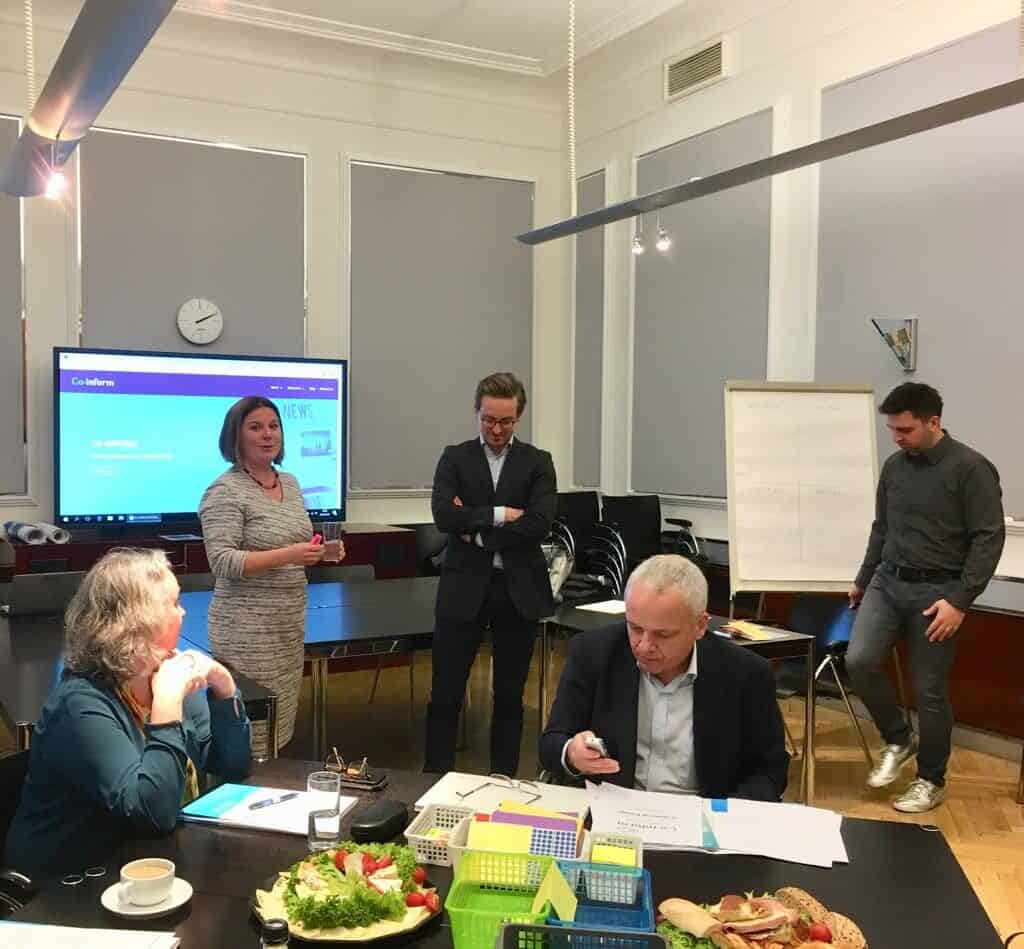
Early in 2019, the International Institute for Applied Systems Analysis (IIASA) organized a workshop at the premises of the Ministry of Economy and Digitalization of the Austrian Republic as part of the EU Horizon 2020 *Co-Inform project. The focus of the event was to discuss the impact of misinformation on perceptions of migrants in the Austrian multifamily limited profit housing sector.
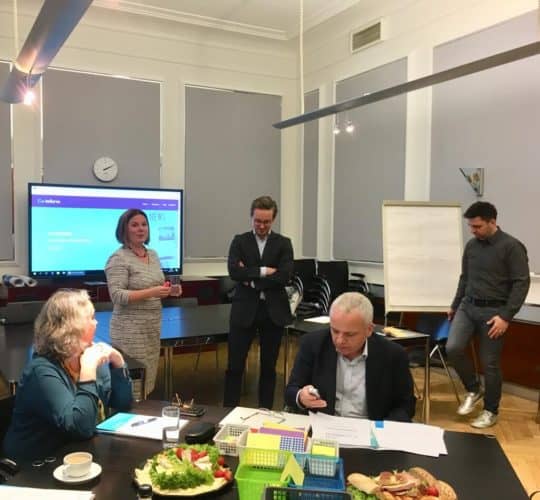
Nadejda Komendantova addressing stakeholders at the workshop.
We selected this topic for three reasons: First, this sector is a key pillar of the Austrian policy on socioeconomic development and political stability; and secondly, the sector constitutes 24% of the total housing stock and more than 30% of total new construction. In the third place, the sector caters for a high share of migrants. For example, in 2015 the leading Austrian limited profit housing company, Sozialbau, reported that the share of their residents with a migration background (foreign nationals or Austrian citizens born abroad) had reached 38%.
Several stakeholders, including housing sector policymakers, journalists, fact checkers, and citizens participated in the workshop. Among them were representatives from the Austrian Chamber of Labor, Austrian Limited Profit Housing (ALPH) companies “Neues Leben”, “Siedlungsgenossenschaft Neunkirchen”, “Heim”, “Wohnbauvereinigung für Privatangestellte”, the housing service of the municipality of Vienna, as well as the Austrian Association of Cities and Towns.
The workshop employed innovative methods to engage stakeholders in dialogue, including games based on word associations, participatory landscape mapping, as well as wish-lists for policymakers and interactive, online “fake news” games. In addition, the sessions included co-creation activities and the collection of stakeholders’ perceptions about misinformation, everyday practices to deal with misinformation, co-creation activities around challenges connected with misinformation, discussions about the needs to deal with misinformation, and possible solutions.
During discussions with workshop participants, we identified three major challenges connected with the spread of misinformation. These are the time and speed of reaction required; the type of misinformation and whether it affects someone personally or professionally; excitement about the news in terms of the low level of people’s willingness to read, as well as the difficulties around correcting information once it has been published. Many participants believed that they could control the spread of misinformation, especially if it concerns their professional area and spreads within their networking circles or among employees of their own organizations. Several participants suggested making use of statistical or other corrective measures such as artificial intelligence tools or fact checking software.
The major challenge is however to recognize misinformation and its source as quickly as possible. This requirement was perceived by many as a barrier to corrective measures, as participants mentioned that someone often has to be an expert to correct misinformation in many areas. Another challenge is that the more exciting the misinformation issue is, the faster it spreads. Making corrections might also be difficult as people might prefer emotional reach information to fact reach information, or pictures instead of text.
The expectations of policymakers, journalists, fact checkers, and citizens regarding the tools needed to deal with misinformation were different. The expectations of the policymakers were mainly connected with the creation of a reliable, trusted environment through the development and enforcement of regulations, stimulating a culture of critical thinking, and strengthening the capacities of statistical offices, in addition to making relevant statistical information available and understandable to everybody. Journalists and fact checkers’ expectations on the other hand, were mainly concerned with the development and availability of tools for the verification of information. The expectations of citizens were mainly connected with the role of decision makers, who they felt should provide them with credible sources of information on official websites and organize information campaigns among inhabitants about the challenges of misinformation and how to deal with it.
*Co-Inform is an EU Horizon 2020 project that aims to create tools for better-informed societies. The stakeholders will be co-creating these tools by participating in a series of workshops in Greece, Austria, and Sweden over the course of the next two years.
Adapted from a blog post originally published on the Co-Inform website.
Note: This article gives the views of the author, and not the position of the Nexus blog, nor of the International Institute for Applied Systems Analysis.
Nov 6, 2019 | Climate, Climate Change, Health, Young Scientists
By Luiza Toledo, IIASA Science Communication Fellow 2019
2019 YSSP participant Rory Gibb discusses his work at IIASA developing models to understand the effects of future land use, climate, and socioeconomic change on disease risk, focusing on Lassa fever in West Africa as a case study.
© Seth Doyle | Unsplash
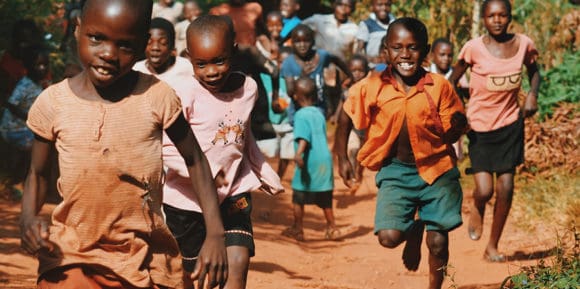
Climate change is a fact and one of the most important environmental changes that populations will face in the coming decades. Changes in areas such as agriculture, energy, economics, and biodiversity, together with other natural and human-made health stressors, influence human health and disease in numerous ways. This is evident in the fact that the emergence and spread of many infectious diseases is on the rise, many of them transmitted from wildlife to humans – a trend that has been associated with the environmental changes we are currently experiencing. Warmer average temperatures can mean longer warm seasons, earlier spring seasons, shorter and milder winters, and hotter summers, during which the prevailing conditions may affect the population cycles of hosts, vectors (such as mosquitoes and ticks) and pathogens, thus increasing the incidence of certain vector-borne or zoonotic diseases. Changes to land use, such as expansion of agriculture, can impact ecological communities and bring people into greater contact with wildlife, again potentially facilitating the spread of pathogens.
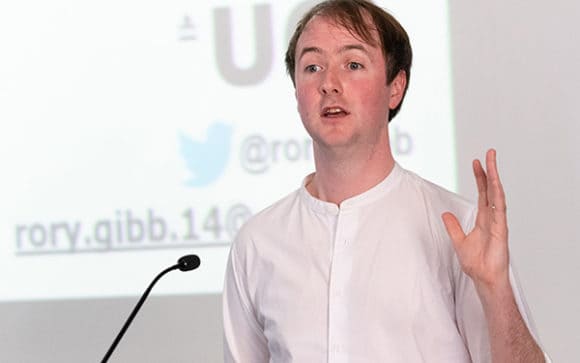
Rory Gibb, a 2019 Young Scientists Summer Program (YSSP) participant, is doing research to understand how global environmental changes – and in particular interactions between land use and climate change – affect zoonotic (animal-borne) infectious diseases. He applied for the YSSP this summer because of the institute’s research portfolio in different dimensions of human wellbeing, including poverty and inequality, food security, and water resilience. He hopes to contribute a dimension about infectious diseases.
©Liebentritt_Christoph | IIASA
Gibb is interested in understanding how the same kind of environmental pressures that affect biodiversity and ecosystems, such as agricultural expansion, intensification and urbanization, may also impact human health. He points out that even though many infectious diseases are widely studied, such as dengue fever and malaria, we still have a patchy understanding of the environmental factors driving many more neglected or recently emerging diseases – as is the case with Lassa fever, which occurs only in West Africa.
Lassa fever is an acute viral hemorrhagic illness recognized by global health institutions as an important rodent-borne disease, however, many important aspects of the disease’s ecology, epidemiology, and distribution remain poorly understood.
“We know that the spread of Lassa fever is very dependent on the environment, so it is sensitive to climate change, land use change, and other ecological changes, but we don’t have a very clear understanding of where it occurs and how many people are being affected every year,” Gibb explains.
Gibb aims to use current knowledge of the local ecological processes that drive the disease, including spatial modeling to determine the extent of the disease’s rodent reservoir host and its interactions with people, to develop a better understanding of the number of people infected with Lassa fever in West Africa. His YSSP project is focused on understanding how sensitive current patterns of disease risk may be to plausible future agricultural, climatic, and economic change in the region. To do this, he is projecting disease risk over large geographical areas using remotely sensed data on climate and landscape factors, and evaluating the effects of future socio-environmental scenarios on the predicted incidence of human disease. Ultimately, he is interested in how to develop better models to understand the relationship between environmental change and diseases caused by bacteria, viruses, and parasites that spread between humans and animals. He hopes that his research outcomes can help to guide disease surveillance efforts for policymakers.
“The spatial modeling work that I am doing will hopefully be useful in terms of giving some insight into regions of West Africa that are predicted to have a very high risk for Lassa fever, both now and under expected environmental changes, to assist in targeting public health interventions such as improving diagnostic test access. We can also identify important knowledge gaps, such as areas that are highly environmentally suitable for Lassa transmission, but in which the disease is apparently absent – these may be useful locations for intensified surveillance, or for showing that there are other ecological or epidemiological processes occurring that we are not accounting for.”
The impacts that environmental changes have on our health remind us how dependent we are on nature and how our own health depends on that of the environment. Environmental and human health cannot and should not be seen as two separate things.
“I want to do work that highlights the importance of understanding human dependence on nature and the necessity of understanding how we can preserve the health of both ecosystems and people,” Gibb concludes.
Note: This article gives the views of the author, and not the position of the Nexus blog, nor of the International Institute for Applied Systems Analysis.


You must be logged in to post a comment.