Dec 15, 2015 | Demography
By Raya Muttarak, IIASA World Population Program
This blog was previously posted on the GMR’s World Education Blog
Not only have climate scientists agreed that humans are contributing to climate change, but recent evidence also points out that the rate of warming is happening much faster now than it ever has before. This is why, at the UN Climate Conference in Paris this month, world leaders sought to reach a new international agreement on climate change, essentially to keep global warming below 2°C (or 3.6°F). Rising temperatures pose threats on food and water security, infrastructure, ecosystems and health and, as a previous blog on this site shows, increases the risk of conflict. With an upsurge in the frequency and intensity of extreme weather events and the potential for rapid sea level rise, both mitigating human-related exacerbation of climate change, and adapting to its devastating effects are key priorities. This is where education comes in.
Both mitigation and adaptation require technological, institutional and behavioral responses. Correspondingly, the Intergovernmental Panel on Climate Change highlighted the value of a mix of strategies to protect the planet, which combine policies with incentive-based approaches encompassing all actors from the individual citizen, to national governments and international communities. Because, while national and sub-national climate action plans are fundamental, changing individual behaviour also lies at the heart of responses to climate change.
At the individual level, barriers to the adoption of mitigation and adaptation measures include a lack of awareness and understanding of climate change risk, doubt about efficacy of one’s action, lack of knowledge on how to change behavior and lack of financial resources to implement changes. Accordingly, there are many sound reasons to assume that different education strategies can help overcome these barriers both in direct and indirect manners.
First, directly formal schooling is a primary way individuals acquire knowledge, skills, and competencies that can influence their mitigation practices and adaptation efforts. Schooling provides a unique environment to engage in cognitive activities such as learning to read, write, and use numbers.
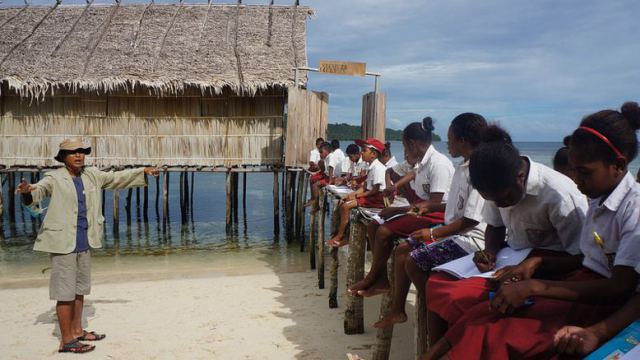
Students in Indonesia learn about living with nature. Credit: Nur’aini Yuwanita Wakan/EFAReport UNESCO
As students move to higher grades, cognitive skills required in school become more progressively demanding and involve meta-cognitive skills such as categorization, logical deduction and cause and effect. This abstract cognitive exercise alters the way educated individuals think, reason, and solve problems. Indeed, experimental studies have shown that higher-order cognition improves risk assessment and decision making. These are relevant components of reasoning related to risk perception and making choices about mitigation and adaptation actions.
Furthermore, education enhances the acquisition of knowledge, values and priorities as well as the capacity to plan for the future and allocate resources efficiently. Schooling can help individuals adopt, for instance, disaster preparedness measures by improving their knowledge of the relationship between preparedness and disaster risk reduction. Moreover, educated individuals may have better understanding of what measures to undertake. Recent evidence also shows that education can change time preferences such that more educated people are more patient, more goal-oriented and thus make more investments (e.g., financial, health or education investments) for their future. Such forward-looking attitudes can influence adoption of mitigation actions or adaptation measures where benefits may only be expected by future generations.
Apart from the direct impacts, education may indirectly reduce vulnerability or promote mitigation actions through other means. Firstly, education improves socio-economic status as education generally increases earnings. This allows individuals to have command over resources such as purchasing costly disaster insurance, living in low risk areas and quality housing, installing renewable energy sources at home or being willing to pay carbon taxes.
Secondly, many empirical studies have shown that people with more years of education have access to more sources and types of information. The level of education is not only highly correlated with access to weather forecasts and warnings but the more educated are better able to understand complex environmental issues such as climate change than less educated counterparts.
Knowing where to get information on how to reduce emissions or what adaptations to take allows individuals to change their behaviour appropriately. Indeed, there is evidence that good understanding of climate change or environmental knowledge are associated with climate change mitigation behaviours such as consumption of climate-friendly food, owning fuel-efficient vehicles and conservation behaviour.
In addition, more educated individuals also have higher social capital. A perception of risk and motivations to take preventive action are more likely to be communicated via social networks and through social activities. Evidently, through increasing socio-economic resources, facilitating access to information and enhancing social capital, education can promote and foster sustainable lifestyle and consumption.
Despite these potential benefits on climate action, education has not yet been sufficiently prioritized as a fundamental instrument to fight climate change. Recently researchers at the Wittgenstein Centre for Demography and Global Human Capital based in Vienna have produced convincing empirical evidence that education, particularly (at least) secondary school, is important for reducing vulnerability to climate change. By showing that education enhances disaster responses, reduces loss and damage and facilitates recovery after disasters, it was argued that part of Green Climate Fund should be spent to promote universal secondary education.
Likewise, education has also been shown to be an important determinant of sustainable lifestyle and consumption. As another blog on this site has shown recently, individuals with a higher level of education are more likely to be concerned about climate change and consequently more likely to take actions to reduce greenhouse gas (GHG) emissions. The Figure below clearly demonstrates how the number of mitigation actions increases with years of schooling. Not only do the highly educated carry out more mitigating actions, education also interacts with concern about climate change. In other words, given the same level of concern about climate change, the highly educated are doing even more to reduce GHG emissions than those with lower education.
Figure 1: Number of mitigation actions taken by years of schooling and concern about climate change
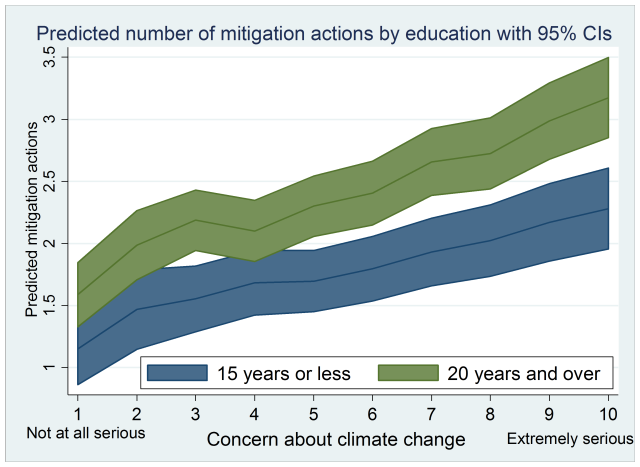
Notes: Own calculation. Estimated from multilevel models with country random effects. Source: Pooled Eurobarometer Surveys (2008, 2009, 2011, 2013).
Responding to the challenges of climate change is going to require action on multiple fronts. Ignoring the impacts of education on climate change is no longer an option. Promoting universal secondary education should be given a high priority on the agenda as we look forward past last week’s Paris meeting.
This article gives the views of the author, and not the position of the Nexus blog, nor of the International Institute for Applied Systems Analysis.
Dec 4, 2015 | Climate Change, Science and Policy
By IIASA Director General and CEO Professor Dr. Pavel Kabat. This article was originally published in the Huffington Post.
I was at the Kyoto climate talks in 1997. I remember doing the calculations, going through the proposals long into the night. I remember the moment of: “We did it. We have an international, legally binding agreement.” I remember the euphoria.
But I also remember what happened after that. As the years passed after Kyoto I saw that the reality of implementation was far from what we had envisaged. As a scientist in the field I took part in many government discussions, and I grew frustrated at the inability of institutions and governments to comply with the agreements.
More than empty promises?
These failures do not mean that Paris will just be the next in a string of ineffective climate talks. A global, UN-level agreement on climate change is necessary, and I believe Paris will deliver it. But I do not see it as providing more than a direction. Yes, we will have an agreement, but our unrelenting focus from Paris onward must be on how to implement it. And that will require a major change in our way of thinking.
Policymakers, climate scientists and society as a whole, must abandon the idea of climate change as a single, discrete issue, to be dealt with using “climate policy.” We cannot think about the future without thinking about climate change. On the other hand, we cannot deal with climate change without considering the future social and economic context. Ultimately, if we do not make climate adaptation and mitigation part of the mainstream development agenda, we will fail again.
Take the Green Climate Fund. An excellent initiative agreed at the 2009 Copenhagen climate talks, it assists developing countries in climate change adaptation. But it is designated as “climate change” money. Let’s say a dike in Bangladesh is being extended, will we advise that only 25 cm of the 40 cm extension be covered by the climate fund because technically that is all that is needed for climate change, and the rest is just “general development”?
Frankly, we shouldn’t care. We shouldn’t spend time or money on such questions. We need an institutional and financial framework within which we are able to say yes, there is a climate objective, but there is also a development objective, and a security objective, together these make up a whole, and we will invest in infrastructure accordingly.
Paris is just the beginning
To ensure that climate change adaptation and mitigation become integral to development, governance also must change. Future strategy cannot consist only of centralized agencies issuing endless targets. Municipalities and small regions have an important part to play. Local efforts will also be more likely to engage people, because they are closer to personal experiences. In fact, while we scientists and politicians talk in dusty rooms, younger generations are already exploring new, bottom-up solutions, such as crowd-funding and joint ownership.
Investment from the private sector is also key. In the Earth Statement, written by an alliance of 17 global-change scientists, including myself, we state that: We must unleash a wave of climate innovation for the global good, and enable universal access to the solutions we already have.
The good news is that at this moment, making the transition to a decarbonized world is still a major opportunity. We can leave behind the idea that we must put aside money to protect our economy against the threat of climate change. Investing in these global transitions can actually be hugely beneficial, both economically and socially. Changing the fundamental narrative of climate change from threat to an opportunity will trigger major innovations and transitions to sustainable economic development.
Climate science must change too. We already know the basic facts. We know that to have at least a 66% chance of keeping the temperature increase below 2°C, our greenhouse gas emissions should drop by 40-70 % between 2010 and 2050.
The next report from the Intergovernmental Panel on Climate Change, and climate research in general, now needs to get at the real issue: implementation. How do we achieve our goals in the institutional, social, and economic context? That is where the main focus should be.
Achieving a stable, sustainable future is possible. If it wasn’t, I would be doing something else with my life. I am convinced that the Paris talks will result in an important, international agreement; but the real solution lies beyond Paris, and beyond the UN altogether. It lies in integrating climate into all development and funding decisions, in giving entrepreneurs and local municipalities the space they need to innovate, and encouraging private investment into climate-friendly development. It is a great opportunity for humanity.
This article gives the views of the author, and not the position of the Nexus blog, nor of the International Institute for Applied Systems Analysis.
Nov 30, 2015 | Climate Change, Risk and resilience
By Thomas Schinko and Reinhard Mechler, IIASA Risk, Policy and Vulnerability Program
Discussions on dealing with the already palpable as well as future burdens from climate change have moved into the spotlight of international climate policy. They are being tackled as part of the climate negotiations via the Warsaw International Mechanism (WIM) for Loss and Damage associated with Climate Change Impacts (Loss and Damage Mechanism), a measure for dealing with impacts and adaptation related to extreme climate events and slow onset events that was agreed in 2013. Debate on the scope, framing and on how the mechanism will eventually be implemented is still continuing, and is heavily framed around moral issues such as compensation, liability, and a need for attributing disasters to climate change, which is a difficult and complex issue.
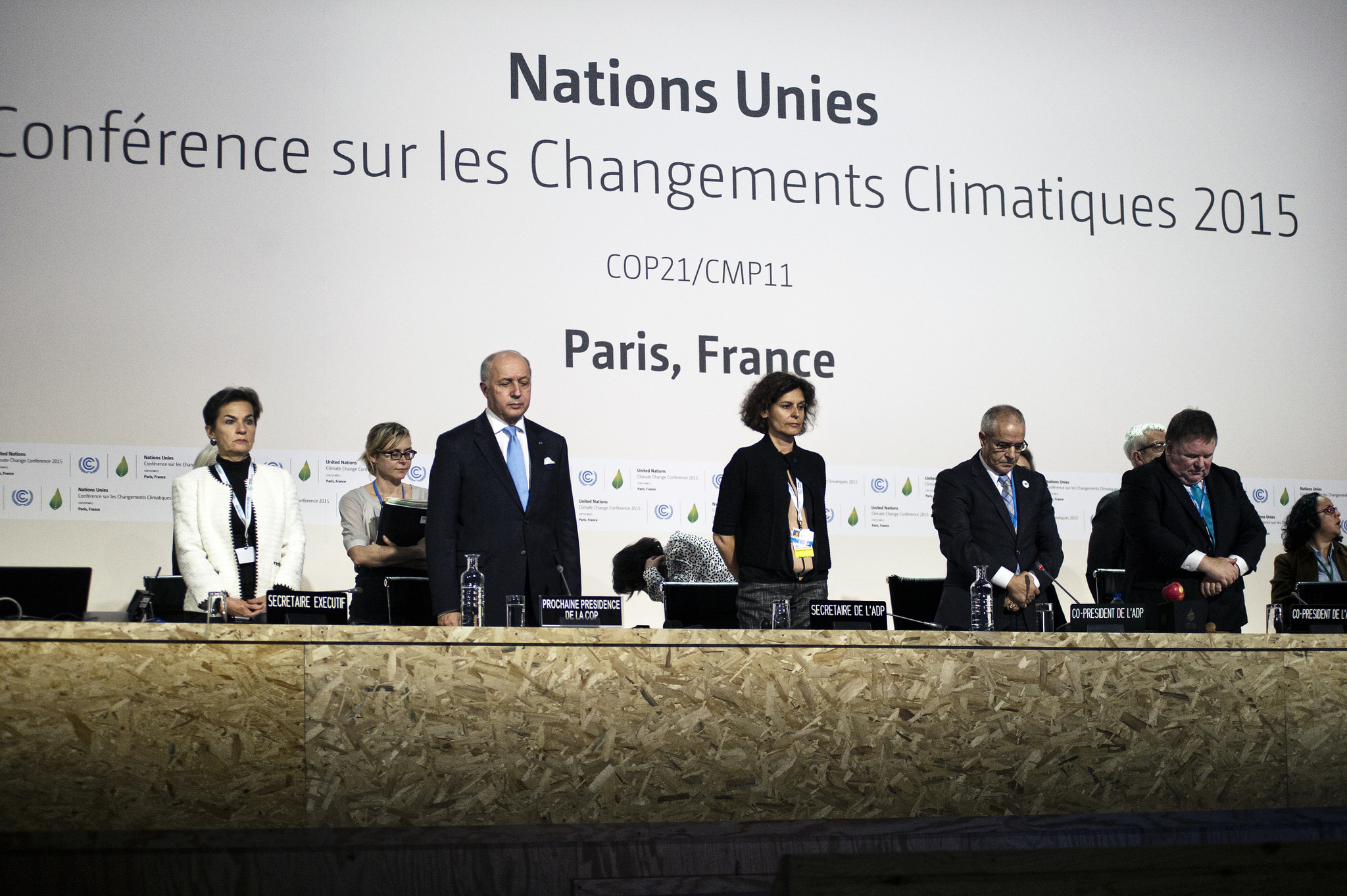
Opening of COP 21 on 29 November 2015. Photo: Benjamin Géminel via Flickr
To help move this contentious debate forward, we recently organized a meeting at IIASA to set up a broad scientific network to support work under the Loss and Damage Mechanism with rigorous and evidence-based research.
Since the first climate negotiations, climate justice has been a major source of contention, with countries disagreeing on the level of responsibility for climate change and the extent to which developed and developing countries should contribute to the solutions. These discussions have predominantly focused on climate mitigation responses, but over the last few years, impact and risk issues have moved into the limelight.
Discussions in the run-up to the 21st Conference of the Parties to the Climate Convention (COP 21) in Paris make it clear that answering key questions revolving around climate justice and climate finance will be pivotal for the conference to deliver on any global climate change agreement.
Even though some rich countries currently appear to acknowledge the central role of a mechanism covering losses and damages within a new global climate agreement to be negotiated at COP 21 in Paris, huge reservations remain. With changing climates, extreme weather events are likely to increase in frequency as well as in intensity. The global North fears exposure to soaring claims for financial compensation by countries of the global South, which will be facing the most severe risks from climate change. In fact, even the meaning and nature of Loss and Damage is still being debated – some suggest the Loss and Damage mechanism should be part of adaptation, while others want it to focus on residual risks that remain after adaptation efforts have been taken. For example, it could finance potential climate-induced migration.
Discussion of compensation raises complex issues about liability, and would presumably require attribution of losses and damages to emitters. Indeed, climate science has been making great progress in attribution research. Recent work has shown a significant human element in mega-events such as superstorm Sandy in 2013 in the US or the Australian heatwave in 2013. Yet, as our kick-off meeting reconfirmed, linking anthropogenic greenhouse gas emissions to extreme weather events and to risks for people and property will remain extremely complex, not least as risks from climate-related events are shaped by many factors, including climate variability, rising exposure of people and assets, as well as socio-economic vulnerability dynamics. While the basic case for climate justice has been made, the concrete, enforceable case remains much harder to establish.
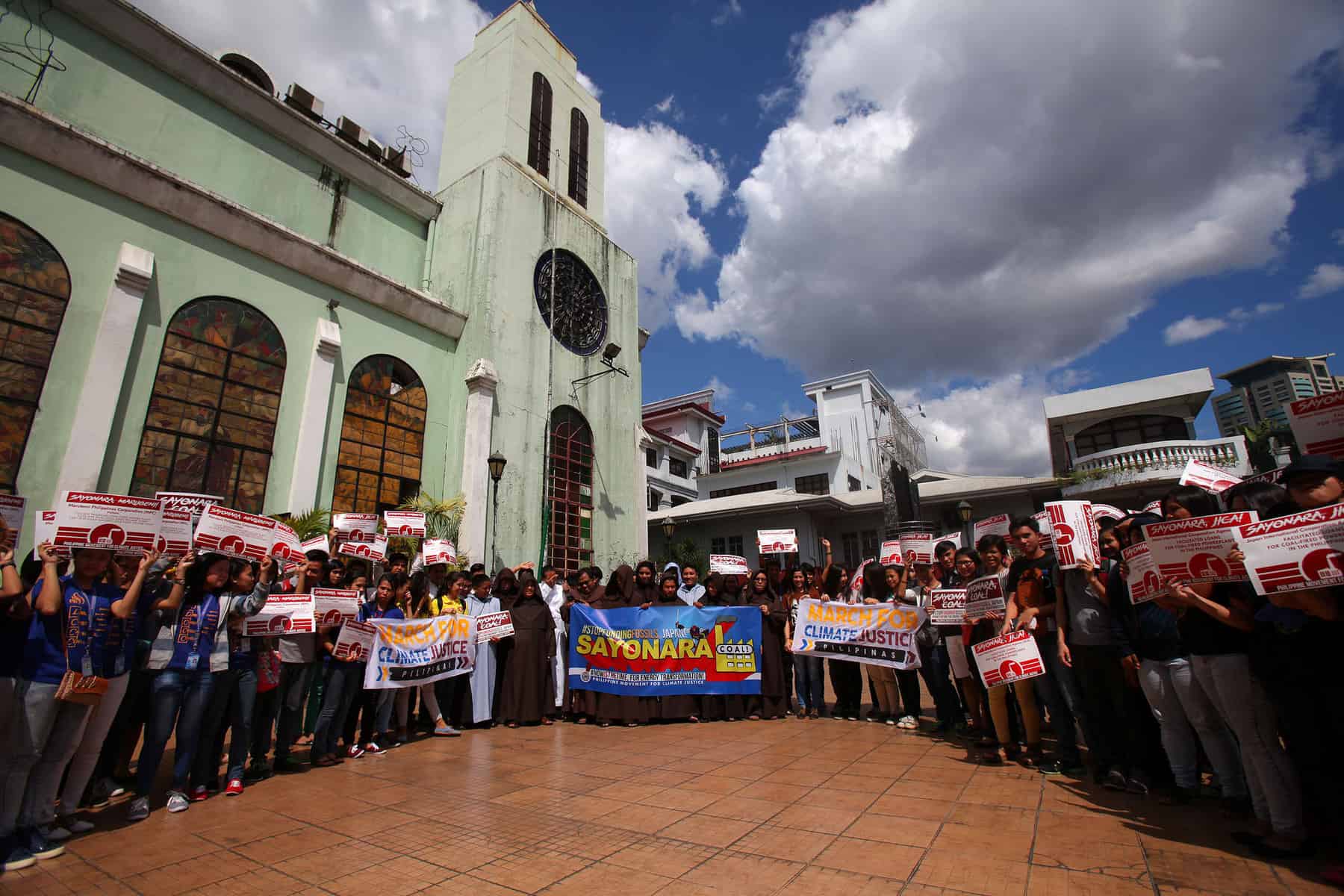
A protest for “climate justice” at Quezon City, Philippines on 14 November 2015. Photo: RB Ibañez via Flickr
For these good reasons and to not derail the debate by fixating on questions regarding liability, the debate has extended beyond the narrow focus on compensation – the omnipresent elephant in the room of the UNFCCC process. The meeting at IIASA, which brought together 14 researchers from 10 institutions and 8 countries, also suggested that for a productive discussion, it makes sense to focus broadly on managing various climate risks by fostering current policies and practices while keeping the climate justice debate in close consideration.
This proposal essentially suggests to build on a long history of managing climate-related (and geophysical driven) extremes by employing a broad portfolio of different disaster risk management tools, including financial instruments such as insurance or regional risk pools. As identified also by the IPCC’s 5th assessment report, building on this body of knowledge and practice for comprehensively tackling existing and increasing extremes, holds a lot of promise and has seen international support, e.g. by the Sendai Framework for Action.
The discussion at IIASA focused on these two angles – climate justice and climate risk management – and worked out the following specific foci and building blocks for an evidence-based research approach to support the operationalization of the Loss and Damage Mechanism:
- Articulation of principles and definitions of Loss and Damage, including ethical and normative issues central to the discourse (e.g. liability and responsibility).
- Definition of the Loss and Damage space vis-á-vis the adaptation space.
- Research on the politics and institutional dimensions of the debate.
- Defining the scope for dealing with sudden-onset risk versus slow-onset impacts.
In the coming months the novel network effort will tackle these issues and questions in order to provide actionable but research-based input into the Loss and Damage deliberations.
Note: The authors thank the researchers present at the kick-off event at IIASA for their input on the topic and this blog post: Florent Baarsch (Climate Analytics, Berlin), Laurens Bouwer (Deltares, Delft), Rachel James (University of Oxford), Stefan Kienberger (University of Salzburg), Ana Lopez (University of Oxford), Colin McQuistan (Practical Action, Rugby), Jaroslav Mysiak (FEEM, Venice), Ilan Noy (University of Wellington), Joeri Roegelj (IIASA), Olivia Serdeczny (Climate Analytics, Berlin), Swenja Surminski (LSE, London), Koko Warner (UNU-EHS, Bonn)
References
Bouwer LM (2013). Projections of future extreme weather losses under changes in climate and exposure. RiskAnalysis 33(5):915–930
Herring, S.C., Hoerling, M.P., Peterson, T.C., Stott P.A. (eds) (2014). Explaining extreme events of 2013 from a climate perspective. Special Supplement to the Bulletin of the American Meteorological Society 95(9)
James, R., Otto, F., Parker, H., Boyd, E., Cornforth, R. Mitchell, D. and M. Allen (2014). Characterizing loss and damage from climate change. Nature Climate Change 4: 938-39
Mechler, R. Bouwer, L., Linnerooth-Bayer, J., Hochrainer-Stigler, S., Aerts, J., Surminski, S. (2014). Managing unnatural disaster risk from climate extremes. Nature Climate Change 4: 235-237
Peterson, T.C., Hoerling, M.P., Stott, P.A., Herring, S.C. (2013). Explaining Extreme Events of 2012 from a Climate Perspective. Bull. Amer. Meteor. Soc., 94: S1–S74. doi: http://dx.doi.org/10.1175/BAMS-D-13-00085.1
Trenberth, K.E., Fasullo, J.T., Shepherd, T.G. (2015). Attribution of climate extreme events. Nature Climate Change 5: 725–730. doi:10.1038/nclimate2657
This article gives the views of the author, and not the position of the Nexus blog, nor of the International Institute for Applied Systems Analysis.
Oct 14, 2015 | Systems Analysis
By Brian Fath, IIASA Advanced Systems Analysis Program and Towson University

Brian Fath. © Matthias Silveri | IIASA
The seminal book The Limits to Growth by Donella Meadows and colleagues was a first attempt to make a world model that integrated environment, economics, population, and industrial pollution. Without drastic changes to curb human population growth, consumption of non-renewable resources and industrial effluence, the model scenario projected a collapse of the world social-industrial system, because physically it is not possible to keep growing on a finite planet. This important message spurred many people in the environmental sciences, but was largely ignored, or worse ridiculed, by the dominant economic and political leaders. Perhaps their work was too pessimistic (although some could say realistic) and called for change for which society was not yet ready.
My co-authors and I feel their message was interpreted incorrectly. The restrictions imposed by The Limits to Growth do not entail stagnation and strife but rather give us an opportunity for new priorities, greater equity, and greater well-being. Living within the limits can offer agreeable, pleasant, even thriving and wonderful living conditions.
Therefore we have written a book, which shows that following nature provides guidance and pathways to Flourishing within Limits to Growth.
People today are confronted with a number of very serious problems: poverty, increased inequalities among countries and people, refugees, regional conflicts and civil wars, global climate change, accelerating exploitation of the global non-renewable and renewable resources, rapid land use change and urbanization, and increased emissions of harmful chemicals into the environment. History has shown us that we cannot solve these problems using traditional methods based on short-sighted economic growth.
Additionally, we know from natural laws that continuous growth in a finite environment is not possible. How can we ensure sustainable development for society on Earth? It would be possible by imitating the system that understands how to sustain long-term development: to learn from nature and follow nature’s way. Nature shifts from quantitative biomass growth when the resources become limiting to qualitative development by increasing resource use efficiency, in terms of both improved network connectivity and information on process regulation and feedbacks. The two main ecosystem functions, flow of energy and transfer of nutrients, are accomplished by renewable energy and complete recycling of the needed elements. Nature also originated and perfected the use the 3Rs: Reduce, Reuse, and Recycle.

“The restrictions imposed by The Limits to Growth do not entail stagnation and strife but rather give us an opportunity for new priorities, greater equity, and greater well-being” Photo: Innsbruck, Austria ©Nikolai Sorokin | Dollar Photo Club
Our book employs a global model to experiment with applying these properties of nature in society. Using global statistics, the model considers how the development will change if:
- A revenue-neutral, resource-based Pigovian tax is increased significantly and along with commensurate tax reduction to enhance recycling and application of renewable energy
- We increase investment in education, innovation, and research significantly to raise the level of understanding by the population and to develop new progressive ideas to address our global problems.
- We increase pollution abatement considerably to reduce its negative impacts on our health, nature, and production.
- We increase aid from the developed to the developing countries to 0.8% of GNP, which would enhance the cooperation among countries, reduce poverty and population growth and thereby also the number of refugees. In this context, it is important that the aid is given as support to education, health care, and family planning and not at all as military aid.
 The model calculations show that it is possible to obtain a win-win situation, where both industrialized and developing nations can achieve a better standard of living – the developing countries mostly quantitatively and the developed countries mostly qualitatively. The calculations are compared with scenarios based on “business as usual” practices. The business as usual scenario shows a major collapse around the year 2060, which is in accordance to the Limits to Growth results from 1972 and the follow-up-publications from the Club of Rome.
Furthermore, the book demonstrates calculations of ecological footprints and sustainability by assessing our consumption and loss of work energy due to our use of resources and destruction of nature. These calculations lead to the following conclusions:
- Maintain natural areas and the ecosystem services they provide.
- Improve agricultural production by increasing efficiencies and technologies.
- Shift our thoughts and actions from quantitative growth to qualitative development, for instance by using the three R’s.
- Shift to renewable energy.
- Leave today’s policy focused entirely on short-sighted economic considerations and start to discuss how we can improve environmental management, increase the level of education and research, and achieve greater equality in society.
- Develop and promote alternative measures of welfare and well-being.
- Reduce, rather than reward, financial speculations, exorbitant profits, and stock market gambling.
More information: Listen to an interview with Brian Fath on WCBN Radio.
References
Jørgensen SE, Fath BD, Nielsen SN, Pulselli F, Fiscus D, Bastianoni S. 2015. Flourishing Within Limits to Growth: Following nature’s way. Earthscan Publisher.
Meadows, DH, Meadows, DL, Randers J., Behrens, W.H. III, (1972) Limits to Growth, New York: New American Library.
Note: This article gives the views of the author, and not the position of the Nexus blog, nor of the International Institute for Applied Systems Analysis.
Oct 1, 2015 | Citizen Science
By Linda See, IIASA Ecosystems Services and Management Program
We had another very hot summer this year in Europe and many other parts of the world. Many European cities, including London, Madrid, Frankfurt, Paris and Geneva, broke new temperature records.
Cities are particularly vulnerable to increasing temperatures because of a phenomenon known as the urban heat island effect. First measured more than a half a century ago by Tim Oke, the increased temperatures measured in urban areas are a result of urban land use, or higher amounts of impervious surfaces such as concrete and concentrated urban structures. The urban heat island effect impacts human health and well-being. It’s not just a matter of comfort: during the heat wave in 2003, more than 70,000 people in Europe are estimated to have perished, mostly urban dwellers.

Summer 2015 in Ljubljana, Slovenia. ©K. Leitzell | IIASA
While climate models have many uncertainties, they do all agree that the urban heat island effect will increase in frequency and duration in the future. A recent article by Hannah Hoag in Nature paints a bleak picture of just how unprepared cities are for dealing with increasing temperatures. The paper cites positive and negative examples of mitigation from various cities but it falls short of suggesting a more widely applicable solution.
What we need is a standardized way of approaching the problem. Underlying this lack of standards is the paucity of data on the form and function of cities. By form I mean the geometry of the city–a 3D model of the buildings and road network, and information on the building materials—as well as a map of the basic land cover including impervious surfaces like roads and sidewalks, and areas of vegetation such as gardens, parks, and fields. Function refers to the building use, road types, use of irrigation and air conditioning and other factors that affect local atmospheric conditions. As climate models become more highly resolved, they will need vast amounts of such information to feed into them.
These issues are what led me and my colleagues (Prof Gerald Mills of UCD, Dr Jason Ching of UNC and many others) to conceive the World Urban Database and Access Portal Tools (WUDAPT) initiative (www.wudapt.org). WUDAPT is a community-driven data collection effort that draws upon the considerable network of urban climate modelers around the world. We start by dividing a city into atmospherically distinct areas, or Local Climate Zones (LCZs) developed by Stewart and Oke, which provides a standard methodology for characterizing cities that can improve the parameters needed for data-hungry urban climate models.
Using freely available satellite imagery of the Earth’s surface, the success of the approach relies on local urban experts to provide representative examples of different LCZs across their city. We are currently working towards creating an LCZ classification for all C40 cities (a network of cities committed to addressing climate change) but are encouraging volunteers to work on any cities that are of interest to them. We refer to this as Level 0 data collection because it provides a basic classification for each city. Further detailed data collection efforts (referred to as Levels 1 and 2) will use a citizen science approach to gather information on building materials and function, landscape morphology and vegetation types.

The Local Climate Zone (LCZ) map for Kiev.
WUDAPT will equip climate modelers and urban planners with the data needed to examine a range of mitigation and adaptation scenarios: For example what effect will green roofs, changes in land use or changes in the urban energy infrastructure have on the urban heat island and future climate?
The ultimate goal of WUDAPT is to develop a very detailed open access urban database for all major cities in the world, which will be valuable for many other applications from energy modelling to greenhouse gas assessment. If we want to improve the science of urban climatology and help cities develop their own urban heat adaptation plans, then WUDAPT represents one concrete step towards reaching this goal. Contact us if you want to get involved.
About the WUDAPT Project
The WUDAPT concept has been developed during two workshops, one held in Dublin Ireland in July 2014 and the second in conjunction with the International Conference on Urban Climate in Toulouse; a third workshop is set to take place in Hong Kong in December 2015. More information can be found on the WUDAPT website at: http://www.wudapt.org.
References
Bechtel, B., Alexander, P., Böhner, J., Ching, J., Conrad, O., Feddema, J., Mills, G., See, L. and Stewart, I. 2015. Mapping local climate zones for a worldwide database of form and function of cities. International Journal of Geographic Information, 4(1), 199-219.
Hoag, H. 2015. How cities can beat the heat. Nature, 524, 402-404.
See, L., Mills, G. and Ching. J. 2015. Community initiative counters urban heat. Nature, 526,43 (01 October 2015) doi:10.1038/526043b
Stewart, I.D. and Oke, T.R. 2012. Local Climate Zones for urban temperature studies. Bulletin of the American Meteorological Society, 93(12), 1879-1900.
Wake, B. 2012. Defining local zones. Nature Climate Change, 2, 487.
Note: This article gives the views of the author, and not the position of the Nexus blog, nor of the International Institute for Applied Systems Analysis.



You must be logged in to post a comment.