Aug 3, 2016 | Climate Change, Risk and resilience
By Adriana Keating, research scholar in the IIASA Risk and Resilience Program.
People have been playing games for fun for many thousands of years. But recently some have been designed not to escape from reality, but to improve it. As the world is becoming more and more complex, and the future more and more uncertain, serious games can be used as innovative tools for learning, decision making, improving effective collaboration and developing strategies for success. With games, we can communicate complex realities and learn from our mistakes without costs.
Systems thinking is required to tackle the challenge of managing both flood risk and development: to live in harmony with floods. Games provide the perfect avenue for exploring these challenges. Games that engage participants have been shown to be very successful and powerful dissemination instruments—with broader outreach than traditional reports. In a team made up of myself, Piotr Magnuszewski from the Water Program, Adam French from the Advanced Systems Analysis and Risk and Resilience Programs, and collaborators from the Zurich Flood Resilience Alliance, we have been developing a game that can help build flood resilience in developing countries.
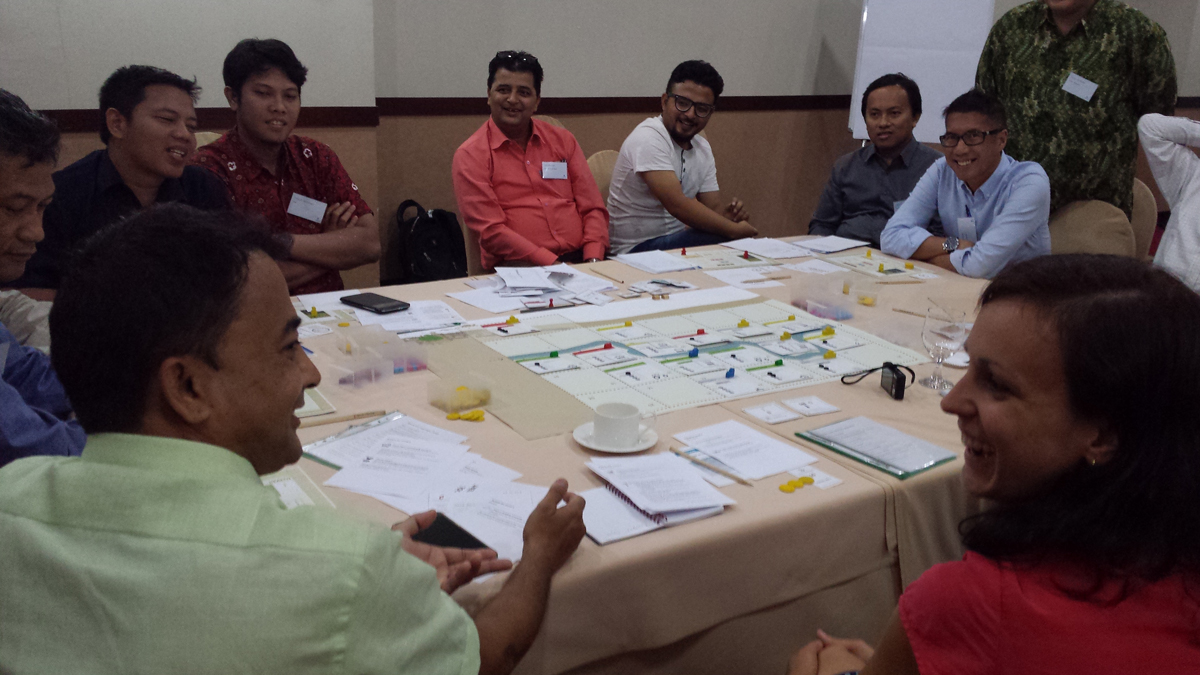
The game provoking discussion at a workshop in Jakarta. © Adriana Keating
Because games are experienced as something that feels real, more information is retained, learning is faster, and an intuition is gained about how to make real decisions. Critically, the IIASA Flood Resilience Game is designed to help participants— such as NGO staff working on flood-focused programs—to identify novel policies and strategies which improve flood resilience. In its current form it is a board-game played by at least eight players, who each take on a role as a member of a flood prone community. The direct interactions between players create a rich experience that can be discussed, analysed, and lead to concrete conclusions and actions. This allows players to explore vulnerabilities and capacities—citizens, local authorities and NGOs together—leading to an advanced understanding of interdependencies and the potential for working together.
The game draws on IIASA research on the deep-seated challenges in the typical approach to flood risk management. It allows players to experience, explore, and learn about the flood risk and resilience of communities in river valleys. It lets them experience the effects on resilience of investments in different types of “capital”—such as financial, human, social, physical, and natural. The impacts of flood damage on housing and infrastructure are also an important part of the game, as well as indirect effects on livelihoods, markets, and quality of life.
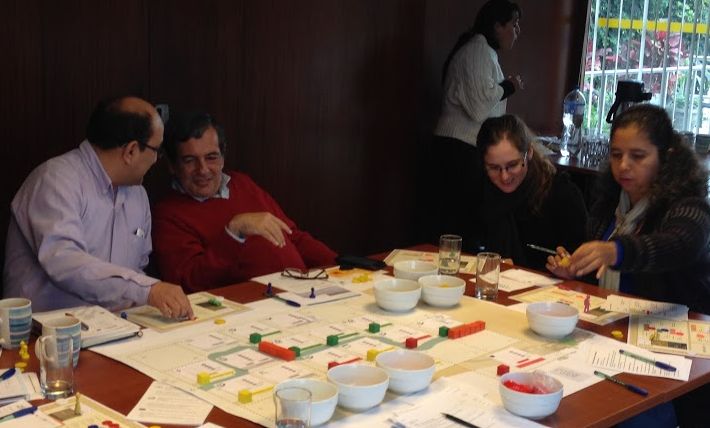
Players in Peru. © Adam French.
Playing the game can also improve understanding of the influence of preparedness, response, reconstruction on flood resilience. Importantly, it demonstrates the benefits of investment in risk reduction before the flood strikes, such as via land use planning and flood proofing homes. The effects of institutional arrangements, such as communication between citizens and with government, also become clearer during the course of the game.
Finally, participants can explore the complex outcomes on the economy, society and the environment from long-term development pathways. This highlights the types of decisions needed to avoid creating more flood risk in the future, incentivizing action before a flood through enhancing participatory decision-making. All these complex ideas are experienced with simple, concrete game elements that participants can connect with their daily realities.
From a researcher’s perspective, observing game play deepens our understanding of stakeholder motivations in relation to flood resilience. The game also contributes to better understanding and use of IIASA research via the Zurich flood resilience measurement tool, a ground-breaking approach to resilience measurement.
After several field tests in Jakarta and Lima with staff from the NGOs Practical Action, Red Cross Indonesia, the International Federation of Red Cross and Red Crescent Societies, Mercy Corp, Plan and Concern Worldwide, the game is now being refined. The next version will be released soon, and the possibility of a mobile application to allow players to handle more complex dynamics while interacting in the workshop is being explored.
The game was developed in collaboration with the Centre for Systems Solutions, Poland, and with funding from the Zurich Flood Resilience Alliance.
Note: This article gives the views of the author, and not the position of the Nexus blog, nor of the International Institute for Applied Systems Analysis.
Jun 2, 2016 | Climate Change
By Katherine Leitzell, IIASA science writer and press officer (and cyclist)
In May over 50 IIASA staff members took part in the Austrian Bike to Work month (Osterreich Radelt zur Arbeit), logging 11,681 kilometers riding to and from the institute in Laxenburg. The institute took fifth place in Austria in terms of kilometers ridden, and first place in Lower Austria.
According to the Austrian initiative’s calculations, this effort translated into saving over 1900 kg of CO2 emissions, or on average 36 kg per person—which is approximately 4% of an average Austrian’s monthly CO2 emissions. However, this calculation assumed that each of the IIASA cyclists would have been otherwise driving alone in a car. Since many people ride the bus or take public transport if they’re not biking, the actual emission savings from our cycling efforts in May were in fact much less. In fact, since buses and trains run anyway, cycling to work may make no impact whatsoever on emissions of air pollution and greenhouse gas emissions. Does that mean it’s not worth it to make the effort?
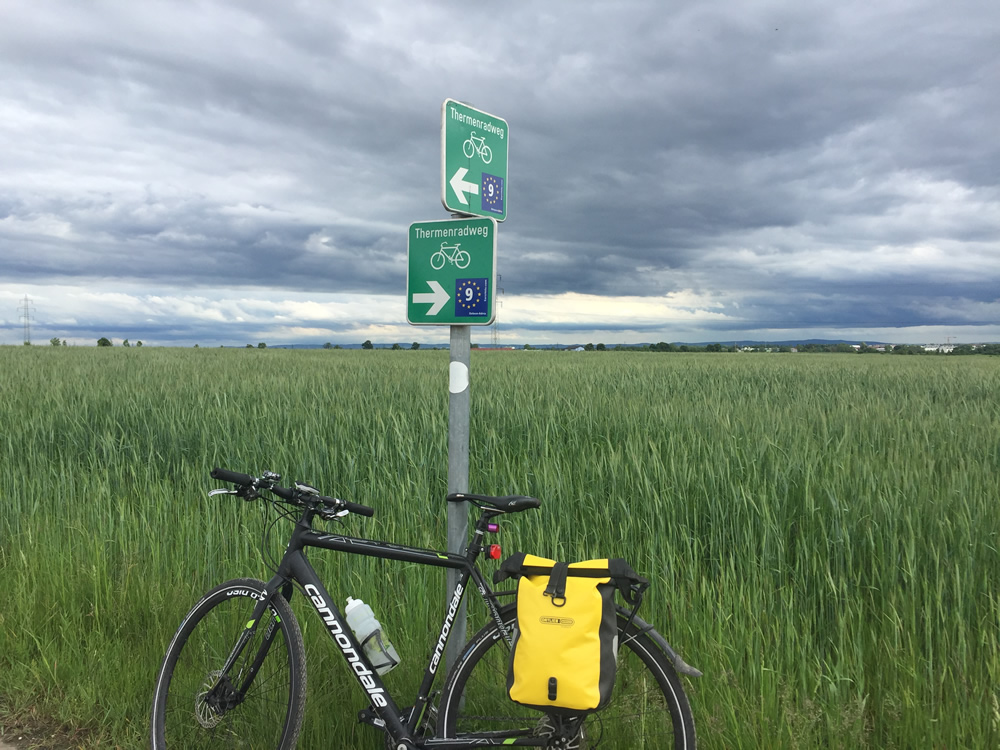
The author’s route to the office. © Katherine Leitzell | IIASA
IIASA researcher Jens Borken has analyzed the impacts that our daily travel has on the individual climate footprint. Personal mobility—all kinds of travel—make up about one third of the average European’s annual greenhouse gas emissions: the rest come from consumption choices and household heating and energy use. Of the carbon footprint from mobility, he says, commuting generally only makes up 10-15% of that. The largest part of the mobility budget is related to shorter and longer distance leisure travel, and in particular from air travel.
“From a quantitative perspective, the climate benefit of riding your bike is small, but it can be one step on a path to a low-carbon lifestyle.” says Borken. “As researchers who work on climate change, riding a bike to work (and possibly further) brings one piece of our lives in line with the message that avoiding fossil fuel consumption is imperative. I think that that is valuable. But it need not stop there. Travel choices are important, especially for longer distances, but so are consumption choices and energy usage and efficiency.”
Charlie Wilson, a researcher at the Tyndall Centre and IIASA, recently won a grant from the European Research Council to explore the role that social influence plays in spreading climate innovations. He says, “As social animals we are strongly influenced by what others do; as psychological beings we strive for consistency. Changing a behavior – like cycling to work – may have a small impact in isolation. But this impact is magnified through positive spillover effects. Others may imitate or be inspired by our commitment to cycling. And this change in behavior may also strengthen the pro-environmental aspects of our own self-identity, reducing dissonance between our work and domestic lives, and supporting further changes in behavior.”
Of course there are benefits of cycling beyond the environmental or climate impact, which is one reason that once they start, many people keep it up. Cycling regularly can save money compared to commuting by car or public transport, and like any regular form of exercise, it can bring health benefits and stress relief. It also brings autonomy and flexibility compared to public transport.
Borken points to research showing that the health benefits of cycling outweigh the exposure to air pollutants that a cyclist might experience on busy city streets—and that automobile drivers are exposed to even higher levels of air pollution within their cars. Cyclists who ride to IIASA, located about 15km outside Vienna, probably have even lower exposure to air pollution riding along tree-lined bike paths.
“Riding to work in the morning wakes me up and prepares me for the day ahead. Even if windy and challenging, the return in the evening calms the mind while riding with colleagues at a pace that allows us to chat at the end of a busy workday. It’s truly one of the best ways to get exercise and stay healthy – good for the heart, good for the environment and, most importantly, good for the soul,” says Michaela Rossini, manager of the IIASA library and a co-organizer of Bike to Work Month at the institute.
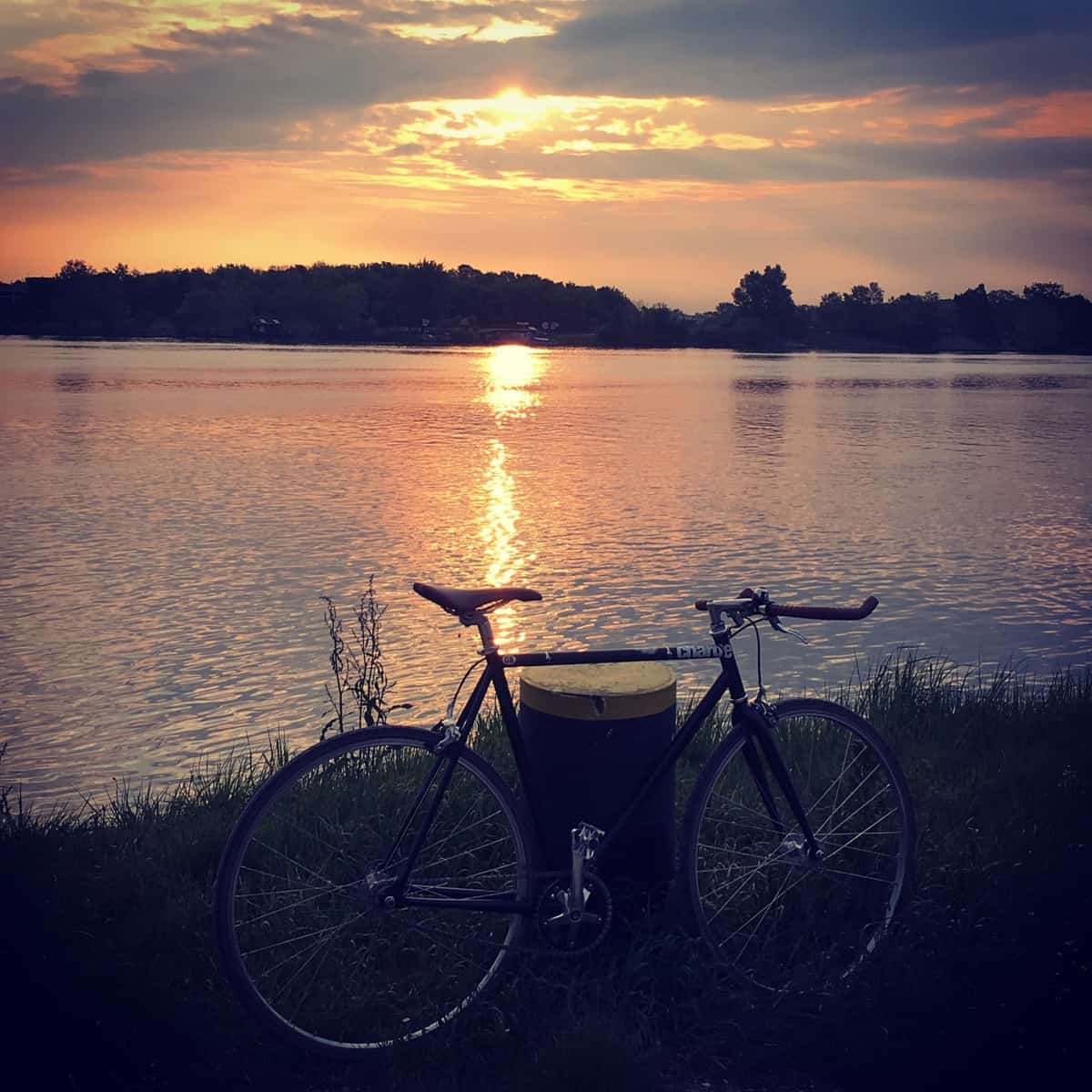
For some staff members, one side benefit of cycling to IIASA is the beautiful sunrise along the Danube River ©Michaela Rossini | IIASA
Note: This article gives the views of the author, and not the position of the Nexus blog, nor of the International Institute for Applied Systems Analysis.
Mar 15, 2016 | Alumni, Environment, Young Scientists
By Carlijn Hendriks, Netherlands Organization for Applied Scientific Research (TNO) & IIASA Peccei award winner
Last summer, I participated in IIASA’s Young Scientist Summer Program, working with the Mitigation of Air Pollution and Greenhouse Gases and Ecosystems Services and Management programs. My research focused on what impacts the EU climate and air quality policy could have on ground level ozone around the middle of this century. While clean air policies should help reduce the pollution that can lead to ozone formation, we found that that climate change and energy policies will still increase ozone concentrations and damage by mid-century, unless stricter air pollution measures are implemented.

Ozone forms through reactions of various pollutants and chemicals in the atmosphere – a process that speeds up at higher temperatures. © Damián Bakarcic via Flickr
Ozone at ground level is an air pollutant, causing health and ecosystem problems. It is also an important component of summer smog. Ozone is not emitted into the atmosphere directly, but is produced when volatile organic carbons are oxidized in the presence of nitrogen oxides and light. Nitrogen oxides are released into the atmosphere mainly as a result of combustion processes (like car engines and industry), while non-methane volatile organic carbons (NMVOCs) come in large part from vegetation, especially broad-leaf trees and some fast-growing crops.
Part of the EU energy policy is to stimulate the use of sustainable biomass as an energy source. This could lead to expansion of commercial bioenergy crop production in plantations and an increasing use of forests. While this may help to reduce greenhouse gas emissions, it will also increase NMVOC emissions. At the same time, EU air quality policies aim to reduce emissions of air pollutants such as nitrogen oxides and man-made NMVOC. Because some steps in the ground level ozone formation process are driven by absorption of light and/or proceed faster with higher temperatures, climate change could lead to higher ground level ozone concentrations in the future.
The separate effects of these three trends on ground level ozone have been studied before, but the question remains: what will be the combined impact of a) an increase of bioenergy plantations, b) EU’s air quality policy and c) climate change on health and ecosystem damage from ground level ozone? And which of the trends is the most important? To answer these questions, I used three models to study two energy and air quality scenarios for Europe under current and possible future climate conditions.
Two energy scenarios calculated by the Price-Induced Market Equilibrium System (PRIMES) model form the basis of this work. We used a reference scenario and one in which Europe reaches 80% CO2 emission reduction in 2050. These energy scenarios were used as a basis to calculate air pollutant emissions with IIASA’s Greenhouse Gas and Air Pollution Interactions and Synergies (GAINS) model. Then we put the same scenarios into IIASA’s Global Biosphere Model GLOBIOM to obtain the change in land cover because of increasing bioenergy demand. I combined these datasets in chemistry transport model LOTOS-EUROS (the model of choice at my home institute, TNO) to calculate the impact on ground level ozone concentrations across Europe. To simulate ‘future climate’ we used the year 2003, in which Europe had a very warm summer, with temperatures 2-5 °C higher than normal.
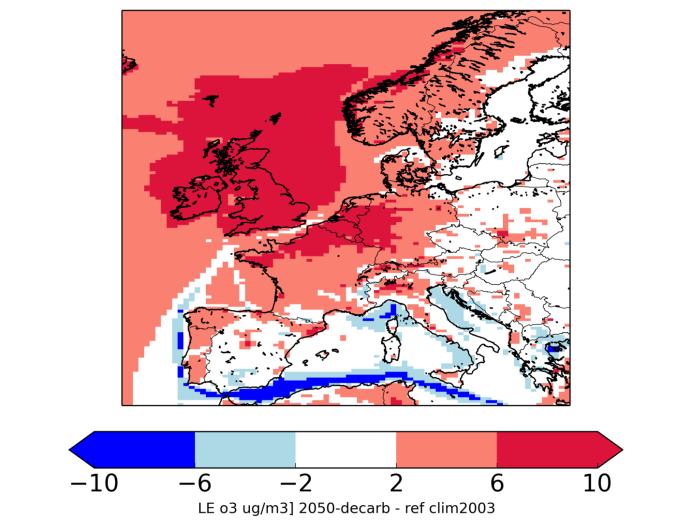
Difference in average ozone concentration (in µg/m3) between the current situation and the 80% CO2 reduction scenario in 2050 under future climate change conditions for the period April-September. Negative numbers mean a decrease in ozone levels.
We found that especially for the CO2-reduction scenario, the increase in bioenergy production could cause a slight increase in ozone damage. However, the impact of reduced emissions because of more stringent air quality policies far outweighs this effect, leading to a net reduction of ozone damage. The third effect, more efficient ozone formation in a warming climate, is so strong that in 2050 ozone damage to human health could be worse than today, especially for northwestern Europe. Stringent air quality policies close to a maximum feasible reduction scenario would be needed to make sure that health and ecosystem damage towards the middle of the century is smaller than it is today.
Note: This article gives the views of the author, and not the position of the Nexus blog, nor of the International Institute for Applied Systems Analysis.
Feb 15, 2016 | Climate Change, Risk and resilience
By Thomas Schinko, IIASA Risk, Policy and Vulnerability Program
Climate change is projected to disproportionately affect people in developing countries, through extreme weather events and slow onset events such as rising sea levels. Because the countries most affected by climate change are also those who contributed the least to the problem and with the least capacities to cope, one of the major issues in recent climate negotiations has been how to support those nations’ efforts to adapt and to address climate impacts beyond adaptation.
To address this problem, in 2013 the United Nations Framework Convention on Climate Change (UNFCCC) established the Warsaw International Mechanism (WIM) for Loss and Damage Associated with Climate Change Impacts (WIM).
Yet at the Paris climate talks in December, the future of the WIM was in limbo. The Global South argued for loss and damage to be a key part of an eventual agreement, while the Global North argued for including it under the adaptation agenda. In the end, the Paris agreement quite prominently featured loss and damage. However the Global North’s fears of signing up to a mechanism that makes them liable for unlimited damage claims in the future have been addressed by adding a specific paragraph to the agreement stating, “the agreement does not involve or provide a basis for any liability or compensation.”
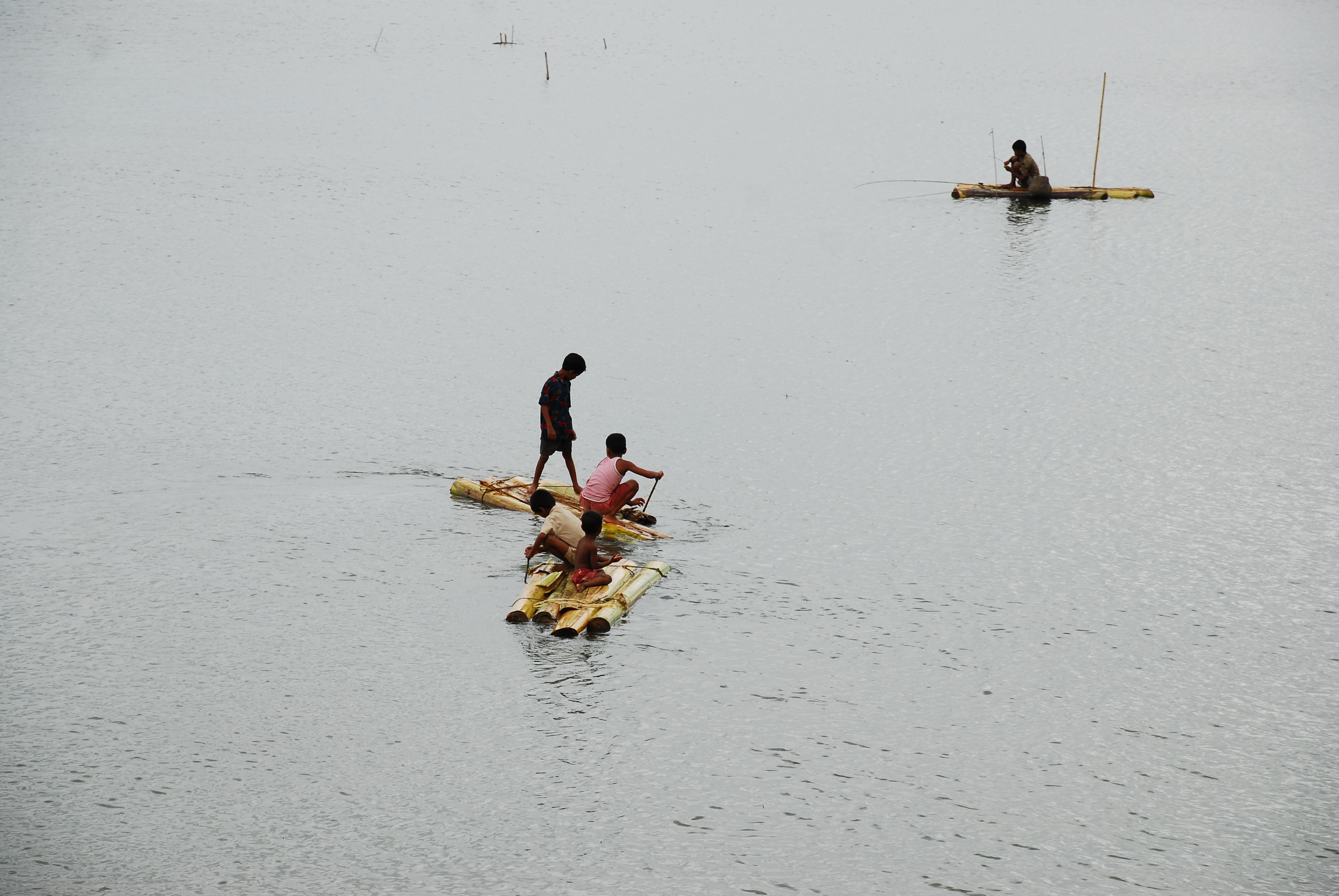
A flood in Bangladesh in 2009. Flooding is project to increase with climate change, yet arguments remain about attributing specific events to the influence of climate change. Photo Credit: Amir Jina via Flickr
Building on this reconfirmed support for the mechanism, the second meeting of the Executive Committee of the WIM was held 2–5 February 2016, in Bonn, Germany. The main purpose of the meeting was to give an update on the delivery of specific activities and to consider relevant requests arising from COP21. The Paris agreement requests the establishment of (1) a clearinghouse for risk transfer to facilitate the implementation of comprehensive risk management strategies and (2) a task force to address displacement issues. On the first issue, discussions have focused on the need to move beyond focusing solely on risk transfer and the link between current disaster risk management practice and climate adaptation as there are important overlaps.
As an observer, I could feel the presence of team spirit among the committee members, all honestly committed to help the most vulnerable people. Yet one issue remained hotly debated: the degree to which anthropogenic climate change can be blamed for natural disasters and extreme weather events. I saw a strong divide between committee members from the Global North and South and between those with a strong background in disaster risk management in contrast to those coming from a climate change background. Nevertheless, even in that regard I see a good chance for a joint vision to emerge, if we can distinguish two levels of the loss and damage discourse: the practical implementation on the ground vs. the political dimension.
On the practical implementation side, a pragmatic compromise became palpable: Building on decades of experience in disaster risk management related to weather extremes and the climate variability, it was identified as an entry point to deal with current and future climate risks – whether they are triggered or intensified by climate change or not. The political level, which circles around climate finance and the question of who is going to pay for losses and damages is quite another matter. Here the anthropogenic element is existentially important, as it builds the foundation for international support under the UNFCCC. If reference to anthropogenic climate change is left out of the loss and damage discourse, the UNFCCC might lose its mandate for support, as disaster risk management falls under national responsibility. Once this door closes it could remain shut, though another one might open (e.g. via civil law).
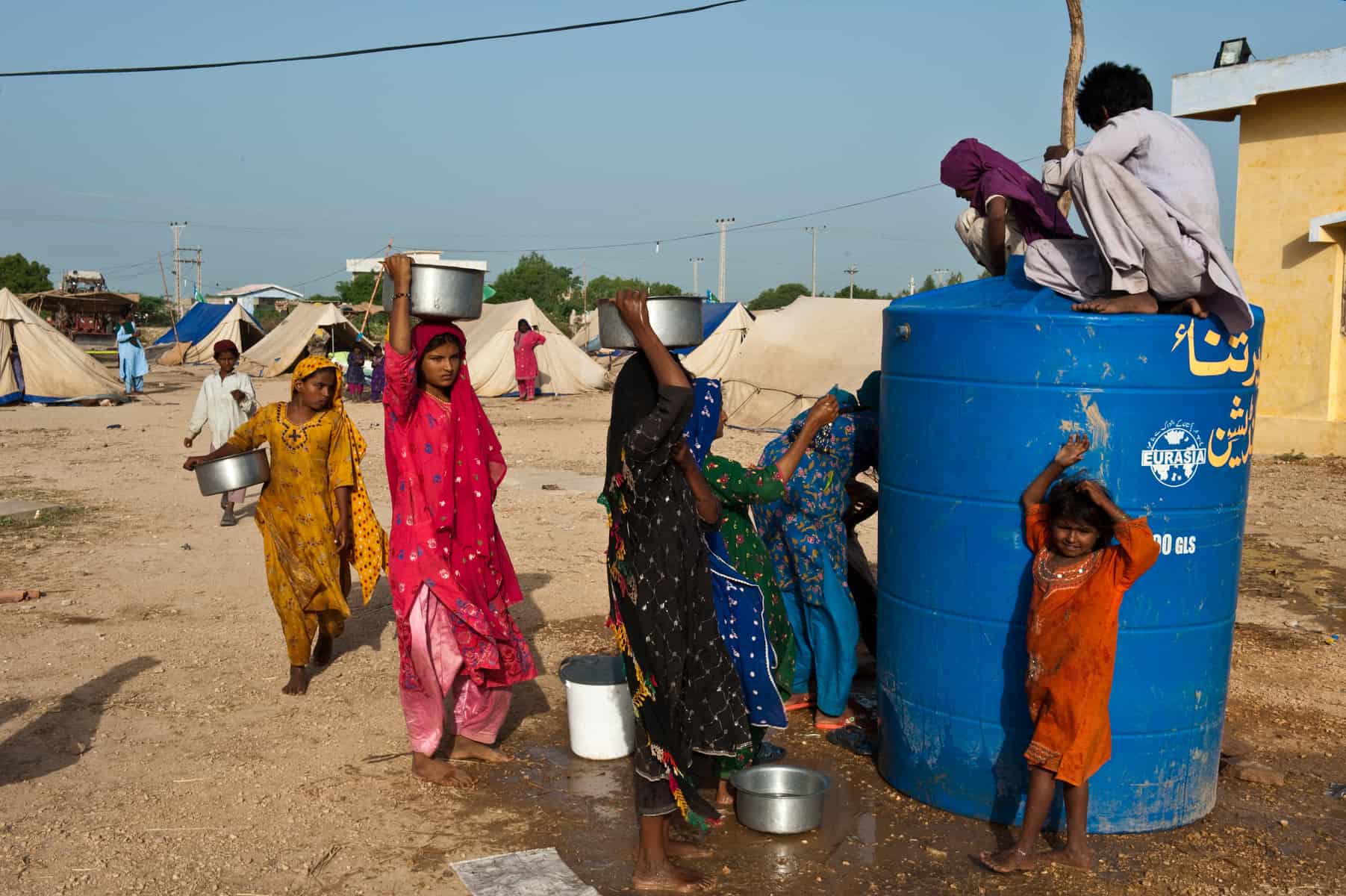
Women in Thata, Pakistan line up for water following 2010 floods. Photo Credit: Asian Development Bank via Flickr
To overcome the political barriers and to build upon the convergence with respect to the short-term practical implementation, we suggest to foster an iterative and comprehensive risk management approach, linking risk prevention, risk reduction, risk retention, risk transfer, as well as ex-post relief and reconstruction to effectively tackle different layers of climate risks.
However, it is important not to lose track of climate change as a risk driver, by consequently screening new scientific and empirical insights. This is crucial, as future risks might substantially increase due to climate change, requiring an iterative adaptation of current practices and support by the international community.
To support such an approach, rigorous scientific input, bringing together researchers from various disciplines, practitioners, NGOs, and policy makers is crucial. Together with international partner institutions, in November 2015 we initiated a scientific hub on loss and damage to provide such input. The envisaged clearinghouse for risk transfer and the task force for climate-related displacement could become key recipients for information generated by our network, packaged with further information and distributed to make it actionable; particularly addressing the needs of the most vulnerable developing countries.
Note: This article gives the views of the author, and not the position of the Nexus blog, nor of the International Institute for Applied Systems Analysis.
Jan 27, 2016 | Climate Change, Postdoc, Risk and resilience
By Mia Landauer, a Finnish postdoc at IIASA Risk, Policy and Vulnerability Program and Arctic Futures Initiative
When I was a child I did not like cross-country skiing. One reason was that like many other schoolmates in Finland, I had no other option than to ski to school throughout the winter, even when temperatures were below -20 C, and even though my skis were too big because I got them from my sister and so old that they could have broken anytime.
When I decided to write my dissertation in Austria about climate adaptation of winter tourism, I found I still couldn’t get away from skiing. My professor at the University of Natural Resources and Life Sciences (BOKU) asked me to join a research team investigating this topic. “What a great tradition you have in Finland! My friend and colleague from METLA (now Natural Resources Institute) in Finland would love to do research with us but with somebody who knows about cross-country skiing! You are the perfect match!” I guess I was too shy to admit that I was not excited about having cross-country skiing as a case study—but I decided to give it a try.
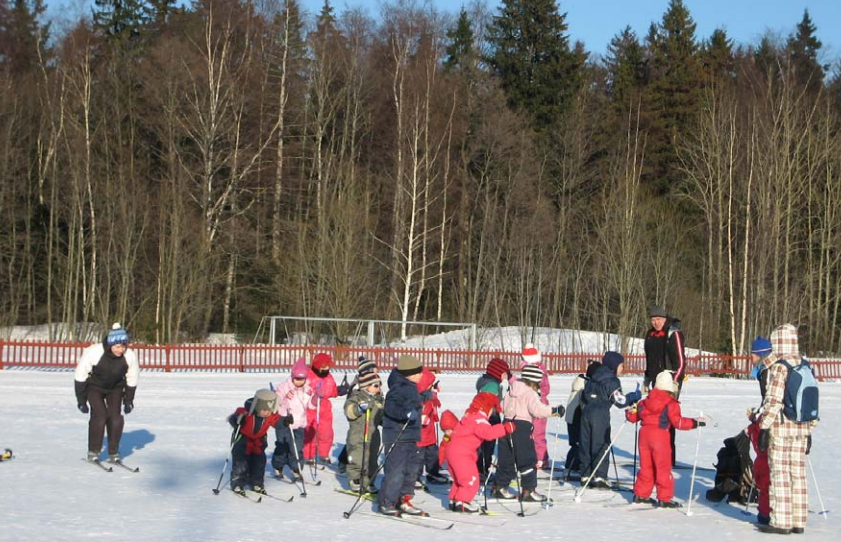
Cross country skiing in Finland is practiced by all age groups (voluntarily or not). Photo Credit: © Mia Landauer
Cross-country skiing is socially and culturally a very important activity in Finland, with considerable health benefits. Forty-two percent of the population practice skiing annually and 98% have the skills. But cross-country skiing, like other snow-based activities, is affected by climate change: even Nordic countries are now seeing lack of snow, shift of seasons, and extreme weather events. The winter 2015/2016 has been no exception. Many Finns are concerned that losing this activity would lead to reduced well-being and loss of cultural tradition. Furthermore, economic impacts on tourism regions brought about by a decrease in skiing would cause problems to local economies heavily dependent on snow-based tourism.
Although vulnerability indicators of some other tourism sectors such as beach tourism exist, nobody had thought about cross-country skiing. So we decided to develop an index, based on climatic observations together with extensive survey data on skiers living in climatically different regions in Finland.
We found that exposure to changes in snow conditions have a considerable effect on regional vulnerability. The most vulnerable skiers are in southernmost parts of Finland, which makes sense. But it is not only the amount of snow and length of winter that matter. We also found that skiers in North and East Finland have the highest capacity to adapt, as indicated by their ability to ski: having the necessary skills and equipment, as well as capacity and willingness to travel to be able to ski.
However, the results also show that if it we could enhance these components of adaptive capacity, also the skiers in the south would have a chance. If there are no adaptation options (no artificial snow tracks, no indoor skiing facilities, or simply no interest to use these, or no money or time to travel to be able to ski), in the short term the Finnish cross-country skiing population will face impacts on health, well-being, and quality of life. In the long term, the skiing culture could be lost. Furthermore, decline in demand would lead to regional economic losses in tourism-dependent local economies.
Attempts are being made to maintain the skiing tradition. Nowadays there are a lot of organized activities where kids are introduced to outdoor activities in a playful and educational environment, and ski school and clubs are being established. They play an important role to create a close and pleasant relationship to nature and increase motivation for skiing. But of course the most important element for skiing is snow.
I have always had a very close relationship to nature. Believe me or not, sometimes I do go skiing although it also brings back the unpleasant memories. Despite them, wintery landscapes and nature experience have motivated me to continue skiing as an adult. The gray and rainy winters make me worried and I simply cannot see myself skiing in a ski tunnel… Albeit “you will never know the true value of a moment until it becomes a memory“, I want snow!
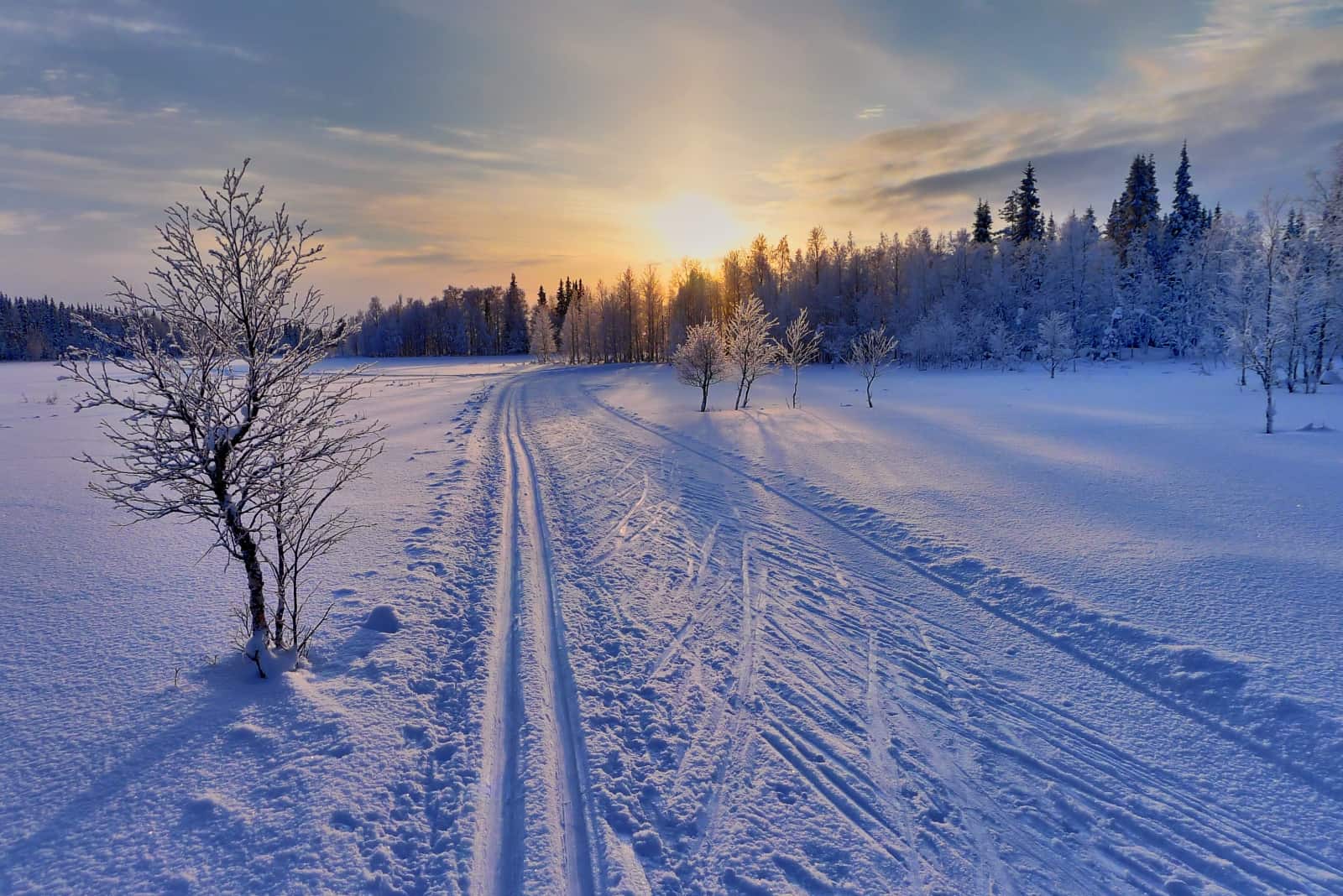
Cross country ski track in Ruka, Finland Photo Credit: © Timo Newton-Syms via Flickr
More information:
Project: “Map Based Assessment of Vulnerability to Climate Change Employing Regional Indicators” (MAVERIC)” http://www.syke.fi/projects/maveric
References
Landauer, M., Sievänen, T., & Neuvonen, M. (2015). Indicators of climate change vulnerability for winter recreation activities: a case of cross-country skiing in Finland, Leisure/Loisir, 39:3-4, 403-440. http://dx.doi.org/10.1080/14927713.2015.1122283
Landauer, M., Haider, W., & Pröbstl, U. (2014). The influence of culture on climate change adaptation strategies: Preferences of cross-country skiers in Austria and Finland. Journal of Travel Research 53(1), pp. 95-109. doi: 10.1177/0047287513481276
Landauer, M., & Sievänen, T. (2011). Suomalaisten maastohiihtäjien sopeutuminen ilmastonmuutokseen. In T. Sievänen & M. Neuvonen (Eds.), Luonnon virkistyskäyttö 2010 (pp. 91–101). Vantaa: Working Papers of the Finnish Forest Research Institute, 212.
Landauer, M., Sievänen, T., & Neuvonen, M. (2009). Adaptation of Finnish cross-country skiers to climate change. Fennia 187 (2), pp. 99–113. http://ojs.tsv.fi/index.php/fennia/article/view/3697
Neuvonen, M., Sievänen, T., Fronzek, S., Lahtinen, I., Veijalainen, N., & Carter, T. R. (2015). Vulnerability of cross-country skiing to climate change in Finland – An interactive mapping tool. Journal of Outdoor Recreation and Tourism, 11, 64–79. doi:10.1016/j.jort.2015.06.010
Neuvonen, M. & Sievänen,T. (2011). Ulkoilutilastot 2010 (Outdoor Recreation Statistics 2010). In: Sievänen, T. & Neuvonen, M. (toim.). Luonnon virkistyskäyttö 2010. Metlan työraportteja / Working Papers of the Finnish Forest Research Institute 212: 133–190
Perch-Nielsen, S. L. (2010). The vulnerability of beach tourism to climate change – An index approach. Climatic Change, 100(3–4), 579–606. doi:10.1007/s10584-009-9692-1
Note: This article gives the views of the author, and not the position of the Nexus blog, nor of the International Institute for Applied Systems Analysis.

You must be logged in to post a comment.