Nov 10, 2016 | Risk and resilience
By Wei Liu, IIASA Risk and Resilience and Ecosystems Services and Management programs
Disasters caused by extreme weather events are on the rise. Floods in particular are increasing in frequency and severity, with reoccurring events trapping people in a vicious cycle of poverty. Information is key for communities to prepare for and respond to floods – to inform risk reduction strategies, improve land use planning, and prepare for when disaster strikes.
But, across much of the developing world, data is sparse at best for understanding the dynamics of flood risk. When and if disaster strikes, massive efforts are required in the response phase to develop or update information. After that, communities have an even greater need for data to help with recovery and reconstruction and further enhance communities’ resilience to future floods. This is particularly important for the Global South, such as the Karnali Basin in Nepal, where little information is available regarding community’s exposure and vulnerability to floods.
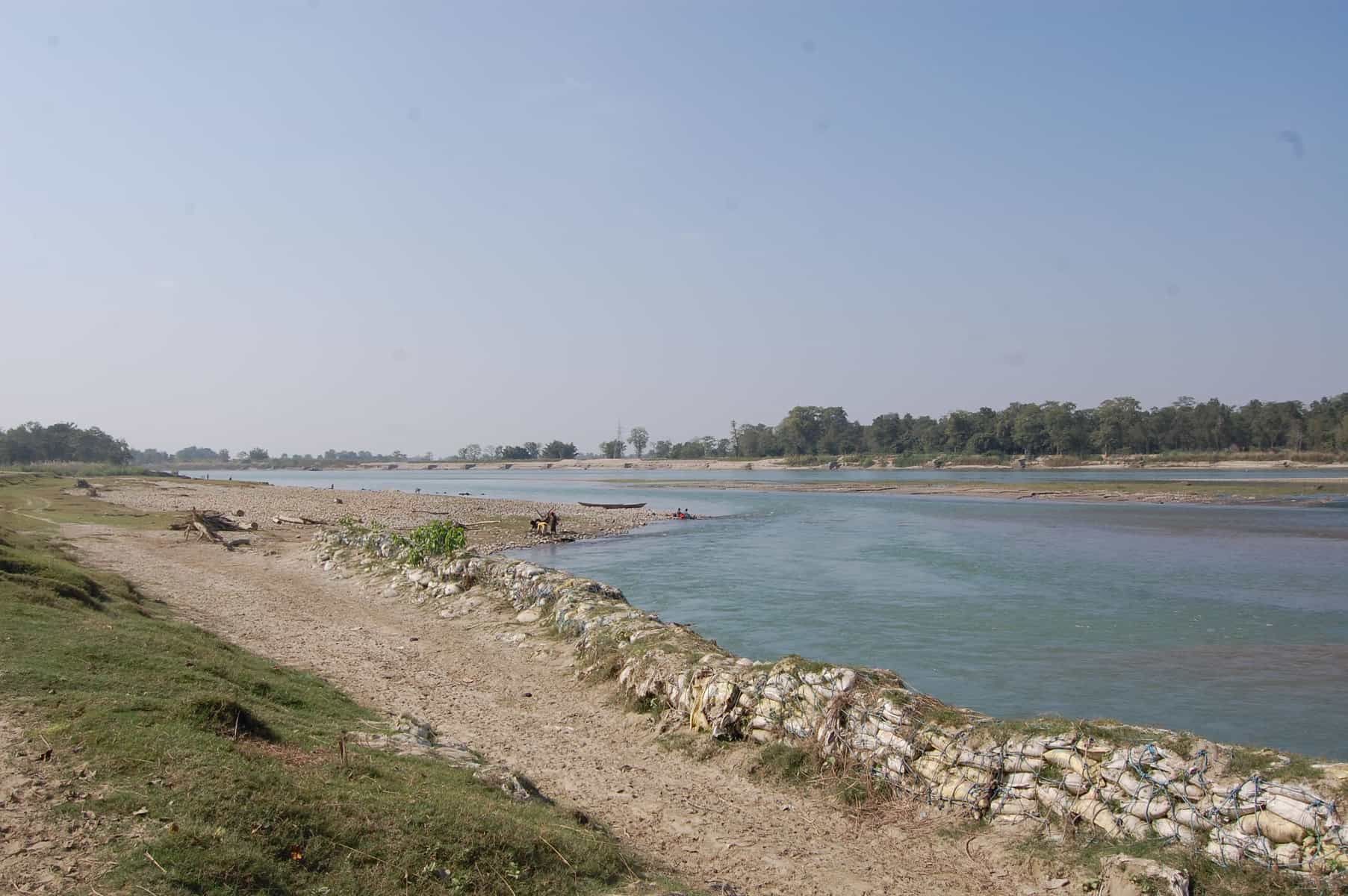
Karnali Basin in Nepal © Wei Liu | IIASA
That’s why we are working with Practical Action in the Zurich Flood Resilience Alliance to try to remedy this situation. Participatory Vulnerability and Capacity Assessment is a widely used tool to collect community level disaster risk and resilience information and to inform disaster risk reduction strategies. One of our first projects was to digitize a set of existing maps on disaster risk and community resources where the locations of, for example, rivers, houses, infrastructure and emergency shelters are usually hand-drawn by selected community members. Such maps provide critical information used by local stakeholders in designing and prioritizing among possible flood risk management options.
From hand-drawn to internet mapping
While hand-drawn maps are ideal for working in remote rural communities, they risk being damaged, lost, or simply unused. They are also more difficult to share with other stakeholders such as emergency services or merge with additional mapped information such as flood hazard. With the recent increase in internet mapping, platforms such as OpenStreetMap have made it possible for us to transfer existing maps or capture new information on a common platform in such a way that anyone with an internet connection can add, edit, and share maps. As this information is digital, it makes it easier to perform additional tasks, such as identifying households in areas of high risk or measuring the distance to the nearest emergency shelter, to support effective risk-reduction and resilience-building.
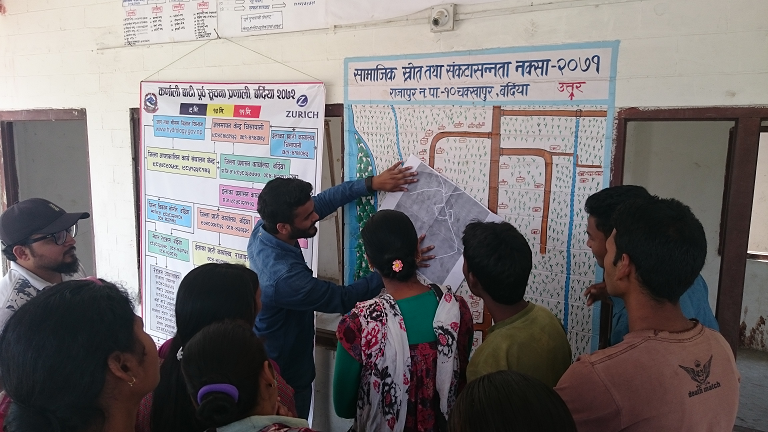
Practical Action Nepal, the Center for Social Development and Research, and community members discuss the transfer of community maps to online maps © Wei Liu | IIASA
From theory to practice
In March 2016, the Project team travelled to two Nepal communities in the Rajapur and Tikapur districts, to pilot the idea of working with a local NGO (the Center for Social Development and Research) and community members, to transfer their maps into a digital environment. The latter can easily be further edited, improved and shared within a broad range of stakeholders and potential users. Local residents in both communities were excited seeing their households and other features for the first time overlaid on a map with satellite imagery. The Center for Social Development and Research was also very enthusiastic about integrating their future community mapping activities with digital mapping, without losing the spirit of participation.
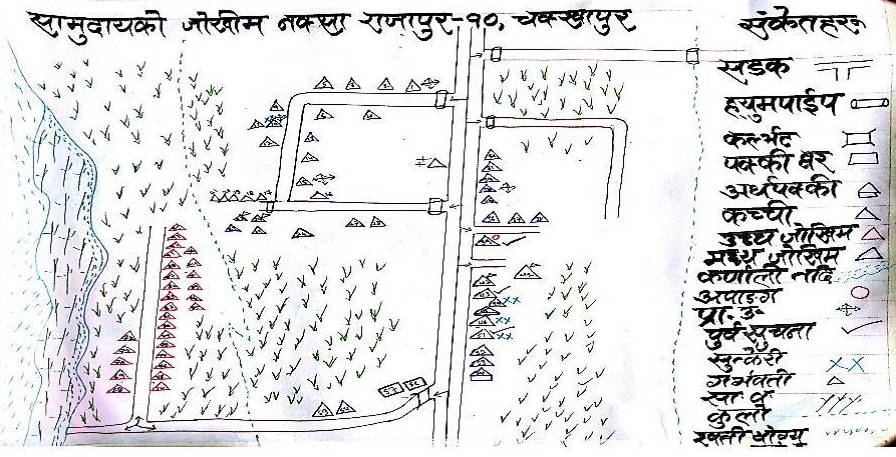
Hand drawn maps produced from community mapping exercises in Chakkhapur, Nepal © Practical Action
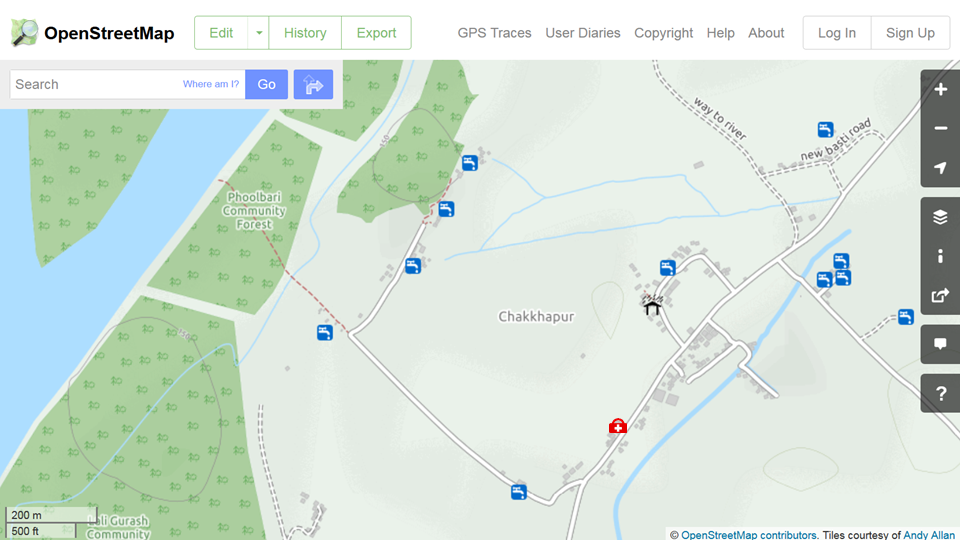
The resulting online maps in OpenStreetMap of Chakkhapur, Nepal, showing the location of drinking water, an emergency shelter and medical clinic. ©OpenStreetMap
Increasing resilience through improved information management
The first stage pilot study in the Karnali river basin confirmed the great potential of new digital technologies in providing accurate and locally relevant maps to improve flood risk assessment to support resilience building at the community level. The next step is to further engage local stakeholders. A wider partnership has been established between Practical Action, the Center for Social Development and Research, the International Institute for Applied Systems Analysis and Kathmandu Living Labs to further build local stakeholders’ capacity in mapping with digital technologies, including a training workshop for NGO staff members in September, 2016. The plan is to have more communities’ flood risk information mapped for designing more effective action plans and strategies for coping with future flood events across the Karnali river basin. A greater potential can be realized when this effort is further scaled up across the region and the results are placed into shared open online databases such as OpenStreetMap.
Further information
- Flood Resilience Portal
- Geo-Wiki Risk
- McCallum, I., Liu, W., See, L., Mechler, R., Keating, A., Hochrainer-Stigler, S., Mochizuki, J., Fritz, S., Dugar, S., Arestegui, M., Szoenyi, M., Laso Bayas, J.C., Burek, P., French, A. and Moorthy, I. (2016) Technologies to Support Community Flood Disaster Risk Reduction. International Journal of Disaster Risk Science, 7 (2). pp. 198-204. http://pure.iiasa.ac.at/13299/
Note: This article gives the views of the author, and not the position of the Nexus blog, nor of the International Institute for Applied Systems Analysis.
Nov 2, 2016 | Alumni, Young Scientists
By Muenire Koeseoglu, Young Scientists Summer Program alumnus.
In the summer of 2016 I traveled to Austria to take part in the IIASA Young Scientists Summer Program (YSSP). Being part of this intense experience, not only in terms of scientific research but also in a social and networking sense, was very rewarding. I learnt a lot, travelled a bit, and made many new international friends and valuable connections for life. However, if you are thinking about applying to the YSSP, some prior preparation and an open mind are essential to absorb what the environment offers.
My YSSP project examined water pollution issues in Scotland, looking into a trading framework that would help address diffuse pollution. My advice to any potential YSSPer working on applied topics like myself is to identify their research question in broad terms with room for possible change. Understand the policy landscape around the issue to establish the policy relevance, and possible partners in the field who might be willing collaborate as a part of their preparation before arriving to IIASA. Establishing connections might be time-consuming, and people might not necessarily be interested in taking the time to help a postgrad student or in sharing information or data which might be confidential, yet even a few successful attempts will be useful in terms of getting site-specific information, data, and feedback. It will also save you time during the YSSP and potentially help clarify the real-life problems beyond the literature or directives. For instance, my initial proposal for the YSSP was to design a trading scheme based on water allowances among different water users at catchment level. However, after relevant consultations, I realized that designing a scheme that would enable trading permits to pollute rather to take water would be more applicable to Britain and especially Scotland, where diffuse pollution impacts affects many more catchments than do water shortages.
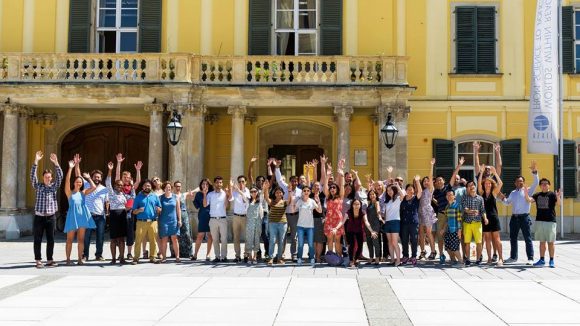
2016 YSSP participants. © IIASA
From my perspective there were many things that made my YSSP a special experience but the most important factor has been the people, my YSSP peers, the IIASA Advanced Systems Analysis Program (ASA) where I was based, and especially my supervisors. As a PhD student in the field of applied land economics, working with mathematicians (as my supervisors and most of my ASA colleagues were), was a very formative experience, as the world of mathematicians is very different to my career so far. Crucially, my supervisors taught me to deal with uncertainty not only in the data but also in the research structure and short-notice changes, and to realise the wider applications and possible extensions of the project rather than being trapped in details. After all, you can return to the details once you have made progress in your overall aims. Moreover, mathematicians are fast thinkers with a “can-do” attitude: a perfect combination for finding a solution in mathematical terms to the next practical problem you face.
I believe I have benefited a lot from this trans-disciplinary cooperation and look forward to working with people from different disciplines again, to learn from their perspectives and expertise.
Note: This article gives the views of the author, and not the position of the Nexus blog, nor of the International Institute for Applied Systems Analysis.
Sep 13, 2016 | Sustainable Development
By IIASA Deputy Director General Nebojsa Nakicenovic and Caroline Zimm, IIASA Transitions to New Technologies Program and The World in 2050 (TWI2050) initiative. (Originally published on The Guardian)
2015 marked a historic turning point. The sustainable development goals (SDGs) unanimously adopted by the United Nations last September provide an aspirational narrative and specific targets for human development: a world free from hunger, injustice and absolute poverty; a world with universal education, health and employment; a world with inclusive economic growth, based on transparency, dignity and equity.
The 17 SDGs’ call for “global citizenship and shared responsibility” and provide legitimacy for a new global social contract for a grand transformation toward a sustainable future. They fully acknowledge the scientific advances achieved during the last three decades that have established compelling evidence that otherwise, as the UN general assembly warned, “the survival of many societies, and of the biological support systems of the planet, is at risk.” Humanity has pushed the Earth system and its global commons to their limits and the SDGs provide us with the long-needed paradigm shift towards realizing the opportunity of a sustainable future for all.
The climate agreement adopted in Paris last December has further strengthened understanding that our society depends on sustainable stewardship of the global commons, shared by us all – and particularly on the stability of the climate system. The Earth system can no longer be viewed as an economic or social externality. Last year we moved beyond the traditional view of global commons as merely the common heritage of humankind outside national jurisdiction. Now we must move beyond national sovereignty to deal with the Earth system and human systems holistically, as the SDGs require. The Paris agreement is a huge step in the right direction.
Time is running out, so we must take urgent action to implement the UN 2030 agenda. Just 14 years are left – less than the wink of an eye in the history of human development, or of the Holocene’s stable Earth systems. But where to start? Which of the 17 goals, which of the 169 targets should be tackled first? Policy makers, the media, civil society and scientists all ask these questions.
However, the 2030 agenda stresses that the SDGs are indivisible and integrated – and cumulative, since efforts to achieve them must be sustained well into the second half of the century, especially in preserving the regulating function of the global commons, Some of the goals, such as SDG13 on climate, must operate on a time scale longer than century.
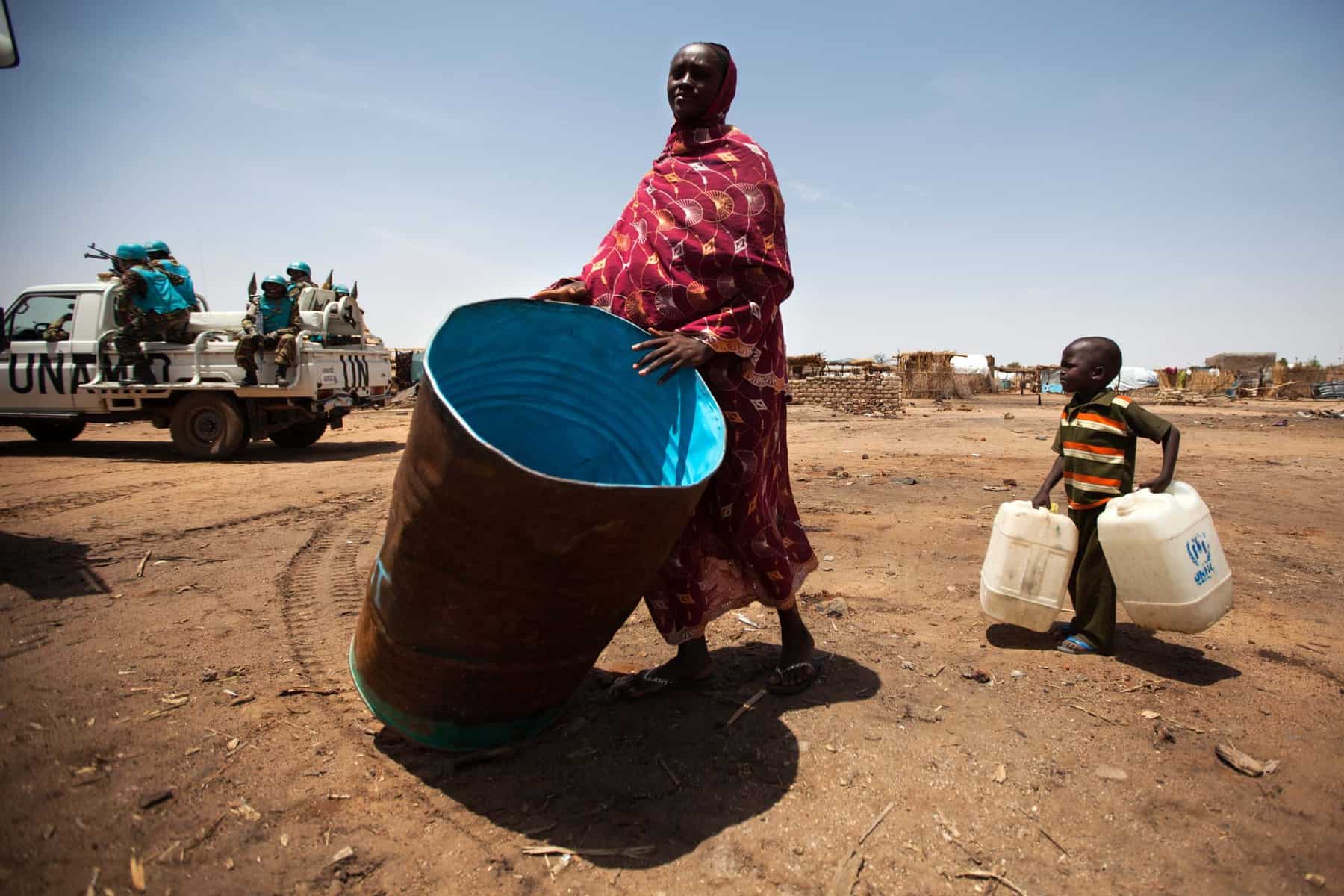
Sustainable Development Goal 6: Clean water and sanitation.
Photo by Albert Gonzalez Farran, UNAMID
Moreover, there are interactions between and among the SDGs. For example, achieving SDG7, the energy goal, could jeopardize SDGs related to water, health and climate. Tackled in harmony, however, these goals can support one another: there would, for example, be clear health benefits from reducing indoor and outdoor air pollution through global decarbonization. Jointly implementing all the SDGs would contribute both to further human development and to safeguarding the commons and the stability of the Earth systems. Importantly, joint implementation that avoids silo-type thinking would be cheaper and faster than tackling them separately.
All these goals should be achieved in such a way as to maximize synergies and minimize investment costs and trade-offs. The SDG credo “leave no one behind” also applies to the SDGs themselves. They are indivisible. We have to deliver on all of them if we want to succeed.
The SDGs are very ambitious but it appears that tackling them together will help humanity make rapid progress and enter a new era for human societies and the Earth system. Yet, many interactions – and their scope – are unknown, and this hampers holistic policy making. We lack clear understanding of the benefits of achieving SDGs and of costs of inaction, especially when it comes to regional and national differences. We urgently need this fact-based information.
We have a plethora of knowledge, but need new ways to synthesize, integrate and share it so as to use its full potential in support of the SDGs and the global commons. Science – one of the strongest voices of the environment in governance – must become more active and leave its ivory tower to engage more intensely with other stakeholders.
This is why we at IIASA, together with the Stockholm Resilience Center, and the Sustainable Development Solutions Network have launched the scientific initiative The World in 2050 (TWI2050), designed to provide the scientific knowledge to support the policy process and implementation of the 2030 agenda.
TWI2050 aims to address the full spectrum of transformational challenges in fulfilling the SDGs in an integrated way so as to avoid potential conflicts among them and reap the benefits of potential synergies through achieving them in unison. This requires a systemic approach.
The time for “climate-only” or “economic development-only” approaches is over. We urgently need an integrated understanding of the processes that account for the inter-linkages between the economy, demography, technology, environment, climate, human development, all global commons and planetary boundaries. TWI2050 brings together leading policymakers, analysts, and modelling and analytical teams to collaborate in developing pathways towards the sustainable futures and policy frameworks necessary for achieving the needed transformational change.
Such a grand transformation goes beyond a purely technology-centered view of the world or the substitution of one technology by another. It encompasses social and behavioral changes at all levels, as well as technological ones. Incremental changes, now being experienced in some areas, are useful but will not suffice: we have waited too long and the window for action is closing rapidly in some domains including such global commons as climate. We will need radical changes in human behavior and technological paradigms. TWI2050 will look beyond 2030 to 2050 – and, in some cases, even to 2100 – to draw a vision of the world where the SDGs are eventually fulfilled.
The SDGs and the Paris agreement show what institutional international governance can achieve with joined forces. We have entered a new era of global governance, acknowledging the complexity and the connectivity of human development with the global commons and the Earth system. TWI2050 hopes to serve the global community with the best science available in tackling these key global challenges for humankind.
This article originally appeared on The Guardian.
Note: This article gives the views of the authors, and not the position of the Nexus blog, nor of the International Institute for Applied Systems Analysis.
Aug 30, 2016 | Sustainable Development
Michael Perkinson is the chief of staff to the chief investment officer at the asset management firm Guggenheim Partners in the US. On 28 and 29 August he took part in a meeting of the Alpbach-Laxenburg Group, focused on new models for sustainable business development, and on 30 August he spoke at the European Forum Alpbach Political Symposium.
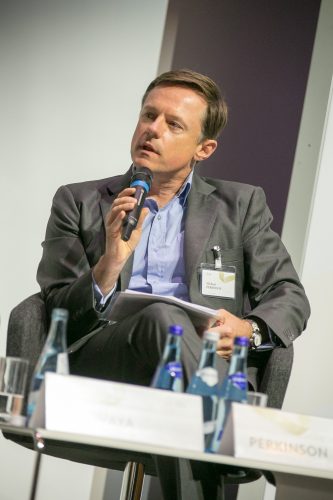
Michael Perkinson speaks at the European Forum Alpbach. ©Matthias Silveri | IIASA
As a business leader with a background in international relations, you have unique experience in both government and the private sector: How do you think that the two could work together towards achieving the sustainable development goals?
Traditionally, the two sectors have not mixed well. Governments were skeptical of the private sector’s profit motives and the private sector believed government was an impediment. Both views were, of course, short-sighted. In recent years the United Nations has looked to the private sector to help finance development as the traditional levels of fiscal policy have been removed from the toolkit by increasingly narrowly focused legislatures. Similarly, private investors and private enterprise, who make up over 60% of GDP in the developed world, realize that they can partner with governments to achieve their social goals. Yes, businesses now have social goals.
What do you see as the biggest challenge is in achieving the SDGs?
Money and willpower.
What changes would be needed in business in order to fully embrace the SDG agenda?
I suspect that businesses need to understand how they can contribute. If given the option of a regulation or a tax, businesses will always chose a tax, because it allows them to plan accordingly. So, in this case, I think businesses require an explanation as to how they can contribute and how it won’t interfere with their executing on their business plan.
Business is often seen as “part of the problem” when it comes to issues like climate change and poverty – do you think that sustainable development could also bring opportunity for business, and if so, how?
Having been in the public sector for 25 years before returning to the private sector, I have never seen the private sector as part of the problem. In the United States, the private sector contributes some 80% of GDP. The private sector also provides jobs, which is really the only way that poverty can be eliminated on a generational scale. I think that there is ample opportunity for business to contribute to the SDGs, but the public sector needs to explain clearly how businesses can contribute in a way that doesn’t interfere with their business plan. It doesn’t mean that businesses need an inducement (like a tax break), they just need to understand the strategic logic of the concept.
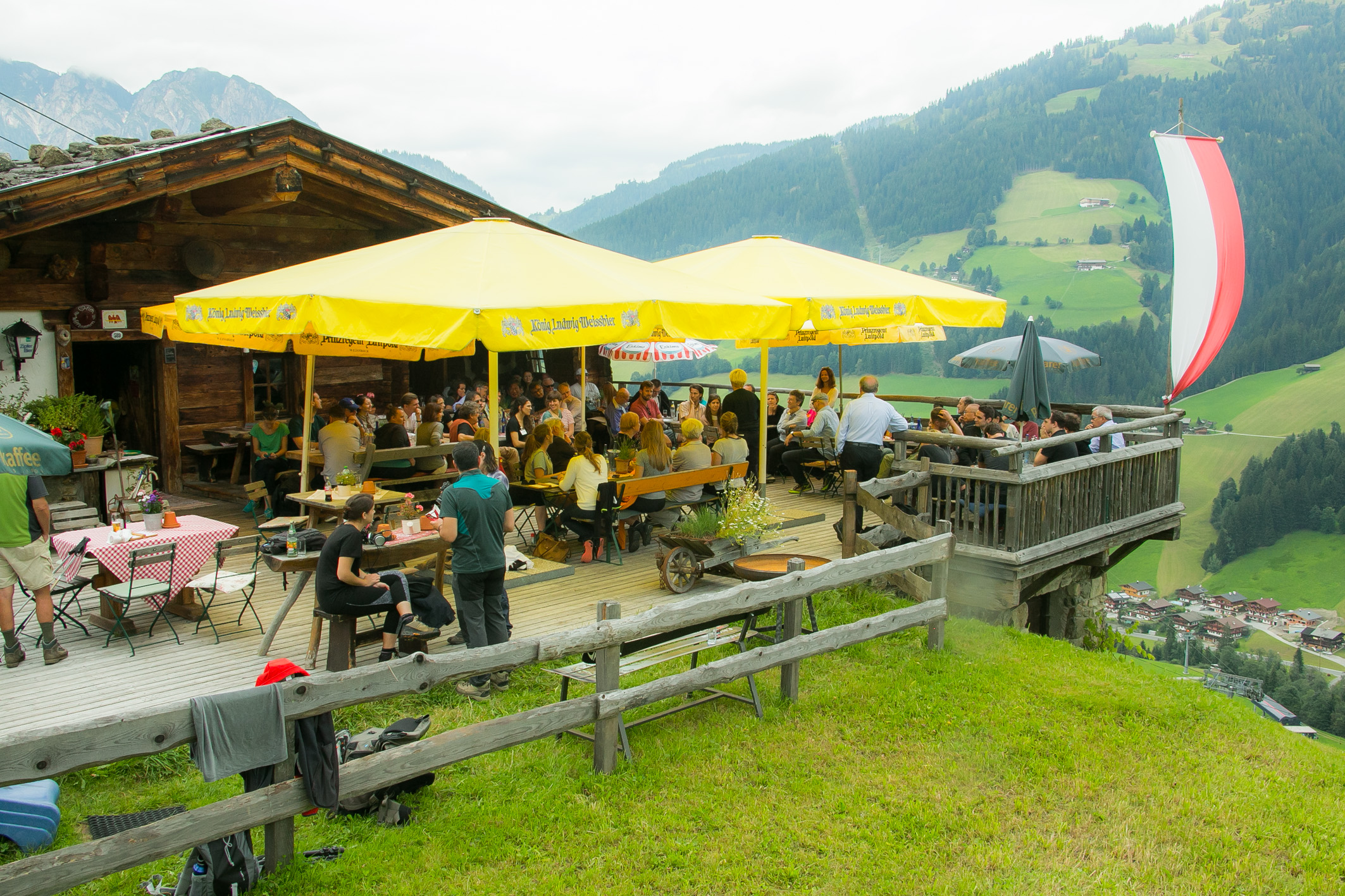
Meeting of the Alpbach-Laxenburg Group, 29 August 2016. ©Matthias Silveri | IIASA
Interview conducted and edited by Katherine Leitzell, IIASA science writer and press officer
Note: This article gives the views of the interviewee, and not the position of the Nexus blog, nor of the International Institute for Applied Systems Analysis.
Aug 29, 2016 | Sustainable Development
Pascal Lamy was the director general of the World Trade Organization from 2005 to 2013, and currently serves as a president emeritus of the Notre Europe – Jacques Delors Institute. On 28 and 29 August he is taking part in a meeting of the Alpbach-Laxenburg Group, focused on new models for sustainable business development.
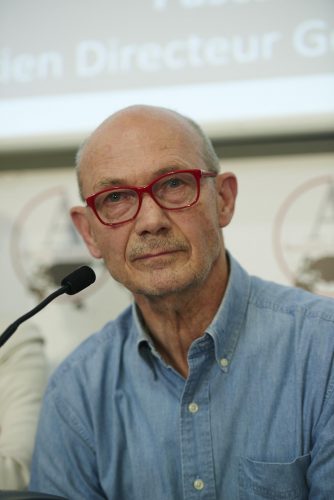
Pascal Lamy ©The Jacques Delors Institute
As the former director general of the WTO, you have extensive experience in global trade and economic development. How does this background inform your perspective on the issues of the sustainable development?
To put it very simply, there is a very well-understood interaction between trade and growth, starting in the 18th century until now. The understanding of the relationship between global trade and sustainable development, i.e. including the environment dimension, is much more recent, understandably because environmental issues only came into the picture much more recently than the 18th century.
The reality is today that the communities working on trade and environmental issues are rather poorly connected. You belong either to one or to the other. There are not that many people who have feet on both sides, which does not help because the issue is complex.
In theory it’s very simple. Take climate change for instance: If you put the carbon price at the proper level, i.e. the one that takes into account the externalities of climate change and CO2 emissions, all you have to do is price CO2 properly, and problem is solved: markets will reallocate production factors accordingly. That’s what theory tells us. The little problem is actually agreeing on a set price for the entire planet. And this triggers a lot of suboptimal propositions, solutions.
I think that the overall stance now is that that trade is not an end. Trade is a means to improve growth in climate, welfare, sustainability, including environment sustainability. This was in fact part of the WTO charter from 1994. When I was DG of the WTO we did quite a lot of work in collaboration with environmental international organizations such as UNEP for instance. We looked into the big question on this topic: Is the expansion of trade good or bad for the environment? There are arguments on both sides, and it is a vast set of issues. But overall I think there are ways and means to reconcile, to synergize the benefits of trade opening for a more environmentally sustainable world.
What do you see as the biggest challenge in achieving the Sustainable Development Goals?
It’s a very long and vast set of issues. So it’s not a single thing—what you have to address issues on inequality, on education, on oceans, on poverty—it’s a lot of different things.
But overall, I think the biggest challenge—and this is why a number of us are working on that—is to properly organize the accountability of these SDGs. That means providing proper metrics, proper review, proper debate, and proper public accountability. Now that the goals have been agreed by the UN, the issue is whether or not they can be achieved, and whether we can properly organize public pressure on sovereign nation states, through civil society, involvement of businesses. So in my view the main issue is building and agreeing on a proper follow up transparency system.
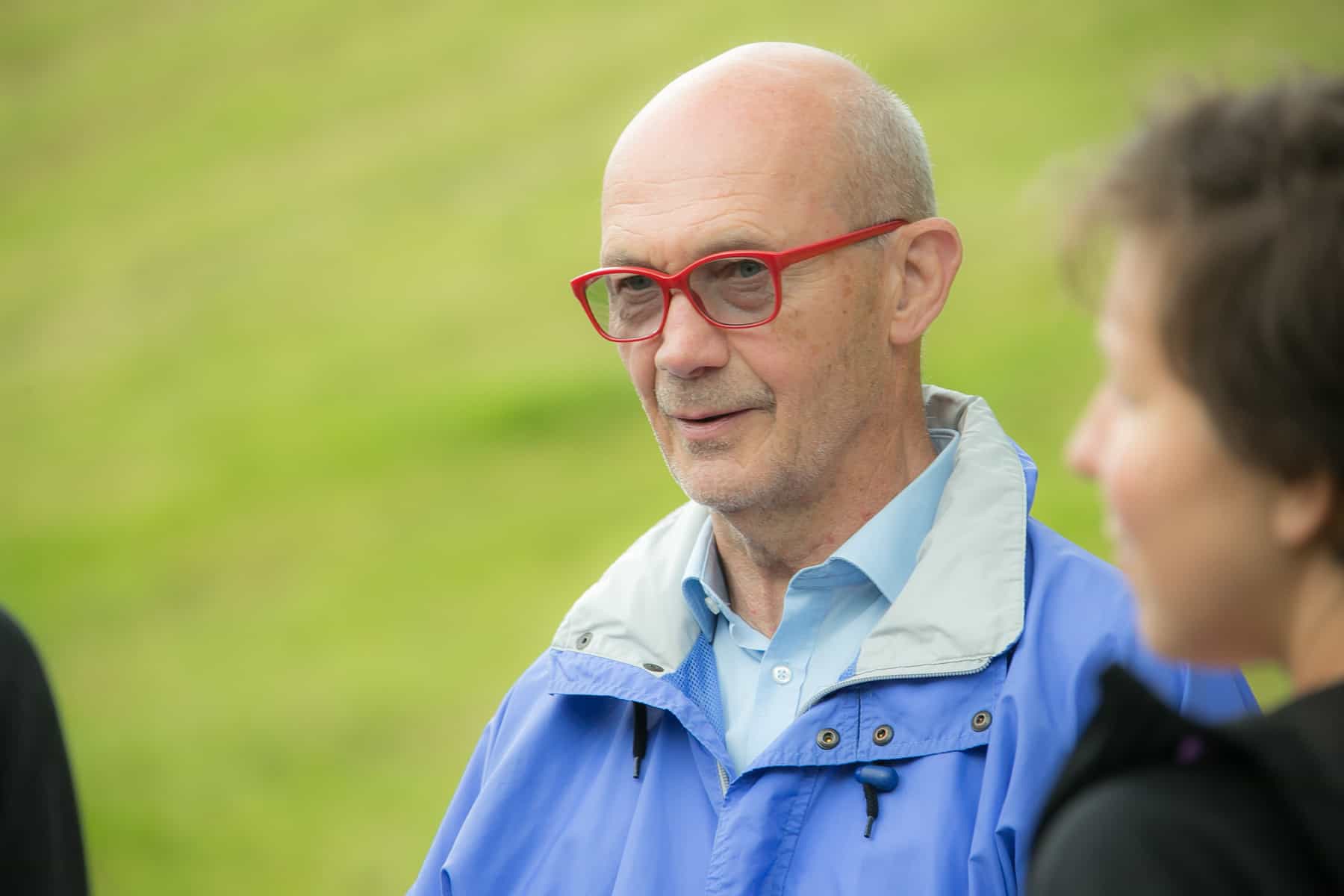
Pascal Lamy talks with other members of the Alpbach-Laxenburg Group at a retreat on 29 August. ©Matthias Silveri | IIASA
How do you think that the private sector could help in achieving the SDGs?
In doing what private businesses have been doing increasingly, which is integrating this sustainable development focus into their global strategies. Most big businesses now have a set of principles, a set of values that include sustainability.
What’s happening for instance around the push towards green finance, notably since the COP21 in Paris, is a good example of how some businesses can be on the front line of a larger coalition. We need coalitions like this to bind public authorities at the national, regional, and city levels, to civil society organizations focused on sustainability, climate, environment, biodiversity, and development, and businesses, whether big or small.
So from your perspective it sounds like business is already on the right track. What further changes would be needed in the private sector in order to fully embrace the SDG agenda?
It will happen if and when businesses realize that it matters to their consumers, to their staff, and to their shareholders, or their finance providers more generally. This is the frame within which they have to optimize what they do—clients, consumers, their people, and where they get their financial resources from. And if these various sides of the triangle push in that direction, inevitably businesses will push in this direction. They’ll have to.
The Alpbach-Laxenburg Group brings together leaders from business, and young entrepreneurs, along with government leaders and science experts. What do you think can be gained from a meeting of this type?
What’s unusual is that it links you with people whom you may not meet every day, so it’s an occasion of diversity connecting on a topic. Plus, there is something which tends to come out of this sort of environment, which is innovation. People exchanging ideas, not just theoretically, “What should we do?” “Where are we?” “Where are we going?” but, “This is what I suggest to do,” “This is what I tried and it worked,” and “This is what I tried and it didn’t work.” It’s more about experiences on the ground, which may then inspire more general conclusions.
Further reading
Pascal Lamy (2016). “Négociations climatiques et négociations commerciales : antinomie évidente ?“. Speech delivered at the 24th Meeting about Risk Management, AMRAE, at Lille, France, February 5th 2016. Download speech (PDF)
Pascal Lamy (2013). The Geneva Consensus: Making trade work for all. Cambridge University Press http://www.cambridge.org/ao/academic/subjects/law/international-trade-law/geneva-consensus-making-trade-work-all
Interview conducted and edited by Katherine Leitzell, IIASA science writer and press officer
Note: This article gives the views of the interviewee, and not the position of the Nexus blog, nor of the International Institute for Applied Systems Analysis.


You must be logged in to post a comment.