
What is the optimal fertility rate?
By Erich Striessnig, IIASA World Population Program When asked what a desirable fertility level for populations might be, most politicians, journalists, and even social scientists would say it is around two children per woman, as this would – on the long run – prevent...
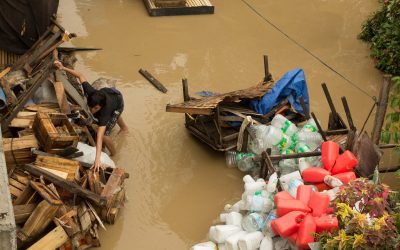
Systems analysis for risk and resilient development
By Junko Mochizuki, Adriana Keating and Reinhard Mechler, IIASA Risk, Policy, and Vulnerability Program The year 2015 will mark a crucial milestone for the international development, climate change, and disaster management communities. Negotiations are currently...
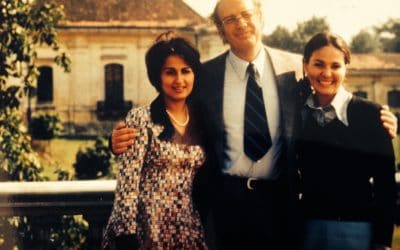
IIASA Employee Number 1
By Martha Wohlwendt IIASA's Alumni Association is hosting its first Alumni Day on April 29, 2014, and we are inviting alumni to send their memories and photos of their time at IIASA. Our first post comes from Martha Wohlwendt, IIASA’s first employee, Executive...
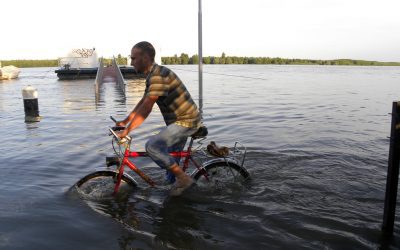
How can Europe cope with multiple disaster risks?
Interview with IIASA risk expert Nadejda Komendantova In a new study, IIASA Risk, Policy, and Vulnerability Program researcher Nadejda Komendantova and colleagues from Germany and Switzerland examined how natural hazards and risks assessments can be incorporated into...
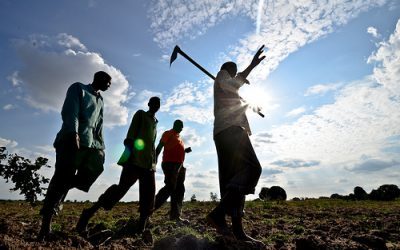
Interview: Taking Geo-Wiki to the ground
Steffen Fritz has just been awarded an ERC Consolidator Grant to fund a research project on crowdsourcing and ground data collection on land-use and land cover. In this interview he talks about his plans for the new project, CrowdLand. What’s the problem with current...

Modeling terrorism
On October 15, 2012, a young man from Bangladesh named Quazi Mohammad Rezwanul Ahsan Nafis parked next to New York Federal Reserve Bank in a van with what he believed was a 1000-pound bomb, walked a few blocks away, and then attempted to detonate the bomb by mobile...
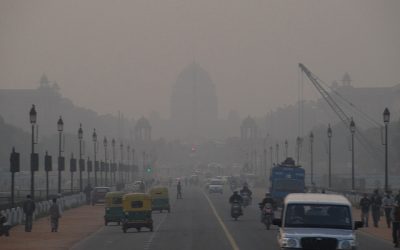
How to save lives—and money – by addressing India’s air pollution
By Erich Striessnig, Research Assistant, IIASA World Population Program We have all heard about the terrible air pollution in India’s cities. Average concentrations of particulate pollution exceed World Health Organization guidelines through most of India, most of the...

Healthy living in hard times?
By Raya Muttarak, Research Scholar, IIASA World Population Program For many years social scientists have observed a connection between economic downturns and a reduction in both unhealthy behaviors and mortality—a paradigm known as “healthy living in hard times.” One...

Interview: Exploring stereotypes about older people
A new study by IIASA researchers Katie Bowen and Vegard Skirbekk examines the stereotypes people have about older people, and what factors influence those views across a number of countries. In this interview Bowen describes the new findings and their implications....

How games can help science: Introducing Cropland Capture
By Linda See, Research Scholar, IIASA Ecosystems Services and Management Program On a recent rush hour train ride in London I looked around to see just about everybody absorbed in their mobile phone or tablet. This in itself is not that unusual. But when I snooped...
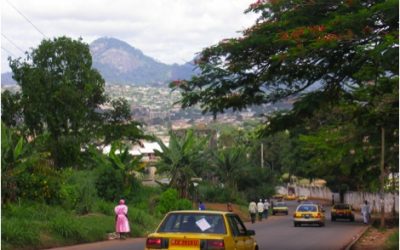
REDD+: Cutting emissions, not trees, in the Congo Basin
By Aline Mosnier, IIASA Research Scholar Deforestation and forest degradation contribute substantially to greenhouse gas emissions, particularly in developing countries. The Reducing Emissions from Deforestation and Forest Degradation plus forest conservation,...
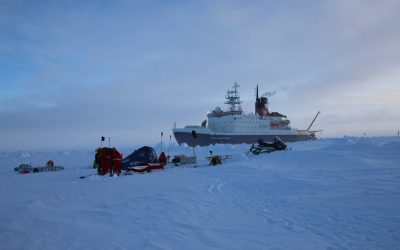
Interview: The Arctic is closer than you think
Peter Lemke, head of the Climate Sciences Research Division at the Alfred Wegener Institute, Helmholtz Centre for Polar and Marine Research in Bremerhaven, Germany, is an expert on sea ice, a polar explorer, and the Chair of the IIASA Council. In this interview Lemke...
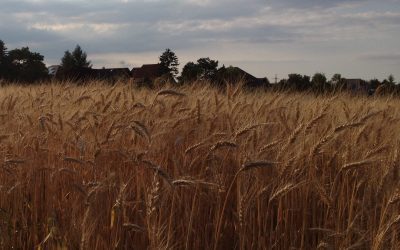
Interview: The problems with phosphorus
In a new commentary (subscription required) in Nature Geoscience, IIASA researchers Michael Obersteiner, Marijn van der Velde, and colleagues write about the problems facing the world’s food supply as we exhaust our supplies of phosphorus. Projections show that...
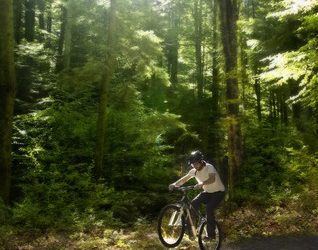
Recharge.green: What’s a forest worth?
This post was originally published on the recharge.green blog. IIASA is a partner in the new project, which focuses on the potential for renewable energy in the Alps. When I think of an alpine forest, I think of the towering cedar trees that blanket the Cascade...
What does the IPCC report mean for climate policy?
By Anthony Patt, ETH Zurich and IIASA (From ETH-Klimablog) The first of three working group reports of the Intergovernmental Panel on Climate Change (IPCC) was made public last Friday. Previous reports served as guidepost for climate policy development. And yet some...