

Tackling the dilemma of local actions and planetary boundaries
Wiley’s open-access journal devoted to documenting global change and sustainability, published online a commentary by scientists from IIASA and Brazil tackling the tough question of how to ensure that actions taken locally do not—collectively—contribute to overreaching planetary boundaries.
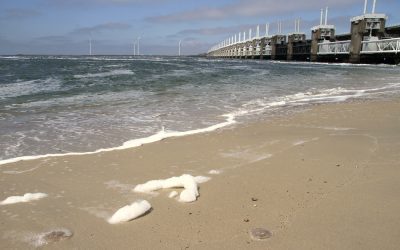
Barriers to adaptation: Really?
What does adaptation to climate change entail, and what stands in the way of successful adaptation? Wageningen University researcher Robbert Biesbroek describes recent research on barriers to adaptation, which he conducted in collaboration with IIASA.
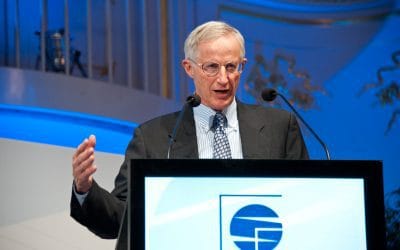
William Nordhaus: A new model for climate treaties
At a lecture for IIASA staff, economist Bill Nordhaus explained his idea of “climate clubs” as a new model for international agreements on climate mitigation.
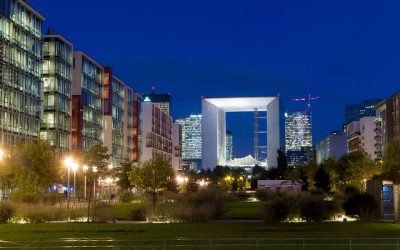
The future of social change
How will societies develop in the future? And what environmental, economic, and social factors will influence these changes? Can these problems be analyzed in a scientific way? IIASA’s Anne Goujon reports from a recent workshop that addressed these questions.
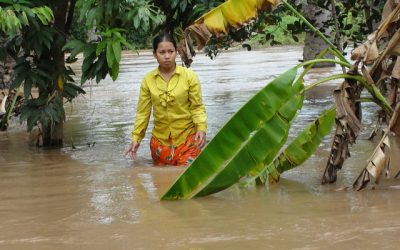
Risk-based planning in developing countries—CATSIM training in Cambodia
Junko Mochizuki, a research scholar in the IIASA Risk, Policy, and Vulnerability Program, writes about her recent trip to Cambodia to train policymakers in risk assessment and preparedness tools.

Towards old-age pensions for everyone in Mexico
IIASA Research Scholar Larry Willmore on his recent research on pensions in Mexico.
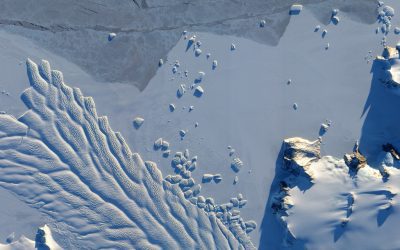
Winning hearts for climate change
Scientists who have worked for many years in the field of climate change sometimes grow cynical about the possibility that the world will address the problem. But John Schellnhuber, director of the Potsdam Institute for Climate Impact Research (PIK) remains hopeful.
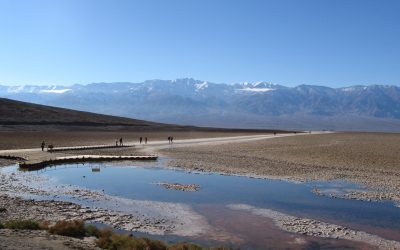
Interview: From systems analysis to remote sensing
Eric F. Wood is a hydrologist at Princeton University, well-known for his work in hydrology, climate, and meteorology, and an IIASA alumnus. In this interview he talks about the next challenges in water research.
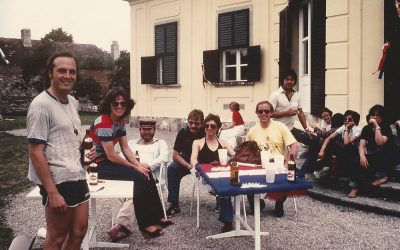
Alumni memories: nuclear reactors and energy models
Alan McDonald, IIASA Alumnus and member of the IIASA Alumni Advisory Board writes about his time at IIASA in the early 1970s and his research on nuclear reactors and energy systems.

Would addressing climate change improve energy security?
By Jessica Jewell, Research Scholar, IIASA Energy Program How would action to mitigate climate change affect energy security for countries around the world? In two recent studies that I worked on with colleagues in IIASA’s Energy Program and three other European...

Uncertainty in an emissions-constrained world
By Matthias Jonas, IIASA, and Gregg Marland, Appalachian State University Greenhouse gas emissions are seldom measured directly. They must be estimated from data such as on energy use and changes in land use. That means that estimates of greenhouse gas emissions from...

Towards a climate risk management approach for adaptation
By Reinhard Mechler, IIASA Risk, Policy, and Vulnerability Program On March 25, member countries of the Intergovernmental Panel on Climate Change (IPCC) started discussing the key findings of the second volume of the Fifth Assessment Report (AR5) in Yokohama, Japan....

Interview: Women, education, and leadership in Africa
Lanoi Maloiy is a PhD student at the University of South Australia in Adelaide, and a participant in the recently completed 2013-14 Southern African Young Scientists Summer Program (SA-YSSP), which IIASA co-organizes with the South African National Research Foundation...
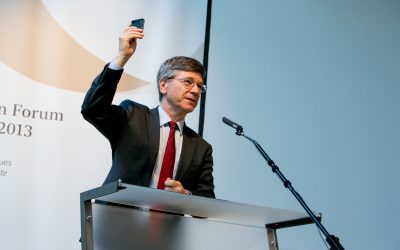
Interview: Sustainable development—the challenge of our generation
Jeffrey D. Sachs, Director of the Earth Institute at Columbia University and Director of the UN Sustainable Development Solutions Network is an expert on economics, development, and sustainability, and a founding member of IIASA and European Forum Alpbach’s Global...
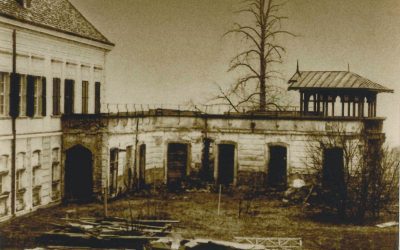
A continuing transformation
By Aviott John, IIASA alumnus Anyone who has seen before and after photos of Schloss Laxenburg—the home of the International Institute for Applied Systems Analysis (IIASA)—knows what an incredible physical transformation the building went through between 1972 and 1981...