
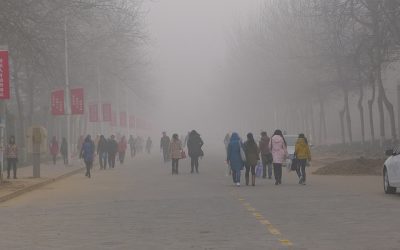
Interview: Coal, natural gas, and clean air for China
In an interview, IIASA 2014 Mikhalevich Award Winner Jun Liu, a participant in the 2014 Young Scientists Summer Program, talks about her research on air pollution in China.
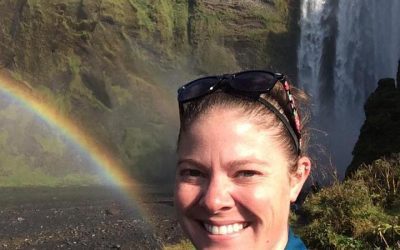
Interview: Aquatic invaders and ecological networks
In an interview, IIASA 2014 Peccei Award Winner Danielle Haak, a participant in the 2014 Young Scientists Summer Program, talks about her research on aquatic invasive species and ecosystem resilience.
Global carbon taxation: a back of the envelope calculation
How much should a carbon tax cost in order to spur climate mitigation policies? IIASA researchers and colleagues provide a back-of-the-enveloped calculation
Climate change missing from government risk agendas
Earlier this month IIASA researcher Leena Ilmola-Sheppard sat in on the OECD High Level Risk Forum, and came away with some new thoughts and questions about how governments approach risk management.
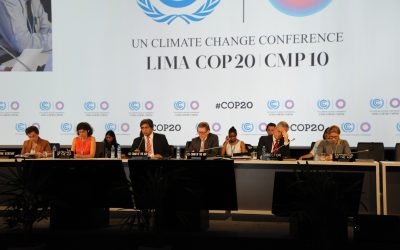
Lima: A stronger role for climate risk management
By Reinhard Mechler & Thomas Schinko (IIASA) with Swenja Surminski (LSE) (updated 17 December 2014) As participants in the 20th Conference of the Parties to the Climate Convention (COP 20) in Lima strived to prepare the grounds for a comprehensive climate...
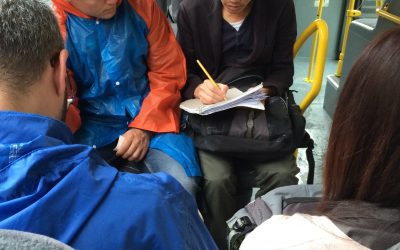
Science that matters: Perspective from young scientists
Participants in IIASA’s Young Scientists Summer Program 2014 bring their perspective to the question of how research connects to society.

Six questions for Simon Levin
Read an interview with Princeton University Professor Simon Levin—IIASA council chair 2003-2008–has won numerous awards for his interdisciplinary research in environmental sciences, economics, and evolutionary biology.
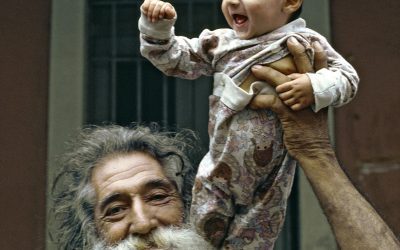
Journey of your life: Demography for the demos
With the new population.io Web site from IIASA population researchers, you can find out where you fit in to the world population, and even look up your estimated date of death. IIASA researcher Samir K.C. explains the science behind the new tool.

Mapping the global palm oil boom
Palm oil is widely blamed for deforestation, but also brings jobs and economic development. IIASA researchers Aline Mosnier and Johannes Pirker argue that with better land-use planning, healthy forests and palm oil plantations can co-exist.

Beyond sharing Earth observations
In a new Correspondence published in the journal Nature, IIASA researchers Ian McCallum and Linda See argue for better sharing of satellite validation data, to improve our understanding of global land cover.

9 billion or 11 billion? The research behind new population projections
IIASA demographers explain why they project the world population to peak this century and UN demographers believe stabilization is unlikely
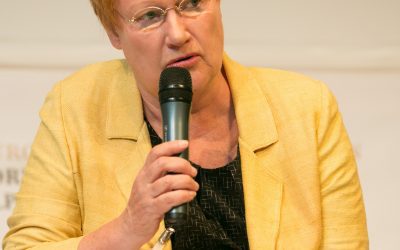
Interview: Inequality is a lifelong story
Tarja Halonen was the 11th President of the Republic of Finland and Finland’s first female head of state from 2000 to 2012. She currently serves as the Co-Chair of the UN High-level Panel on Global Sustainability, and the Chair of the Council of Women World Leaders....

Charting connections: the next challenge for systems analysis
At a lecture for IIASA staff, mathematician Don Saari challenged researchers to think outside the box when it comes to systems analysis research.
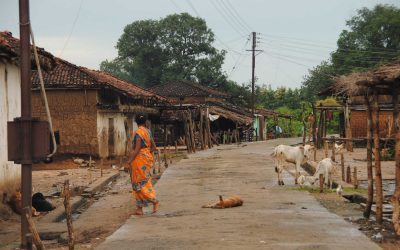
Poverty eradication and climate change: Is there a conflict?
Many people associate raising living standards in developing countries with increases in greenhouse gas emissions. New research by IIASA’s Narasimha Rao shows that may not be the case.
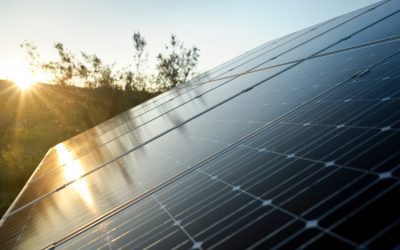
Innovating to address climate change
How can we innovate successfully to address climate change? A new book by IIASA researchers shows the way through a historical investigation of past energy innovations. By Charlie Wilson and Arnulf Grubler.